Shape Recognition Easy 2D Shapes Worksheets for Ages 5-7
6 filtered results
-
From - To
Unlock the world of geometry with our "Shape Recognition Easy 2D Shapes Worksheets"! Perfect for children aged 5-7, these engaging worksheets are designed to help young learners easily identify and understand basic 2D shapes such as circles, squares, triangles, and rectangles. Our fun, interactive activities cultivate critical thinking and visual discrimination skills, ensuring a solid foundation in early math. Ideal for classroom or home use, these printable worksheets make learning an enjoyable adventure. Empower your child’s educational journey with our expertly crafted resources, nurturing shape recognition skills essential for success in math and beyond.
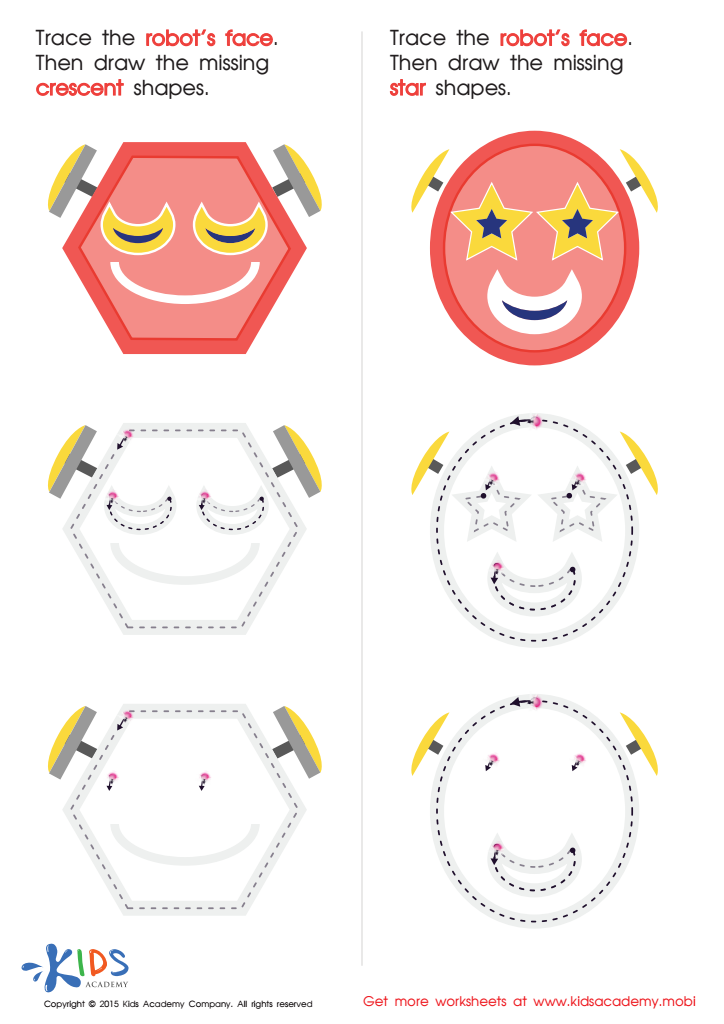
Composing a Robot's Face of Crescents And Stars Worksheet
 Assign to My Students



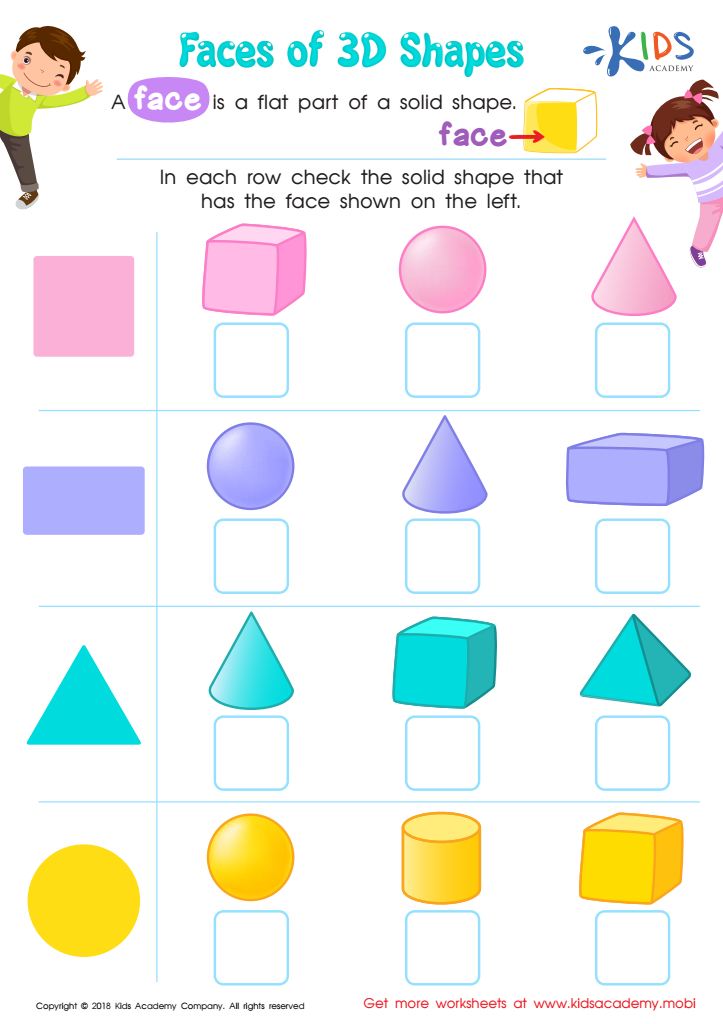
Faces of 3D Shapes Worksheet
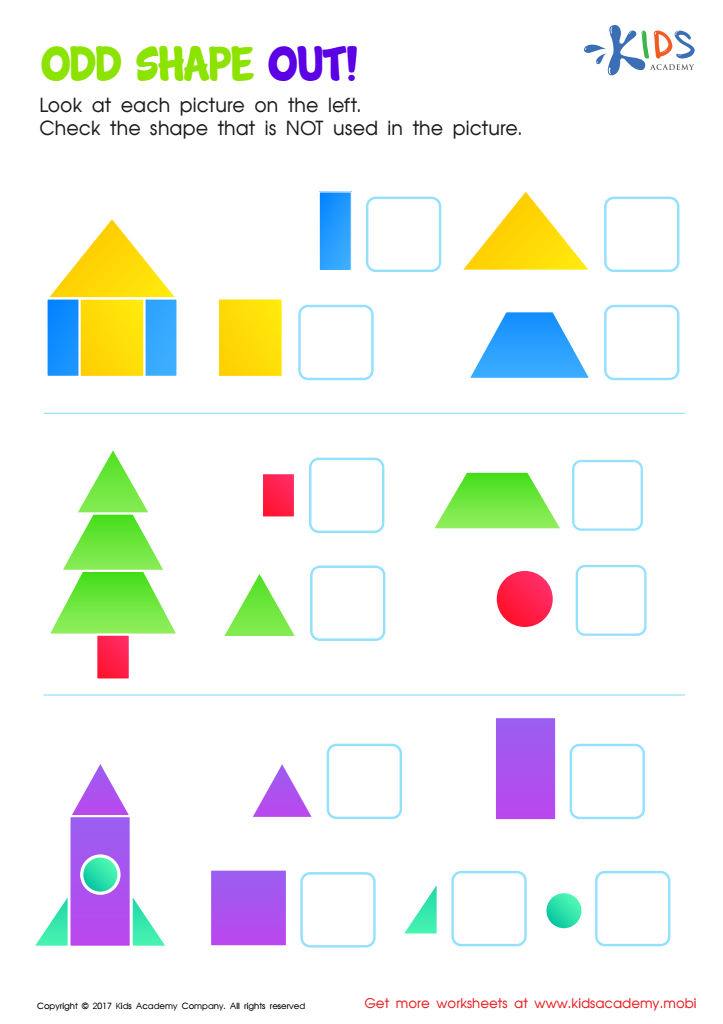
Odd Shape Out Worksheet for Grade 1
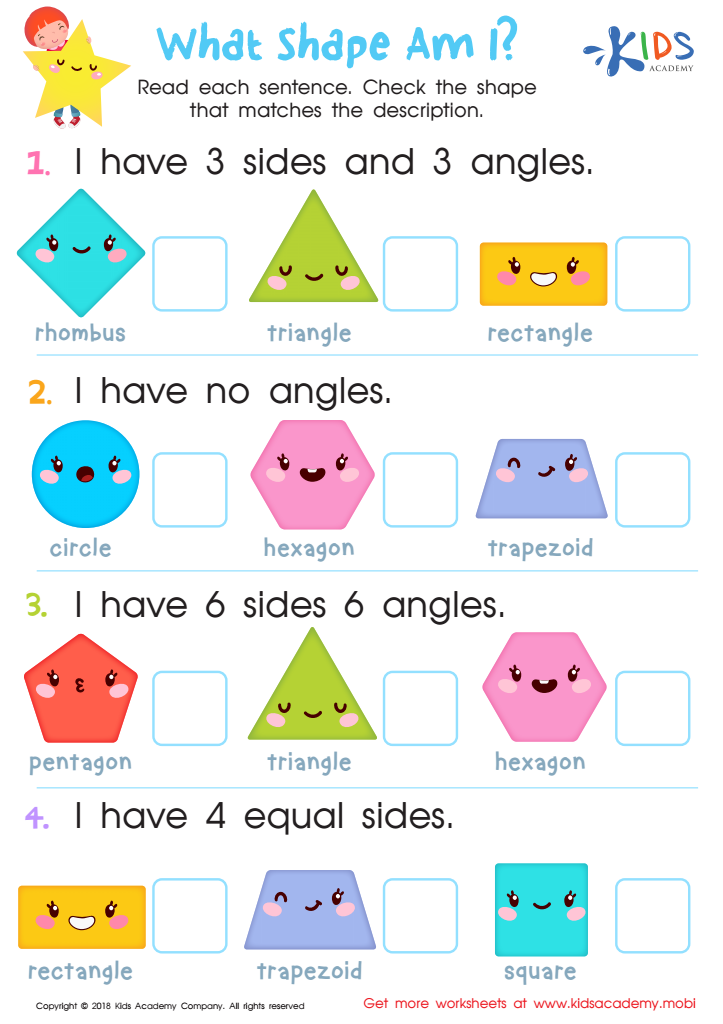
What Shape Am I? Worksheet
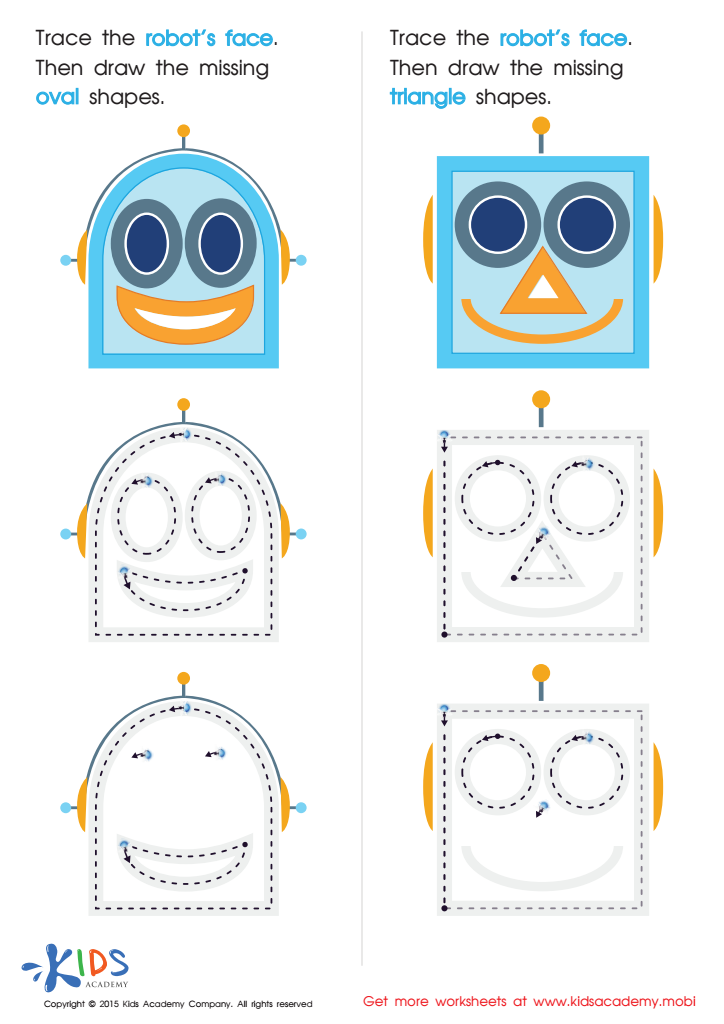
Drawing Ovals And Triangles with Fun Printable
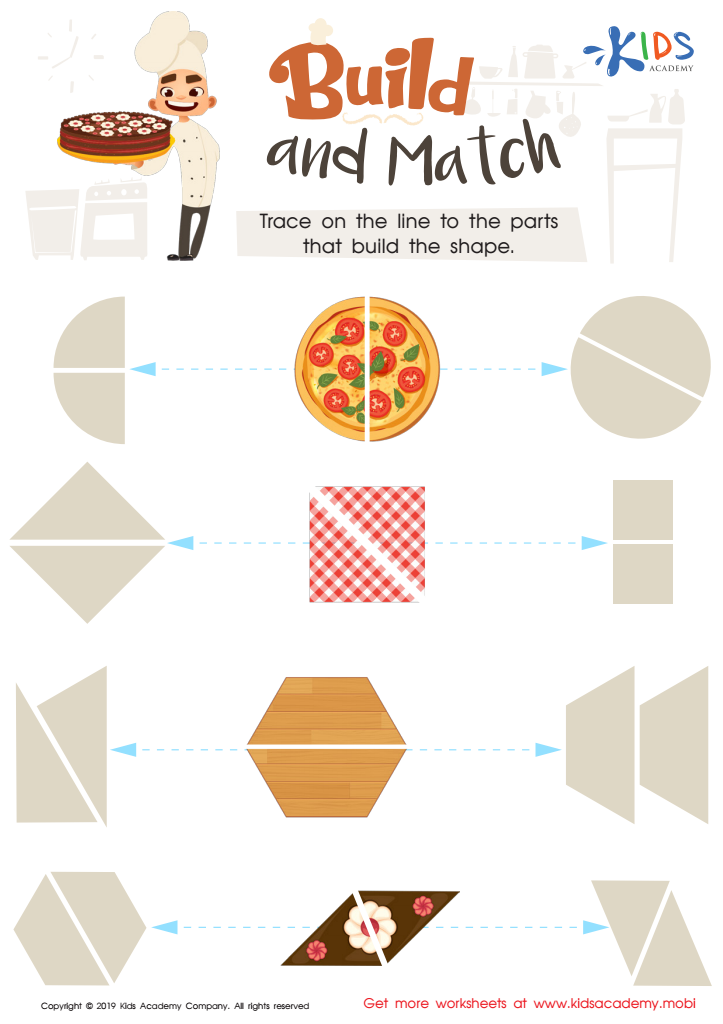
Build and Match Worksheet








Shape recognition is a foundational skill for young learners, especially those between the ages of 5-7. It is crucial for parents and teachers to understand its significance because it impacts various developmental domains. Firstly, recognizing shapes aids in mathematical learning; it builds a basis for understanding geometry, spatial awareness, and basic maths concepts like symmetry, patterns, and measurements. Shapes serve as the building blocks for complex problem-solving skills later in life.
Secondly, it enhances visual discrimination and cognitive development. Children learn to differentiate between various attributes like size, color, and orientation, which improves attention to detail and categorization skills. These abilities are helpful not just in academics but also in daily life, enabling children to organize the world around them effectively.
Moreover, shape recognition supports language development. When children learn the names and properties of shapes, they expand their vocabulary and communication skills. Describing shapes also introduces them to more complex verbs and adjectives, improving linguistic proficiency.
Lastly, it encourages creativity and artistic expression, allowing children to navigate and express their understanding of the environment through drawing and construction games. Overall, nurturing shape recognition in early ages forms a rich foundation for cognitive, linguistic, mathematical, and creative growth, preparing children for future academic and life challenges.