Shape Recognition Easy Fractions of Shapes Worksheets for Ages 5-7
5 filtered results
-
From - To
Discover engaging Shape Recognition Easy Fractions of Shapes Worksheets, specially designed for ages 5-7. These fun, educational worksheets introduce young learners to basic geometry and fractions through colorful and interactive activities. Kids will learn to recognize and name different shapes while understanding simple fractions such as halves and quarters. Perfect for both classroom and home use, these worksheets enhance critical thinking and visual learning skills. Foster a love for math in your child with our easy-to-follow and enjoyable exercises. Download today and watch them master shapes and basic fractions with confidence!
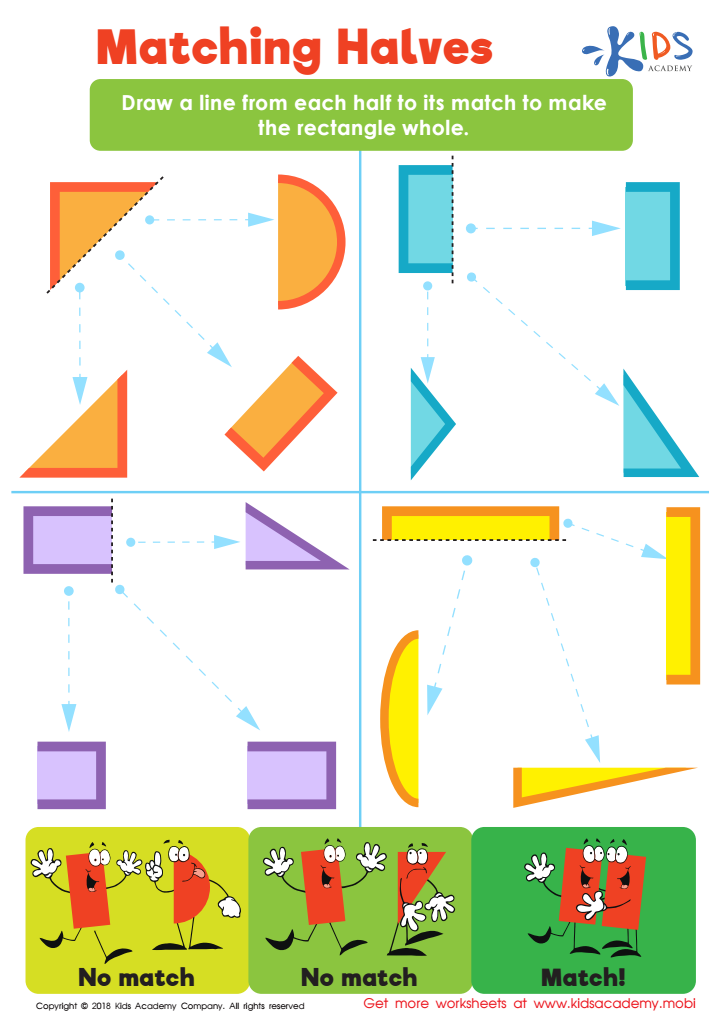
Matching Halves Worksheet
 Assign to My Students
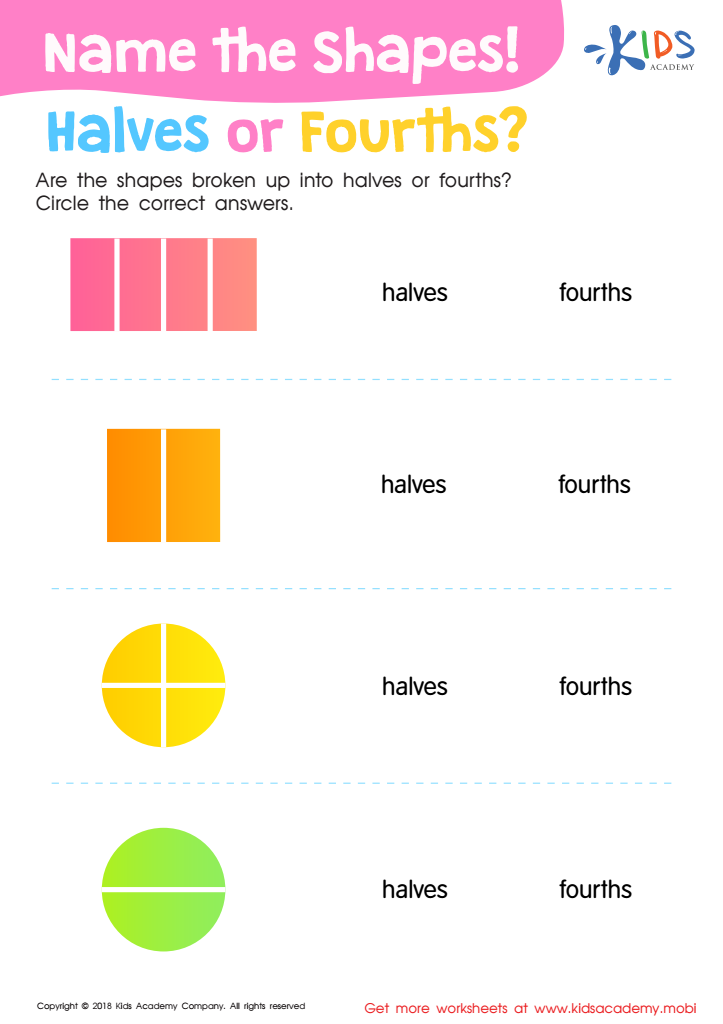
Name the Shapes Halves or Fourths? Worksheet
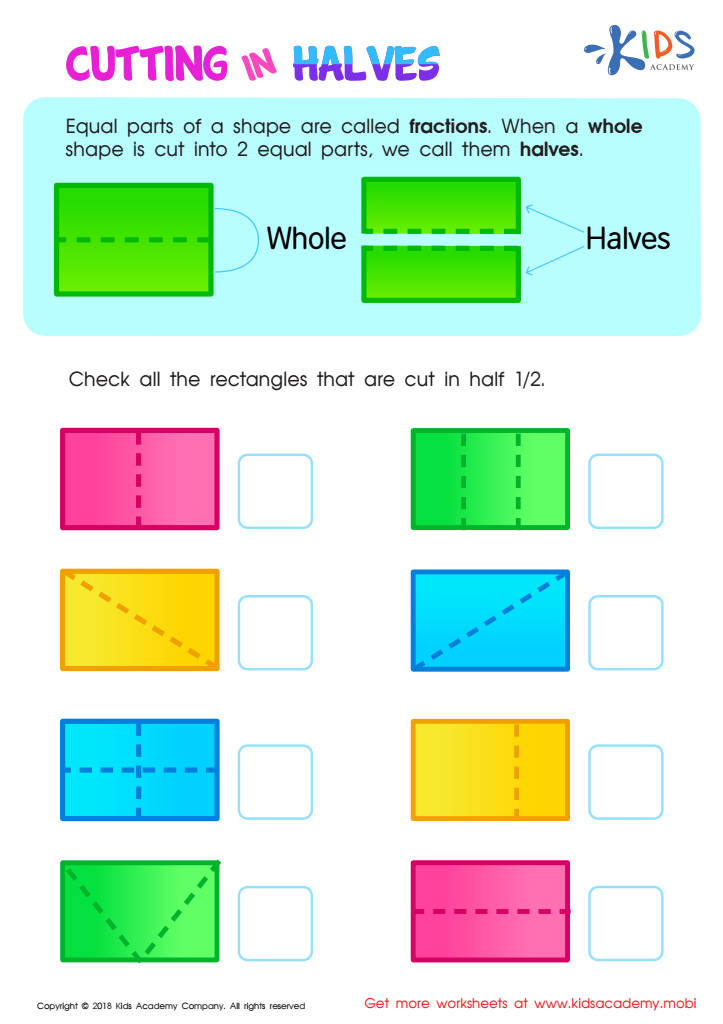
Cutting in Halves Worksheet
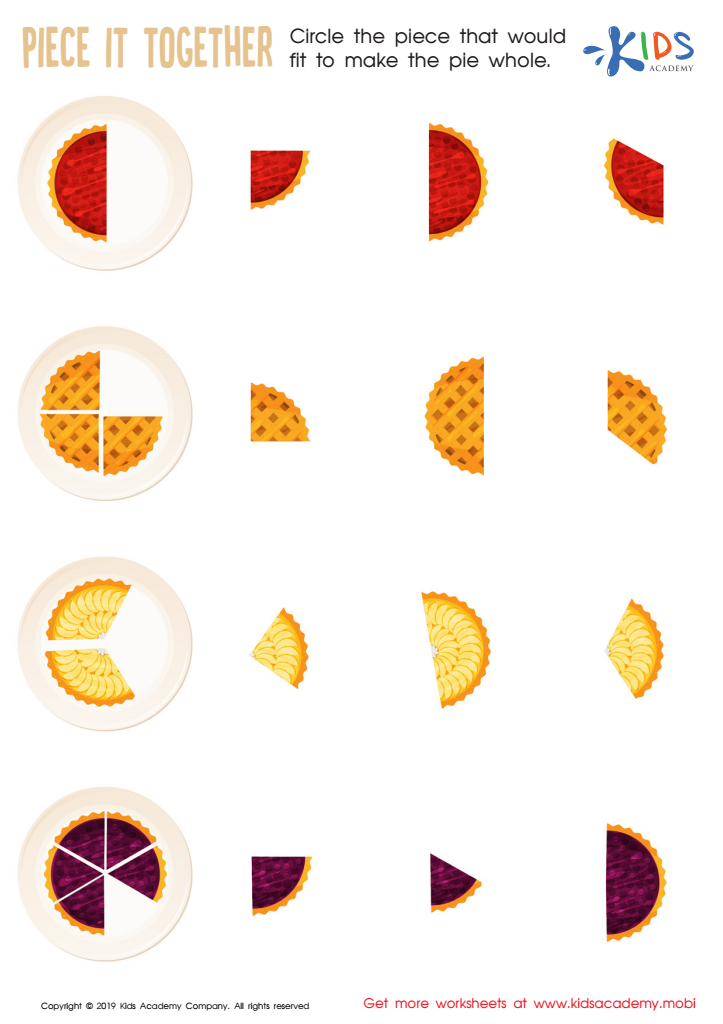
Piece it together Worksheet
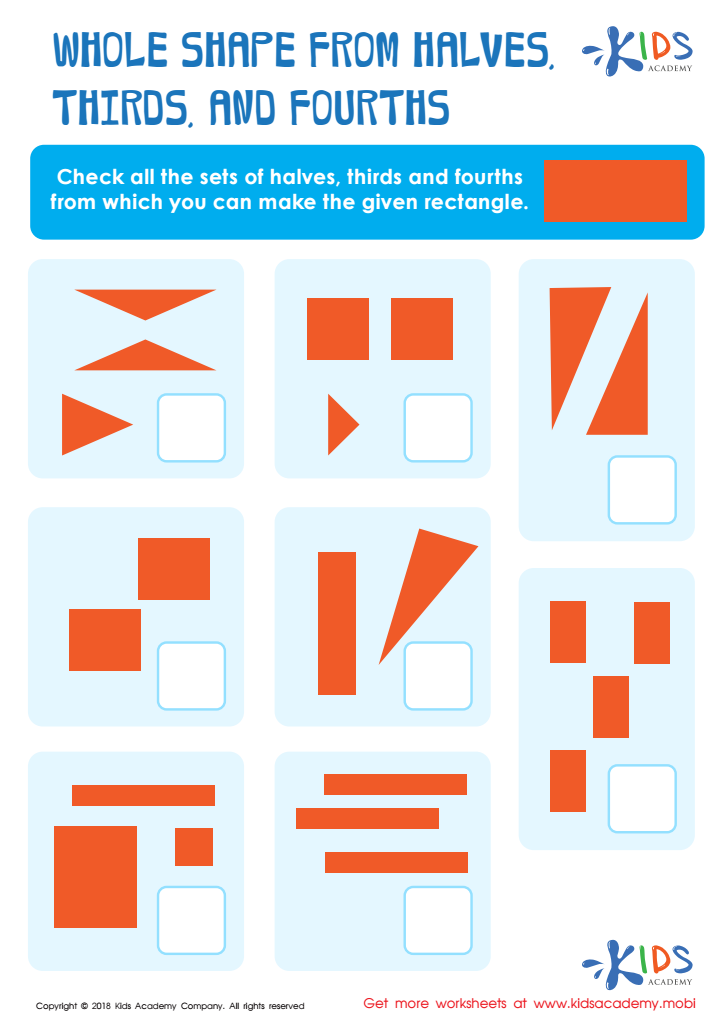
Whole Shape from Halves, Thirds and Fourths Worksheet








Parents and teachers should recognize the importance of shape recognition and early fraction concepts for children aged 5-7 as these foundational skills contribute significantly to early math development. First, understanding shapes builds visual-spatial awareness, essential for problem-solving and understanding more complex math concepts later. By identifying and distinguishing between different shapes, children start to recognize patterns and categorize objects, which supports logical reasoning.
Fractional awareness begins with familiar everyday shapes, like halves and quarters. When children learn to divide shapes into parts, they develop a base for more complex arithmetic and fractions. This tangible understanding of division helps them visualize proportions and ratios. It’s a practical skill that connects math to real-world situations, making math feel relevant and engaging at an early age.
Furthermore, these activities often strengthen fine motor skills as children trace or cut shapes. The hands-on part of the learning process aids cognitive retention while boosting their confidence in handling geometric tools and concepts.
Ultimately, early exposure to shape recognition and fraction integration forms a cornerstone for future learning, making abstract concepts manageable and setting the stage for academic success. Supporting children in these areas nurtures a positive attitude towards math, laying the groundwork for robust critical thinking skills.