
Data interpretation Easy Math Worksheets for Ages 5-7
10 filtered results
Difficulty Level
Grade
Age
-
From - To
Subject
Activity
Standards
Discover engaging and educational Data Interpretation Easy Math Worksheets designed specifically for children aged 5-7! These worksheets make learning data interpretation fun and simple, helping young learners understand how to read graphs, charts, and tables. With colorful visuals and interactive activities, kids will develop essential math skills while building confidence in their analytical abilities. Each worksheet is thoughtfully crafted to align with early learning standards, ensuring that children gain a strong foundation in interpreting data. Perfect for home or classroom use, these worksheets provide an enjoyable way for children to enhance their math skills and develop critical thinking from an early age!
Favorites
With answer key
Interactive
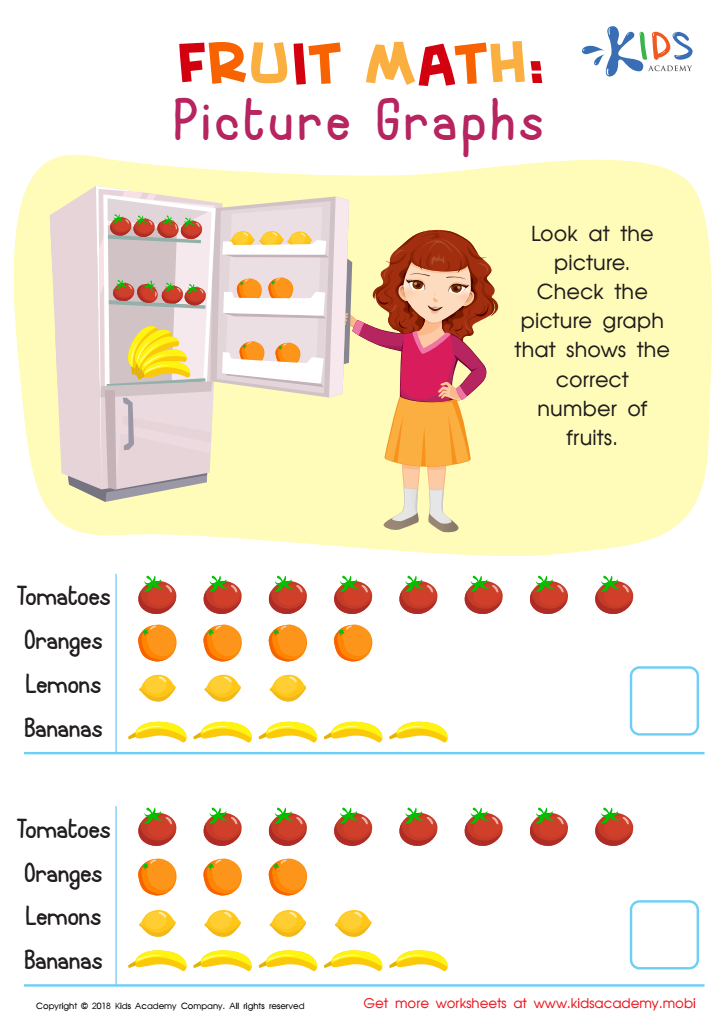
Fruit Math: Picture Graphs Worksheet
Help your child learn to draw graphs by having them look at pictures. Ask them to identify a graph that accurately portrays the data and have them explain why. This will prepare them to easily draw more complex graphs in the future. For example, have them look at the picture with the number of fruits in the colorful worksheet and explain why the graph is accurate.
 Assign to My Students
Fruit Math: Picture Graphs Worksheet
Worksheet
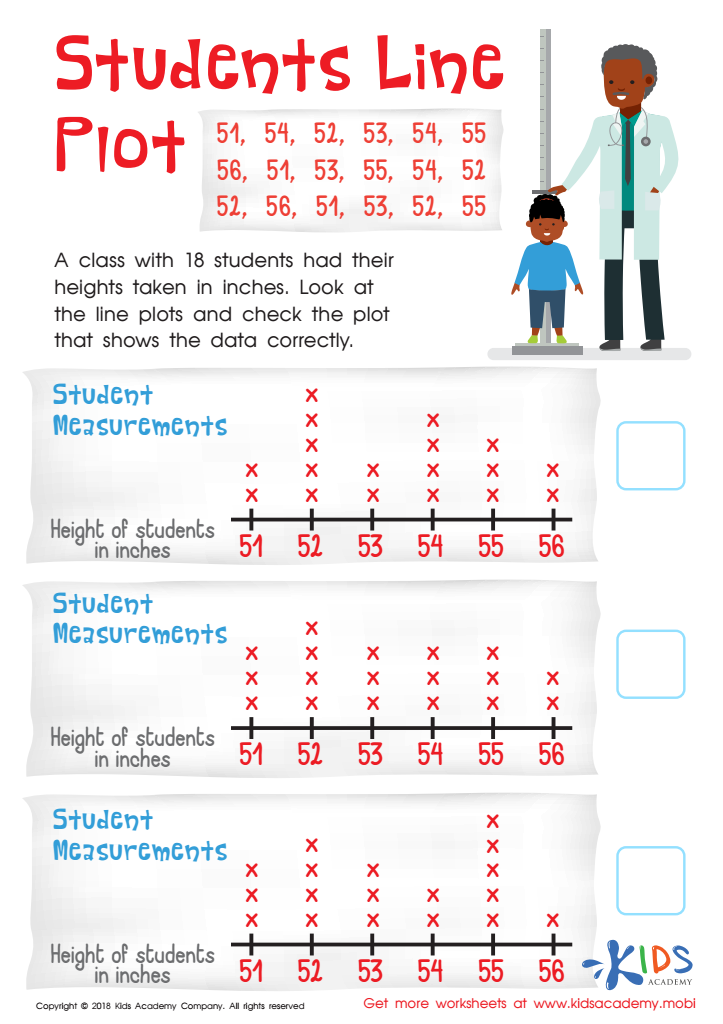
Students Line Plot Worksheet
Help your students learn to draw a line plot correctly by giving real examples. In this exercise, they must check the data of a class of 18 students' heights (in inches). Have them compare two line plots and figure out which one is correct.
Students Line Plot Worksheet
Worksheet
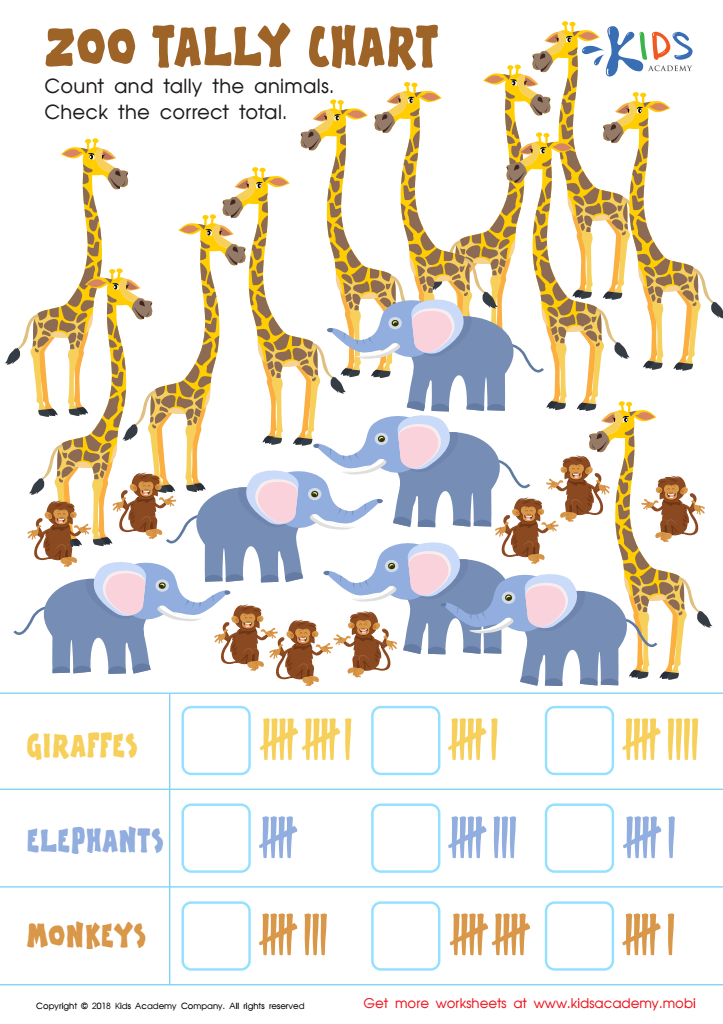
Zoo Tally Chart Worksheet
Your young mathematician will have fun counting and tallying zoo animals on this worksheet! Giraffes, elephants and monkeys - all accurately tallied at the bottom. They will assign values to each animal group to find the answer. It's math but they won't know it - it's a zoo out there!
Zoo Tally Chart Worksheet
Worksheet
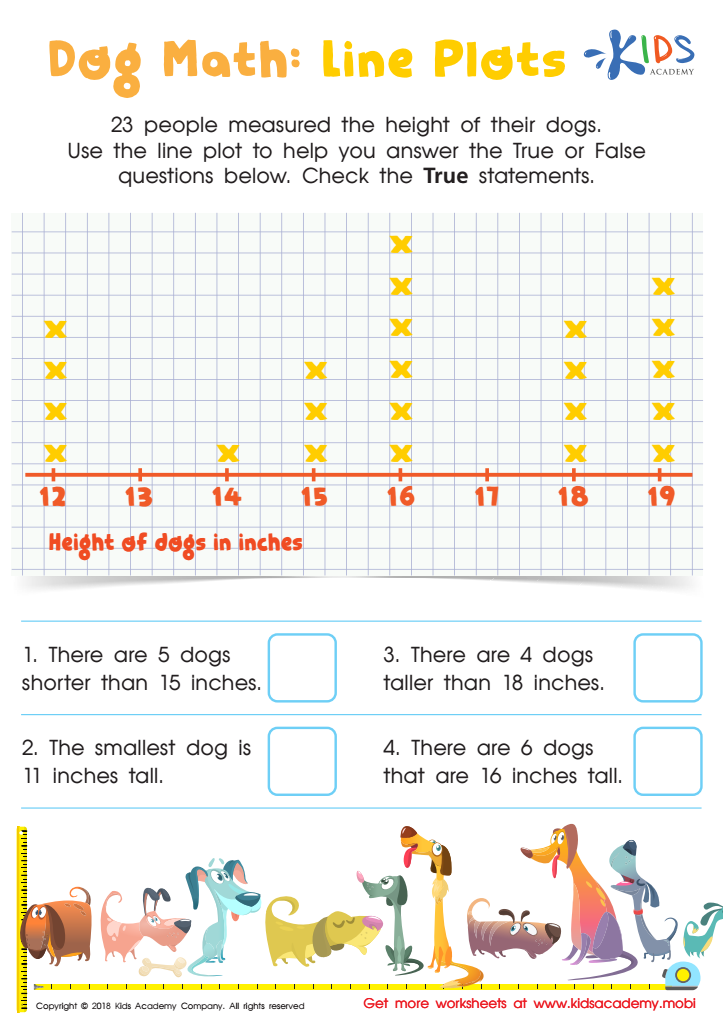
Dog Math: Line Plots Worksheet
Do your kids love dogs? If you have family pets, your kids may be excited to do this worksheet. It involves a line plot and True/False questions about 23 people measuring their dogs' heights. Assist your kids in verifying the statements that are True.
Dog Math: Line Plots Worksheet
Worksheet
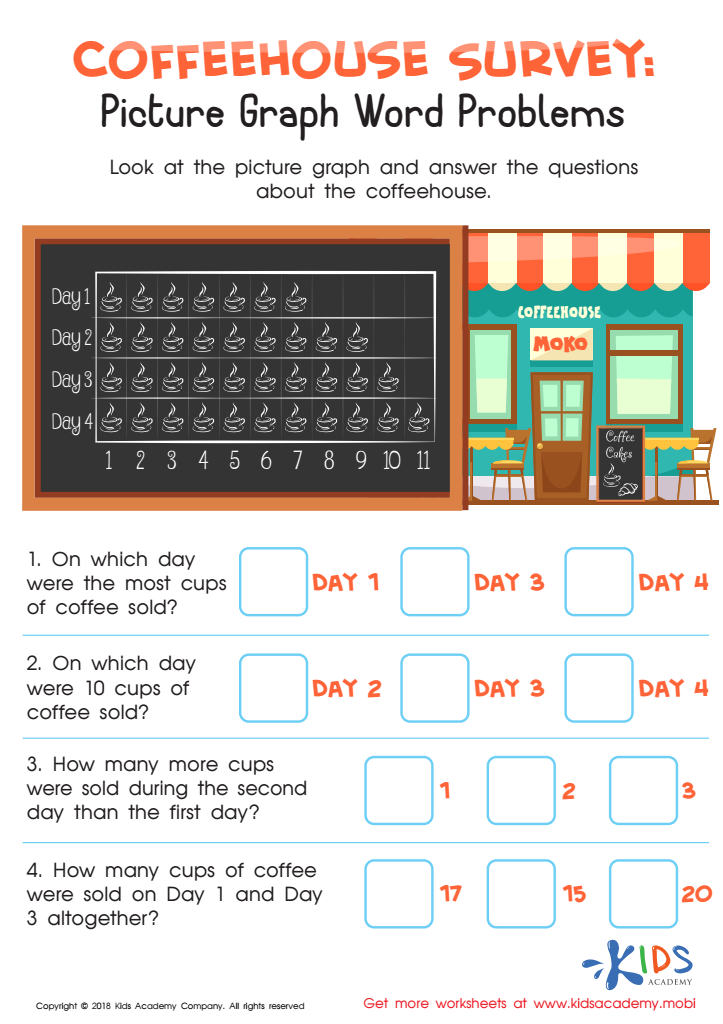
Coffeehouse Survey: Picture Graph Word Problems Worksheet
This coffeehouse survey helps children interpret pictures and answer questions. Your child will look at a picture graph displaying daily coffee cup sales from Day 1 to Day 4. Aid them in answering questions on the number of cups sold and which day had the most sales.
Coffeehouse Survey: Picture Graph Word Problems Worksheet
Worksheet
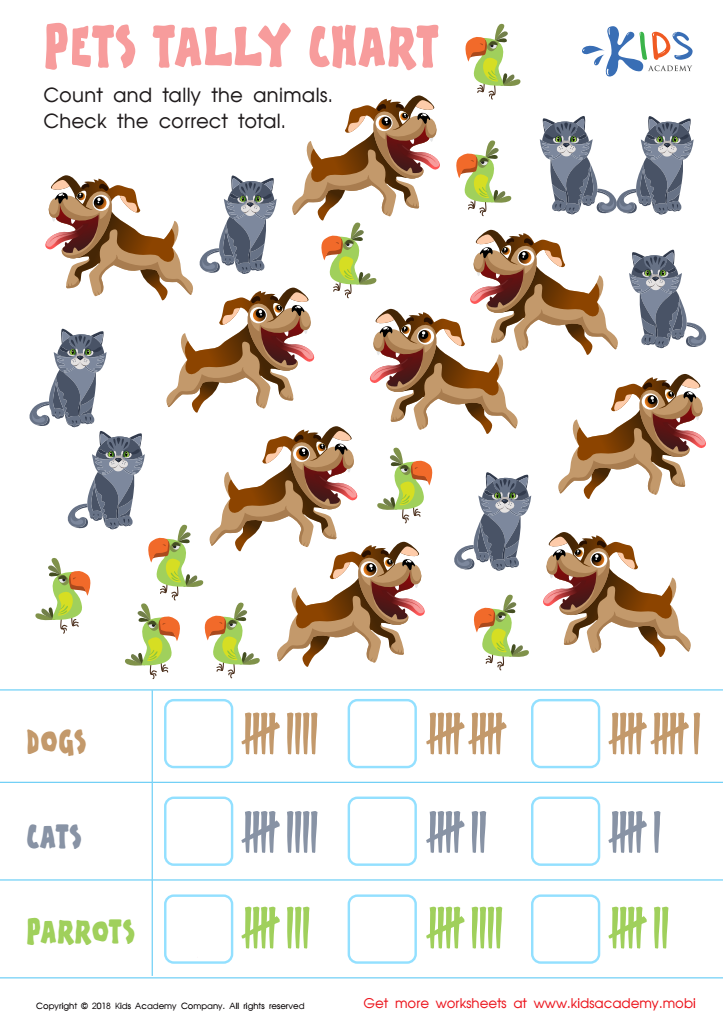
Pets Tally Chart Worksheet
Let your little mathematician count and tally the animals with this fun PDF worksheet. They'll assign value to each pet type and select the correct answer. It's a great way to practice number reasoning and learn how tallying helps keep math organized and efficient when solving equations.
Pets Tally Chart Worksheet
Worksheet
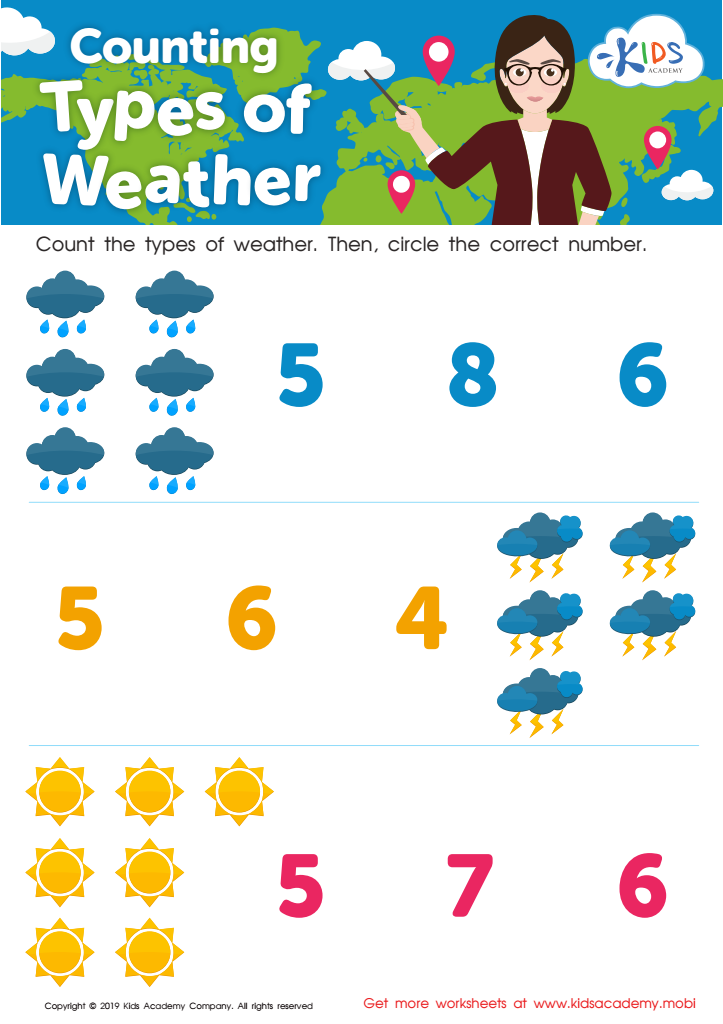
Counting Types of Weather Worksheet
Have your students look outside and tell you the weather today. Get kindergartners thinking by asking them to name different types of weather. Point to each one in the picture and get them to tell you what it is. Then, have them count the types and circle the number.
Counting Types of Weather Worksheet
Worksheet
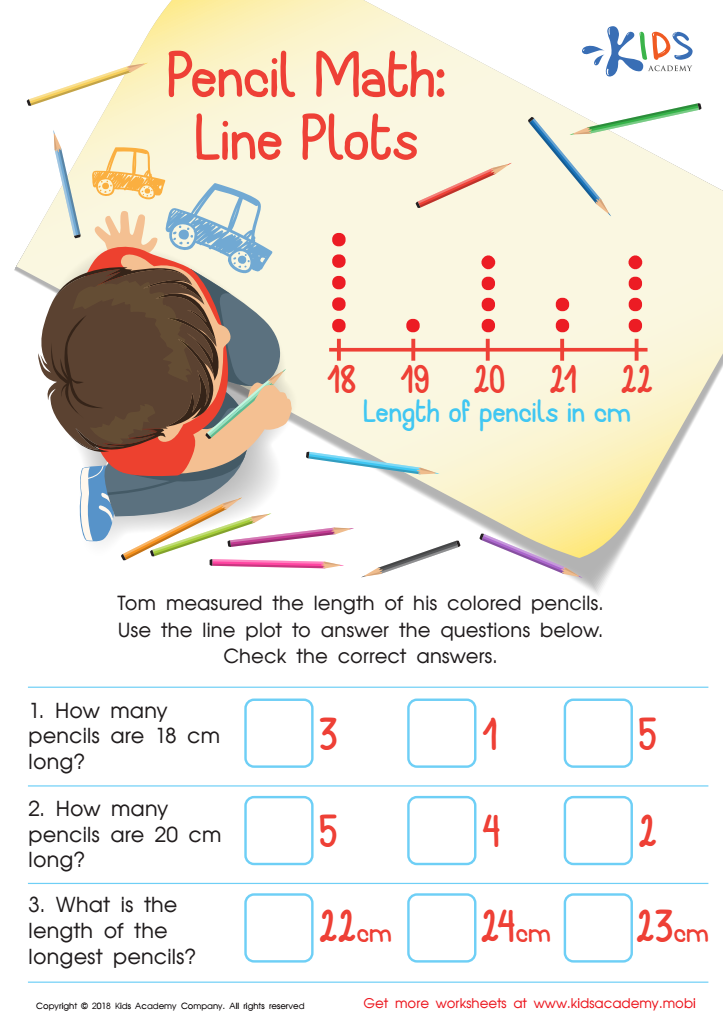
Pencil Math: Line Plots Worksheet
Your child will meet Tom in this worksheet, helping him find the length of his colored pencils. Tom has written the lengths in cm, and the line plot will help your kids answer the questions. Check the correct answers for each, including how many pencils are of a certain length. The line plot makes it easy to find the answers.
Pencil Math: Line Plots Worksheet
Worksheet
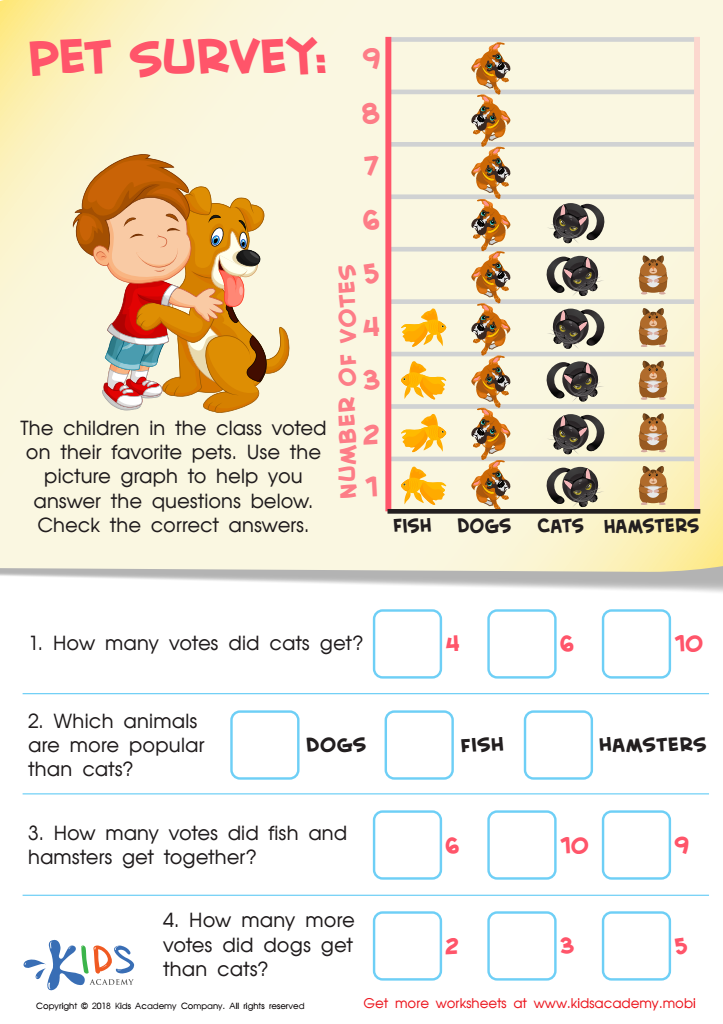
Pet Survey Worksheet
Do you have a furry family member? If the answer is yes and your kids love animals, they'll enjoy this worksheet. The picture graph shows the children's votes for their favorite pet - fish, dog, cat and hamster. Ask your child to use the graph to answer the questions. Guide them to check the right answer.
Pet Survey Worksheet
Worksheet
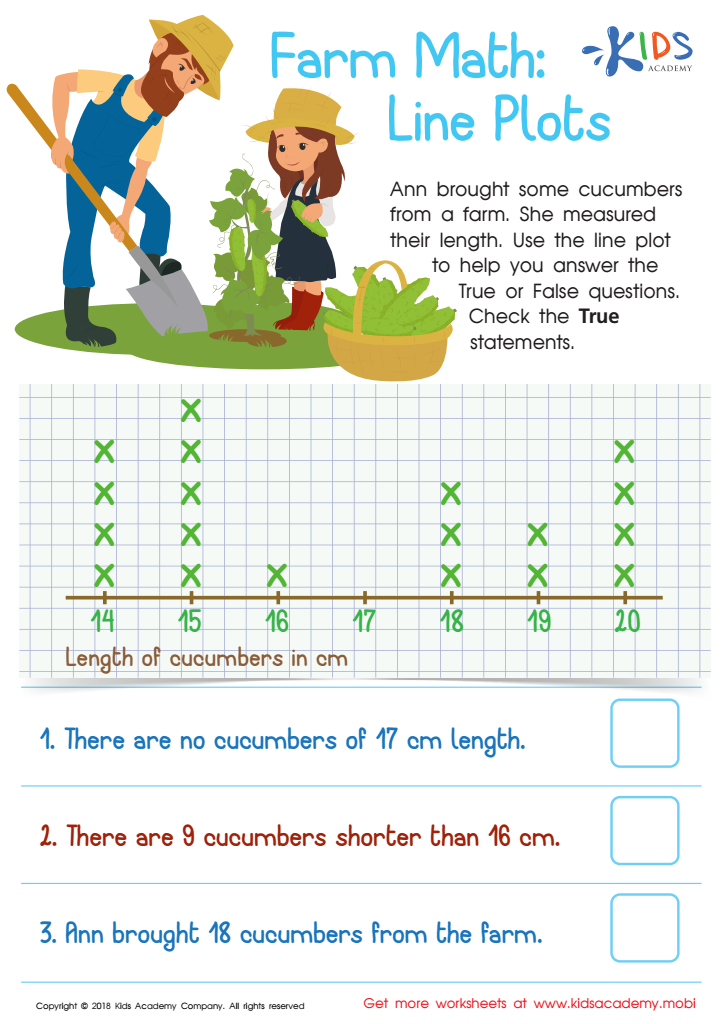
Farm Math: Line Plots Worksheet
Ann brought cucumbers from a farm and measured their length. She drew a line plot for your students to use to answer True/False questions about the number and length of the cucumbers. Ask your students to check only the True statements. (80 words)
Farm Math: Line Plots Worksheet
Worksheet
Join Kids Academy for Free
Who is primarily going to use this learning content?







Understanding data interpretation in early education is crucial for children aged 5-7, as it lays the foundation for critical thinking and analytical skills. Parents and teachers should care about this concept because it not only introduces basic mathematical principles but also helps children make sense of the world around them.
At this age, students are naturally curious and eager to explore patterns and relationships. Engaging them in data interpretation activities, such as reading simple charts or sorting objects by various attributes, promotes active learning and fosters curiosity. These activities encourage them to communicate their findings and learn to ask questions, which are essential skills in any educational journey.
Moreover, skills in data interpretation support cross-disciplinary learning. For instance, when children learn to collect and represent data about their classmates’ preferences or weather patterns, they also enhance their literacy, social studies, and science skills.
As parents and teachers nurture these foundational competencies, they empower children to develop informed decision-making skills and a greater understanding of statistical thinking, preparing them not only for future math challenges but also for navigating everyday life tasks with confidence. Thus, investing time in teaching data interpretation is an invaluable step in a child's educational journey.








