Visual discrimination Easy Math Worksheets for Ages 5-7
3 filtered results
-
From - To
Boost your child's mathematical skills with our "Visual Discrimination Easy Math Worksheets" designed for ages 5-7! These engaging and colorful worksheets are specifically crafted to help young learners enhance their ability to recognize differences and similarities among shapes, sizes, and patterns. By sharpening visual discrimination, students will strengthen their problem-solving skills and set a solid foundation for future math success. Our resources encourage interactive learning, making math enjoyable and accessible. Perfect for classroom use or home practice, our worksheets cater to every child's learning pace. Start your child’s journey toward mathematical confidence today with these fun and educational activities!
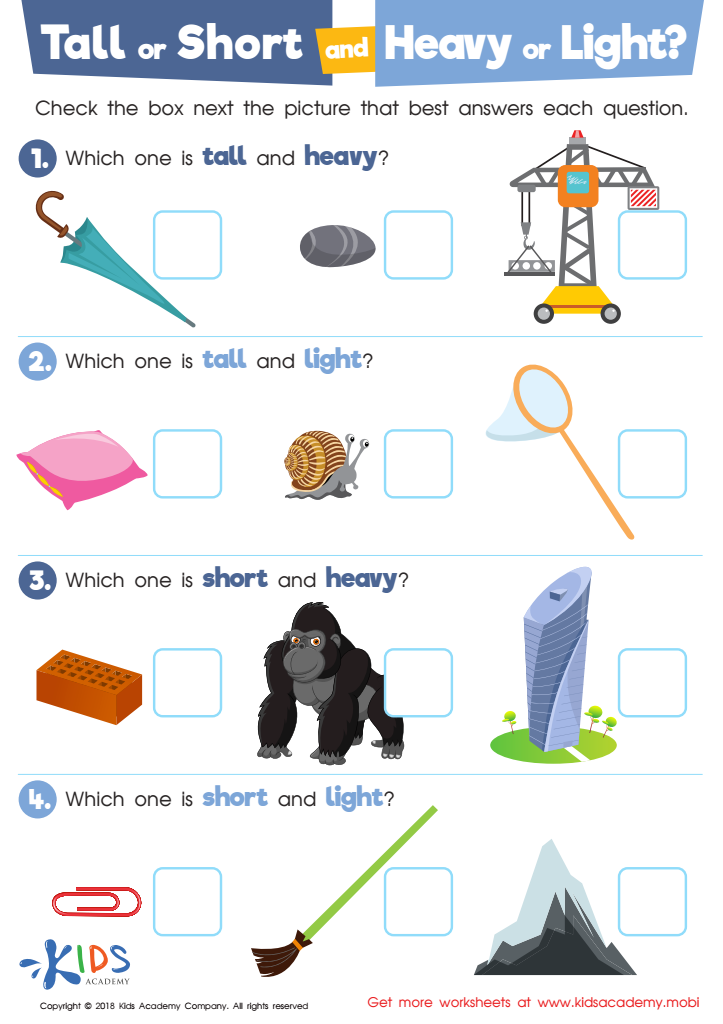
Tall or Short and Heavy or Light? Worksheet
 Assign to My Students
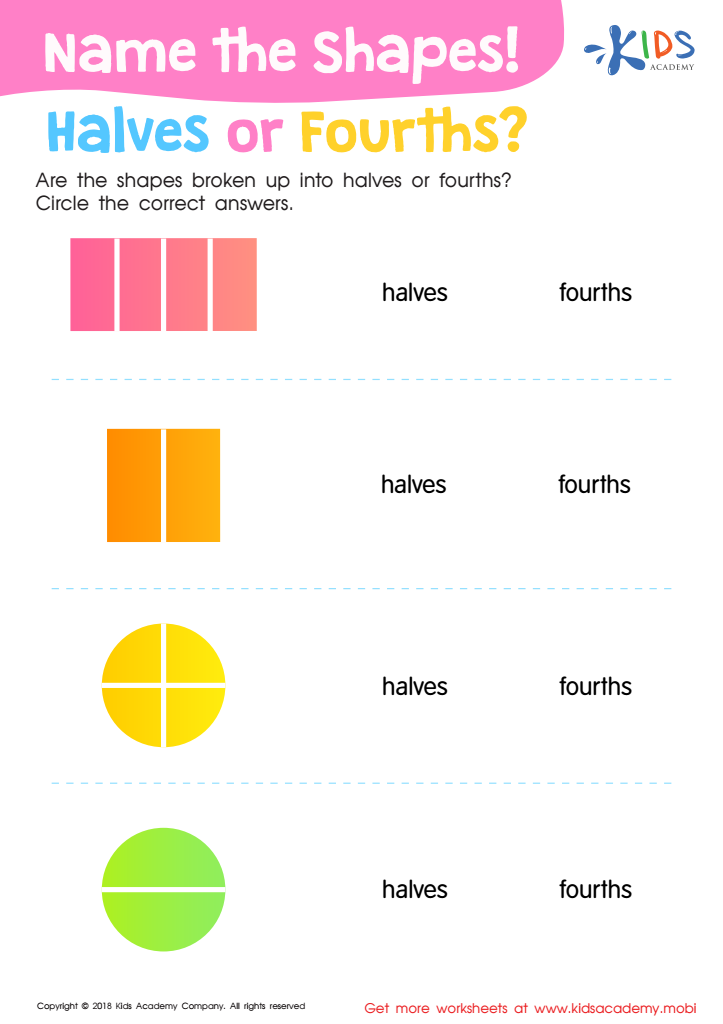
Name the Shapes Halves or Fourths? Worksheet
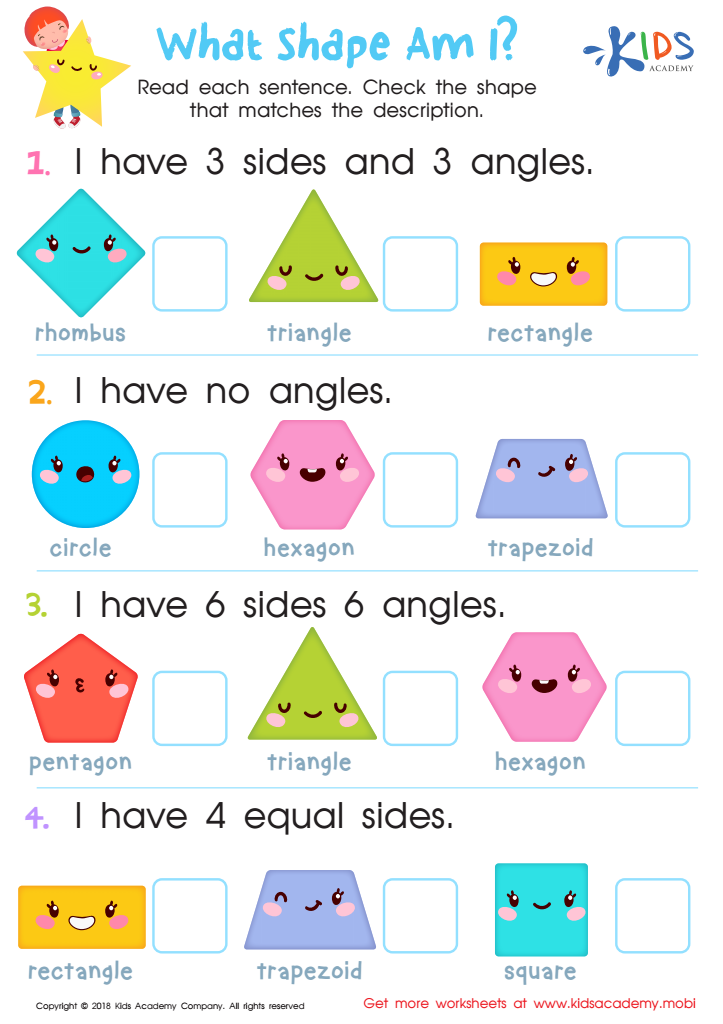
What Shape Am I? Worksheet


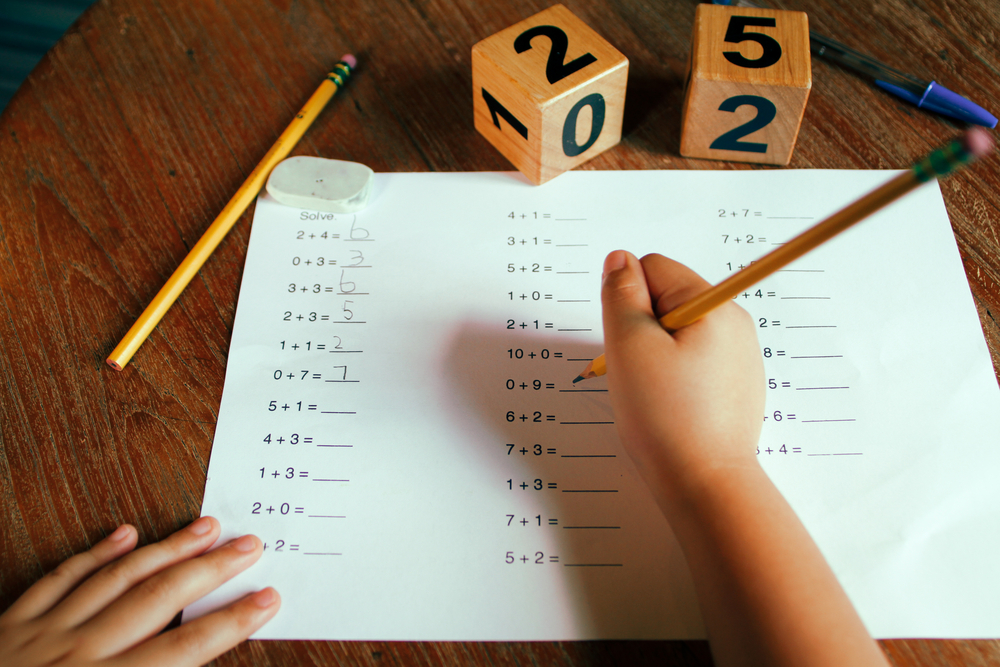





Visual discrimination is a crucial skill for young learners, particularly in the context of math, as it involves the ability to differentiate shapes, sizes, and patterns. For children aged 5-7, developing strong visual discrimination skills can significantly enhance their mathematical understanding and problem-solving abilities.
Here’s why parents and teachers should care:
Firstly, visual discrimination underpins many foundational math concepts, such as recognizing numbers and understanding geometry. When children can accurately identify and compare different visual information, they find it easier to grasp counting, addition, subtraction, and spatial awareness.
Secondly, early math proficiency predicts future academic success. Skills gained during these formative years can set the tone for a child’s ongoing approach to learning and self-confidence in mathematics.
Lastly, fostering visual discrimination supports overall cognitive development. It helps children improve their attention to detail, memory, and critical thinking skills, which are essential not only in math but across all subjects.
Engaging children in activities that enhance visual discrimination—like puzzles, sorting games, and pattern recognition—benefits their all-around development, making parents and teachers vital partners in cultivating these foundational skills. By emphasizing visual discrimination, they are investing in their child's future academic journey.








