Letter recognition Easy Reading Worksheets for Ages 5-7
3 filtered results
Difficulty Level
Grade
Age
-
From - To
Subject
Activity
Standards
Discover our engaging Letter Recognition Easy Reading Worksheets designed for children ages 5-7! These thoughtfully crafted activities promote essential literacy skills while making learning fun. Each worksheet features vibrant illustrations and interactive exercises that help young learners identify and differentiate letters, enhancing their reading readiness. You'll find a variety of activities, including matching, tracing, and coloring, all tailored to suit various skill levels. Perfect for home or classroom use, these worksheets foster independent learning and boost confidence. Experience the joy of reading as your child develops a strong foundation in letter recognition with our delightful resources! Start their learning journey today!
Favorites
With answer key
Interactive
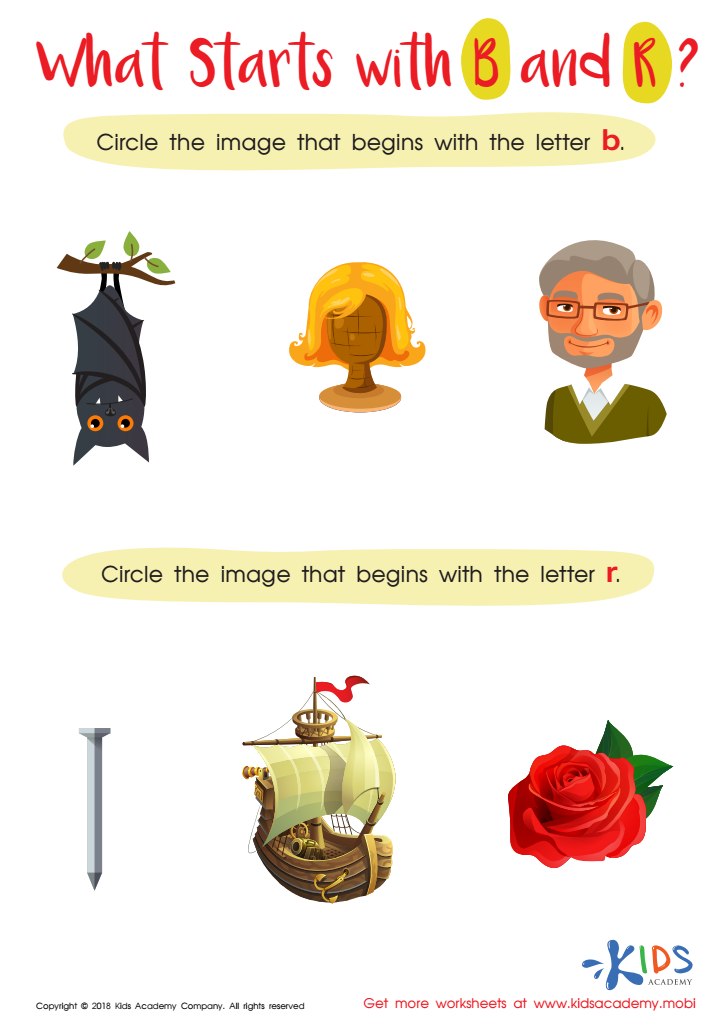
What Starts with B and R? Worksheet
Download this worksheet to help young readers practice visual and motor skills! They'll enjoy matching pictures with "B" and "R" letters while tracing the images. Bright and colorful, this engaging activity will help kids differentiate between words and have fun doing it.
 Assign to My Students
What Starts with B and R? Worksheet
Worksheet
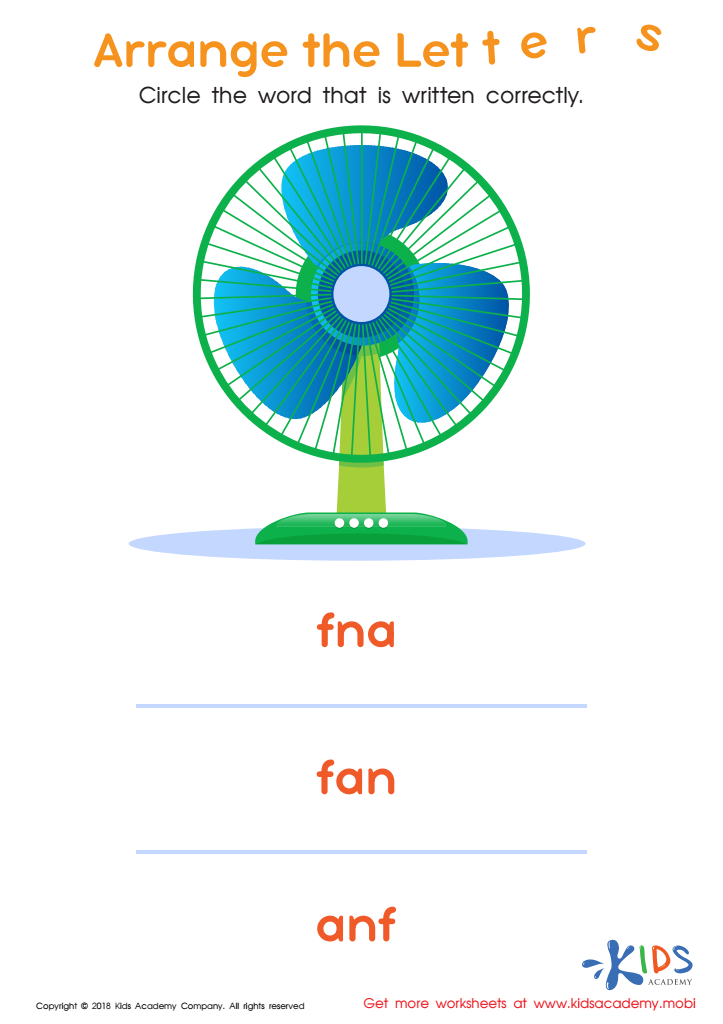
Arrange the Letters Worksheet
Test your kids' spelling skills with this worksheet! Show them the picture and ask what it stands for. Then, have them choose the correct spelling from the options given. Check their answer by circling the right one.
Arrange the Letters Worksheet
Worksheet
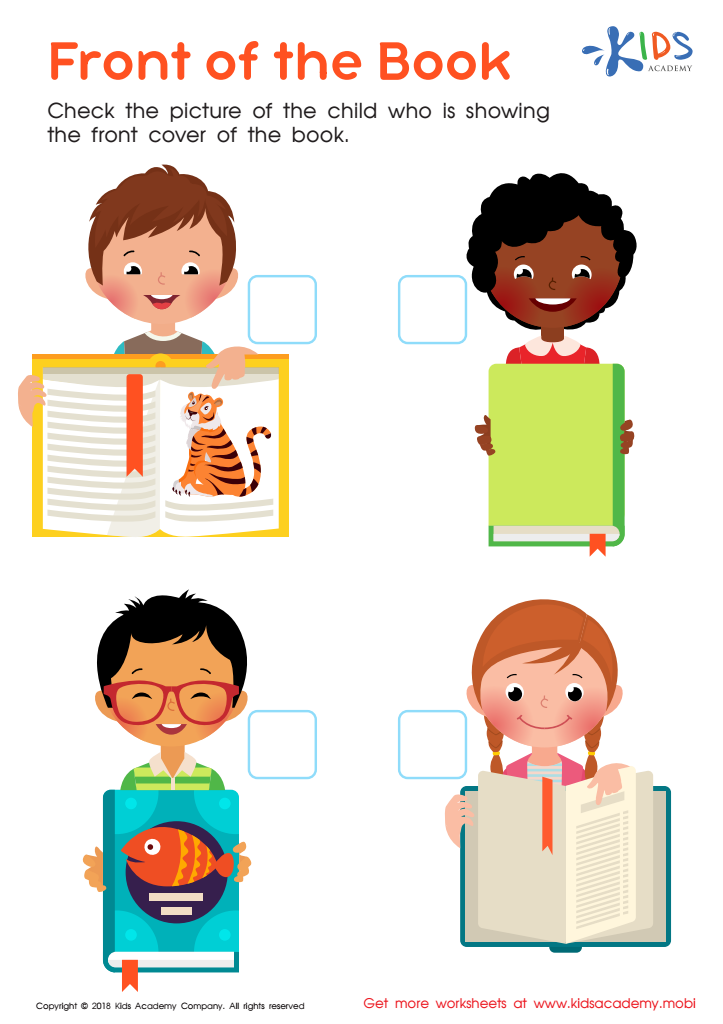
Front of the Book Worksheet
Help your child become a reader with this free worksheet! It's full of fun new friends and is designed to help kids understand concepts about the front of a book. They'll look at each picture and decide which friend is holding the book with the front cover, and check off the correct answer in the given boxes. Get your little one ready to be a reader!
Front of the Book Worksheet
Worksheet
Join Kids Academy for Free
Who is primarily going to use this learning content?






Letter recognition is a foundational skill pivotal to a child's early literacy development. For parents and teachers of children aged 5-7, emphasizing this skill holds immense importance as it serves as the building block for reading and writing. When kids can identify letters, they begin to understand the connections between sounds and symbols, which is essential for phonics and spelling.
Children who struggle with letter recognition may face challenges in their reading journey, potentially leading to future difficulties in their academic careers. Early intervention, such as engaging activities focused on letter recognition, can cultivate a love for reading and foster confidence in young learners.
Moreover, early reading skills contribute to cognitive development and improve overall communication abilities. Recognizing letters also enables children to decode words, comprehend text, and express themselves effectively, essential skills in today’s world.
By prioritizing letter recognition through fun and interactive practices, parents and teachers not only speed up literacy development but also instill a positive attitude towards reading. This engagement lays the groundwork for lifelong learning, encouraging children to explore the world through books and inspiring them to become avid readers. Encouraging letter recognition today can lead to smarter, more literate generations tomorrow!