Understanding life cycles Easy Reading Comprehension Worksheets for Ages 5-7
3 filtered results
-
From - To
Discover the wonders of nature with our "Understanding Life Cycles Easy Reading Comprehension Worksheets" designed for children ages 5-7. These engaging worksheets introduce young learners to the fascinating journey of living organisms, from birth to adulthood. Each activity is crafted to enhance reading skills, comprehension, and critical thinking while making learning fun and interactive. Students will explore various life cycles, including plants, animals, and insects, through vibrant illustrations and relatable texts. Perfect for homeschoolers or classroom settings, these worksheets foster curiosity and help children connect with the world around them. Dive into the adventure of life cycles today!
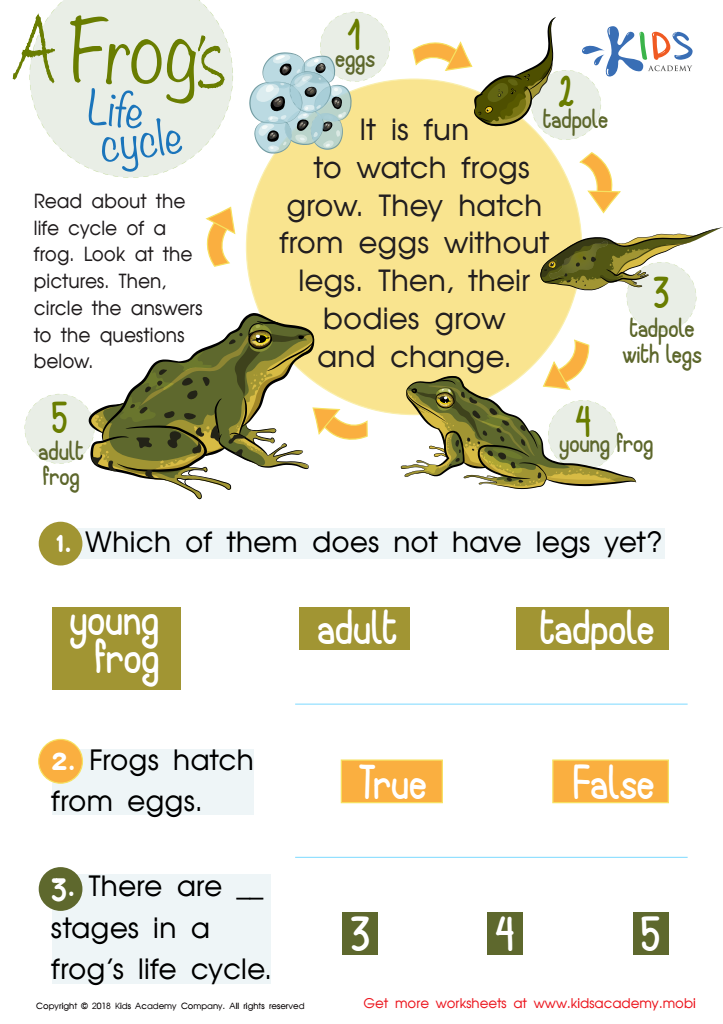
A Frog’s Life Cycle Worksheet
 Assign to My Students
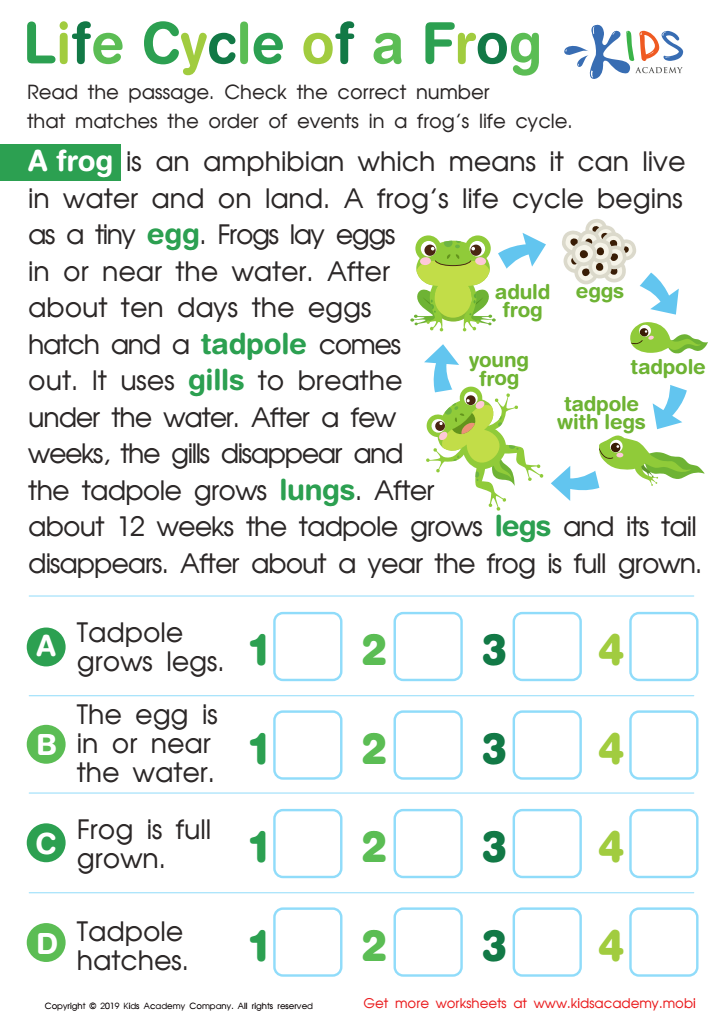
Life Cycle of a Frog Worksheet
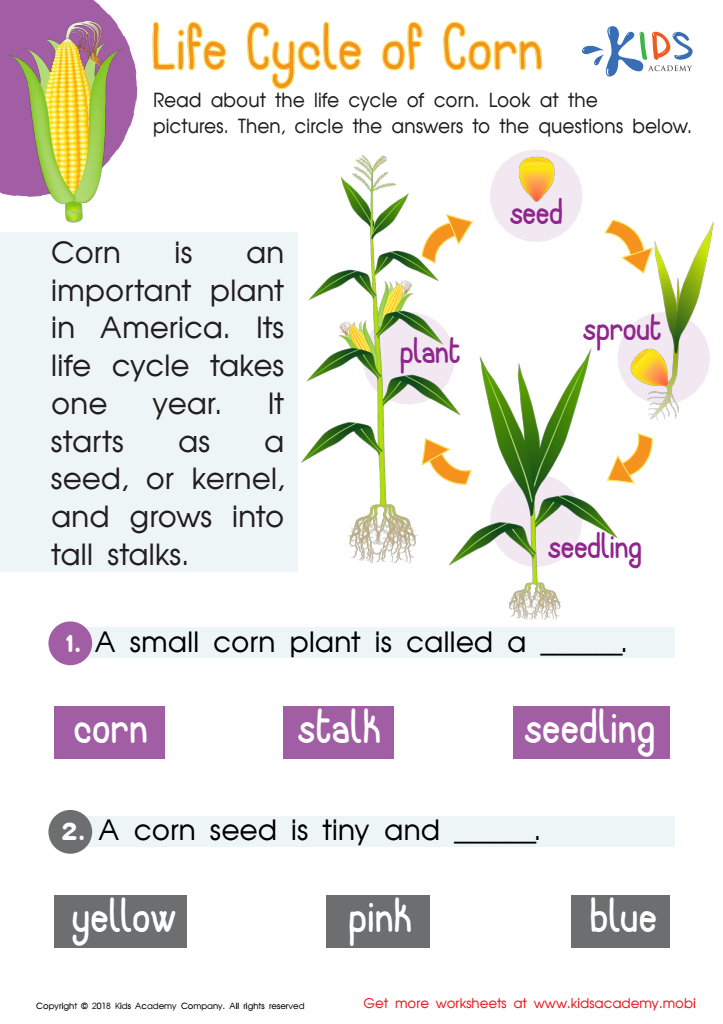
Life Cycle of Corn Worksheet








Understanding life cycles is essential for young learners, as it not only enriches their knowledge of the natural world but also fosters critical thinking and curiosity. For ages 5-7, life cycles—like those of plants, insects, and animals—are fascinating and relatable topics. By exploring how living things grow, reproduce, and change, children develop an awareness of the interconnectedness of life.
Parents and teachers should care about teaching life cycles because it promotes observation skills. Children learn to notice and appreciate details in their environment, such as budding flowers or caterpillars transforming into butterflies. These lessons spark discussions about nature, encouraging communication and vocabulary development.
Furthermore, life cycle education supports hands-on learning. Activities like planting seeds or observing the growth of a caterpillar can enhance engagement and retention, making learning enjoyable. It cultivates a sense of responsibility and respect for living things.
Additionally, understanding life cycles can foster empathy and environmental awareness. Children learn that all creatures have their unique journeys and that we have a role in caring for our planet. For parents and teachers, instilling an appreciation of life cycles lays the foundation for responsible, informed future citizens who appreciate the wonders of nature.