Fraction comparison Easy Worksheets for Ages 5-8
3 filtered results
-
From - To
Introducing our "Fraction Comparison Easy Worksheets for Ages 5-8," meticulously designed to make learning fractions fun and accessible for young children. Our playful and engaging worksheets provide a strong foundation in understanding and comparing fractions through visually appealing activities tailored for early learners. Helping your child grasp this essential mathematical concept is now easier than ever with colorfully illustrated exercises that encourage active participation and critical thinking. Perfect for both classroom and at-home learning, these worksheets will bolster your child's confidence and foster a love for math. Join Kids Academy to give your child the head start they deserve!
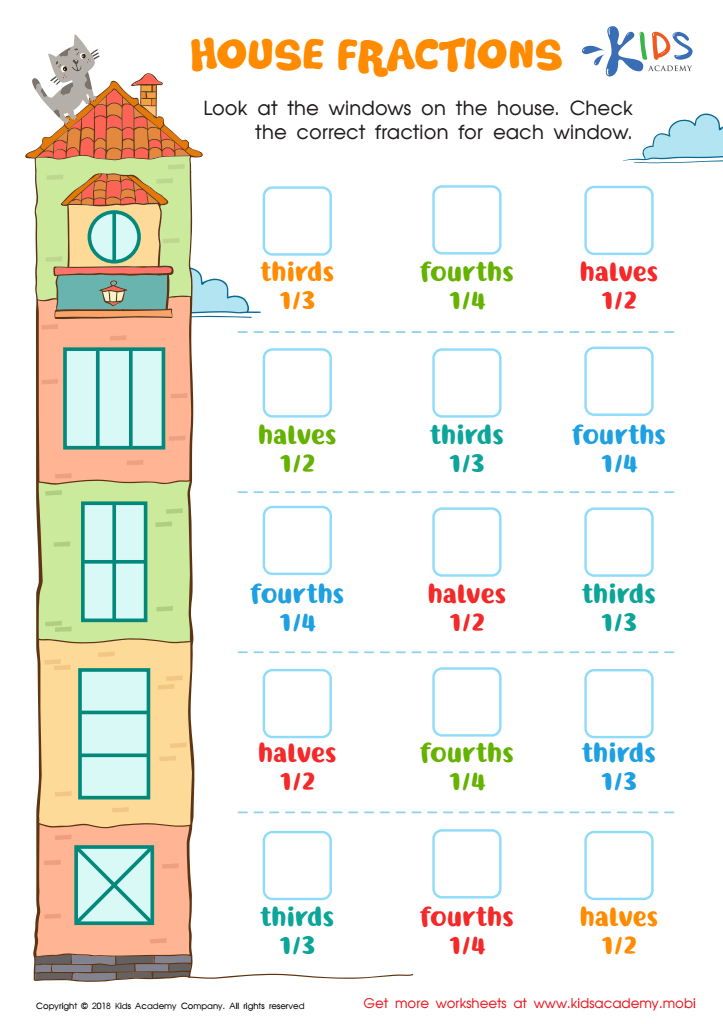
House Fractions Worksheet
 Assign to My Students
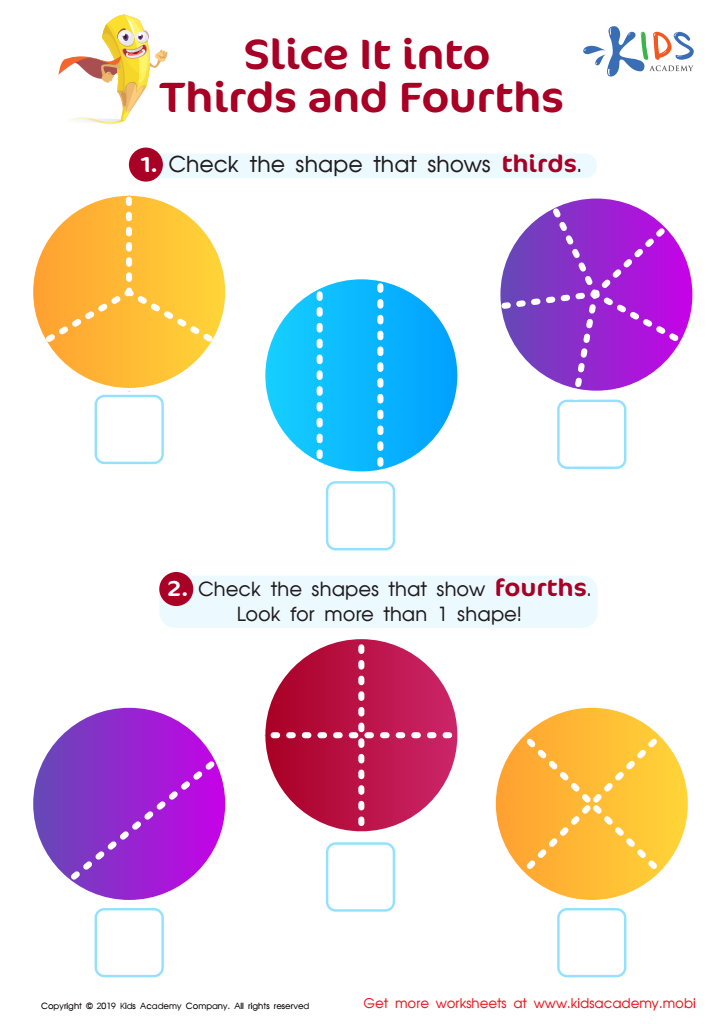
Slice in Thirds Fourths Worksheet
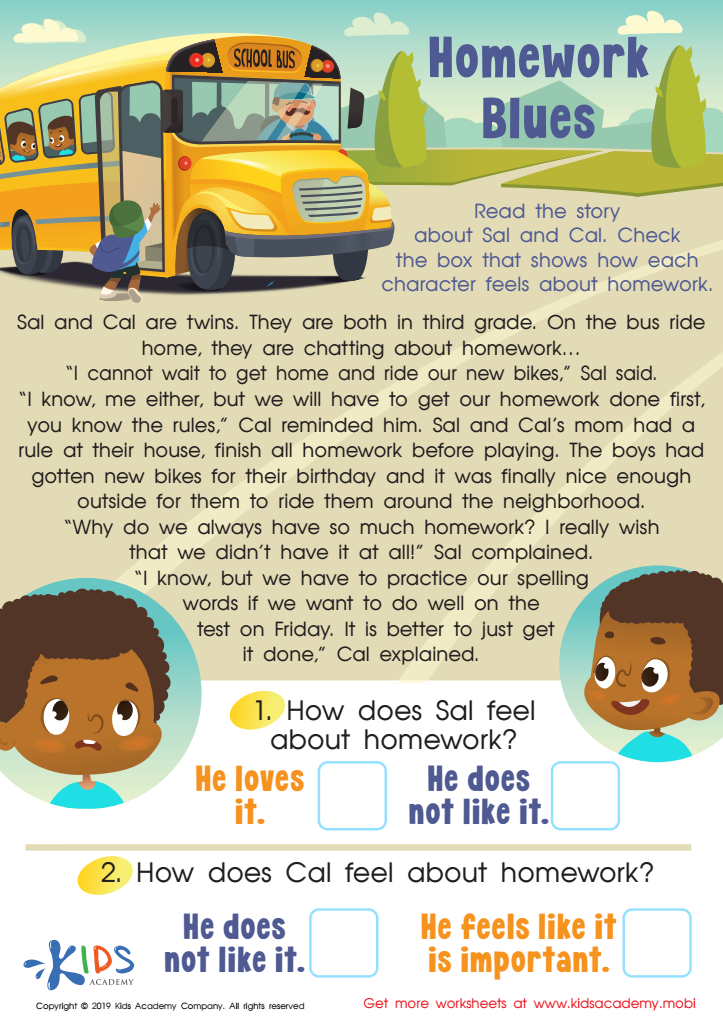
Homework Blues Worksheet




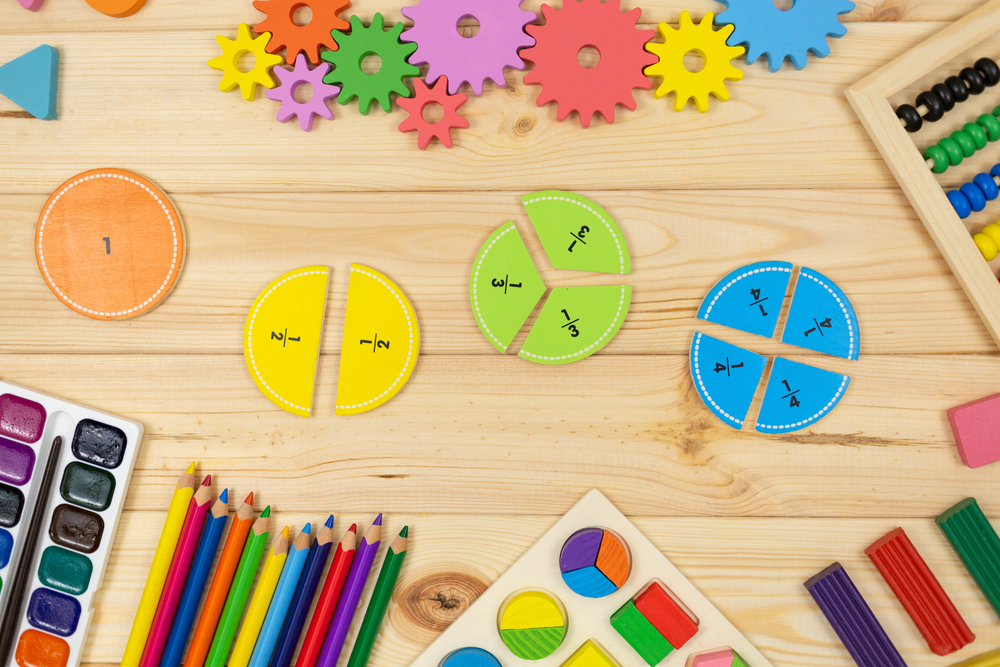

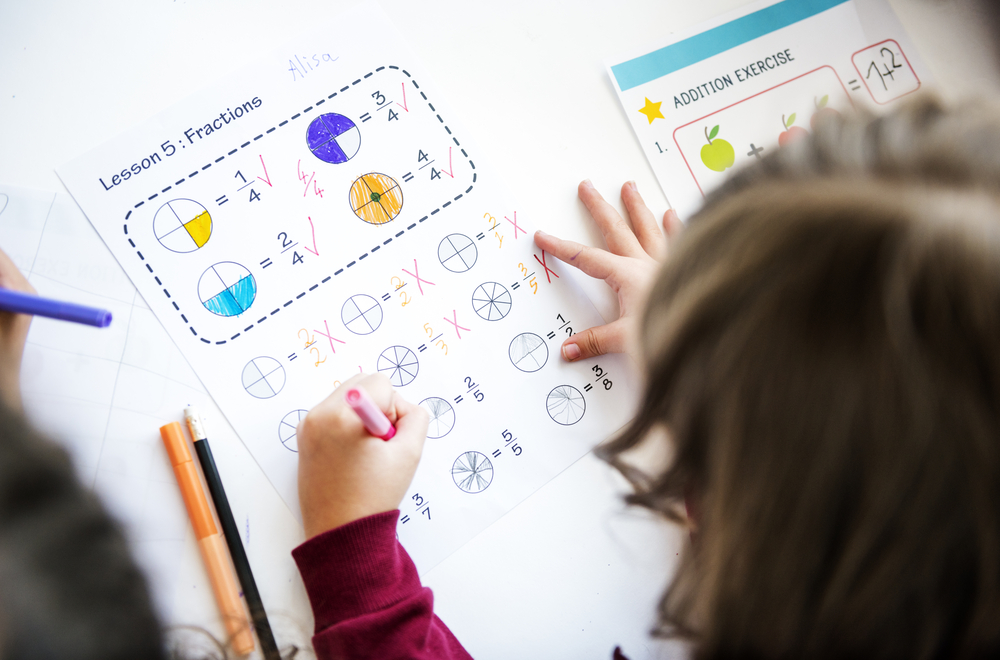

Teaching fraction comparison to young children is immensely valuable, as it forms a foundational skill that influences their overall understanding of mathematics. At ages 5-8, children are curious and quick learners, which makes it the ideal time to introduce fundamental math concepts in a simple, engaging way. Understanding fractions early prepares them for more complex operations, such as addition, subtraction, multiplication, and division of fractions in later grades.
Fraction comparison helps develop number sense by allowing children to grasp how different parts make up a whole. It enhances logical thinking as youngsters learn to evaluate and reason out which fractions are larger or smaller. Visual tools like fraction bars or pie charts can make this learning process interactive and enjoyable, fostering a love for math rather than aversion.
Incorporating simple fraction comparison exercises in everyday activities—like comparing slices of pizza or segments of an apple—can make learning tangible and relevant. This not only helps retain mathematical concepts but also boosts confidence.
Moreover, parents and teachers who emphasize these foundational skills are setting children up for academic success. Proficiency in comparing fractions will smooth their transition into more advanced math topics and problem-solving scenarios, making future learning endeavors less daunting and more accessible.








