Matching skills Easy Worksheets for Ages 5-8
5 filtered results
-
From - To
Discover our "Matching Skills Easy Worksheets for Ages 5-8," designed to enhance your child's learning experience through engaging and fun activities. These worksheets focus on developing critical matching skills essential for young learners, helping them strengthen their recognition and cognitive abilities. Each worksheet is tailored to be age-appropriate and encourages children to match items, images, or concepts seamlessly. Ideal for both classroom settings and home learning, our easy worksheets stimulate curiosity and promote fine motor skills. Perfect for parents and educators looking for effective tools to support children's educational journeys, our resources make learning enjoyable and interactive!
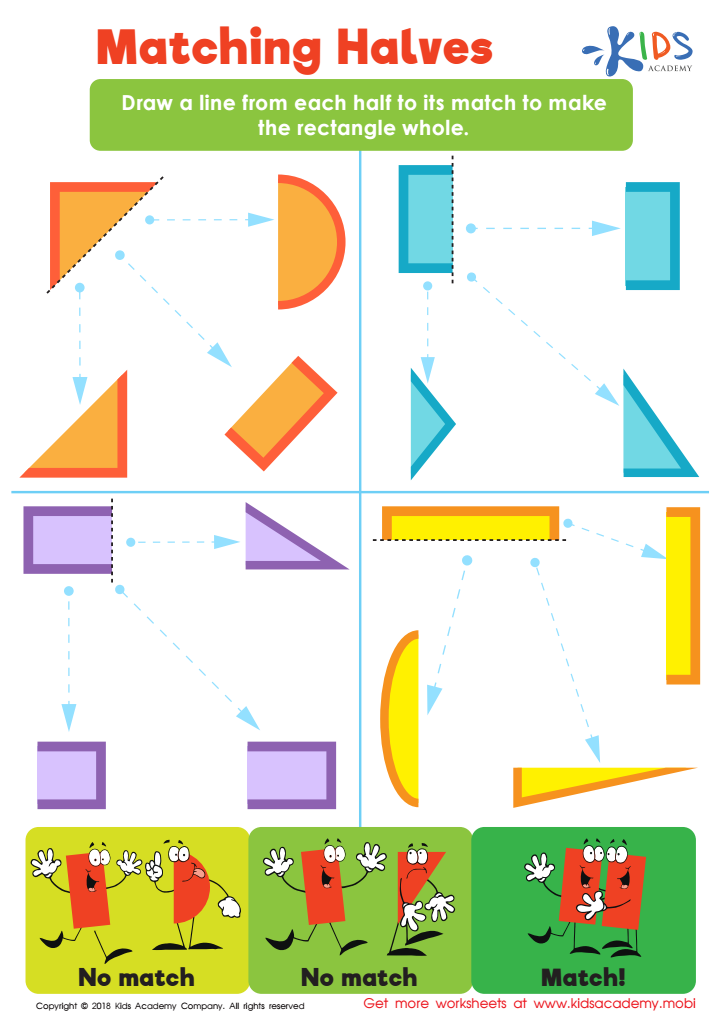
Matching Halves Worksheet
 Assign to My Students
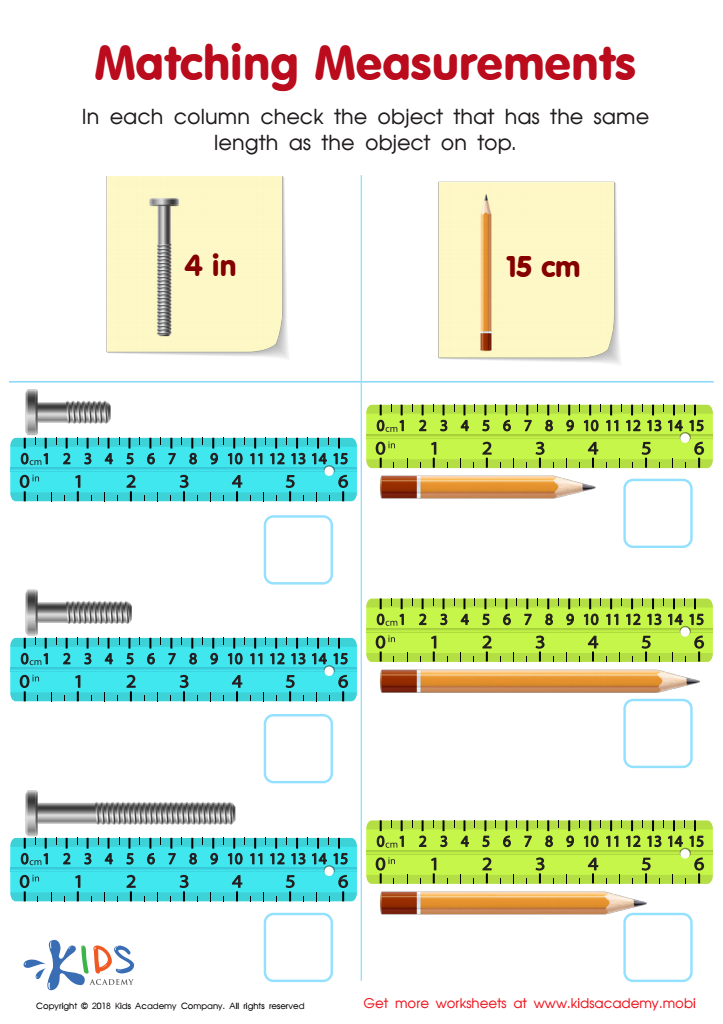
Matching Measurements Worksheet
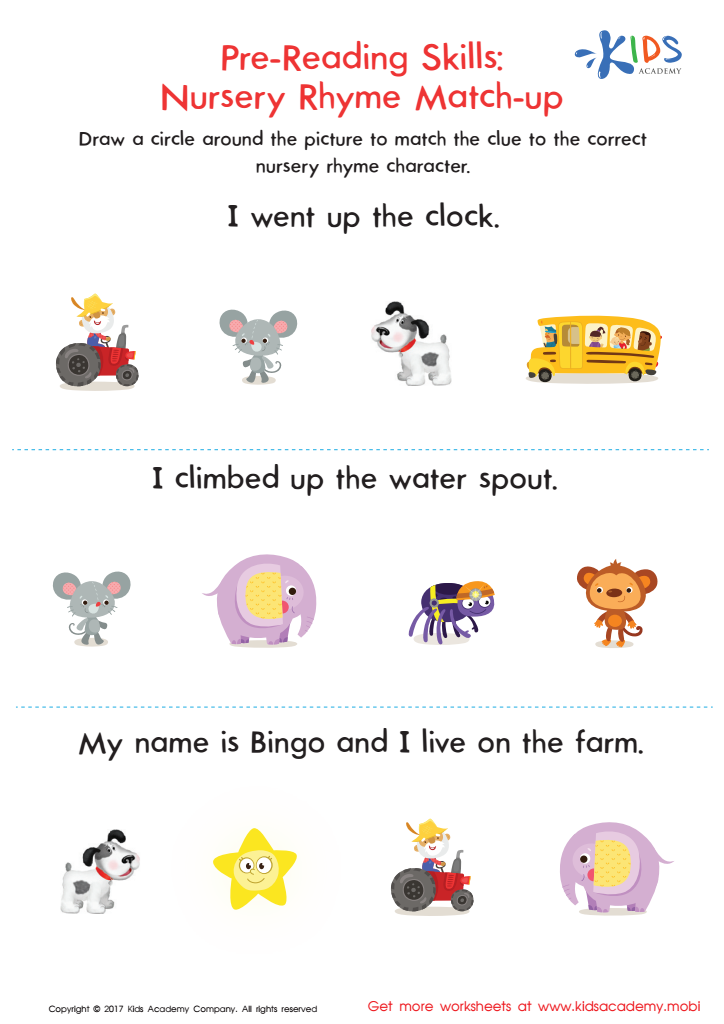
Nursery Rhyme Match–Up Worksheet
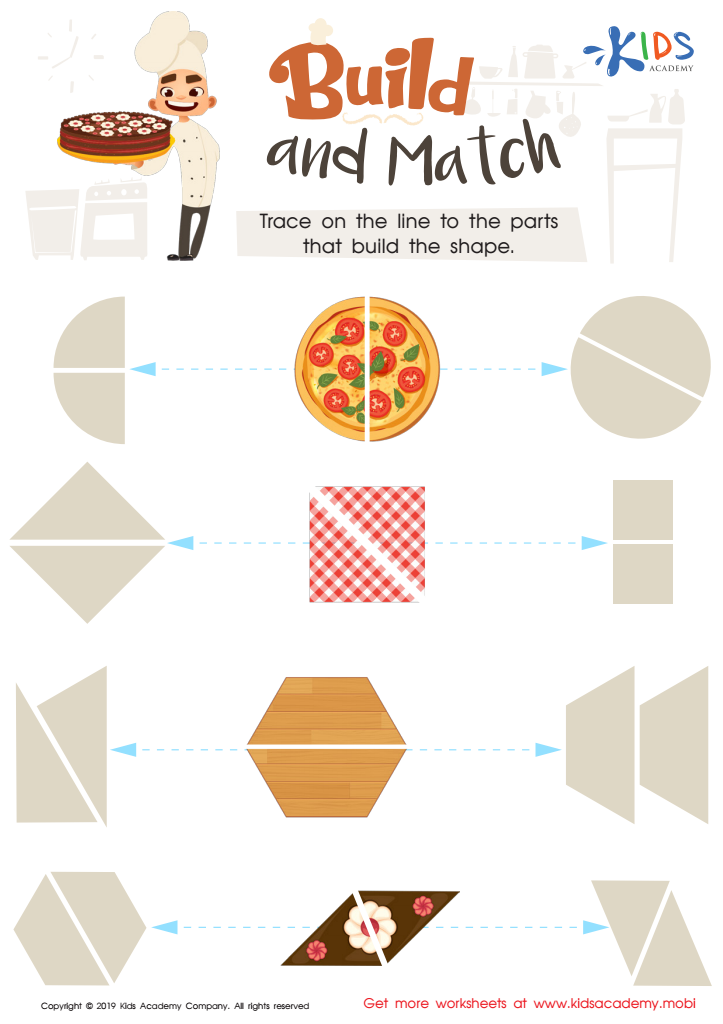
Build and Match Worksheet
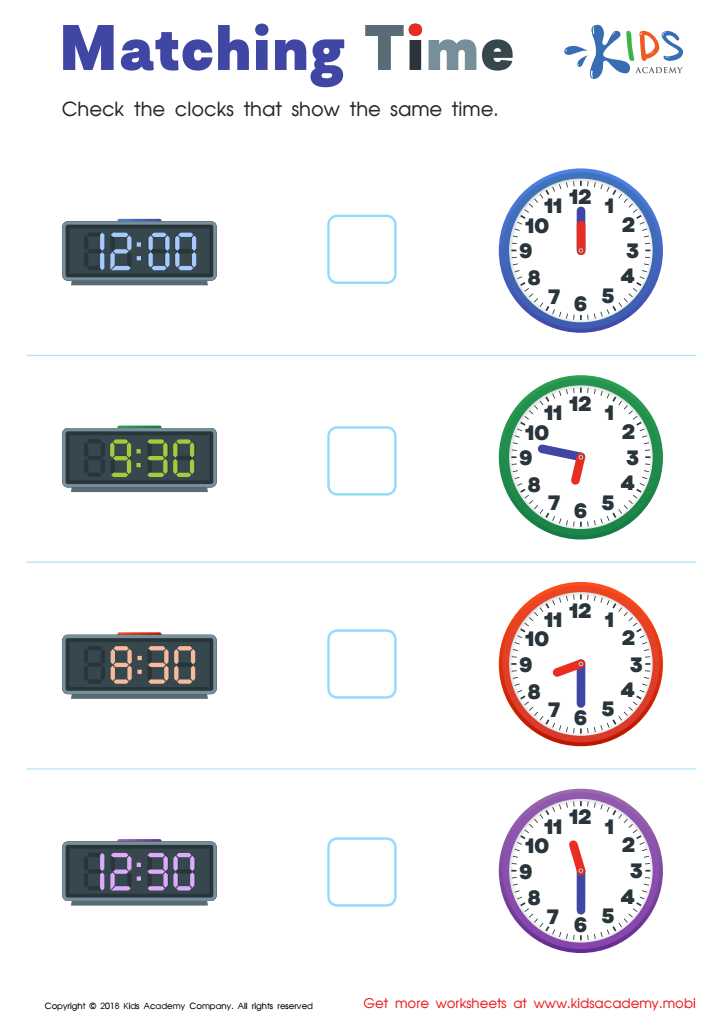
Matching Time Worksheet





Matching skills are crucial for children aged 5-8 as they form the foundation for various cognitive and social abilities. Firstly, matching helps in developing a child's observational skills. By identifying similarities and differences, children enhance their critical thinking and problem-solving abilities—skills that are vital in academics and everyday life.
Moreover, matching activities boost vocabulary and language comprehension. As children match words with images or objects, they learn to associate concepts, fostering better communication skills. This cognitive engagement also prepares them for more complex tasks later in their education.
Socially, matching games encourage teamwork and communication as children often engage in these activities with peers, reinforcing their ability to work collaboratively and develop empathy.
Parents and teachers play a critical role in nurturing these skills. By integrating fun matching games into learning, children become more motivated and engaged. These activities can be adapted easily to accommodate different learning styles, making them inclusive.
Encouraging matching skills is not merely about play; it's about laying down essential building blocks for literacy, numeracy, and social relationships, which are paramount in a child's developmental journey. Thus, investing in matching skills yields long-term benefits for children’s growth and learning prowess.








