
Shape identification Easy Worksheets for Ages 5-8
6 filtered results
Difficulty Level
Grade
Age
-
From - To
Subject
Activity
Standards
Discover our "Shape Identification Easy Worksheets for Ages 5-8" designed to make learning fun and engaging for young kids. These worksheets on Kids Academy help children enhance their shape recognition, spatial awareness, fine motor skills, and foundational math concepts. Each worksheet is thoughtfully created with vibrant illustrations and interactive activities to captivate and motivate young learners. Your child will enjoy identifying and coloring different shapes while honing their critical thinking and problem-solving abilities. Ideal for classroom learning or home practice, these worksheets are the perfect tool to foster a love for learning in your little one. Start exploring today!
Favorites
With answer key
Interactive
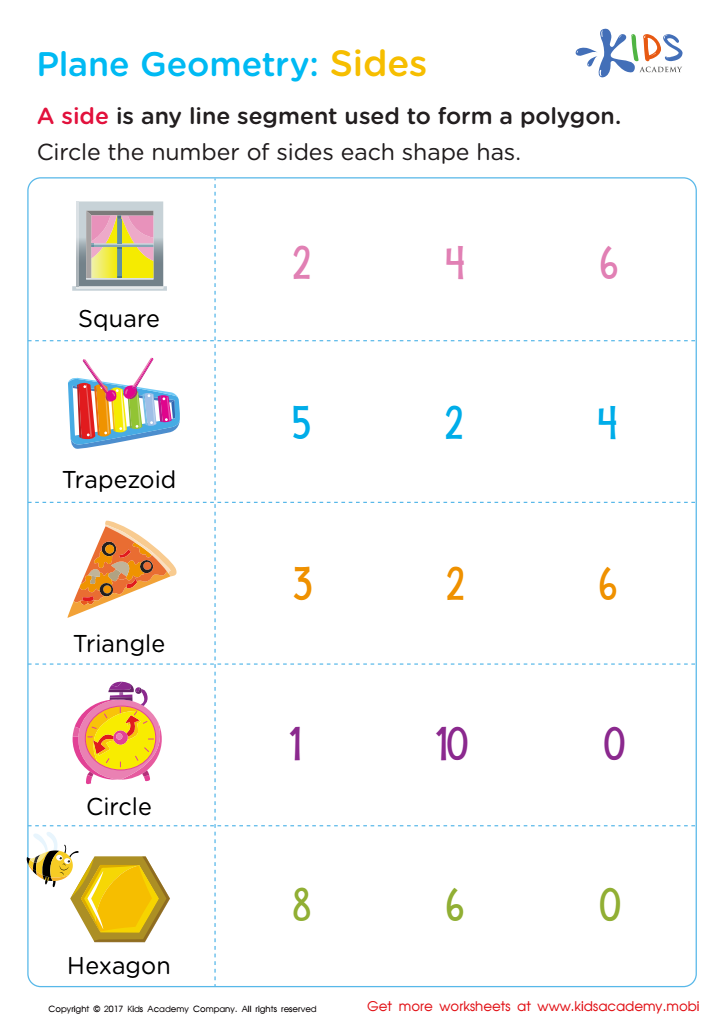
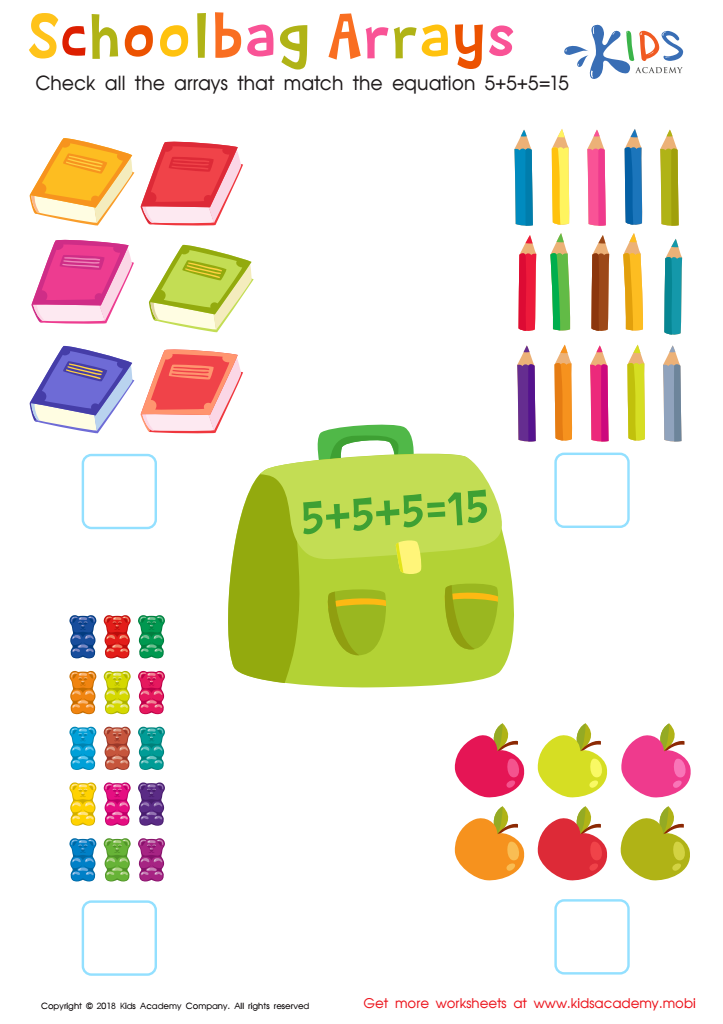
Schoolbag Arrays Worksheet
Help your child spot the correct arrays in this worksheet: having them count the items in each and check the boxes for the ones with 15 objects. Ask them to differentiate between rows and columns and explain which ones match the equation 5+5+5=15.
Schoolbag Arrays Worksheet
Worksheet
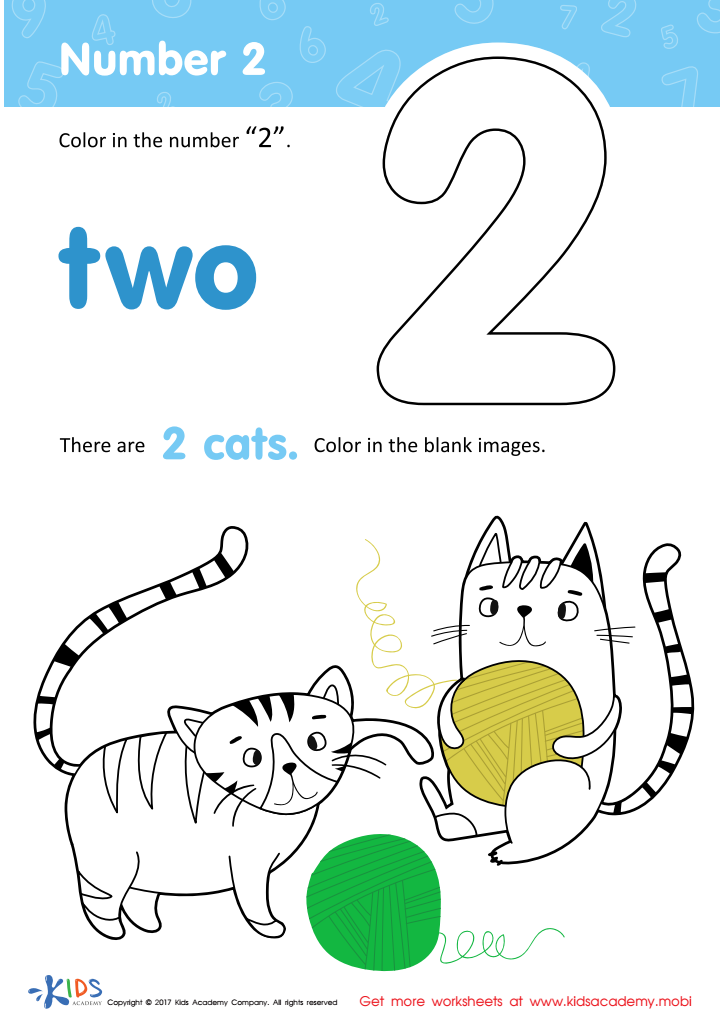
Number 2 Printable
Help your child learn to recognize the number two with these cats and their yarn balls. Print this coloring page – it's great for counting and coloring fun! Your child will develop basic numeracy skills as they visually see numbers in action.
Download (PDF)
 Assign to My Students
Assign to My Students
Number 2 Printable
Worksheet
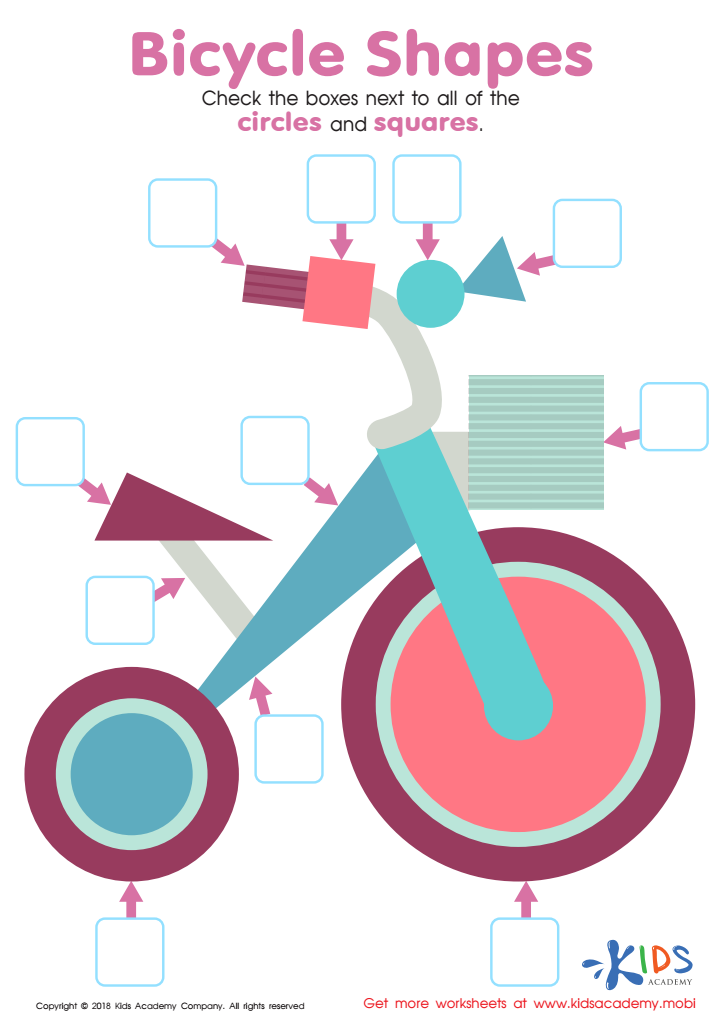
Bicycle Shapes Worksheet
This fun geometry worksheet for preschoolers asks the child to spot hidden shapes (circles, squares) in a colorful bicycle. Each shape varies in size and the child checks the box when it's found. It's a visual way to teach shapes.
Bicycle Shapes Worksheet
Worksheet
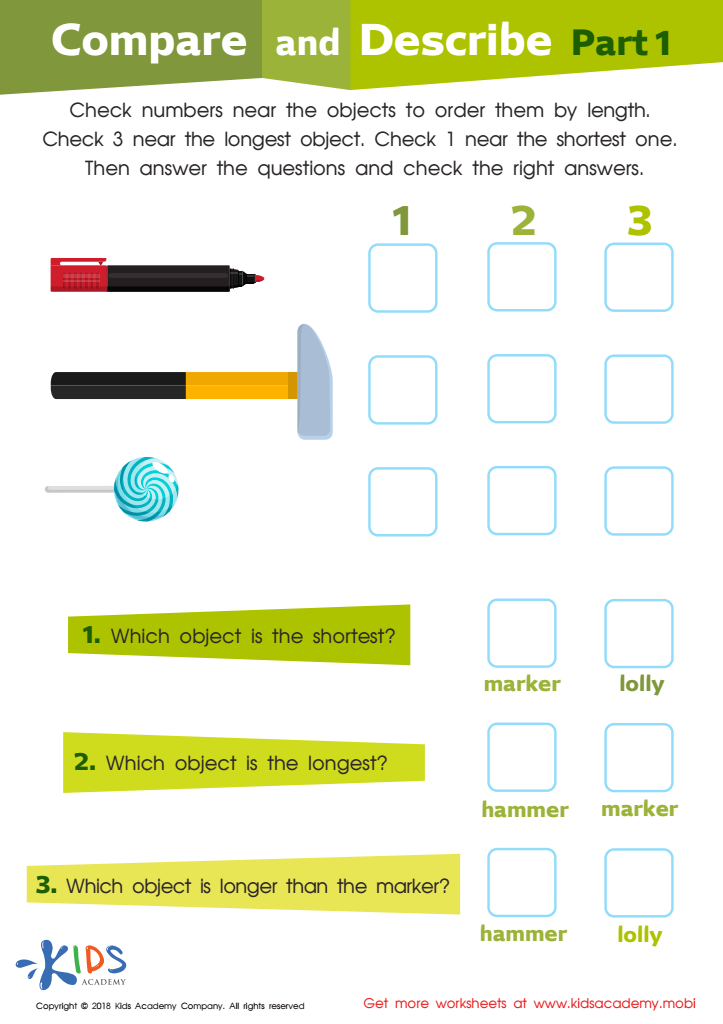
Compare and Describe: Part 1 Worksheet
In this worksheet from Kids Academy, kids can start learning measurement in stages. Observe the images, then compare their length - which one is shortest? Which one is longest? Answer the questions at the bottom to complete the sheet. It's an easy way to help kids understand measurement basics.
Compare and Describe: Part 1 Worksheet
Worksheet
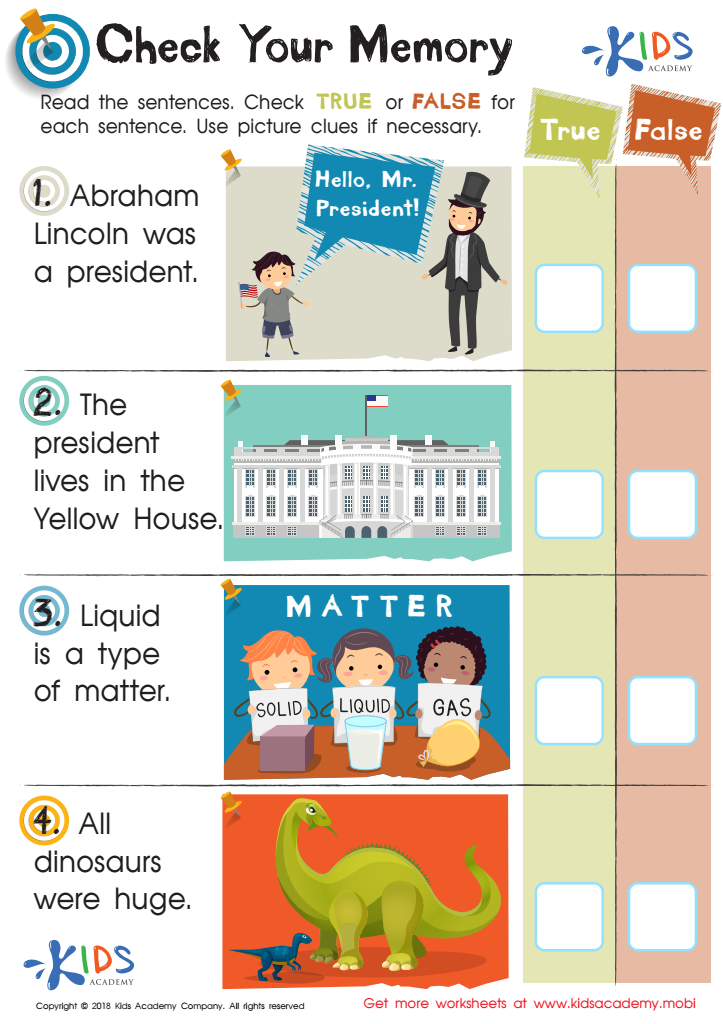
Check Memory Worksheet
Assisting your kids with their homework and using worksheets is a great way for them to learn. The vibrant visuals in this printout can help stimulate the mind and motivate your child. Have them read the sentences and then point to the associated images. Afterwards, ask them to state True or False for each sentence. If they are still uncertain, offer them the picture clues to assist further.
Check Memory Worksheet
Worksheet
Join Kids Academy for Free
Who is primarily going to use this learning content?








Shape identification is an essential skill for children ages 5-8, serving as a foundational building block for both academic and cognitive development. Parents and teachers should care about it because shapes are the most fundamental aspects of various subjects like mathematics, science, and even art. Recognizing different shapes enhances a child's spatial awareness, helping them understand and navigate the world around them.
Early shape identification skills contribute significantly to a child’s ability to differentiate between objects, which is crucial for categorization and organization—a practice commonly associated with successful learning strategies. This knowledge aids in recognizing letters and numbers, hence contributing to literacy and numeracy. For instance, noticing that the letter "O" is a circle, or "A" forms a triangle, this visual discrimination directly supports reading proficiency and writing skills.
Moreover, teaching shapes fosters problem-solving and logical thinking. Children learn to notice patterns and comprehend the relationships between different objects. These skills are paramount in higher-order math, like geometry and algebra. Emotional development isn’t left out either; successfully identifying and manipulating shapes boosts confidence and encourages a positive attitude toward learning.
In summary, focusing on shape identification sets a robust framework for future educational success, and should thus be a priority in early childhood education.








