Visual Perception Skills Easy Worksheets for Ages 5-8
5 filtered results
-
From - To
Enhance your child's visual perception skills with our Easy Worksheets designed for ages 5-8! These engaging and interactive activities help young learners recognize patterns, shapes, and visual details essential for their cognitive development. Our worksheets are thoughtfully crafted to improve focus, memory, and spatial awareness while keeping learning fun. Suitable for the home or classroom, these printable resources align with early education standards, allowing parents and teachers to support children's growth in vital learning skills. Boost your child's confidence and academic success today—explore our collection of visual perception worksheets and make learning a delightful experience!
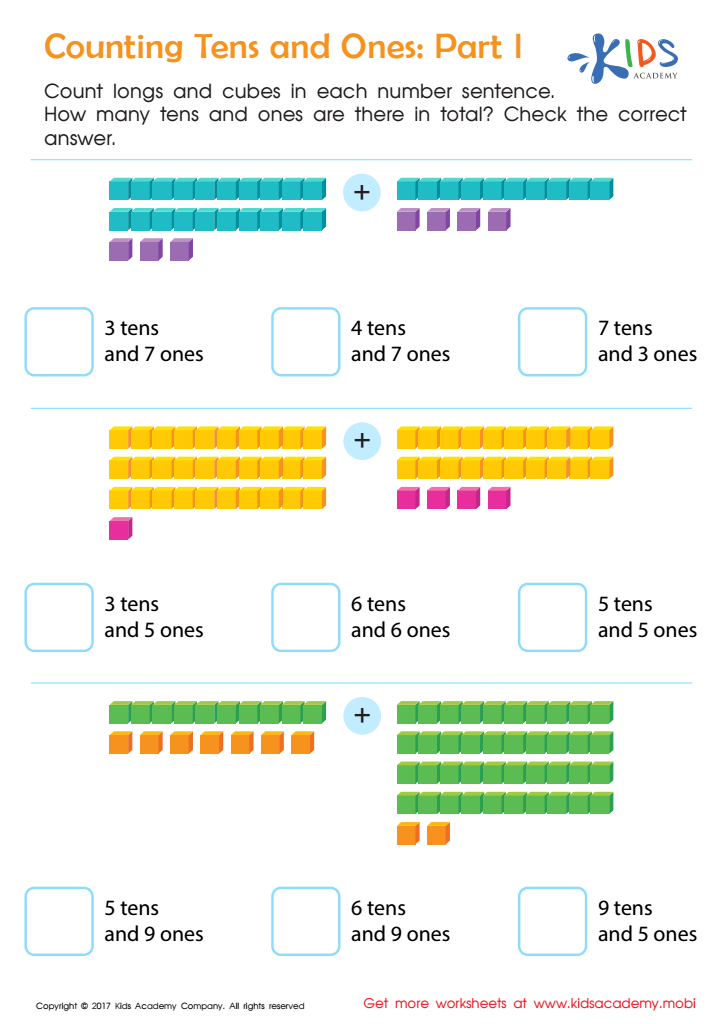
Counting Tens and Ones: Part 1 Worksheet
 Assign to My Students
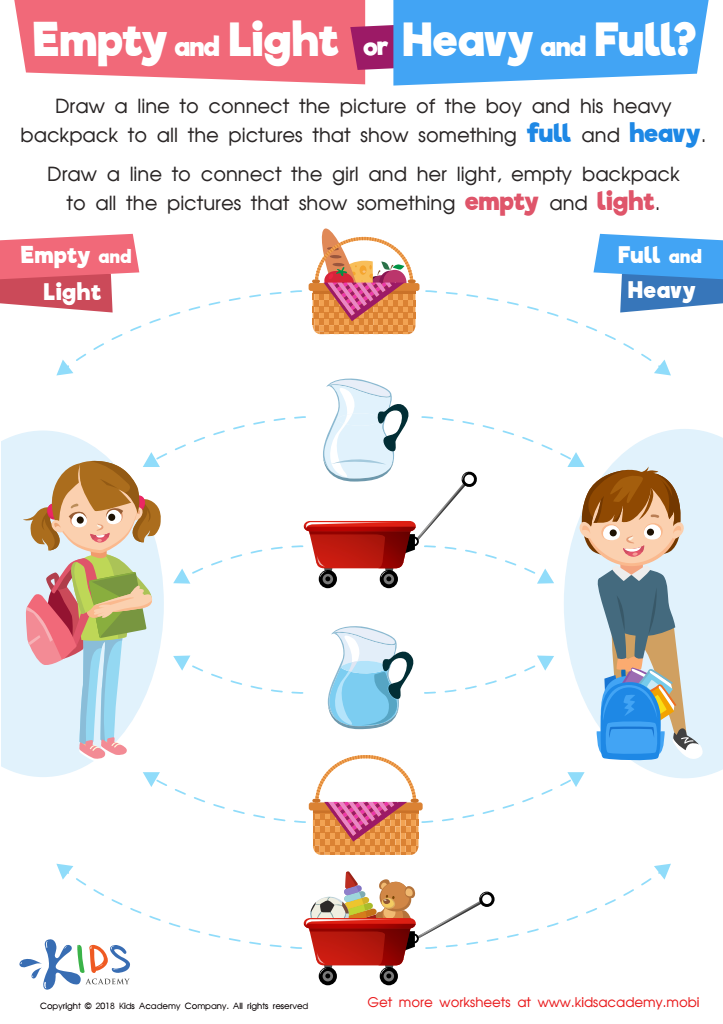
Empty and Light or Heavy and Full? Worksheet
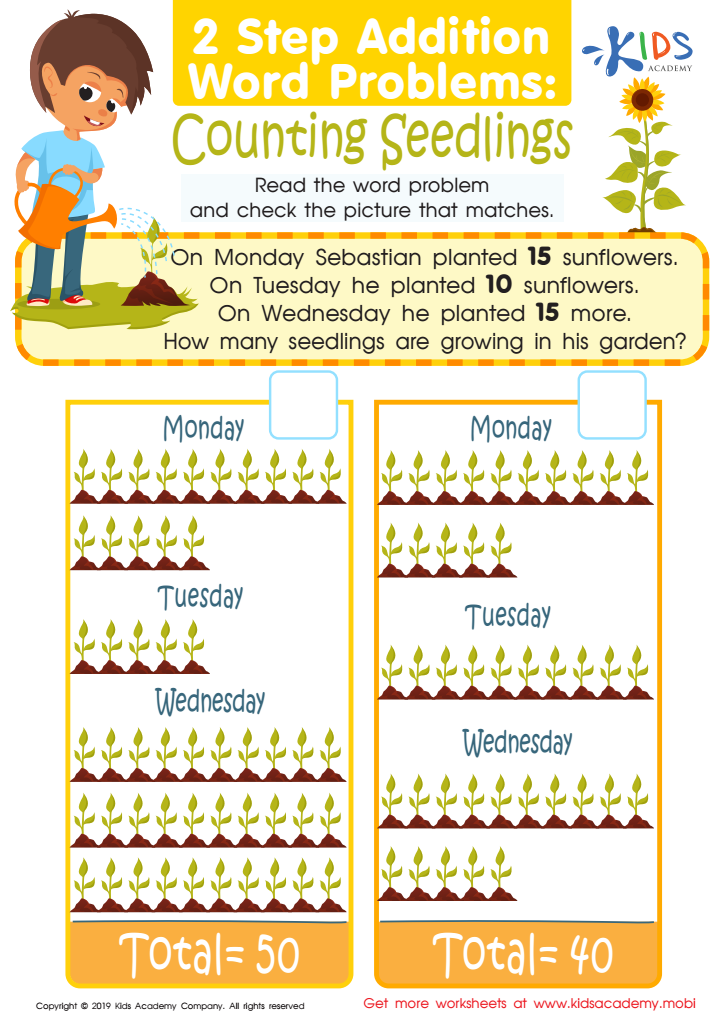
Counting Seedlings Worksheet
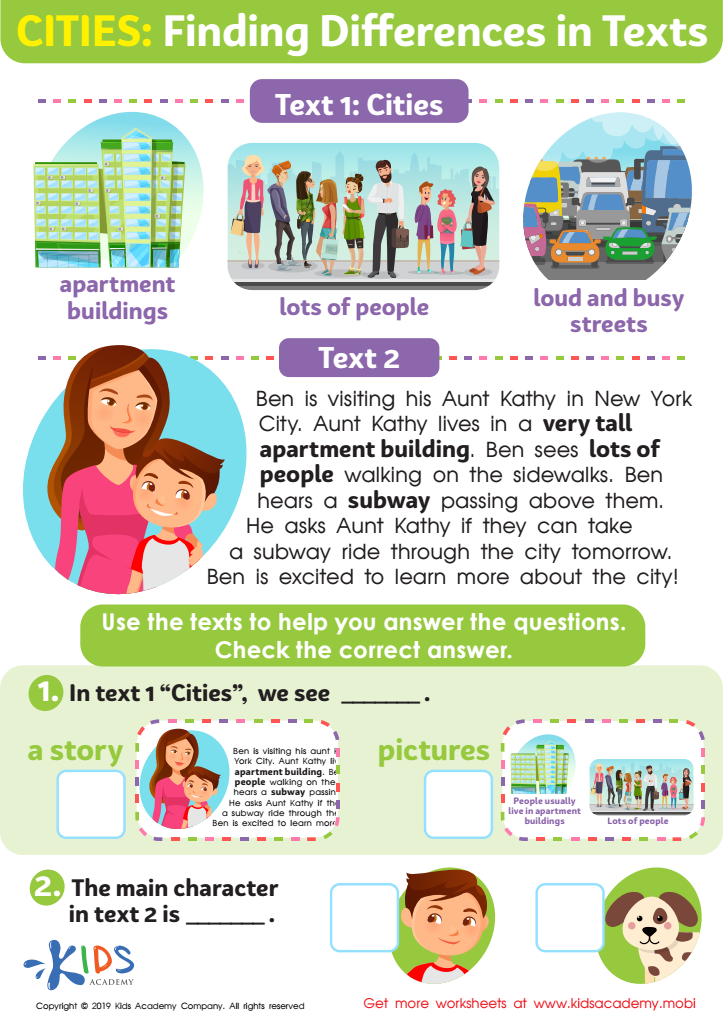
Cities: Finding Differences Worksheet
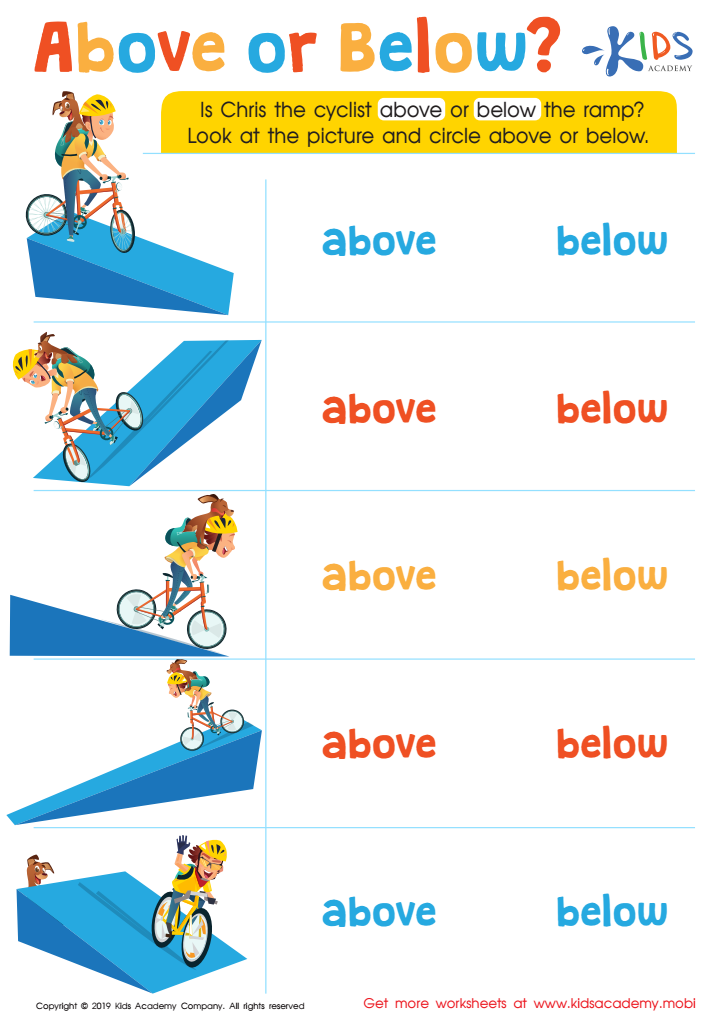
Above or Below? Worksheet






Visual perception skills are crucial for children ages 5-8 as they form the foundational ability to interpret and understand visual information. These skills enable kids to identify shapes, recognize letters, differentiate between colors, and understand spatial relationships—an essential tool for basic learning, especially in literacy and math.
Developing strong visual perception skills enhances a child's ability to follow instructions, complete puzzles, and engage in arts and crafts, all of which are vital for cognitive development. Improved visual processing fosters better reading skills, as children who can recognize words and letters effectively are more likely to read fluently. Furthermore, these skills play a role in everyday activities, from navigating a playground to organizing their belongings.
If parents and teachers prioritize visual perception skill development, they empower students to build confidence and independence. They can use simple games, interactive worksheets, or engaging technology to foster these skills in a fun way. By investing time in this development stage, adults can equip children with essential tools that not only support academic success but also lay the groundwork for lifelong learning and critical thinking. Creating a well-rounded learning experience helps nurture enthusiastic and capable learners ready to explore and understand the world around them.








