Word association Easy Worksheets for Ages 5-8
3 filtered results
-
From - To
Discover our engaging "Word Association Easy Worksheets for Ages 5-8," designed to nurture young minds while making learning fun! These innovative worksheets help children develop critical thinking and language skills by encouraging them to connect words through visual prompts and guided activities. Tailored for early learners, our worksheets ensure that kids can explore vocabulary and relationships between words in a playful manner, boosting their confidence and creativity. Ideal for home or classroom use, these resources make foundational learning enjoyable and effective. Embrace the power of word association and watch your child flourish in their learning journey today!
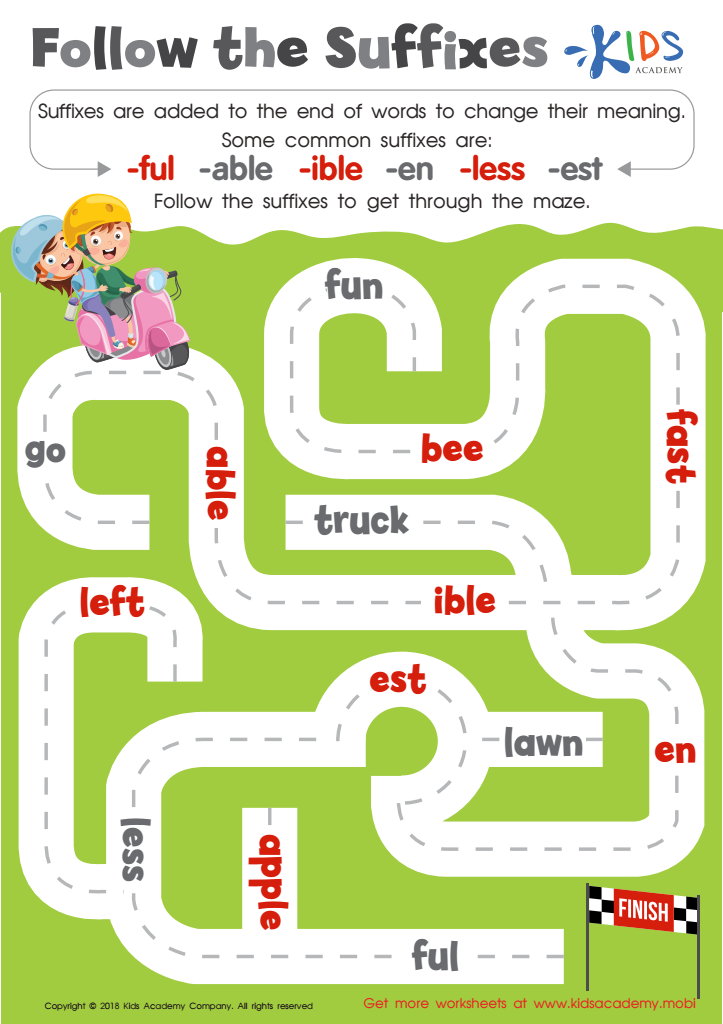
Reading: Follow the Suffixes Worksheet
 Assign to My Students
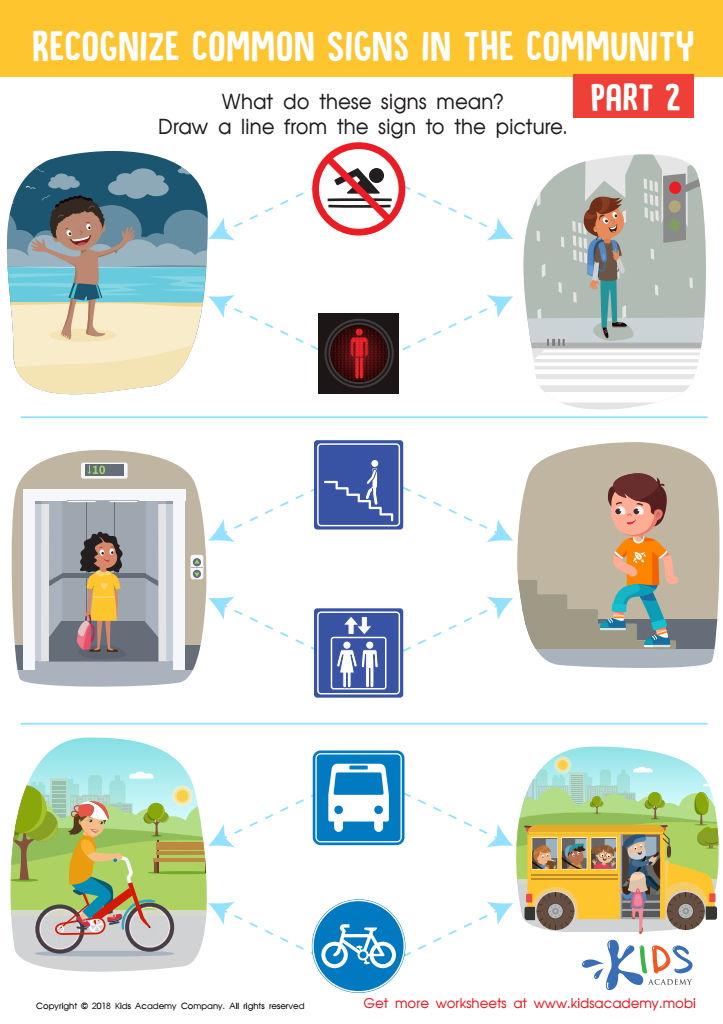
Recognize Common Signs: Part 2 Worksheet
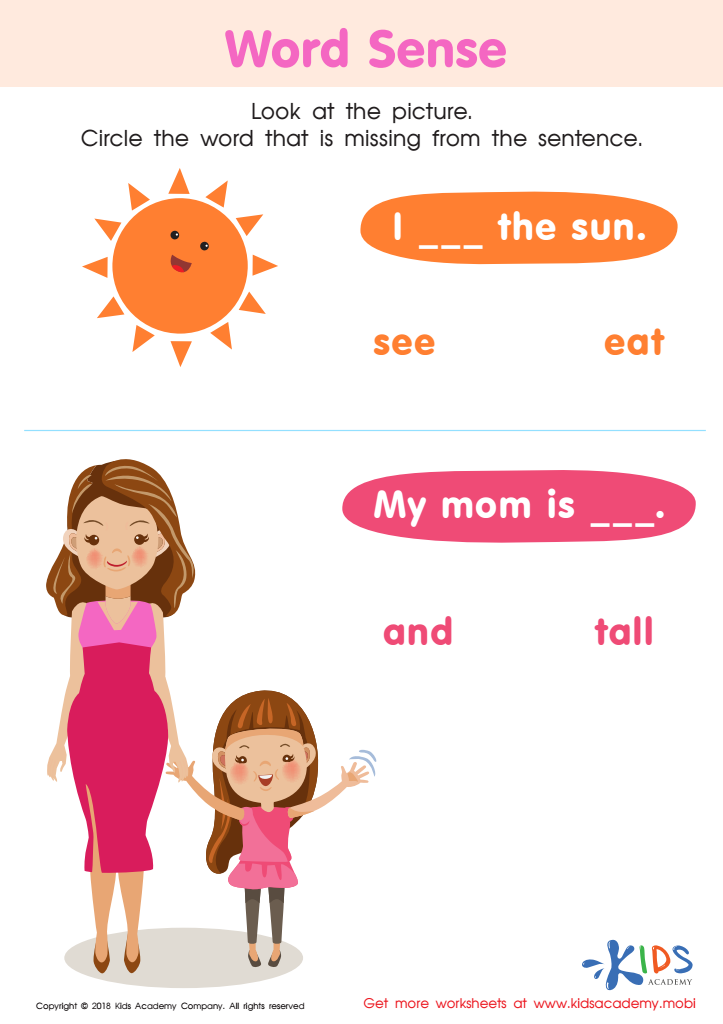
Word Sense Worksheet


.jpg)





Word association games are a valuable tool for children aged 5-8, offering numerous benefits that parents and teachers should prioritize. Such activities stimulate cognitive development by enhancing vocabulary and phonetic recognition. As young learners engage in word association, they become more adept at understanding language structures, allowing them to form connections between words and concepts.
Furthermore, these games boost memory skills. When children associate words with specific ideas or images, they strengthen their ability to recall information later, an essential skill for reading and comprehension. Socially, word association encourages interaction and collaboration among peers or family members, fostering communication skills and making learning a more engaging experience.
Moreover, integrating word association into learning can spark creativity. Children often generate unique connections and ideas, stimulating imaginative thinking. This imaginative stretch can benefit them in various subjects, enhancing their problem-solving capabilities.
Ultimately, by caring about and incorporating word association activities into their teaching and parenting practices, adults can create a fun, interactive learning environment that promotes literacy, critical thinking, and social skills, laying a strong foundation for lifelong learning. Engaging in these activities supports not only academic success but also the overall development of a child’s cognitive and social abilities.








