Understanding patterns Easy Basic Times Tables up to 12 Worksheets for Ages 5-8
3 filtered results
-
From - To
Empower your young learner with our "Understanding Patterns Easy Basic Times Tables up to 12 Worksheets" designed for ages 5-8. These engaging and educational worksheets help children grasp the fundamentals of multiplication through colorful visuals and repetitive exercises that focus on pattern recognition. By exploring times tables from 1 to 12, kids not only enhance their math skills but also build a solid foundation for future learning. Foster a love for mathematics early on while ensuring your child develops critical thinking and problem-solving abilities in a fun and approachable way. Perfect for home or classroom use!
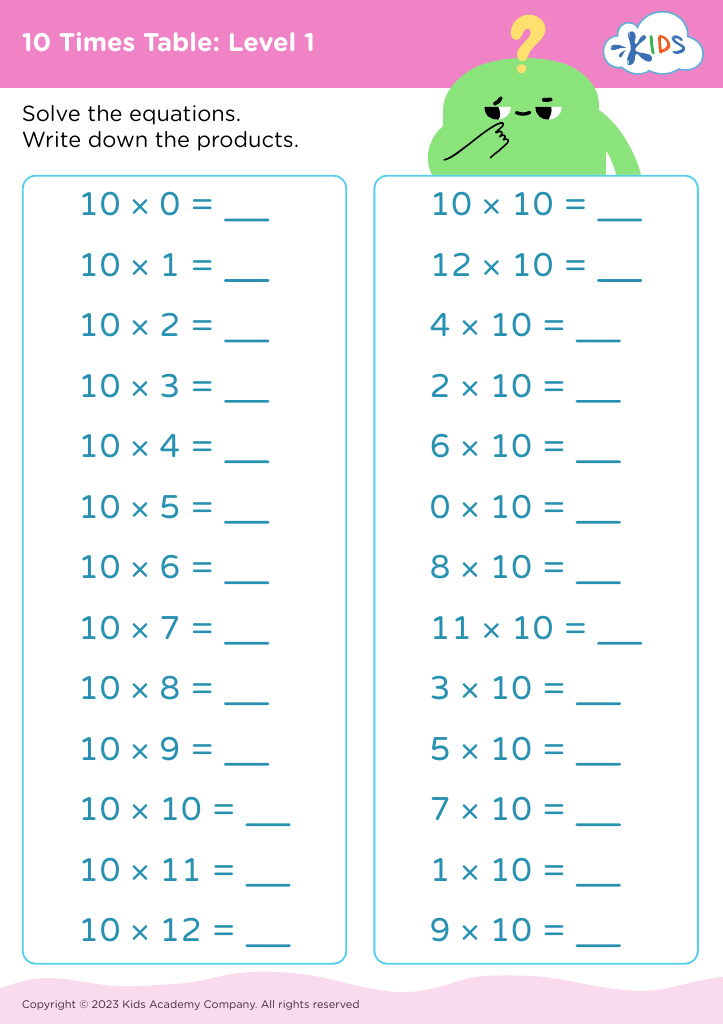
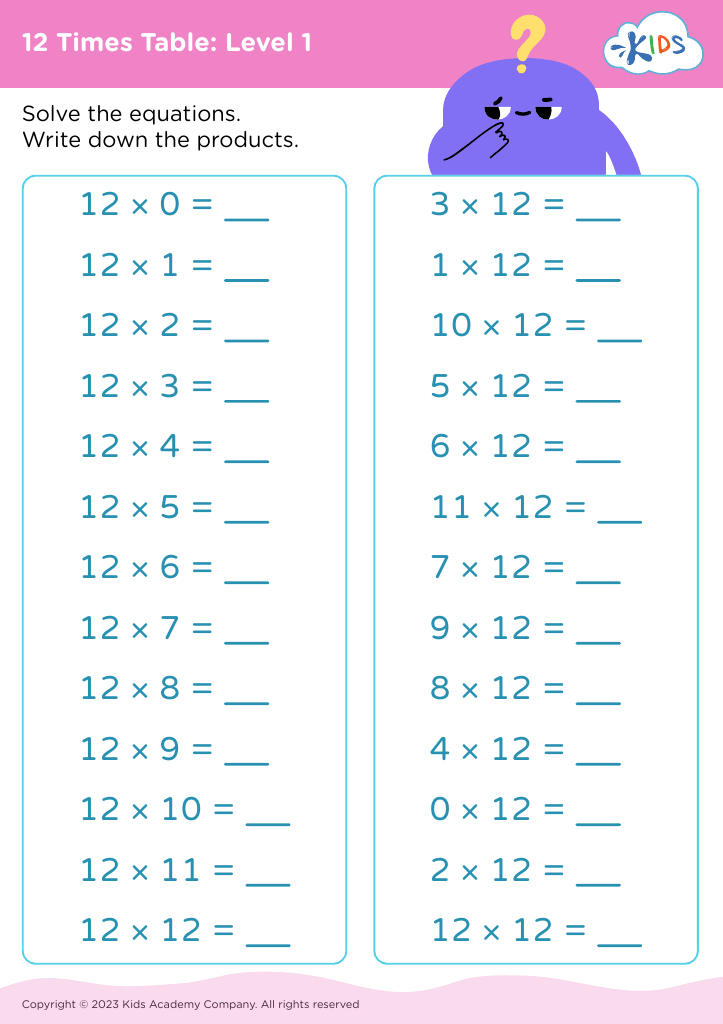
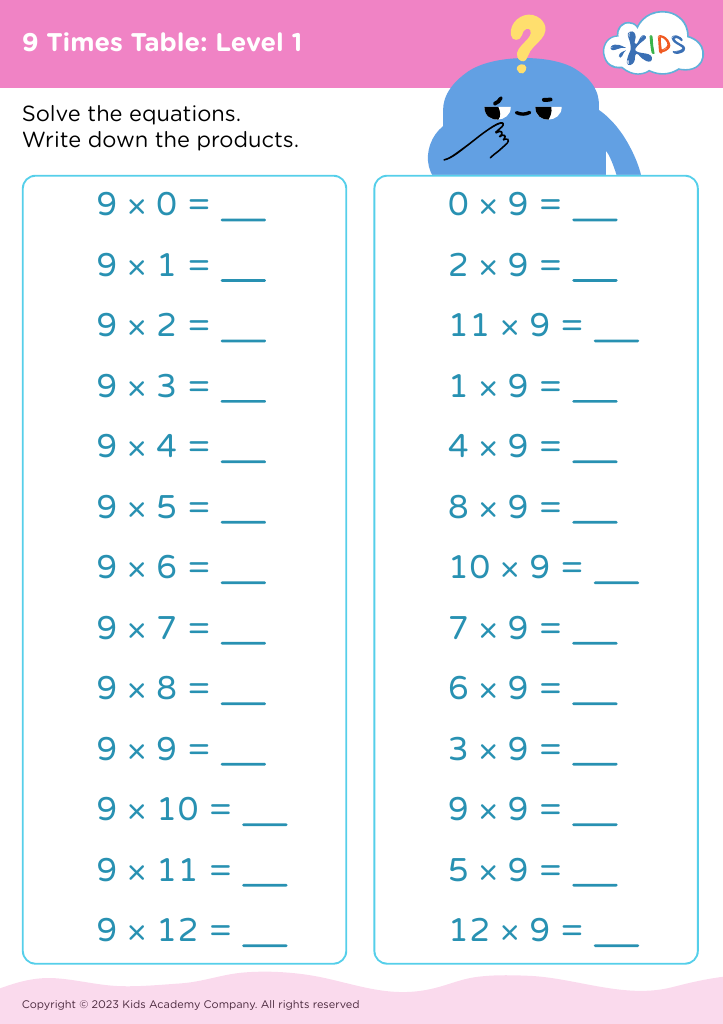


Understanding patterns, especially in basic times tables up to 12, plays a crucial role in children's mathematical development for several reasons. Firstly, it establishes a solid foundation for advanced mathematical concepts they will encounter later. Recognizing these patterns helps children grasp multiplication, which is essential for division, fractions, and algebra. This foundational knowledge makes math less intimidating and more approachable.
For ages 5-8, when cognitive skills are rapidly developing, learning times tables enhances memory and cognitive flexibility. The repetition and pattern recognition inherent in times tables strengthen neural pathways, promoting overall brain development. Fluency in times tables also boosts math confidence, allowing children to solve complex problems more easily and independently.
Parents and teachers focused on this aspect empower children with critical problem-solving skills. Mastery of times tables fosters a growth mindset: children realize that perseverance in learning leads to success. This confidence spills over into other academic areas, fostering a positive attitude toward learning.
Furthermore, times tables are frequently used in daily life, from calculating change to measuring ingredients in recipes. By developing competence early, children are not only prepared for academic success but also equipped with practical skills for everyday problem solving.
Encouraging proficiency in times tables up to 12 provides children with both immediate and long-term benefits, making it an investment in their future academic and everyday success.








