Understanding Sequences Easy Numbers Worksheets for Ages 5-8
3 filtered results
-
From - To
Welcome to our "Understanding Sequences Easy Numbers Worksheets" designed specifically for children aged 5-8! These engaging worksheets introduce young learners to the concept of number sequences in a fun and accessible way. Through colorful illustrations and interactive exercises, kids will develop their understanding of patterns, counting, and ordering numbers. Our resources are crafted to promote critical thinking and enhance math skills while ensuring an enjoyable learning experience. With easy-to-follow instructions and varied activities, these worksheets cater to different learning styles, making math enjoyable and manageable. Help your child embrace early math concepts and build a strong foundation for future success!
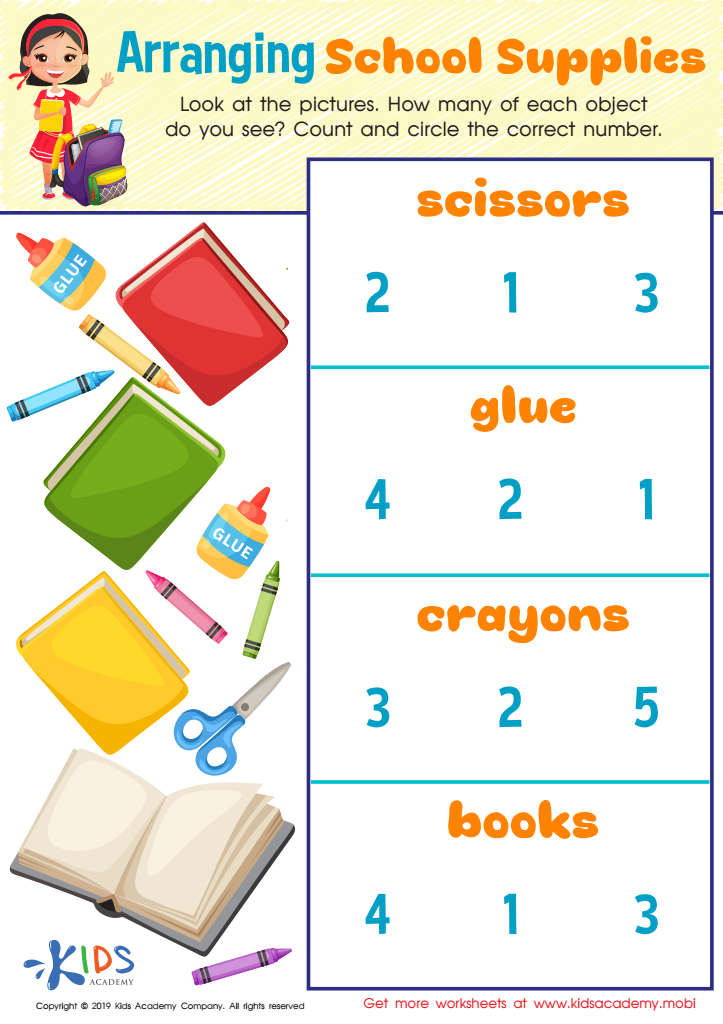
Arranging School Supplies Worksheet
 Assign to My Students
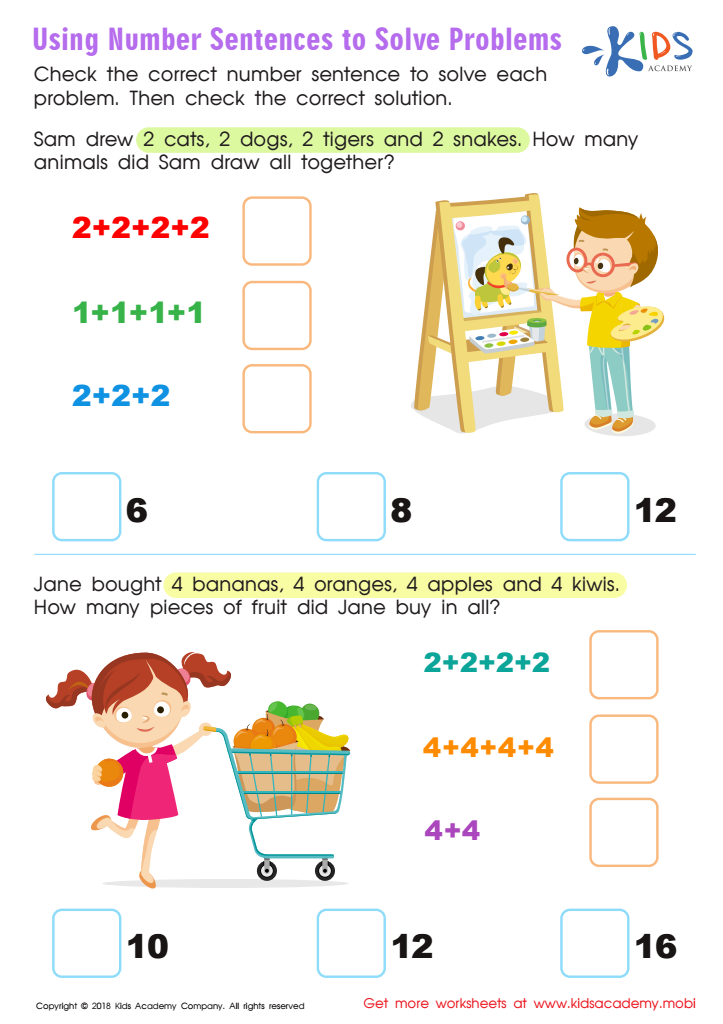
Using Number Sentences to Solve Problems Worksheet

Haystack Steps Worksheet








Understanding sequences of easy numbers is essential for children ages 5-8, as it lays the foundation for critical mathematical skills. At this age, children are developing their ability to recognize patterns and make connections, which are fundamental to their cognitive development. By introducing sequences, teachers and parents help children enhance their problem-solving abilities and logical thinking.
Sequences teach children how to anticipate what comes next, fostering their ability to think ahead and predict outcomes—a skill applicable not only in math but also in everyday scenarios. Furthermore, recognizing numerical patterns aids children's understanding of addition and subtraction, crucial concepts in early math education. When children grasp the idea of sequences, they can tackle more complex mathematical principles later on, such as multiplication and division.
Additionally, introducing sequences promotes engagement and creativity in learning. Fun activities, such as skip counting songs or pattern games, can make math enjoyable, fostering a positive attitude toward the subject. This will build children's confidence as learners and empower them to tackle progressively challenging concepts. Therefore, parents and teachers play a vital role in encouraging participation in these foundational mathematical experiences, which will support children’s cognitive development long-term.








