Understanding patterns Easy Math Worksheets for Ages 5-8
6 filtered results
-
From - To
"Understanding Patterns Easy Math Worksheets for Ages 5-8" by Kids Academy offers fun and engaging activities designed to help young learners grasp the concept of patterns. Perfect for ages 5 to 8, these printable worksheets use colorful visuals and interactive exercises to guide children in recognizing, predicting, and creating patterns. By practicing with shapes, colors, and numbers, kids can develop critical thinking and problem-solving skills. Whether you're a parent or a teacher, these pattern worksheets provide an excellent resource to support early math learning and enhance your child's cognitive development in a playful and educational way.
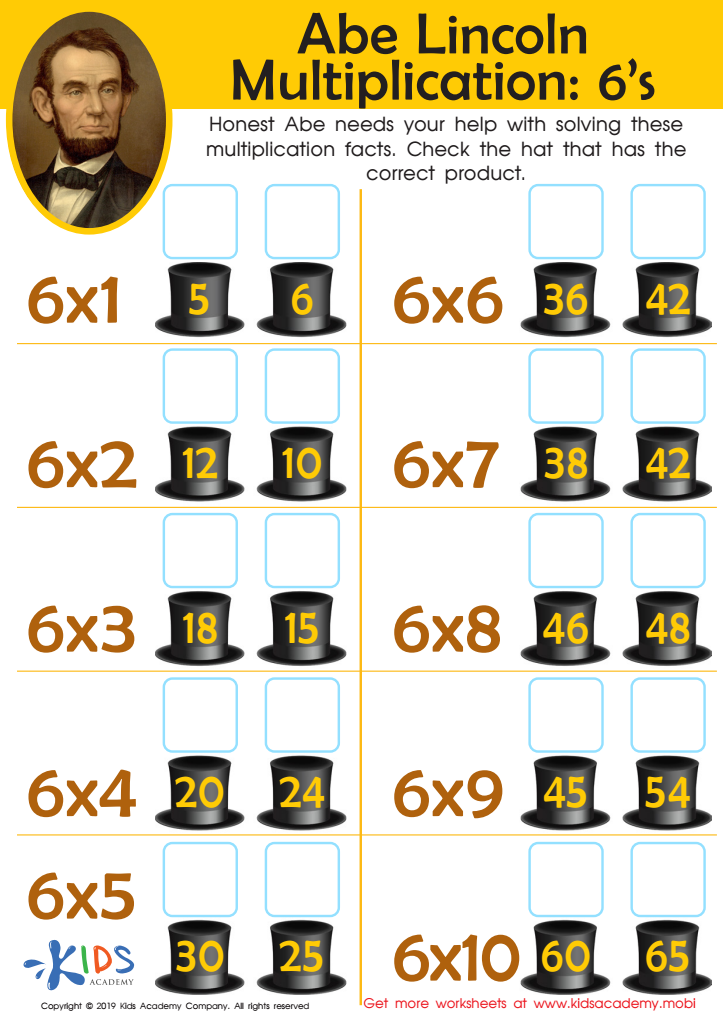
Abe Lincoln Multiplication: 6’s Worksheet
 Assign to My Students
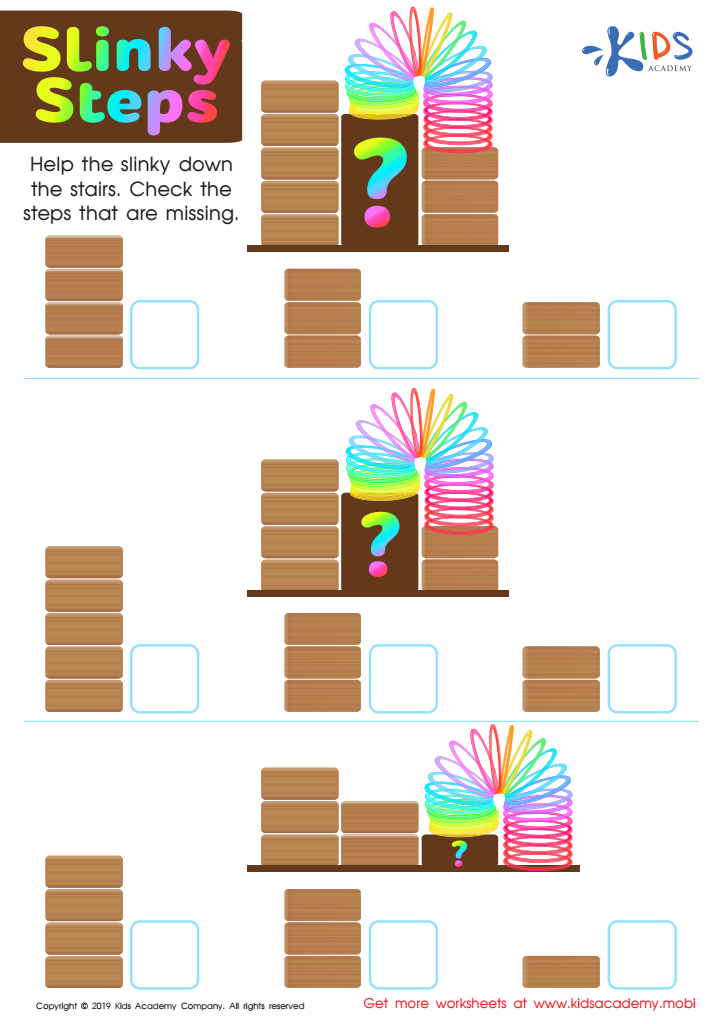
Slinky Steps Worksheet
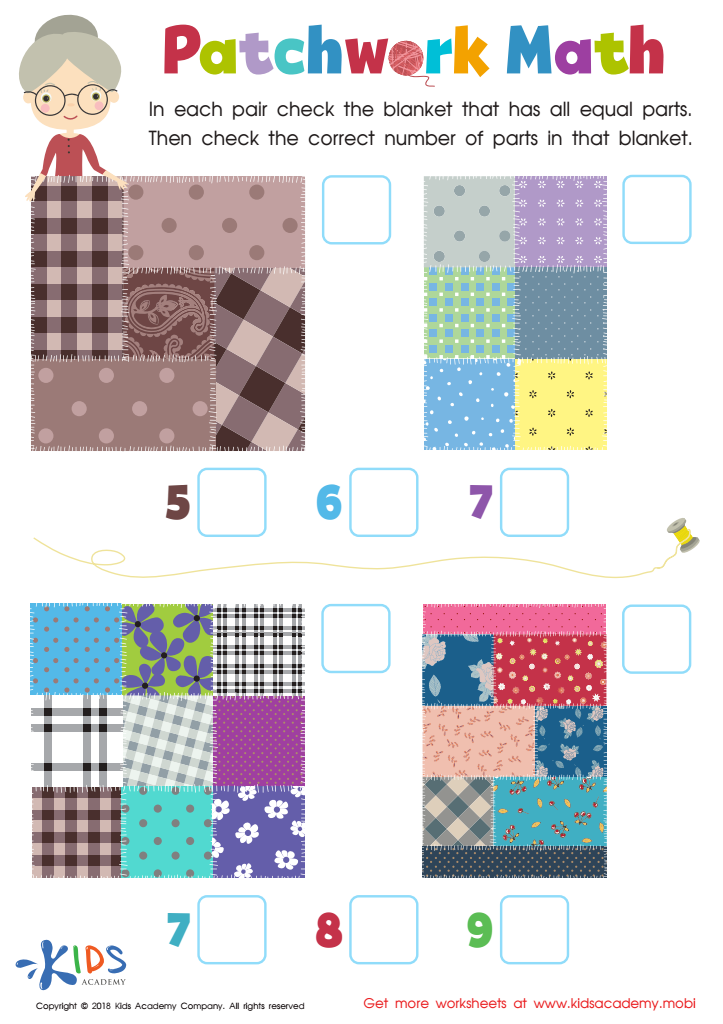
Patchwork Math Worksheet
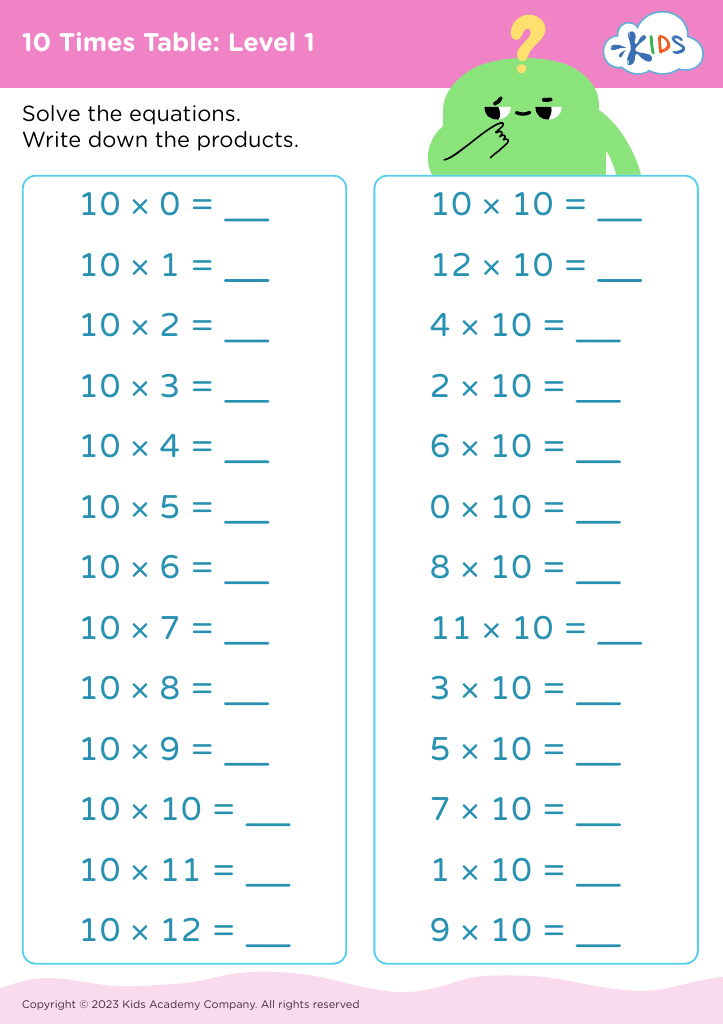







Understanding patterns at an early age is fundamental for children, ages 5-8, because it forms the cornerstone for higher-level mathematical thinking and problem-solving skills. Patterns are all around us – in nature, music, art, and daily routines – making it a relatable and practical concept for young learners.
For parents and teachers, recognizing the importance of patterns helps children to develop critical foundational skills. Firstly, identifying and predicting patterns improves their ability to understand sequencing and order, which is essential for not only mathematics but also reading and writing. Counting by twos, threes, or recognizing shapes and colors in a sequence strengthens arithmetic skills and lays the groundwork for algebraic thinking.
Moreover, understanding patterns fosters analytical and cognitive development. It enhances children's abilities to predict and make connections, improving their reasoning and logical thinking skills. For example, when a child recognizes that a red bead follows every three blue beads, they begin to grasp the idea of regularity and numerical relationships – concepts that are the building blocks of future complex math concepts and algorithms.
By integrating pattern recognition into early learning, parents and teachers not only make math accessible but also enjoyable, setting a positive tone for future learning experiences. This foundational competency supports academic performance across subjects and cultivates a curious and confident mindset in young learners.








