Understanding patterns Easy Times Tables Worksheets for Ages 5-8
3 filtered results
-
From - To
Discover how "Understanding Patterns Easy Times Tables Worksheets for Ages 5-8" can transform your child's math skills! Designed to build strong foundational knowledge, these engaging worksheets simplify multiplication through fun and interactive pattern recognition activities. Perfect for young learners, these resources make abstract concepts accessible and enjoyable. Each worksheet is crafted to develop critical thinking, reinforce learning, and boost confidence in solving times tables. Ideal for home or classroom use, our worksheets are an excellent tool for nurturing a love for math at an early age. Unlock your child's potential today with easy times tables practice!
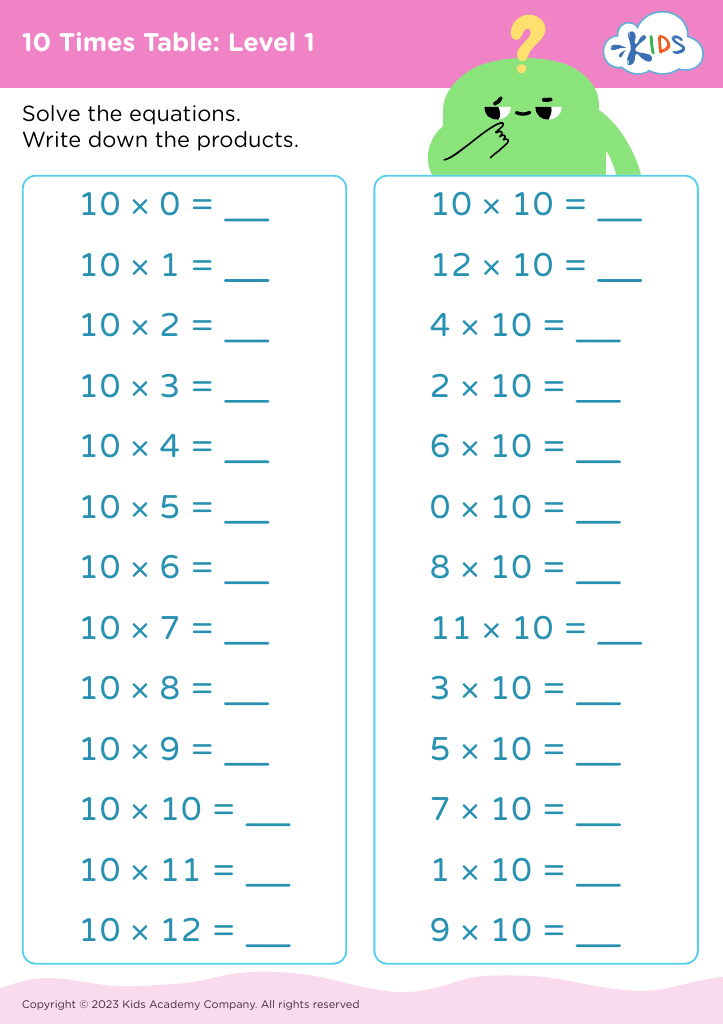
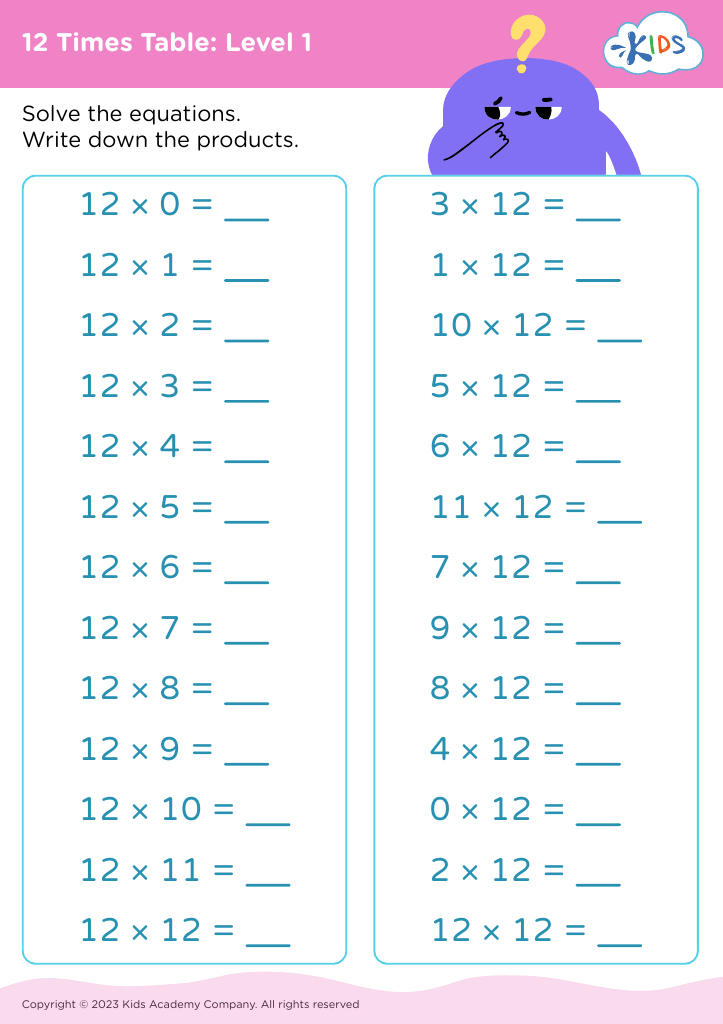
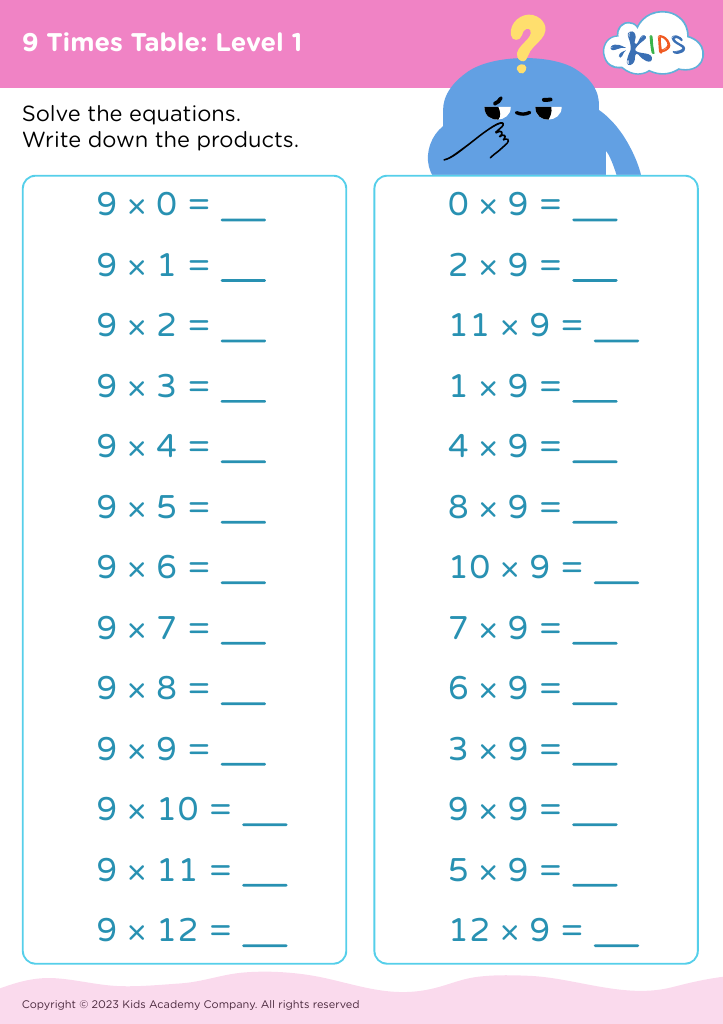





Understanding patterns in times tables for young children aged 5-8 is essential for building a strong mathematical foundation. Patterns make learning easier and more intuitive, transforming what can be a challenging and abstract concept into something approachable and predictable. This early grasp of multiplication patterns fosters confidence and enthusiasm for math, setting the stage for more complex arithmetic and problem-solving skills in later years.
For parents and teachers, focusing on patterns in times tables means providing children with tools for quicker recall. For instance, recognizing that the products in the 2 times table are each 2 more than the previous one helps solidify understanding. Similarly, noticing that the 5 times table alternates ending in 5 and 0 makes it easier to predict and remember these numbers.
Patterns also teach critical thinking and analytical skills. When children discern patterns, they not only memorize facts but learn to apply logical reasoning to new problems. This skill is invaluable for solving everyday problems and future academic challenges.
Moreover, familiarizing children with times tables through patterns integrates well with other subjects. Music, art, and physical activities often involve patterns, and recognizing this connection can make learning more interdisciplinary and holistic. Thus, understanding patterns in times tables solidifies a foundational skill with wide-reaching benefits, making it critical for both parents and teachers to focus on this concept.








