Color recognition Easy Building Vocabulary Worksheets for Ages 5-8
6 filtered results
-
From - To
Discover our "Color Recognition Easy Building Vocabulary Worksheets" tailored for children ages 5-8. These engaging printables help sharpen vocabulary skills while teaching color identification. Designed by educational experts at Kids Academy, each worksheet offers fun activities that promote learning through play. Kids will find joy in naming colors, matching objects, and expanding their vocabulary. Ideal for classrooms or at-home learning, these resources support cognitive development and enhance fine motor skills. Prepare your young learners for academic success by integrating these effective and entertaining color recognition worksheets into their daily routine.
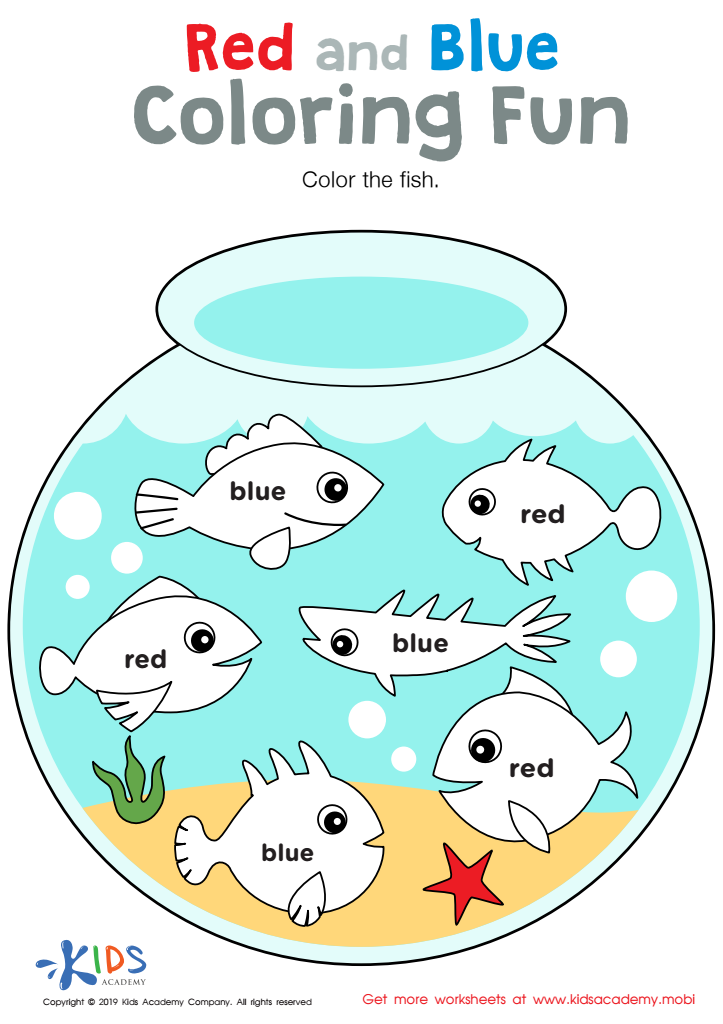
Red and Blue Coloring Fun Worksheet
 Assign to My Students











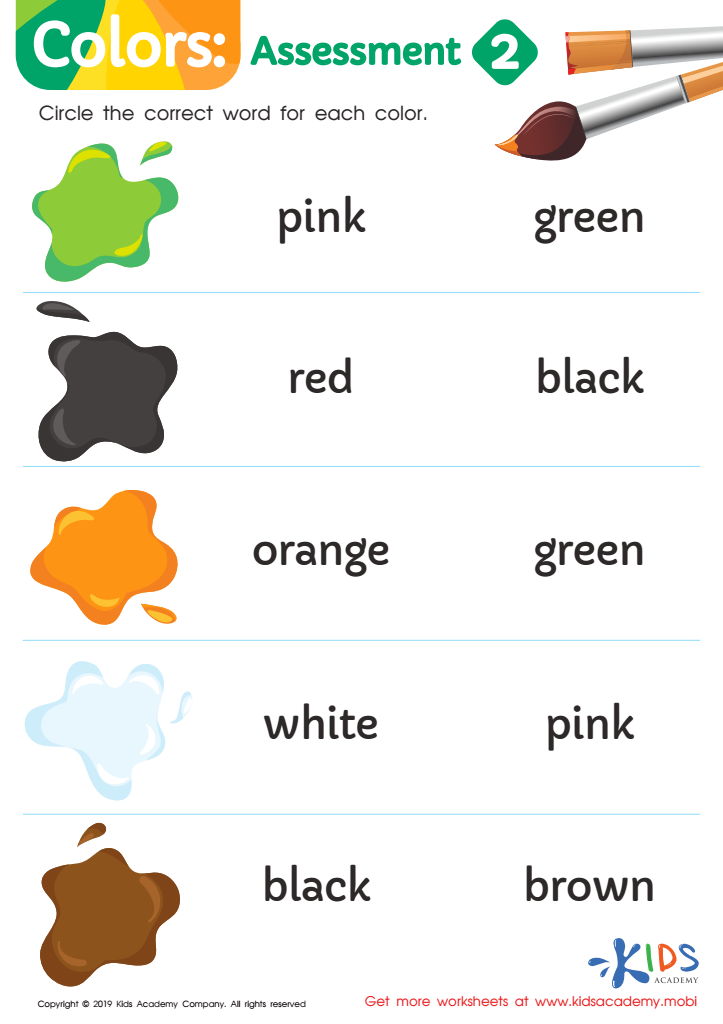
Colors: Assessment 2 Worksheet
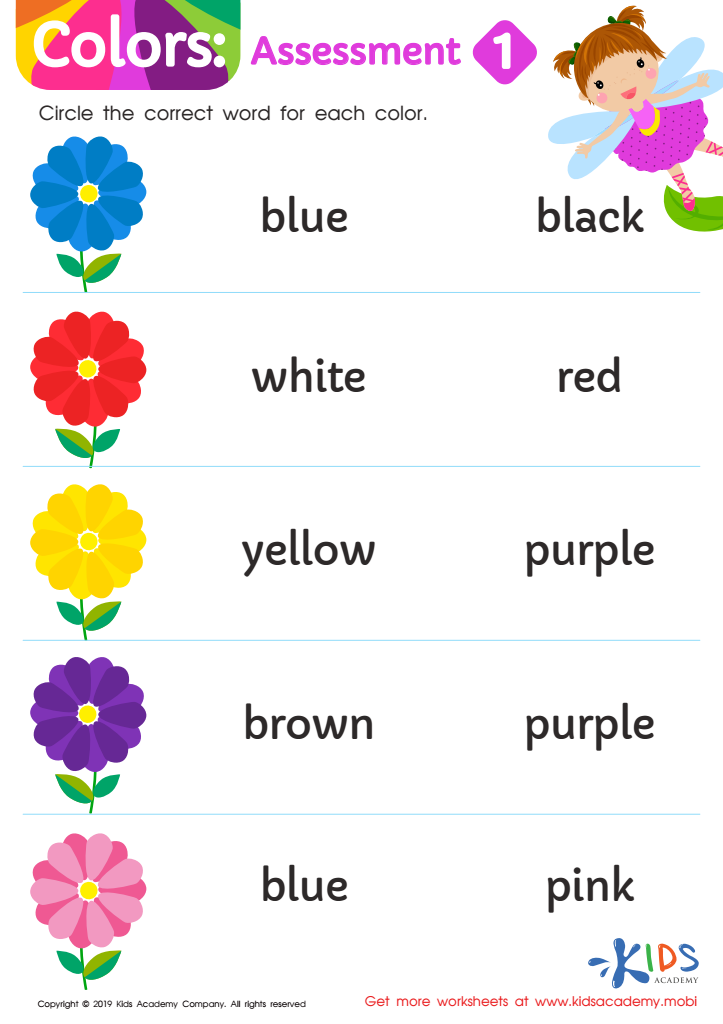
Colors: Assessment 1 Worksheet
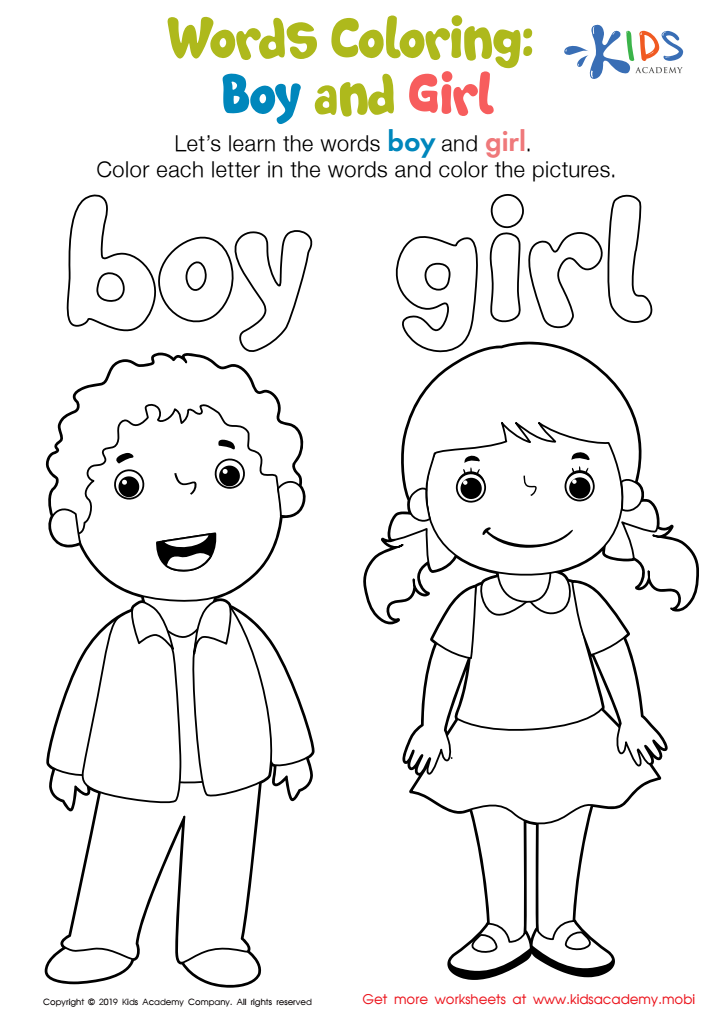
Boy and Girl Words Coloring Worksheet
Assign to My Students
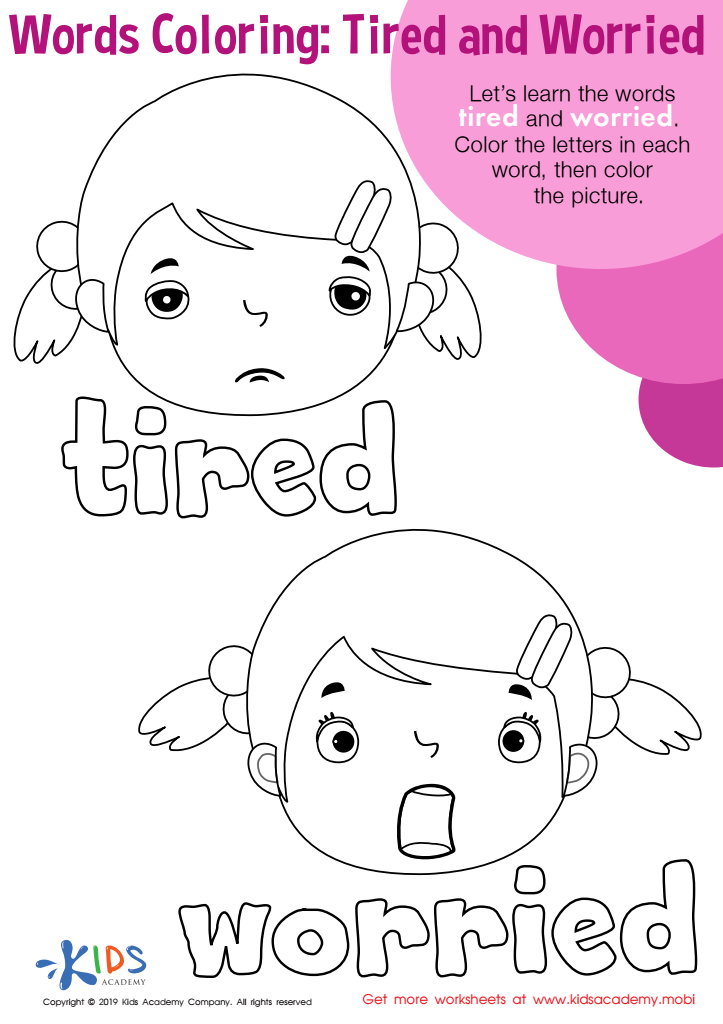
Tired and Worried Words Coloring Worksheet
Assign to My Students
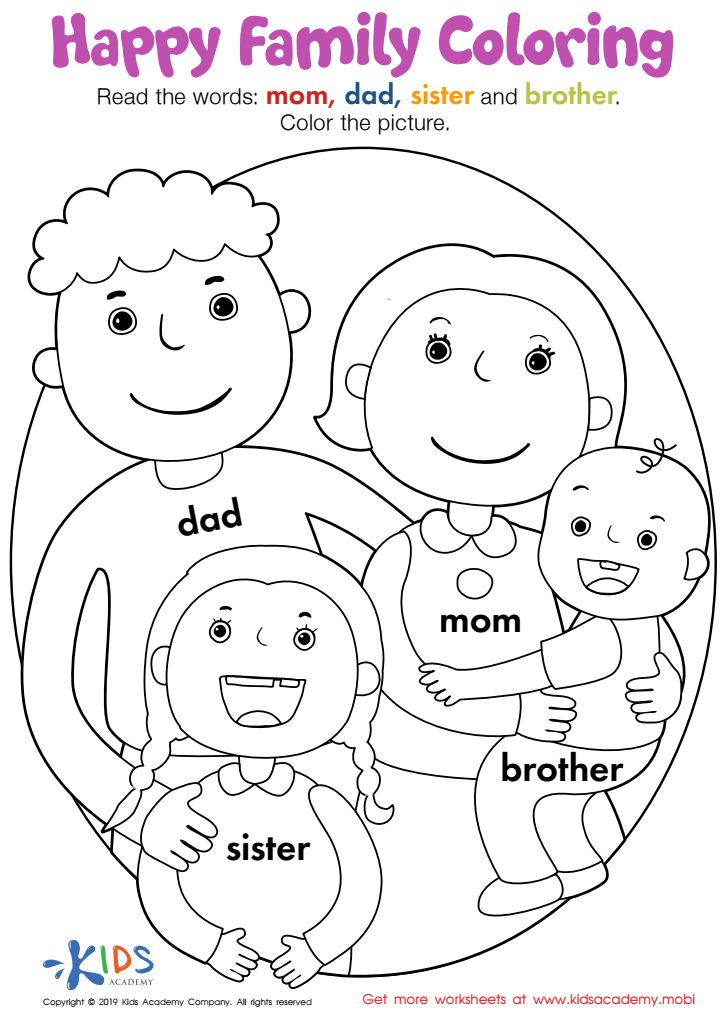
Happy Family Coloring Worksheet
Assign to My Students




.jpg)


.jpg)
Color recognition is foundational to a child's cognitive and language development, making it vital for parents and teachers to focus on building this skill between the ages of 5-8. Identifying and naming colors enriches a child’s vocabulary, enhancing their ability to describe and understand the world around them. This is particularly crucial during the early years, as it fosters effective communication and comprehension.
Furthermore, knowing colors aids in various learning domains such as math, reading, and science. For instance, differentiating colors can help children interpret graphs, follow patterns, and recognize shapes more accurately. These skills are fundamental stepping stones for advanced learning stages.
Color recognition also supports critical thinking and categorization skills. When children group objects based on color, they learn to organize and make connections, which translates to better problem-solving abilities. Moreover, participatory activities such as sorting colorful blocks or painting cultivate creativity and fine motor skills, contributing to overall developmental progress.
Socially, when children accurately identify colors, they gain confidence and are more likely to engage in collaborative play and learn alongside their peers. Therefore, investing time in color recognition not only expands vocabulary but also bolsters a well-rounded foundation for future learning and social interactions.