Understanding life cycles Easy Science Worksheets for Ages 5-8
4 filtered results
-
From - To
Explore the fascinating world of life cycles with our "Understanding Life Cycles" easy science worksheets designed for ages 5-8! These engaging, age-appropriate activities help young learners grasp the concept of life cycles in a fun and interactive way. Through colorful illustrations and hands-on tasks, children will discover the stages of life for various organisms, from plants to animals. Each worksheet encourages creativity while enhancing critical thinking and comprehension skills. Perfect for classrooms or home learning, our worksheets simplify complex ideas into relatable, accessible content. Join us in making science enjoyable and informative for your little ones today!
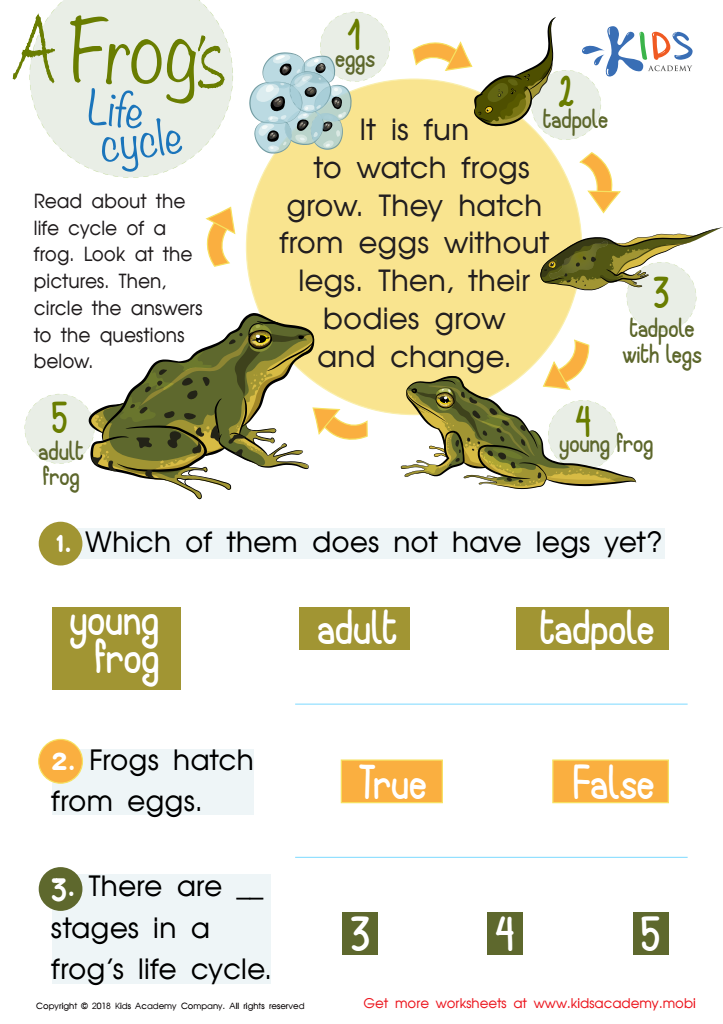
A Frog’s Life Cycle Worksheet
 Assign to My Students
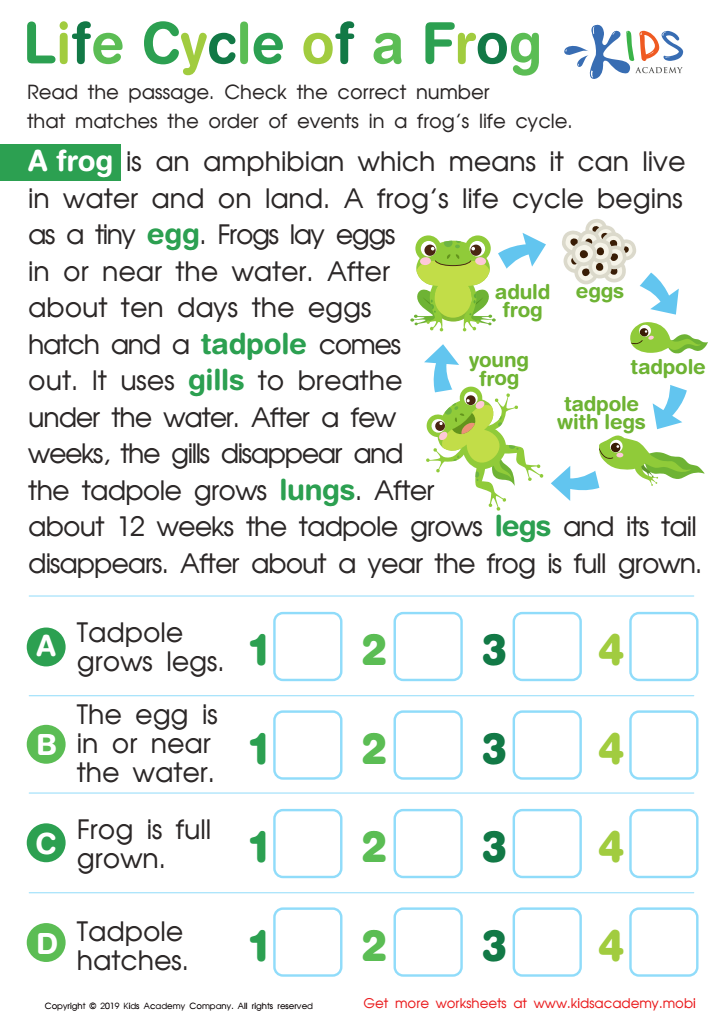
Life Cycle of a Frog Worksheet
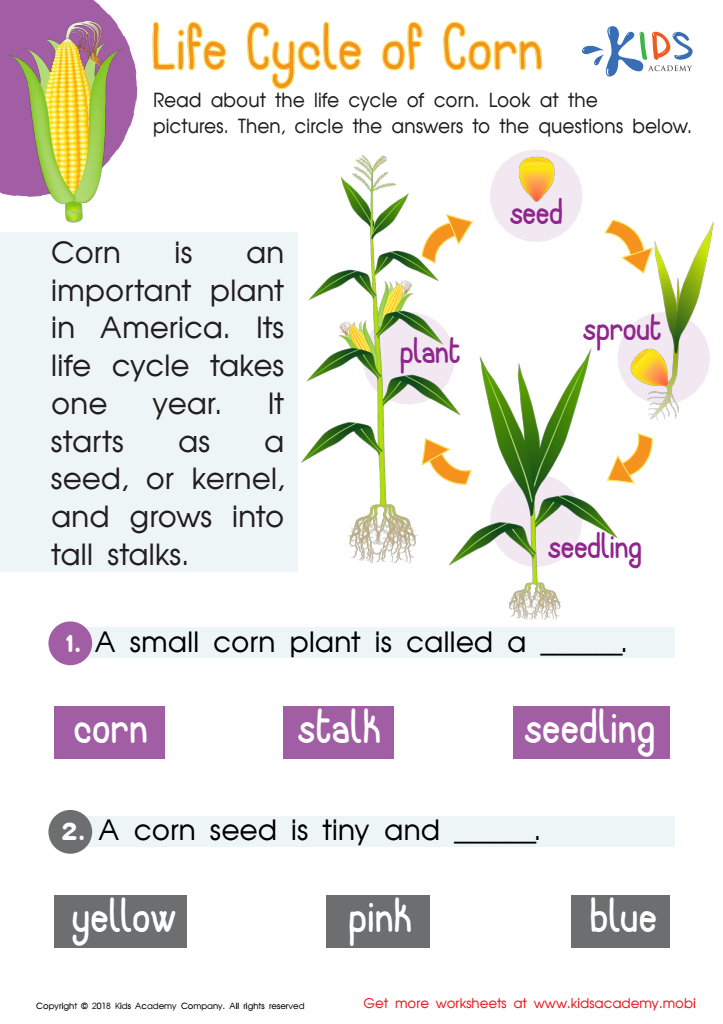
Life Cycle of Corn Worksheet
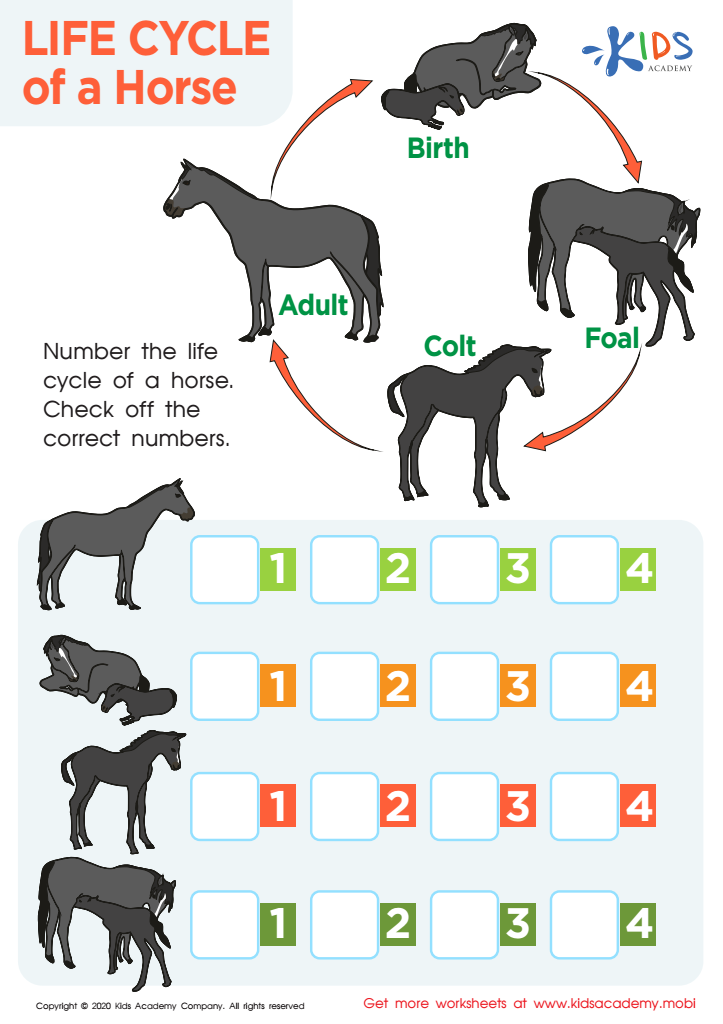
Life Cycle of a Horse Worksheet







Understanding life cycles is essential for young children, and both parents and teachers play a crucial role in this learning process. At ages 5-8, children are naturally curious about the world around them, and exploring life cycles—including those of plants, animals, and even humans—can enrich their understanding of nature and science.
Firstly, teaching children about life cycles fosters critical thinking and observation skills. Kids learn to recognize patterns and changes in growth, which encourages them to ask questions and develop inquiry-based learning habits. For instance, observing the metamorphosis of a caterpillar into a butterfly makes the concept of transformation tangible and memorable.
Moreover, understanding life cycles helps instill respect for living things and the environment. Children begin to appreciate the interconnectedness of different organisms and ecosystems, nurturing a sense of responsibility for nature and sustainability. This awareness can lead to greater empathy toward all living beings.
Additionally, life cycles often serve as an engaging entry point for broader topics, such as reproduction, ecosystems, and conservation. By grasping these foundational concepts early on, children build a solid base for their future science education. Ultimately, supporting children in understanding life cycles promotes curiosity, responsibility, and a lifelong love for learning about the natural world.