
Animal identification Easy Worksheets for Ages 5-9
5 filtered results
Difficulty Level
Grade
Age
-
From - To
Subject
Activity
Standards
Unlock the magical world of animals for your little ones with our "Animal Identification Easy Worksheets for Ages 5-9." Tailored to inspire curiosity and learning, these engaging worksheets help children recognize and name various animals, fostering their cognitive skills and vocabulary. Perfect for both classroom use and at-home activities, each worksheet promises fun illustrations and simple formats suitable for young learners. Whether identifying wild animals, farm animals, or pets, kids will boost their confidence and knowledge through play-based learning. Our printable worksheets make education accessible, enjoyable, and amazingly effective for early graders.울
Favorites
With answer key
Interactive
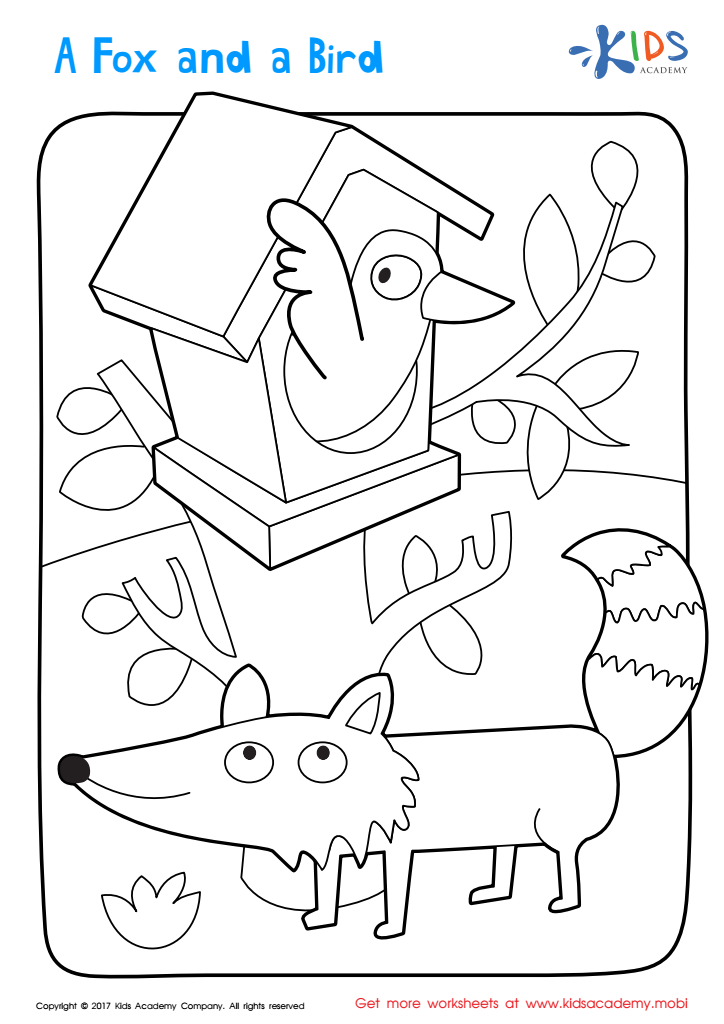
A Fox and Bird Coloring Page
Flex their creativity with this fun-filled coloring page: A Fox and Bird! Let kids express themselves through colors, allowing them to make each scene their own. This picture will bring joy to their art routine!
Download (PDF)
 Assign to My Students
Assign to My Students
A Fox and Bird Coloring Page
Worksheet
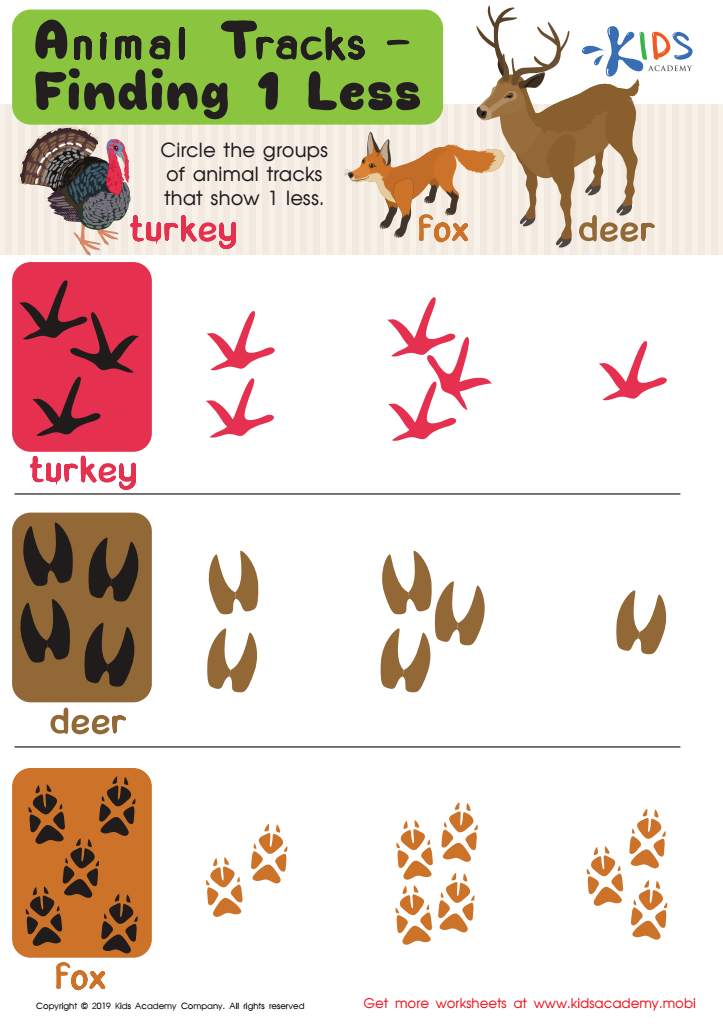
Animal Tracks: Find 1 Less Worksheet
Animals are all around us - wild and domestic. Ask your kids to name their favourites, then use this animal tracks worksheet to explore more. Help them circle the groups with 1 less animal track. It's a great way to learn about the creatures we share our world with!
Animal Tracks: Find 1 Less Worksheet
Worksheet
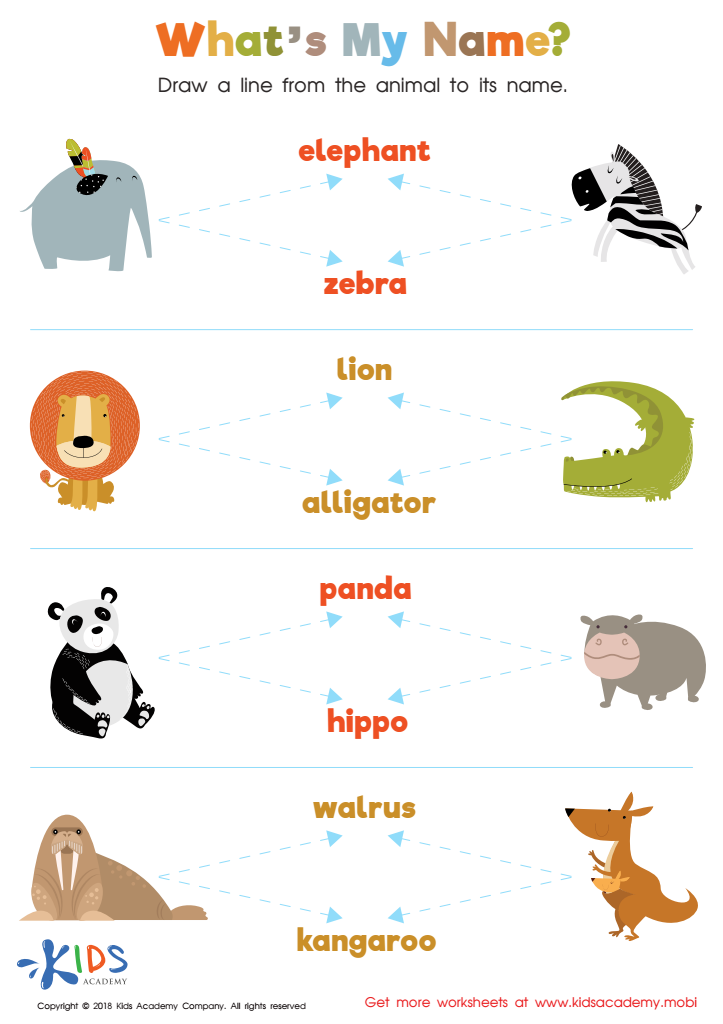
Animals and Their Names Worksheet
Match animals with their names with this worksheet! Draw a line from the word to its picture. Say the name of each animal. Later, search for these animals at the zoo - great for reinforcing learning!
Animals and Their Names Worksheet
Worksheet
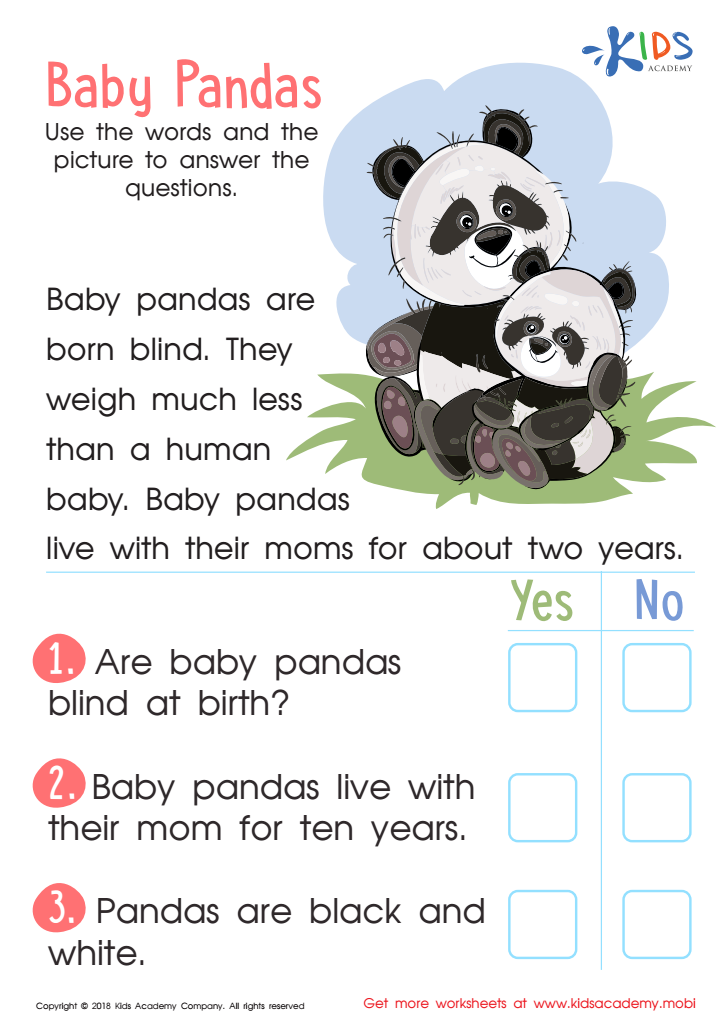
Baby Pandas Worksheet
Kids can't usually see pandas in person, but they can learn more about them with this fun worksheet! It includes a passage and picture, plus questions at the end to check kids' reading comprehension. Just ask them to read the text, check the "yes" and "no" boxes, and enjoy the fascinating facts about baby pandas!
Baby Pandas Worksheet
Worksheet
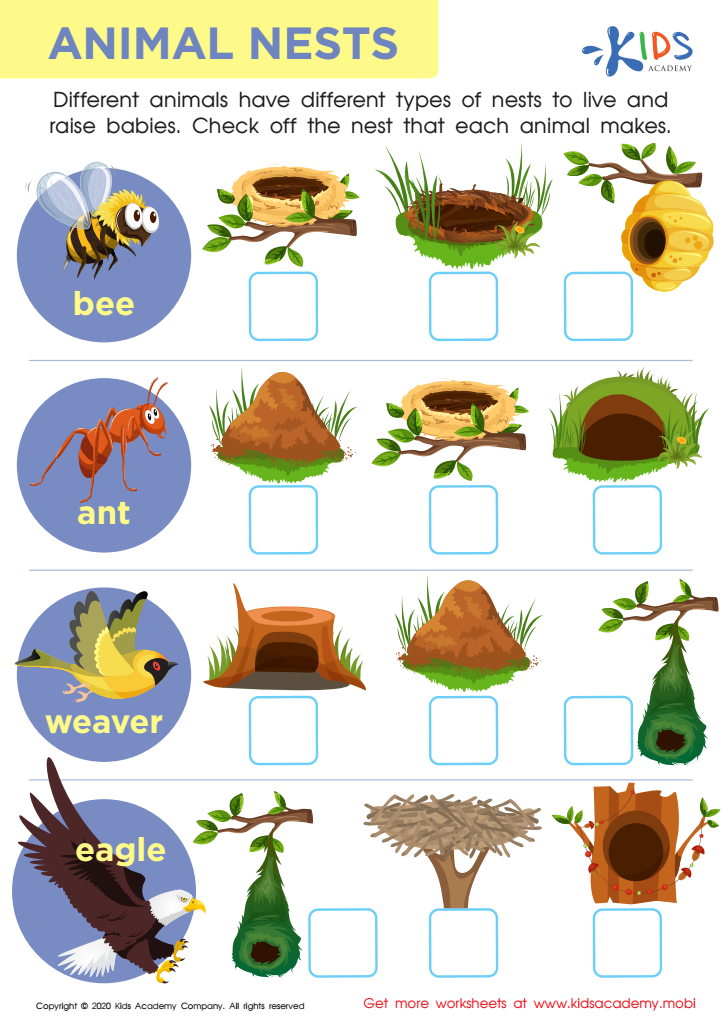
Animal Nests Worksheet
Animals need homes to sleep and stay safe. Look at the animal on the left and examine the nests and hives to the right. Check off the correct one for each animal to complete the worksheet! From birds to bees, it's a great way to show different types of homes animals make!
Animal Nests Worksheet
Worksheet
Join Kids Academy for Free
Who is primarily going to use this learning content?




.jpg)


Parents and teachers should care about early animal identification for children ages 5-9 for several crucial reasons. First, this key developmental activity nurtures curiosity about the natural world, fostering a lifelong love of nature and animals. When children learn to identify and name animals, they are also gaining valuable observational and cognitive skills. This helps improve focus, memory, and attention to detail.
Understanding different species and their characteristics encourages empathy and the importance of conservation from an early age. When children recognize that all creatures have habitats and specific roles in the ecosystem, they are more likely to develop a sense of responsibility towards protecting the environment.
Moreover, animal identification integrates seamlessly into early literacy and language development. It expands vocabulary and enriches descriptive language, contributing to better reading and communication skills.
Socially, discussing animals and their traits provides a common theme for interaction, boosting social skills and cooperative learning. Activities like field trips, nature walks, and classroom discussions on animals can foster teamwork and respect among peers.
In essence, early animal identification is more than just a fun activity; it's foundational to cognitive development, environmental stewardship, language acquisition, and social connectedness. It equips children with essential life skills, nurturing well-rounded, informed, and empathetic individuals.








