Reading comprehension Easy Addition Worksheets for Ages 5-9
4 filtered results
-
From - To
Discover "Reading Comprehension Easy Addition Worksheets for Ages 5-9" from Kids Academy, designed to boost your child's math and reading skills effortlessly. These engaging worksheets combine basic addition problems with fun reading comprehension activities, making learning enjoyable and effective. Tailored for young learners aged 5 to 9, each worksheet enhances understanding through practical exercises that reinforce math concepts while developing critical reading abilities. Perfect for classroom use or extra practice at home, Kids Academy's worksheets provide a strong foundation for future academic success. Help your child excel with these expertly crafted resources today!
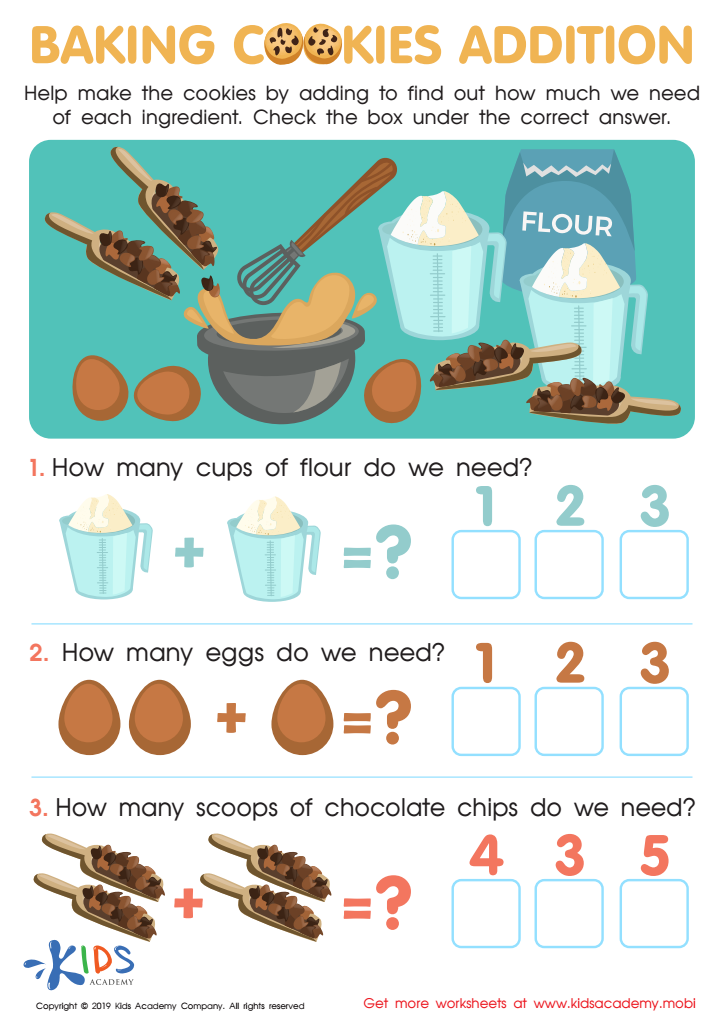
Baking Cookies Addition Worksheet
 Assign to My Students
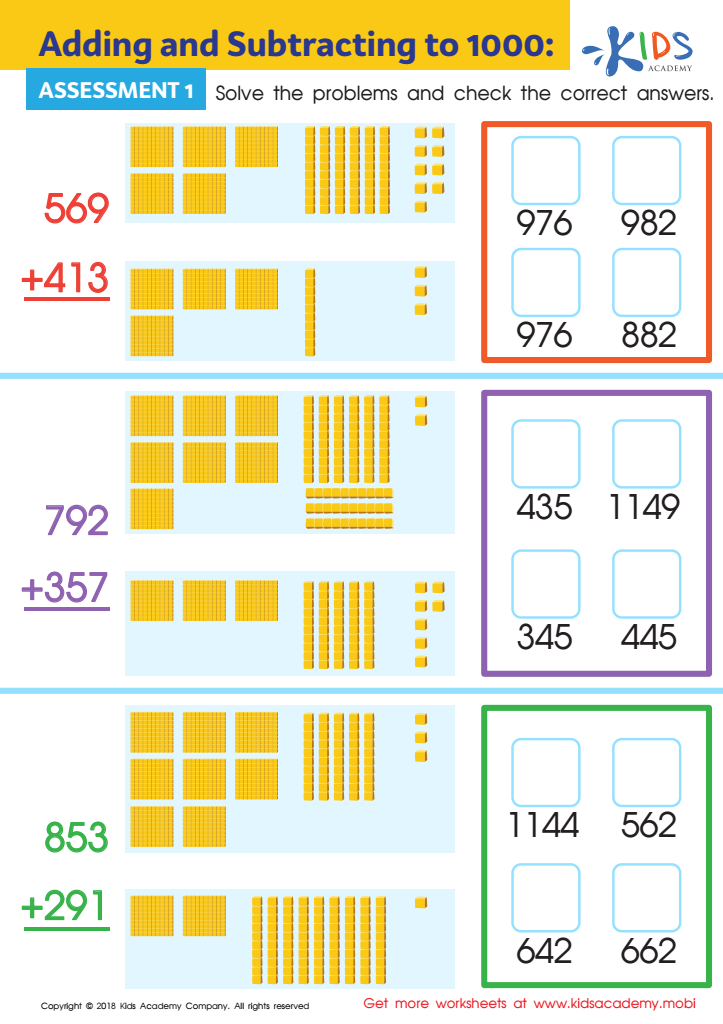
Adding and Subtracting to 1 Worksheet: Assessment 1
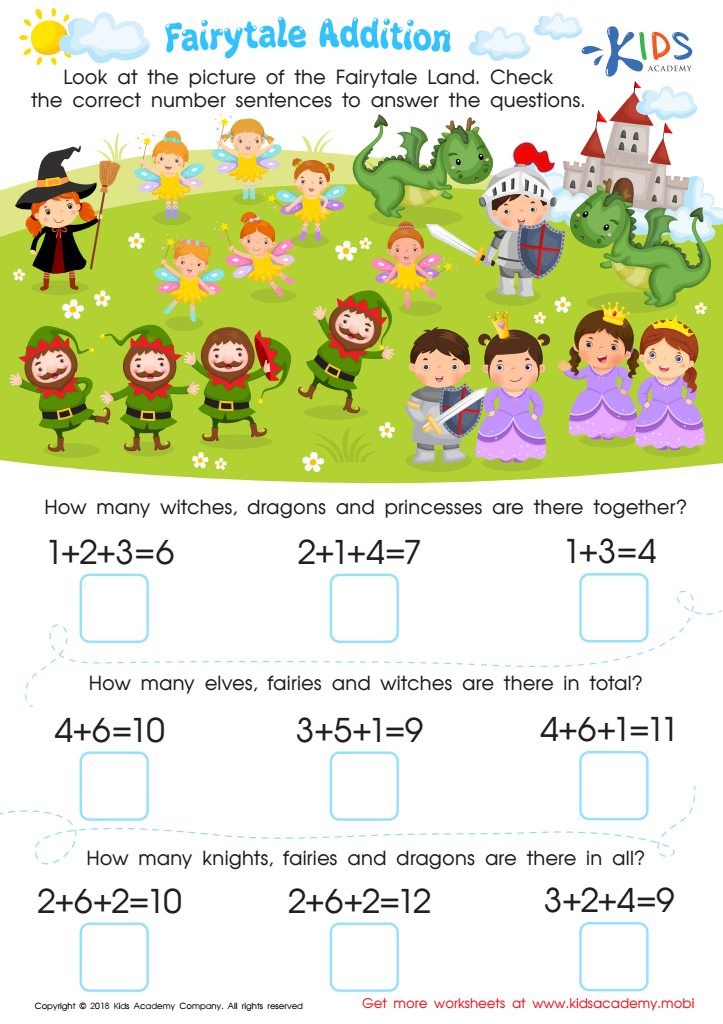
Fairytale Addition Worksheet
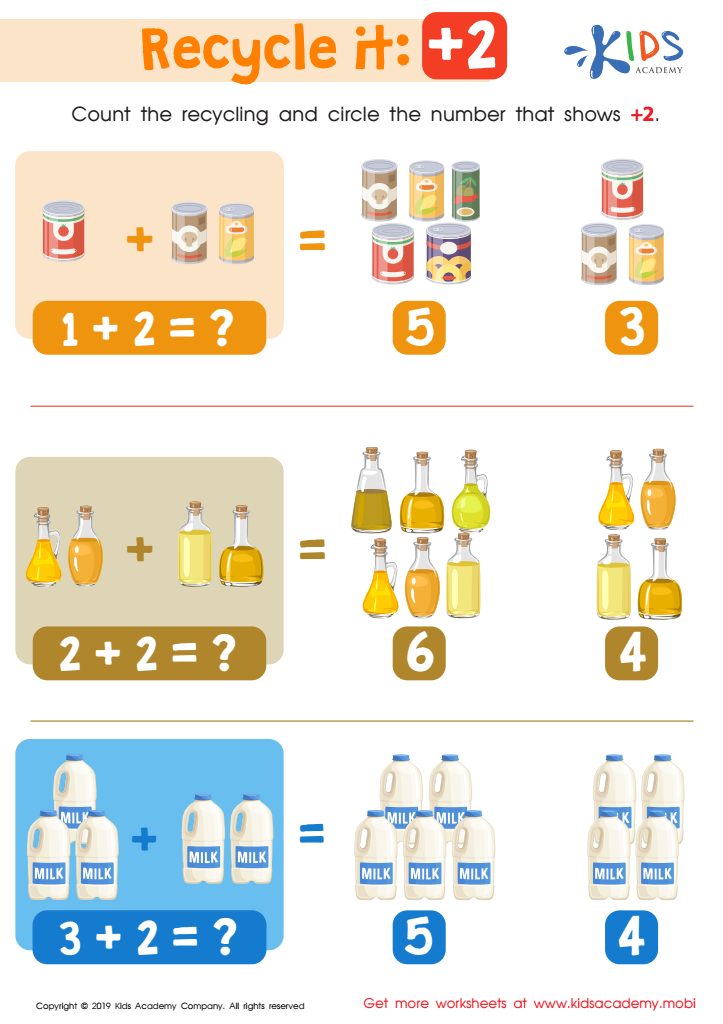
Recycle It: +2 Worksheet








Reading comprehension and basic math skills, such as easy addition, are foundational elements of a child's intellectual development, particularly between the ages of 5-9. Parents and teachers should prioritize these areas because they serve as critical building blocks for future academic success and lifelong learning.
Reading comprehension is essential for a child's ability to understand and process information. At this age, children are transitioning from learning to read to reading to learn. Strong reading comprehension enables them to grasp the meaning of texts, follow instructions, and develop critical thinking skills. It fosters a love for reading, paving the way for improved language acquisition, vocabulary, and communication skills.
Easy addition, on the other hand, is fundamental for mathematical literacy. Mastery of basic addition helps children develop numerical fluency and problem-solving skills. Understanding addition lays the groundwork for more complex math concepts such as subtraction, multiplication, and division. It also enhances logical reasoning and cognitive functions, which are applicable in various real-life situations, from handling money to breaking down complex problems.
Together, reading comprehension and basic addition bolster a child's overall academic performance. Fostering these skills early on ensures that children are well-prepared to tackle more advanced subjects with confidence. Therefore, parents and teachers alike should be deeply invested in nurturing these critical competencies in young learners.








