Number Recognition Easy Numbers Worksheets for Ages 5-9 - Page 4
75 filtered results
-
From - To

Counting on the City Skyline: Dot-to-Dot Worksheet
 Assign to My Students
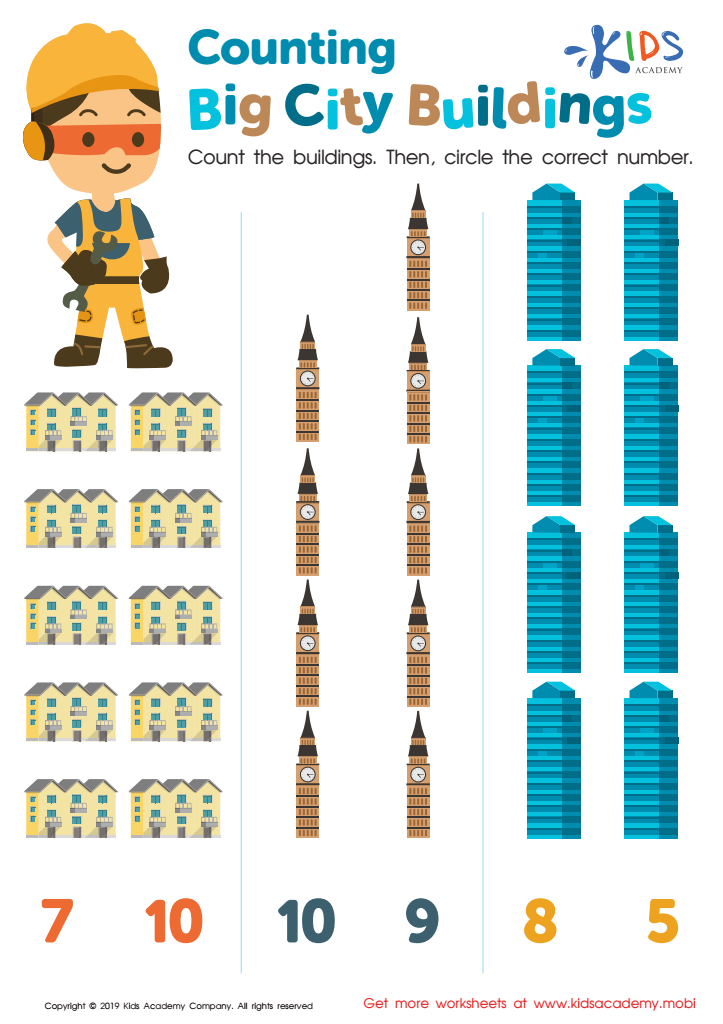
Counting Big City Buildings Worksheet

Night Sky Numbers Worksheet








Number recognition is a foundational skill for children aged 5-9. It sets the groundwork for future success in mathematics and overall academic achievement. When parents and teachers invest time and effort in helping children recognize and understand numbers, they are opening doors to essential learning opportunities.
Firstly, early number recognition facilitates easier learning of basic arithmetic operations such as addition, subtraction, multiplication, and division. Children who can recognize numbers quickly and accurately are more likely to develop confidence in these areas, reducing anxiety and fostering a positive attitude towards math.
Secondly, number recognition helps in everyday life. Simplistic tasks like telling time, reading page numbers in books, counting money, measuring ingredients for a recipe, or playing board games all require a basic understanding of numbers. This real-world application enhances a child's practical skills, making them more independent and competent in handling daily activities.
Moreover, early interactions with numbers help stimulate cognitive development. They bolster memory, improve attention span, and encourage logical thinking. By incorporating fun and engaging number recognition activities like games, flashcards, or interactive apps, children can also enjoy learning experiences that spur curiosity and excitement.
In summary, prioritizing number recognition for young children equips them with crucial skills for both academic success and everyday competence. It is an investment that pays rich dividends throughout their educational journey and beyond.








