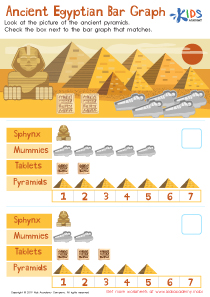
Basic arithmetic practice Easy Math Worksheets for Ages 5-9
5 filtered results
-
From - To
Discover engaging Basic Arithmetic Practice worksheets designed for children ages 5-9! Our Easy Math Worksheets make learning fun and accessible, helping young learners master essential skills such as addition, subtraction, and number recognition. Tailored to suit varying skill levels, these printable resources encourage independent practice and build confidence in mathematics. Each worksheet incorporates colorful designs and interactive elements to capture kids' attention while reinforcing foundational concepts. Perfect for home or classroom use, these worksheets not only enhance math proficiency but also promote critical thinking and problem-solving abilities. Unlock your child's potential with our comprehensive collection of enjoyable, easy-to-use math learning materials!
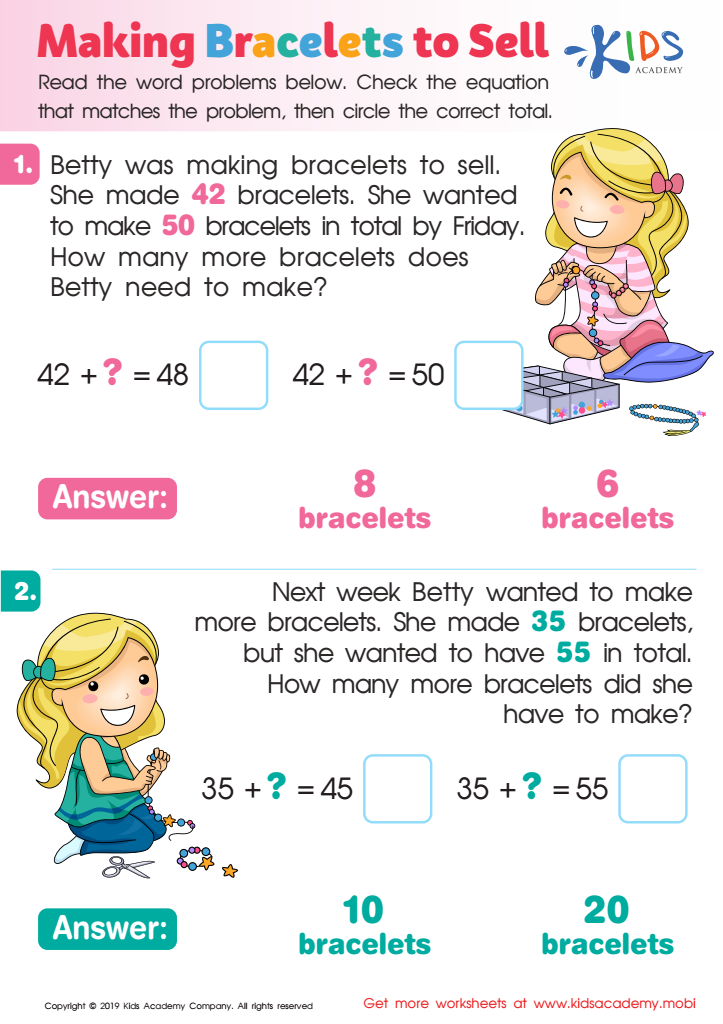
Making Bracelets to Sell Worksheet
 Assign to My Students
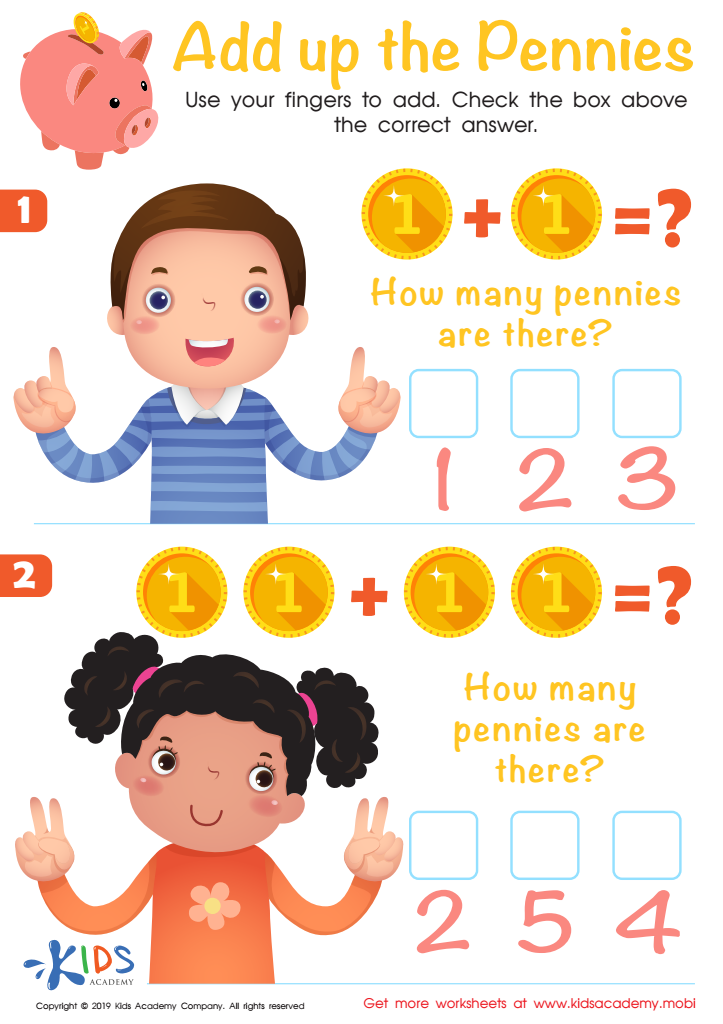
Add up the Pennies Worksheet
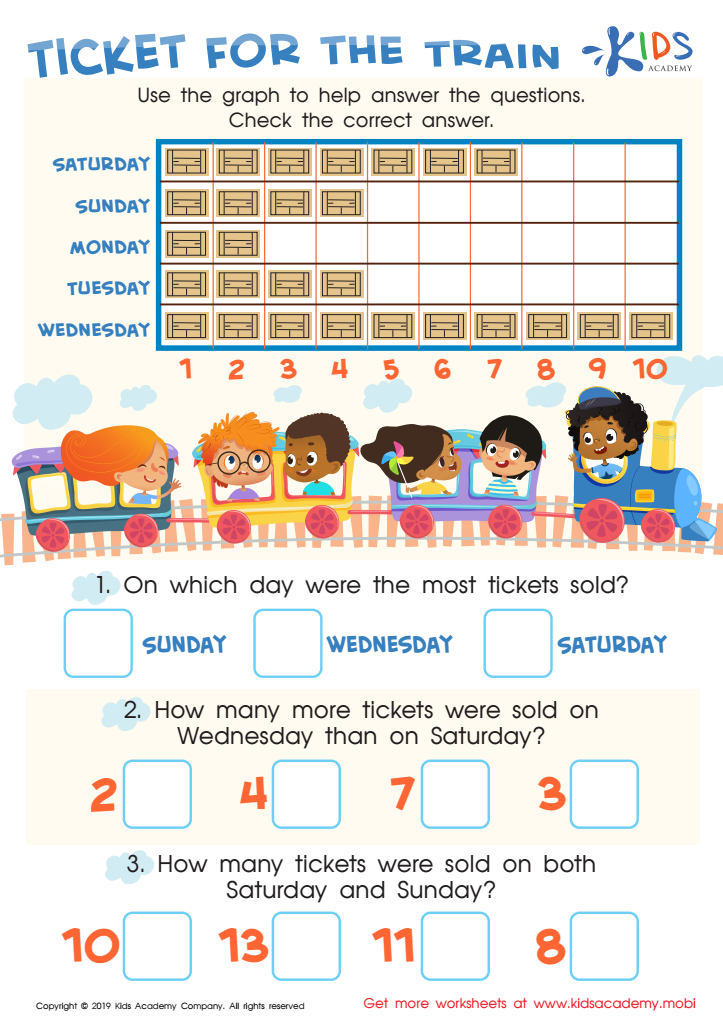
Ticket for the Train Worksheet
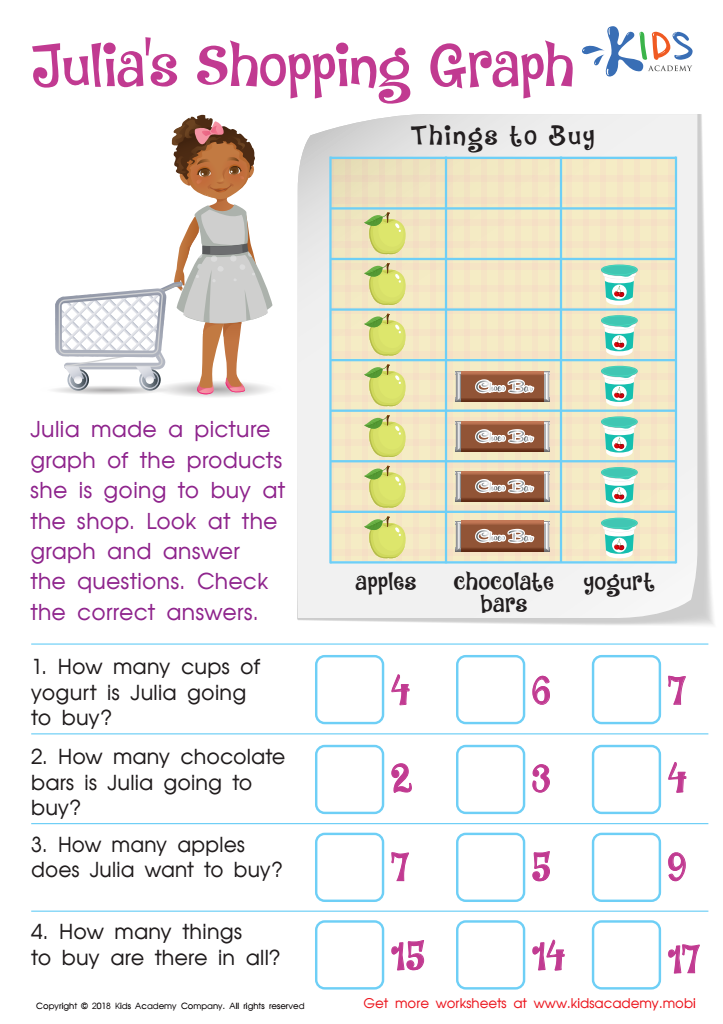
Julia's Shopping Graph Worksheet
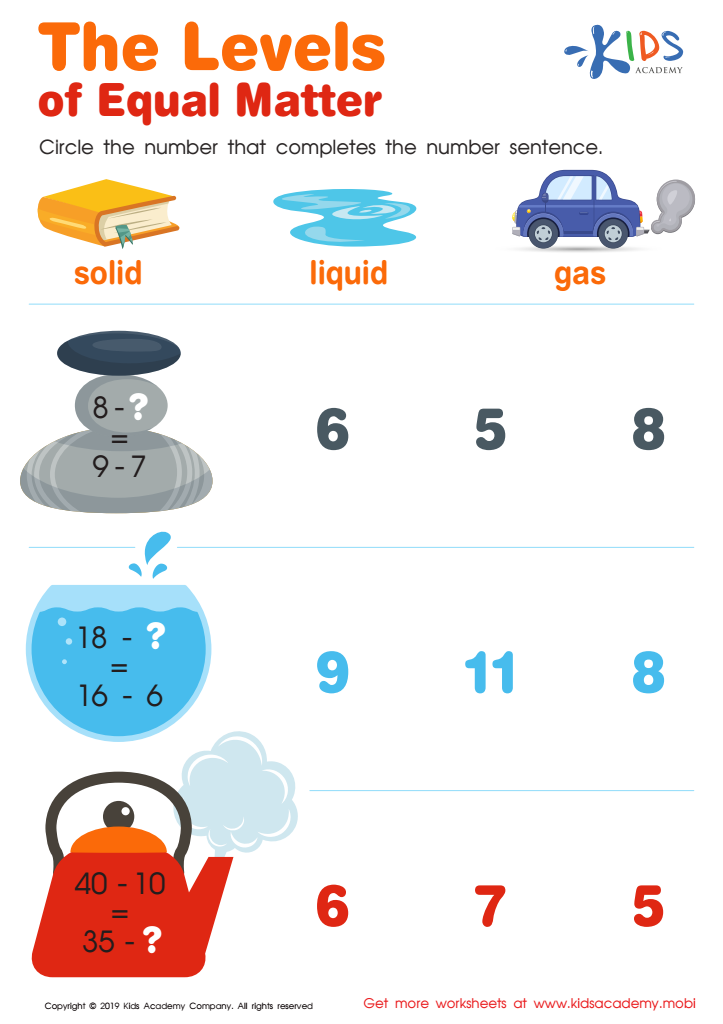
The Levels of Equal Matter Worksheet






.jpg)
Basic arithmetic practice is essential for children ages 5-9, as it lays the foundation for their future math skills and overall academic success. During these formative years, children are developing critical thinking and problem-solving abilities. Engaging in simple math activities helps improve their number sense, enhances cognitive development, and fosters a positive attitude towards learning.
Parents and teachers should care because early math skills are linked to long-term educational outcomes. Mastery of basic arithmetic—addition, subtraction, and number recognition—forms the cornerstone for more complex operations they will encounter in later grades. Additionally, children who are confident in their basic math abilities are more likely to engage positively with mathematics in the future, reducing anxiety related to the subject.
Moreover, incorporating fun, interactive math practice at home or in the classroom can promote enthusiasm for learning and strengthen the parent-child or teacher-student relationship. Utilizing age-appropriate resources, such as games, puzzles, and worksheets, can keep children motivated and engaged. Ultimately, by prioritizing basic arithmetic practice, parents and teachers support not only academic growth but also instill a lifelong love of learning in children, enabling them to navigate the challenges of higher-level math with confidence.