
Counting proficiency Easy Math Worksheets for Ages 5-9
3 filtered results
Difficulty Level
Grade
Age
-
From - To
Subject
Activity
Standards
Unlock your child's counting potential with our "Counting Proficiency Easy Math Worksheets for Ages 5-9." Specifically crafted to make learning fun and engaging, these worksheets help children develop essential counting skills. Whether it's counting objects, understanding number sequences, or mastering basic arithmetic, our worksheets offer a range of activities that cater to various learning styles. Designed by educational experts, each worksheet is both challenging and enjoyable, aiming to boost your child's confidence and proficiency in math. Perfect for supplementing school work or home practice, these printables are the ideal resource for nurturing a love for math in young learners.
Favorites
With answer key
Interactive
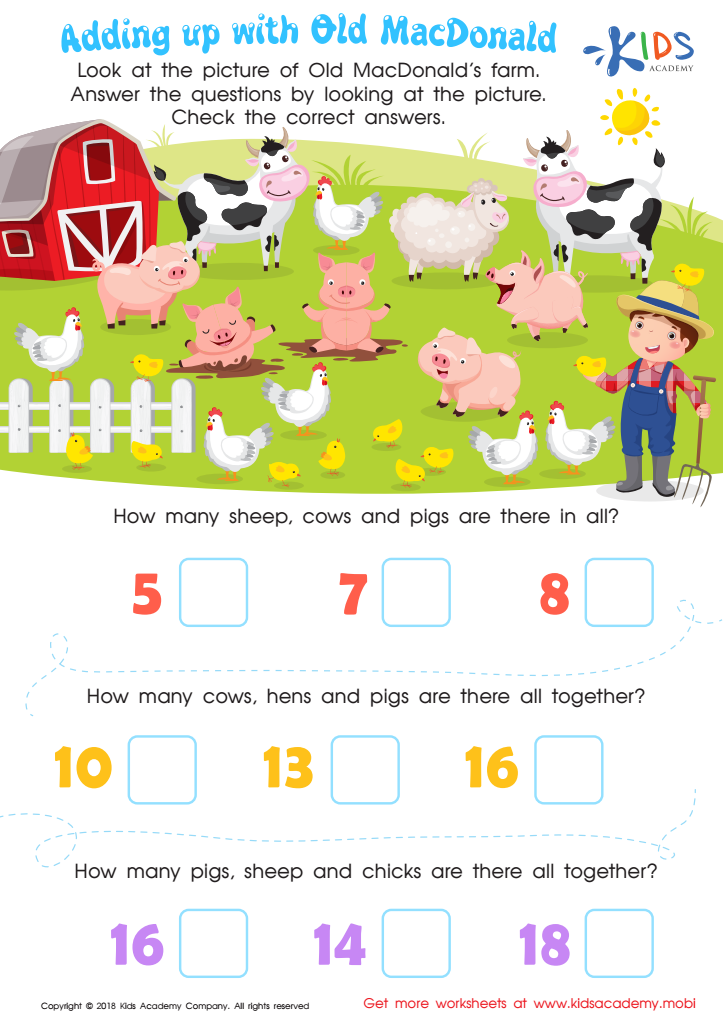
Adding Up with Old MacDonald Worksheet
Old MacDonald needs help counting his animals! Give your little math whiz a fun challenge with a free PDF worksheet. They'll love counting the animals and doing basic addition with two or three addends. Who knew math could be so much fun on the farm?
 Assign to My Students
Adding Up with Old MacDonald Worksheet
Worksheet
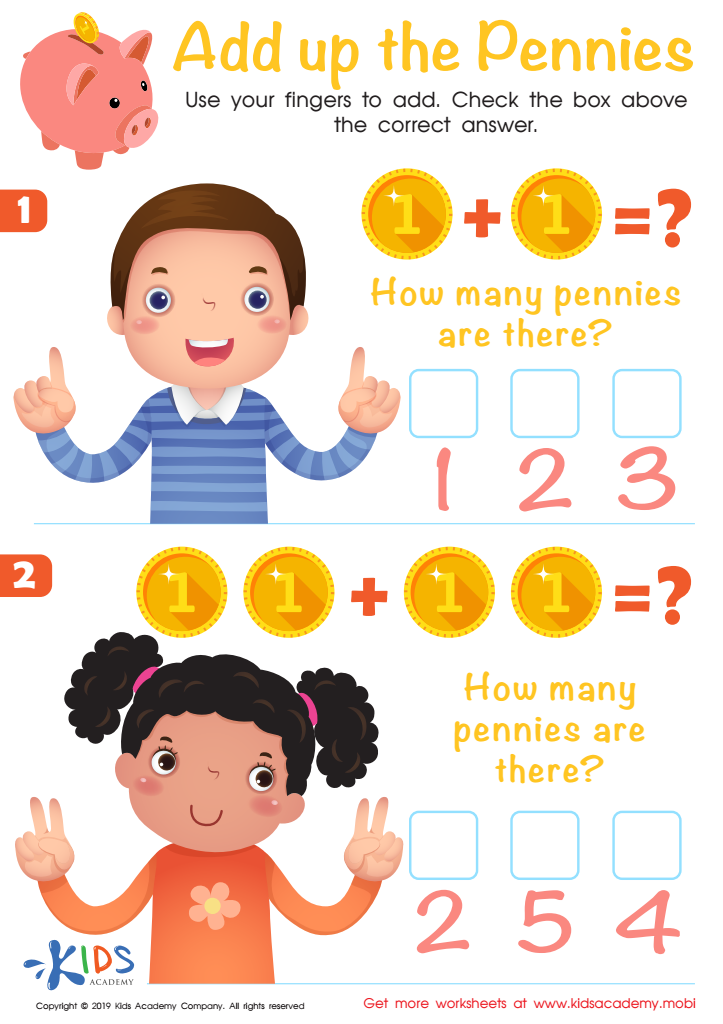
Add up the Pennies Worksheet
Help your kids ace their math skills with this simple worksheet! You can guide them to use their fingers to add numbers and then check the box above the correct answer. With practice and your support, they can become faster and better at adding numbers. No sweating required!
Add up the Pennies Worksheet
Worksheet
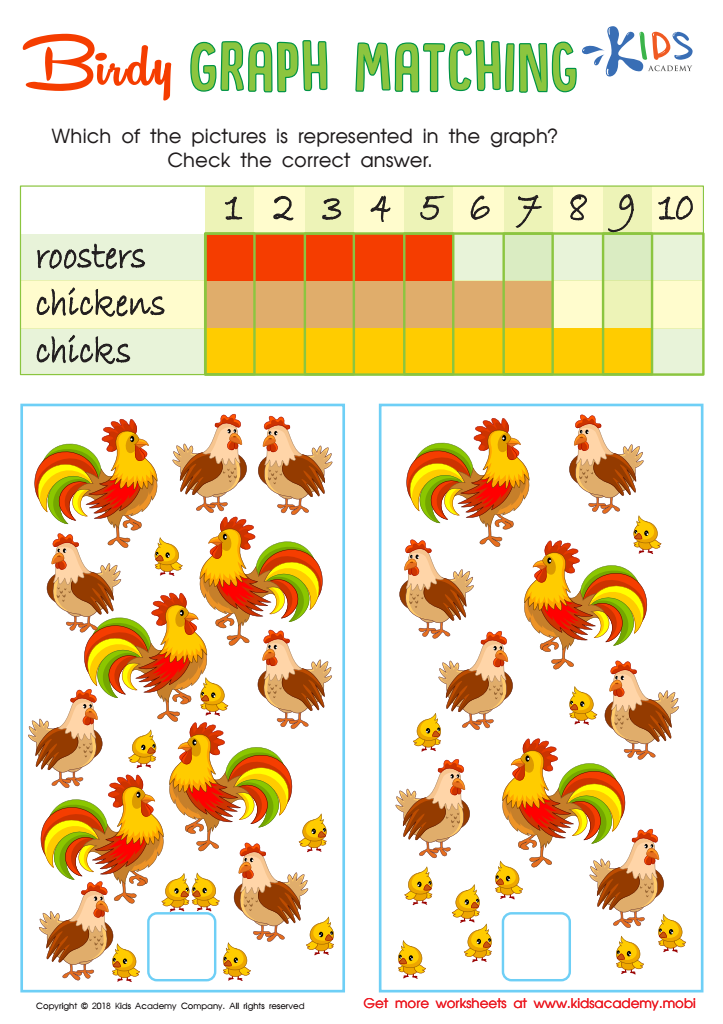
Birdy Graph Matching Worksheet
Treat your little one to a fun worksheet to practice visual discrimination, counting, graphing and tallying! They will sort the birds, count and assign values and use graph reading to answer the questions. They'll be so busy enjoying the counting that they won't even realize they are honing their skills!
Birdy Graph Matching Worksheet
Worksheet
Join Kids Academy for Free
Who is primarily going to use this learning content?




.jpg)


Counting proficiency is a fundamental skill for young children, and it lays the groundwork for future mathematical learning and development. For ages 5-9, having a solid grasp of counting helps students develop a strong number sense, enabling them to understand the relationship between numbers, quantities, and basic arithmetic operations. This foundational knowledge is crucial since mathematical skills are built progressively. Without proficiency in basic counting, children may struggle with more advanced concepts like addition, subtraction, multiplication, and division, which can affect their confidence and interest in math.
Moreover, early counting skills support cognitive development in other ways as well. They enhance concentration, logical thinking, and problem-solving abilities. These are critical for academic success across all subjects—not just math. Counting also integrates with language skills as children learn number names, patterns, and sequences, enriching their vocabulary and conceptual understanding.
From an emotional and social standpoint, mastering counting helps children gain a sense of accomplishment and boosts their self-esteem. It assists in everyday activities, from telling time to handling money, fostering independence. Regular practice in counting through games, songs, and interactive activities can make learning math fun, engaging, and stress-free, encouraging a lifelong positive attitude toward mathematics. Teachers and parents play an essential role in nurturing these vital skills through supportive, enjoyable learning experiences.








