Visual discrimination Easy Math Worksheets for Ages 5-9
3 filtered results
-
From - To
Enhance your child's visual discrimination skills and math abilities with our easy-to-follow math worksheets specially designed for ages 5-9. Our engaging printables help young learners recognize differences in numbers, shapes, sizes, and patterns, while reinforcing essential math concepts. These activities are perfect for building strong foundations in classrooms or at home, making learning fun and interactive. Tailored for young minds, our worksheets help sharpen attention to detail, improve focus, and boost confidence in math. Discover a variety of exercises in our Visual Discrimination Easy Math Worksheets and watch your child develop critical skills with enthusiasm and ease.
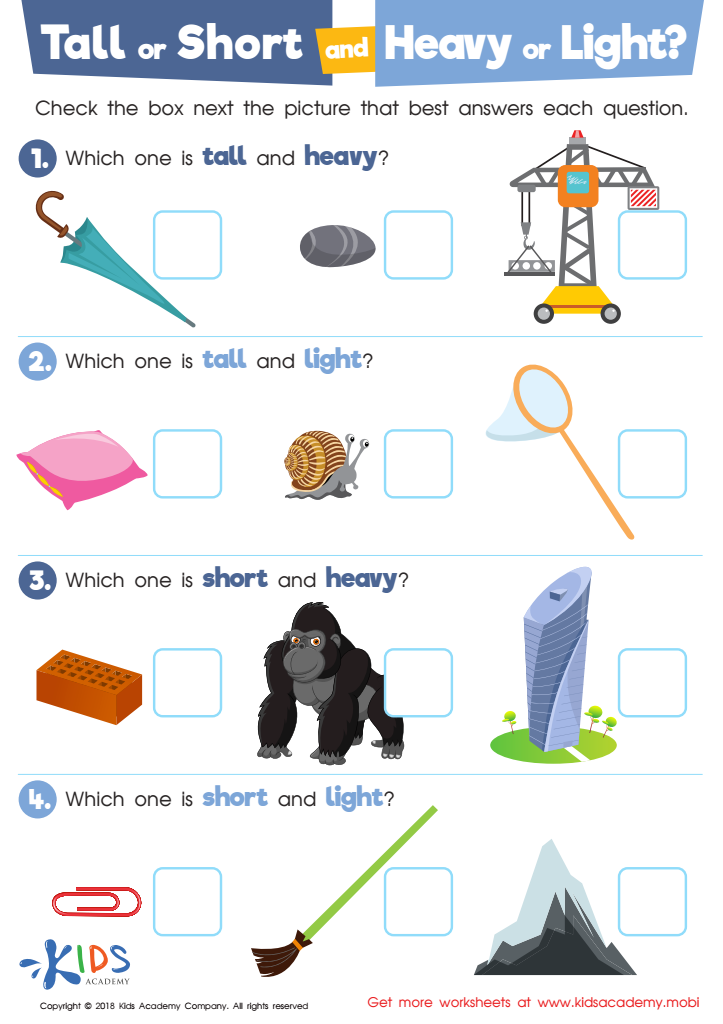
Tall or Short and Heavy or Light? Worksheet
 Assign to My Students
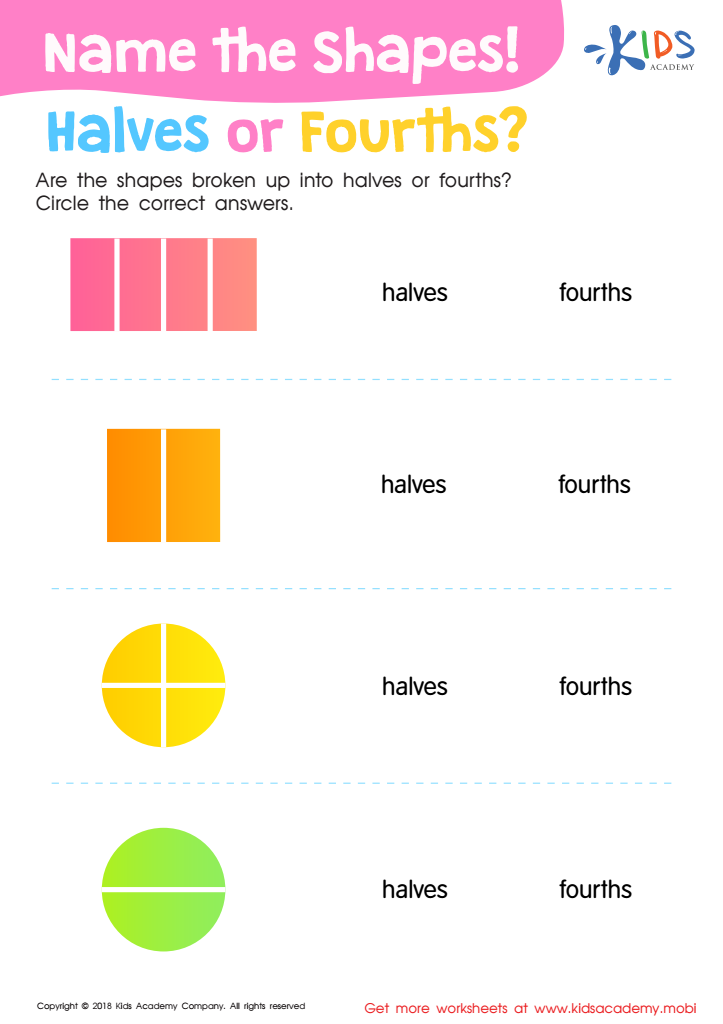
Name the Shapes Halves or Fourths? Worksheet
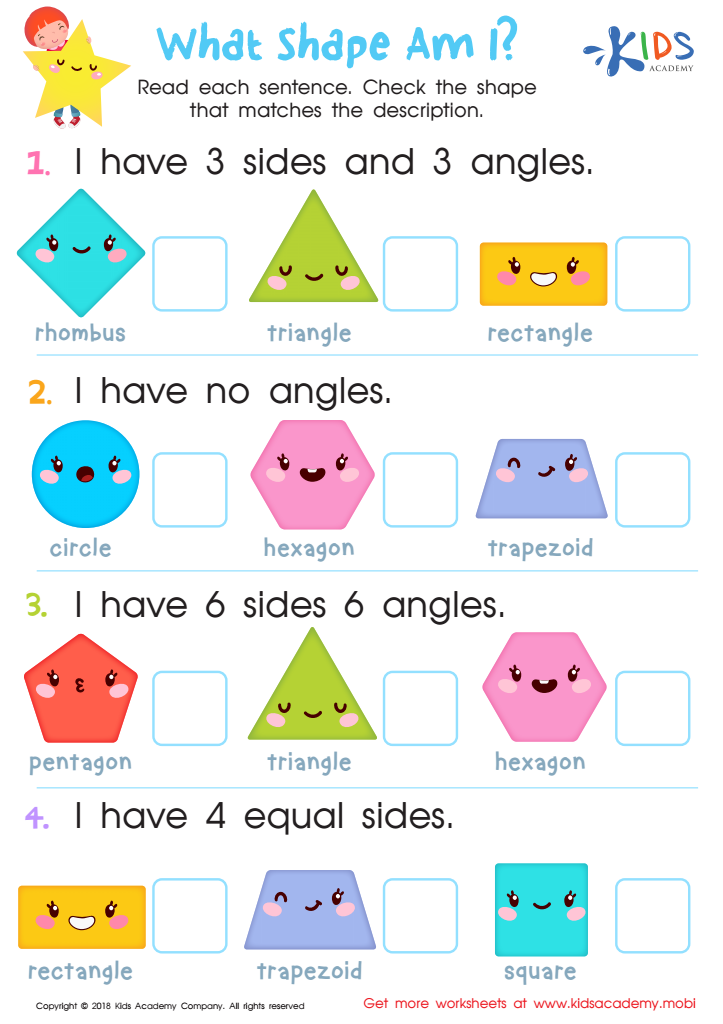
What Shape Am I? Worksheet








Visual discrimination is crucial for young children, especially those ages 5-9, as it lays the foundation for skills in math and other academic areas. Parents and teachers should care about visual discrimination in easy math activities because it involves the ability to notice and compare the differences and similarities in numbers, shapes, sizes, patterns, and colors. This skill is essential for a child’s overall cognitive development and can significantly impact their ability to recognize numbers and symbols, which are fundamental in basic arithmetic.
Children with strong visual discrimination skills can more easily differentiate between similar-looking numbers, preventing common errors such as mixing up 6 and 9 or 1 and 7. These skills also help in understanding geometric concepts, sorting and classifying objects, and following patterns— all foundational math concepts. Additionally, enhanced visual discrimination aids in reading as children learn to differentiate between similar letter forms and word structures, thus supporting literacy alongside numeracy.
By emphasizing visual discrimination through fun and easy math activities, parents and teachers can build a child’s confidence, improve their problem-solving skills, and foster a love for learning that carries into more complex mathematical concepts and other subjects. Therefore, fostering these abilities damages school readiness and long-term academic success.








