Easy Multiplication Worksheets for Ages 5-9 - Page 2
29 filtered results
-
From - To
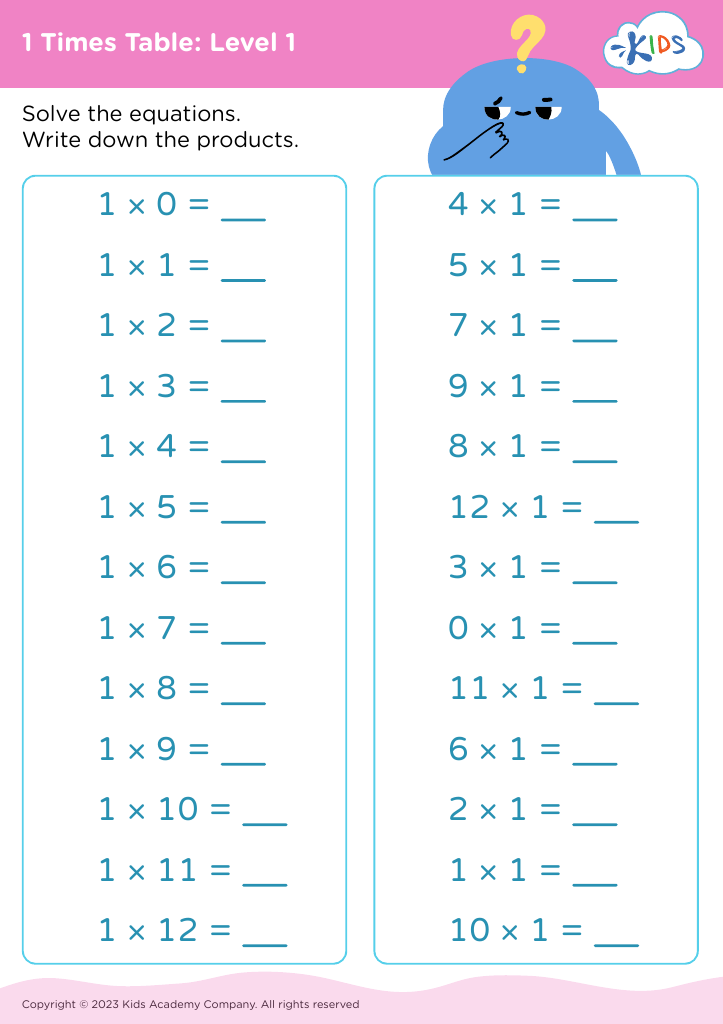
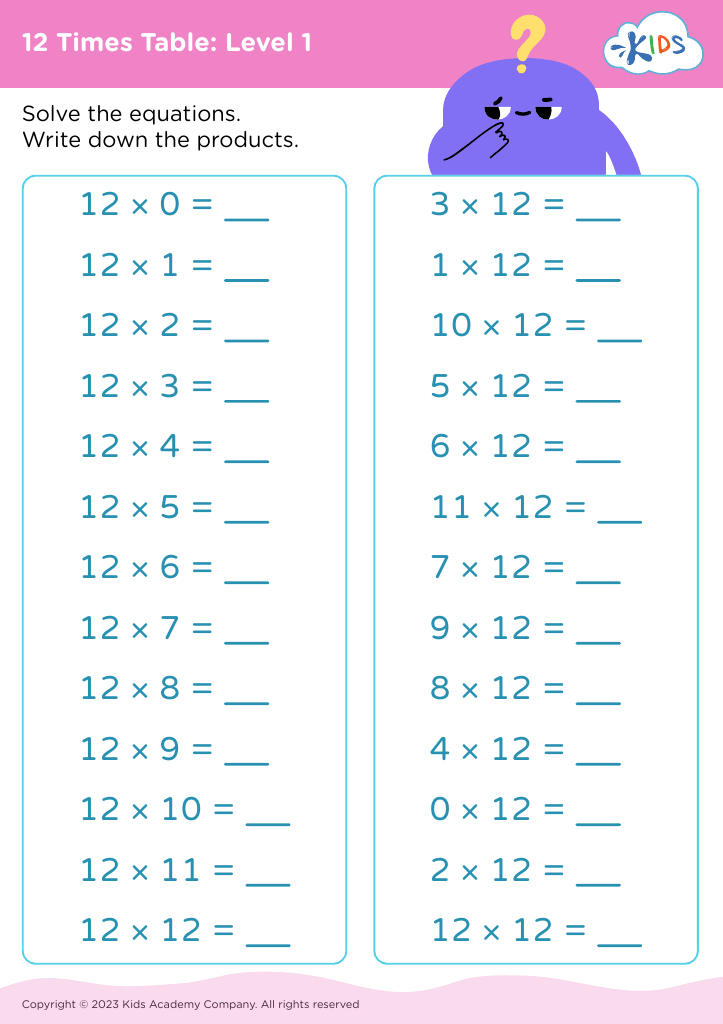
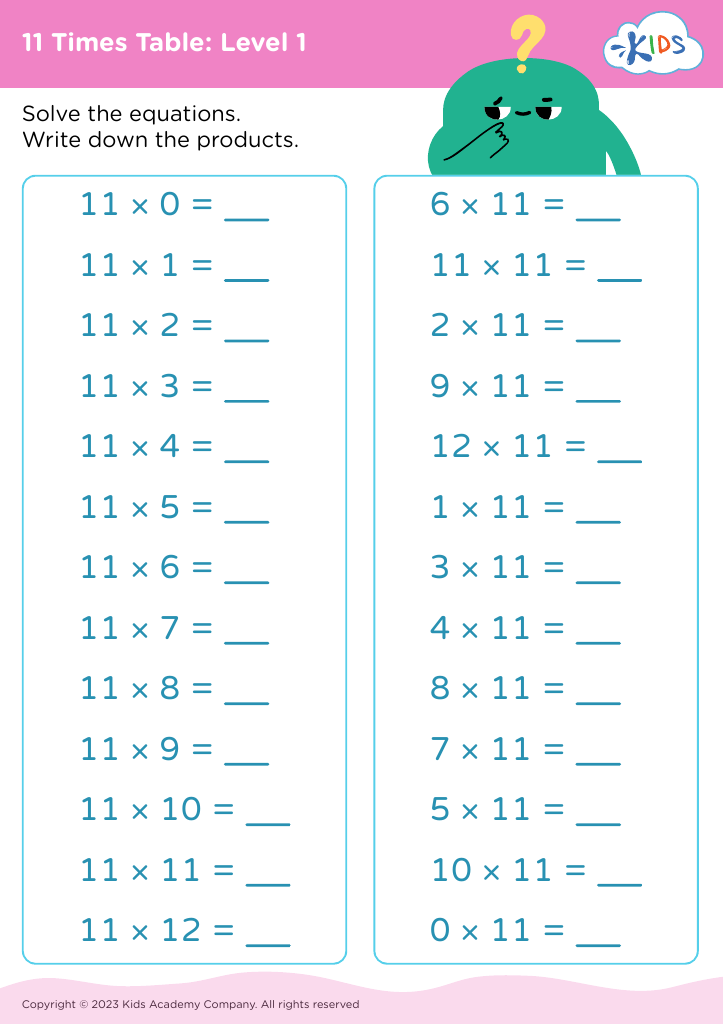
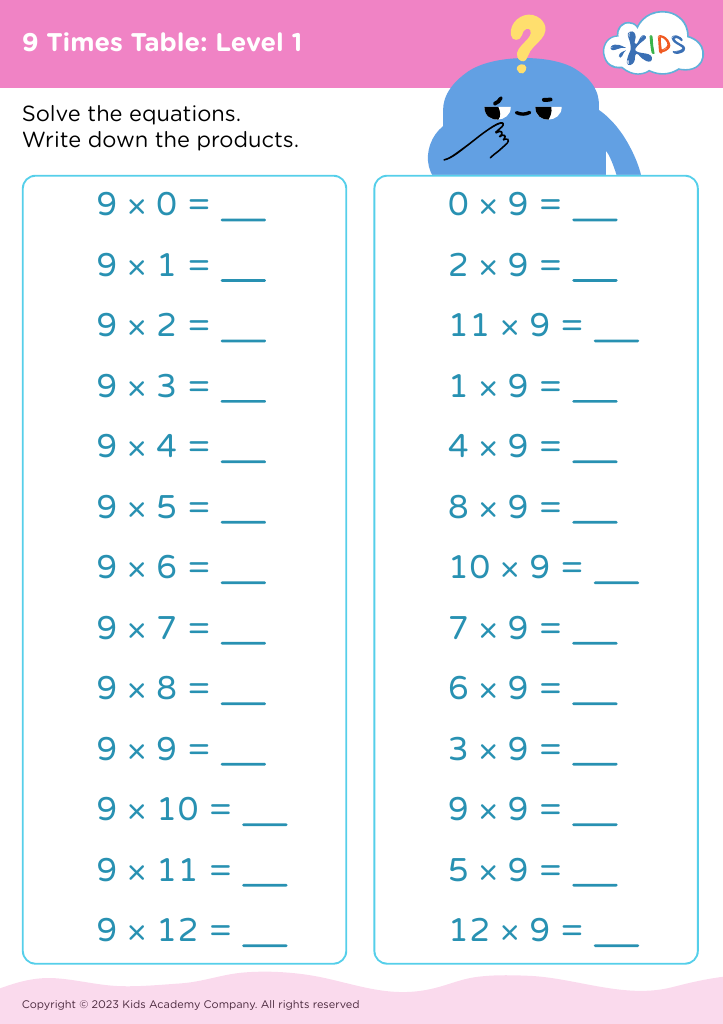
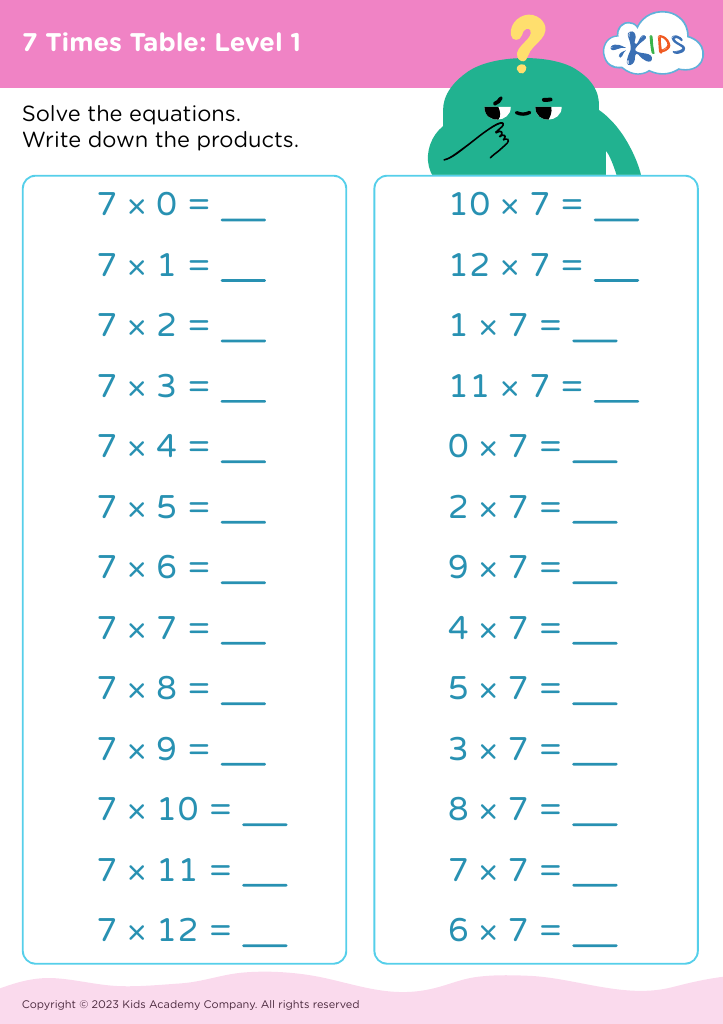








Easy multiplication is a fundamental skill that lays the groundwork for future mathematical understanding and success in school, particularly for children aged 5-9. At this age, children are naturally curious and adept at learning through play, making it an ideal time to introduce multiplication concepts in a fun and engaging way. Understanding multiplication enhances their number sense and helps them make connections between addition and multiplication, reinforcing their overall arithmetic skills.
By focusing on easy multiplication, parents and teachers can help build children’s confidence in math. Early mastery creates a strong foundation for more complex concepts that they will encounter later in their education, such as division, fractions, and even algebra. Engaging children with multiplication through games, visuals, and music makes learning enjoyable, ensuring they develop a positive attitude toward math.
Furthermore, learning multiplication at an early age equips children with practical life skills; they will encounter multiplication in everyday situations, from cooking to budgeting. Support from both parents and teachers is crucial in making learning personalized and meaningful, ensuring that kids grasp these core concepts while fostering a lifelong love for learning in mathematics. This promotes not just academic success, but also critical thinking and problem-solving abilities for future challenges.








