Counting skills Easy Tracing Numbers Worksheets for Ages 5-9
4 filtered results
-
From - To
Boost your child’s math confidence with our "Counting Skills Easy Tracing Numbers Worksheets for Ages 5-9." Perfectly crafted for young learners, these engaging worksheets help children practice tracing numbers while reinforcing essential counting skills. Designed for ages 5-9, the activities promote number recognition, fine motor development, and a strong mathematical foundation. Each worksheet combines fun images and meaningful tasks to keep kids excited about learning. Ideal for both classroom and at-home use, our tracing number worksheets provide a supportive and interactive approach to enhancing counting proficiency in a stress-free environment. Start fostering a love for numbers today!
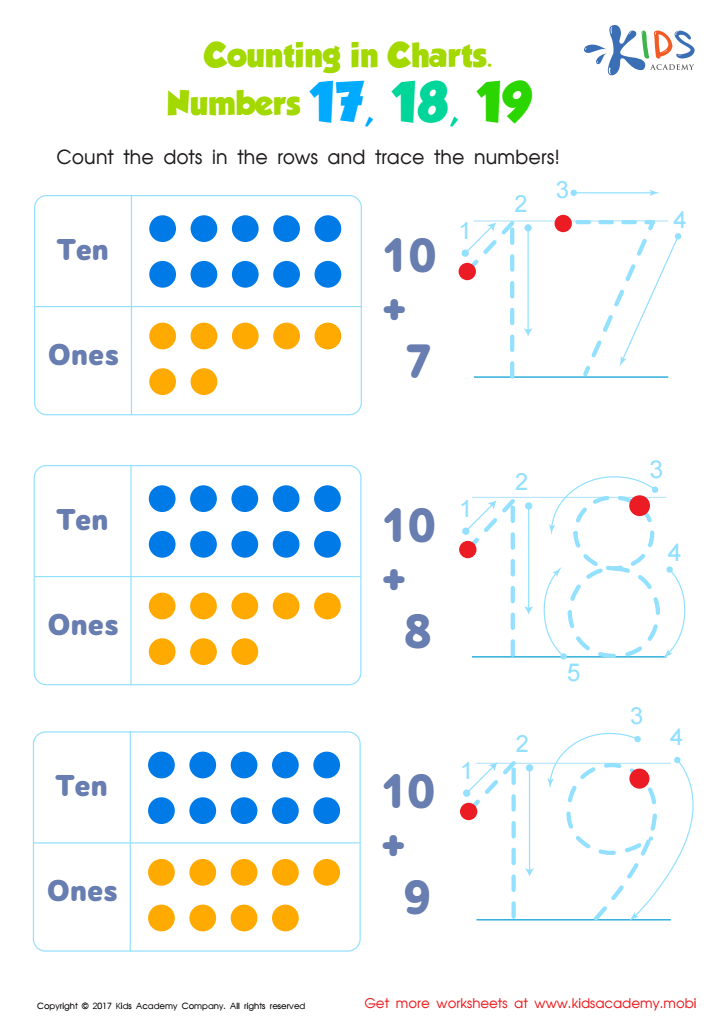
Kindergarten Number Tracing: Counting in Charts Worksheet
 Assign to My Students
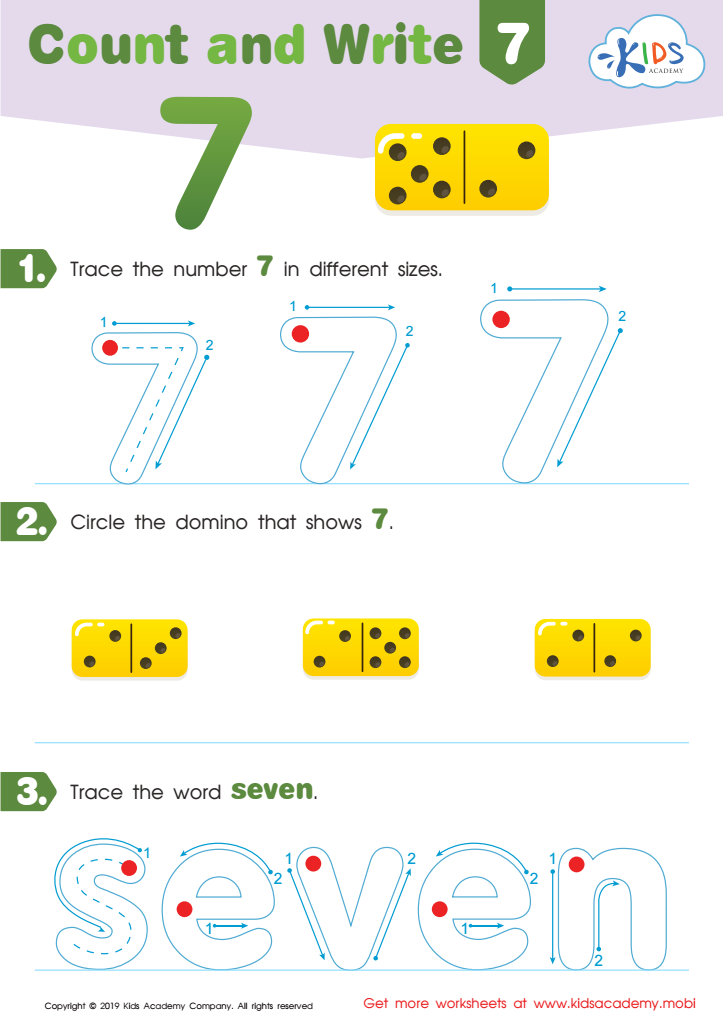
Count and Write 7 Worksheet
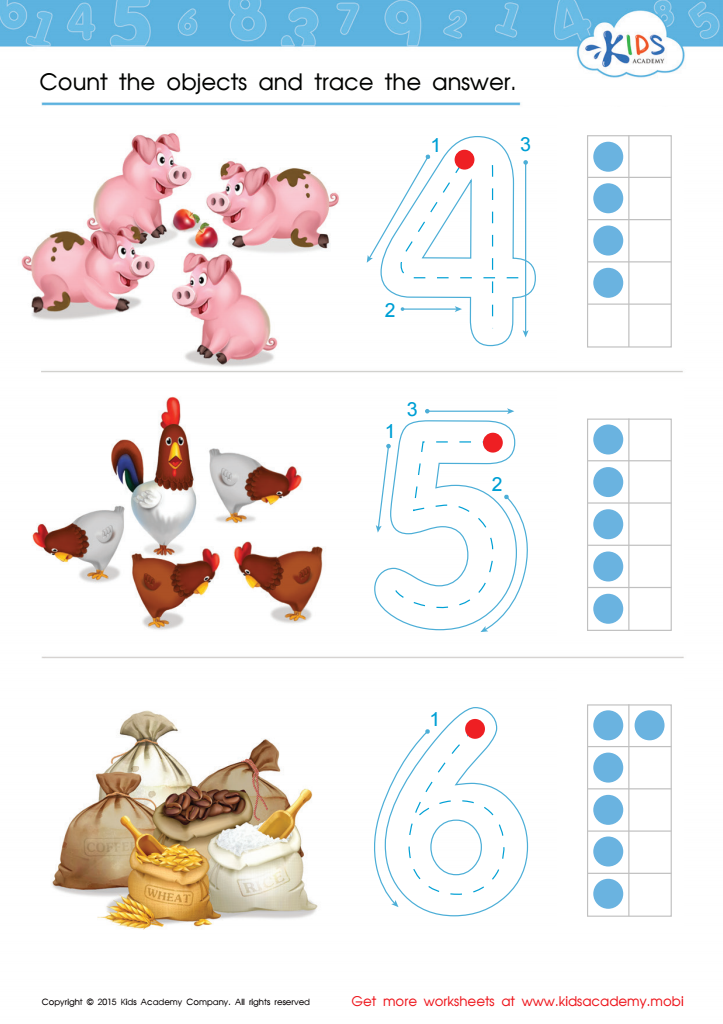
Count and Trace 4 – 6 Worksheet
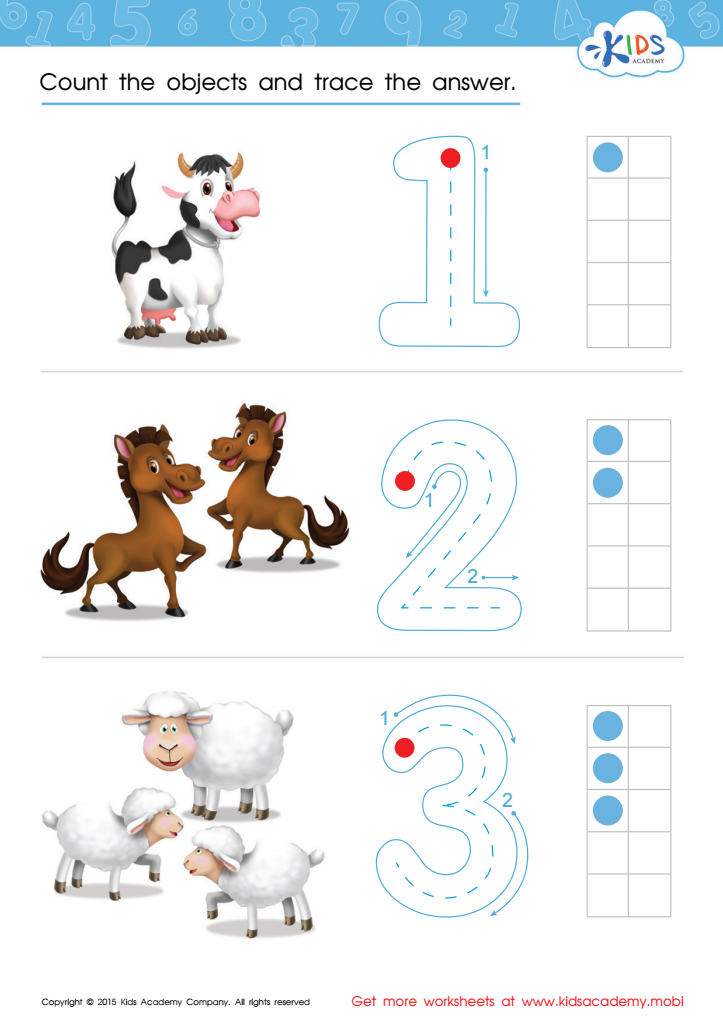
Count and Trace 1 – 3 Worksheet








Counting skills and tracing numbers are foundational aspects of early childhood education that play a vital role in a child's cognitive development. For ages 5-9, mastering these skills is essential for several reasons. Firstly, counting skills help children make sense of the world around them by allowing them to quantify objects, create a sense of order, and understand simple math concepts. This early number sense becomes the building block for more complex mathematical reasoning, such as addition, subtraction, and eventually, fractions and multiplicative relationships.
Tracing numbers, on the other hand, contributes significantly to fine motor skills development. These activities enhance a child's hand-eye coordination, dexterity, and control, which are essential for writing. As children trace numbers, they also internalize their forms, establishing strong memory connections that help with both recognition and recall of numerical symbols. This multi-sensory approach combines visual, tactile, and kinesthetic learning, making it easier for children to integrate and retain the information.
Moreover, these skills foster self-confidence and a positive attitude towards learning. Successfully mastering counting and tracing numbers can provide children with a sense of accomplishment and encourage them to engage more enthusiastically with math and other educational subjects. Therefore, parents and teachers should prioritize these crucial early math activities to establish a robust educational foundation.