Critical Thinking Easy Plants and Animals Worksheets for Ages 5-9
4 filtered results
-
From - To
Discover the world of plants and animals with our Critical Thinking Easy Worksheets designed for ages 5-9. These engaging, educational resources are crafted to spark curiosity and enhance critical thinking skills in young learners. Each worksheet combines fun activities with essential learning objectives, helping children explore science topics while developing their analytical and problem-solving abilities. Perfect for classrooms or at-home learning, these worksheets cover a range of concepts from plant life cycles to animal habitats, making science accessible and enjoyable. Foster a love for learning and nature with these thoughtfully designed worksheets today!
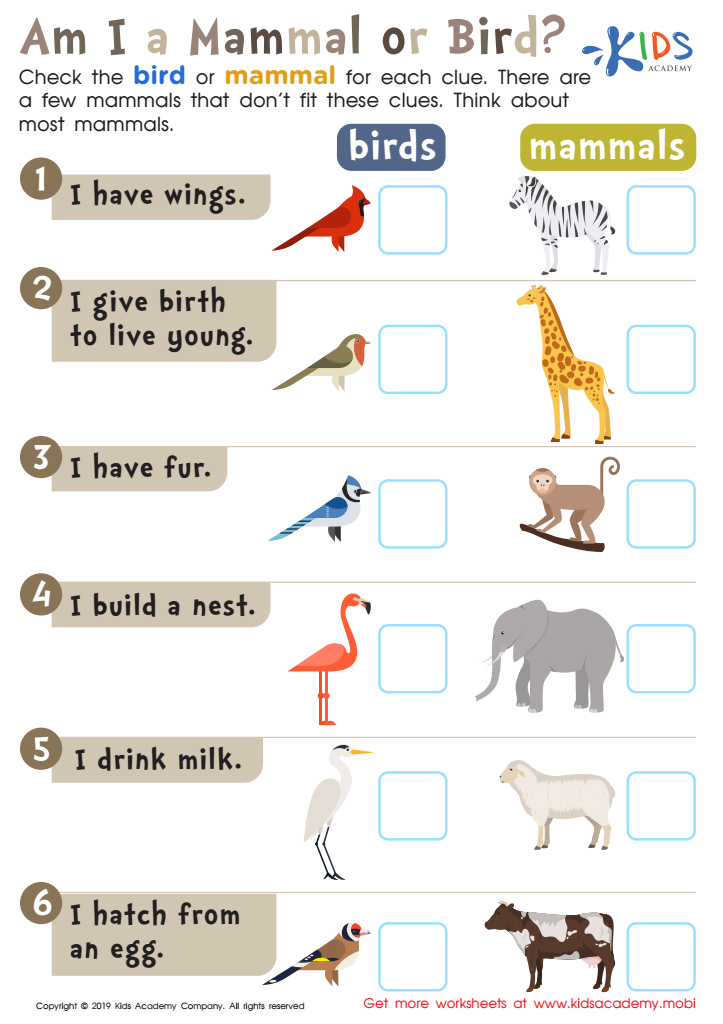
Am I a Mammal or Bird? Worksheet
 Assign to My Students





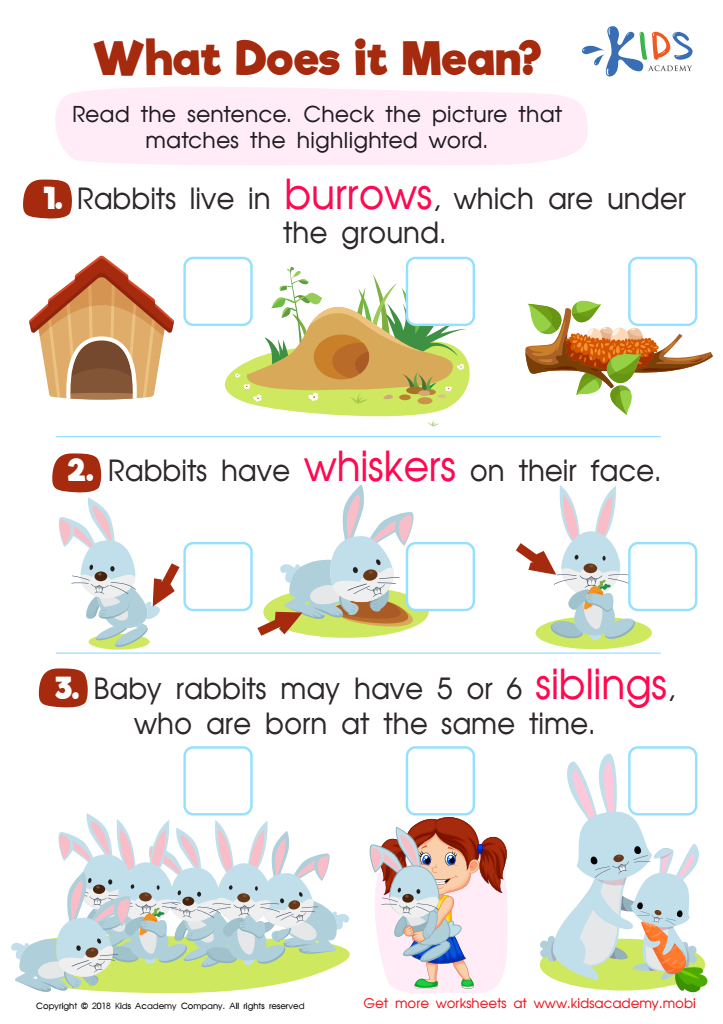
What Does It Mean? Worksheet
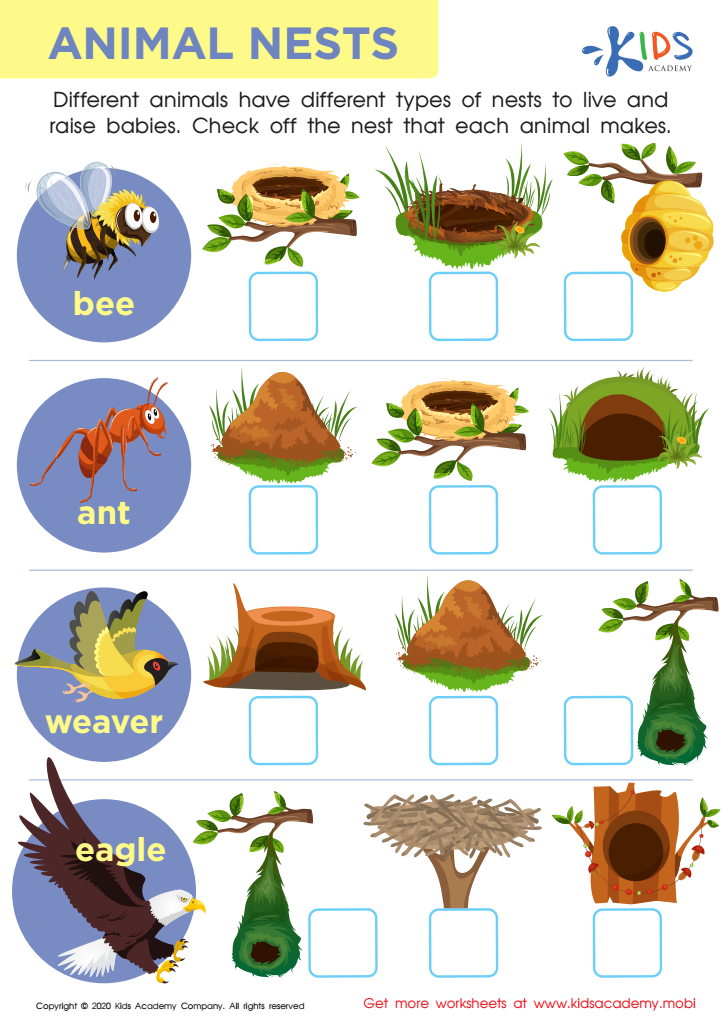
Animal Nests Worksheet
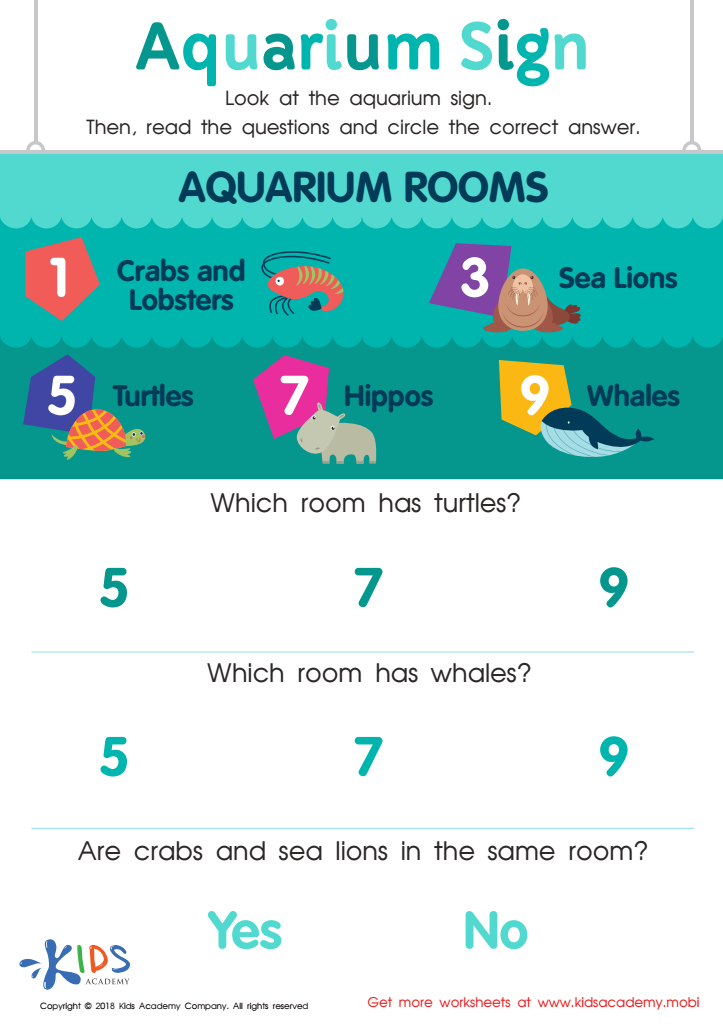
Assessment: Aquarium Sign Worksheet







Critical thinking is an essential cognitive skill that helps individuals process information, solve problems, and make informed decisions. Introducing critical thinking to children aged 5–9 through engaging topics like easy plants and animals can be particularly beneficial. During these formative years, children's brains are incredibly receptive to learning new concepts.
Focusing on plants and animals, which are tangible and relatable topics, makes it easier for young minds to grasp complex ideas in a simple manner. Observing a plant grow from seed to sprout or watching the behaviors of a family pet offers natural opportunities for inquiry, observation, and questioning. Children are naturally curious, and these real-life examples give them a chance to practice asking questions, forming hypotheses, and conducting basic experiments, all of which are foundational critical-thinking skills.
Furthermore, integrating critical thinking with nature-themed content fosters environmental awareness and stewardship from a young age. It helps children understand the interdependence of living beings and their ecosystems, promoting empathy and responsibility toward nature.
For parents or teachers, nurturing critical thinking in the early years means equipping children with skills they'll use throughout their educational journey and beyond. It encourages independent thought, enhances problem-solving abilities, and lays the groundwork for effective, life-long learning. Therefore, embracing topics like easy plants and animals as mediums for teaching critical thinking is a strategic and impactful educational approach.