Understanding opposites Easy Worksheets for 5-Year-Olds
4 filtered results
-
From - To
Welcome to our "Understanding Opposites Easy Worksheets" designed specifically for 5-year-olds! These engaging worksheets introduce young learners to the concept of opposites through fun activities and colorful illustrations. Children will enjoy identifying contrasting pairs, such as hot and cold, big and small, and more. Our resources aim to enhance vocabulary and critical thinking skills while making learning enjoyable. Each worksheet features age-appropriate tasks that encourage creativity, observation, and recognition of everyday opposites found in their surroundings. Perfect for teachers and parents alike, these simple, engaging worksheets will make learning about opposites an exciting adventure for your little ones!
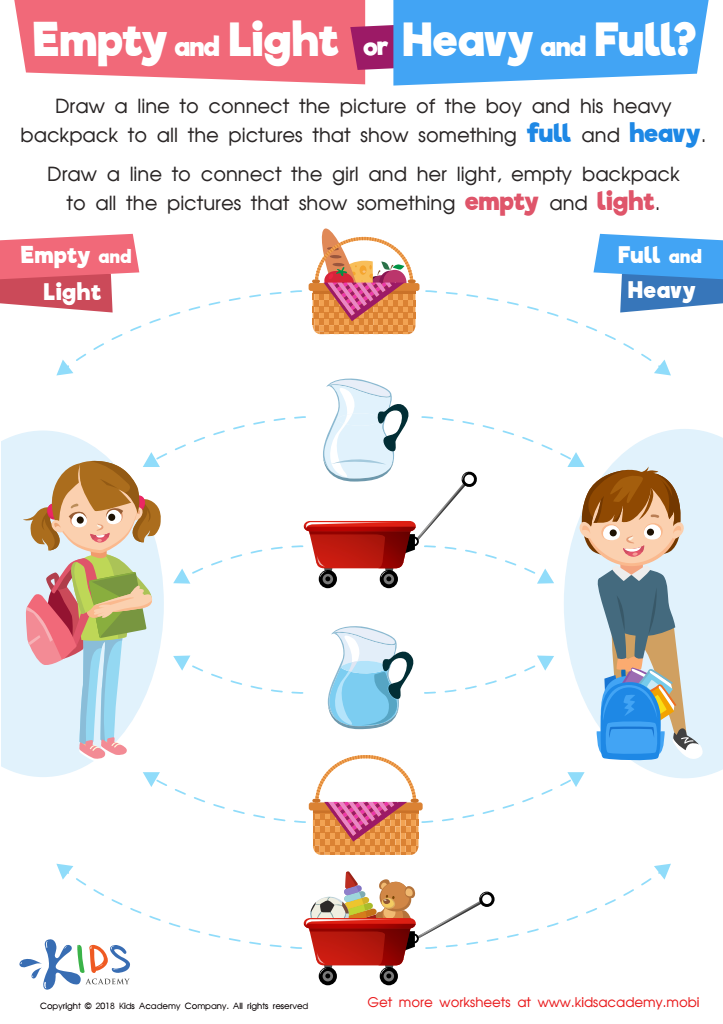
Empty and Light or Heavy and Full? Worksheet
 Assign to My Students
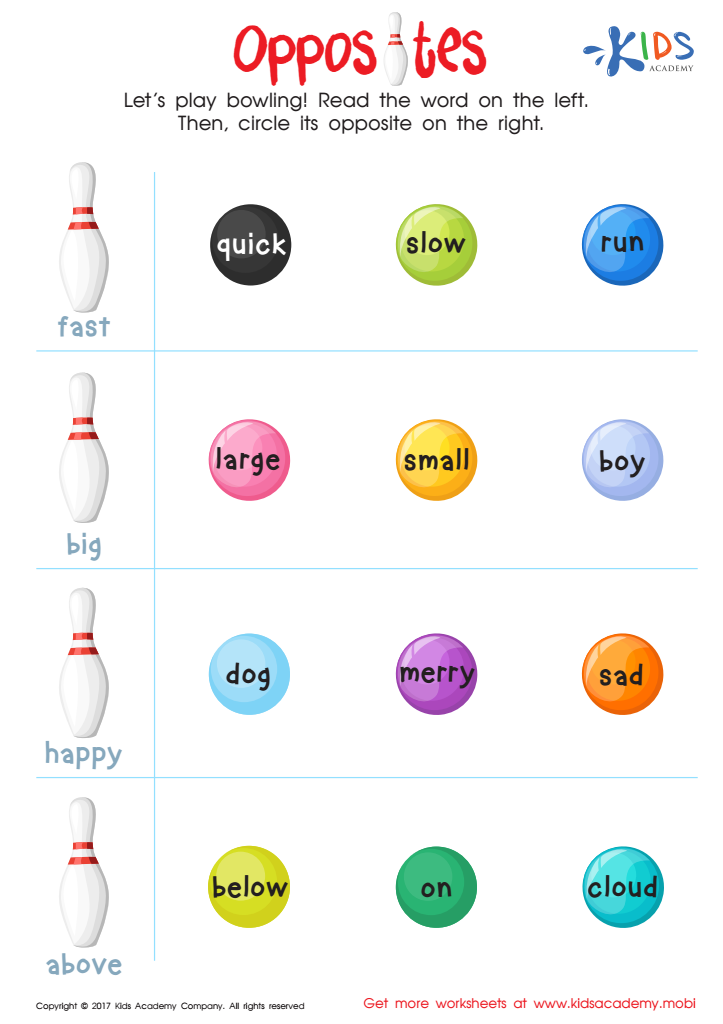
Opposites Worksheet
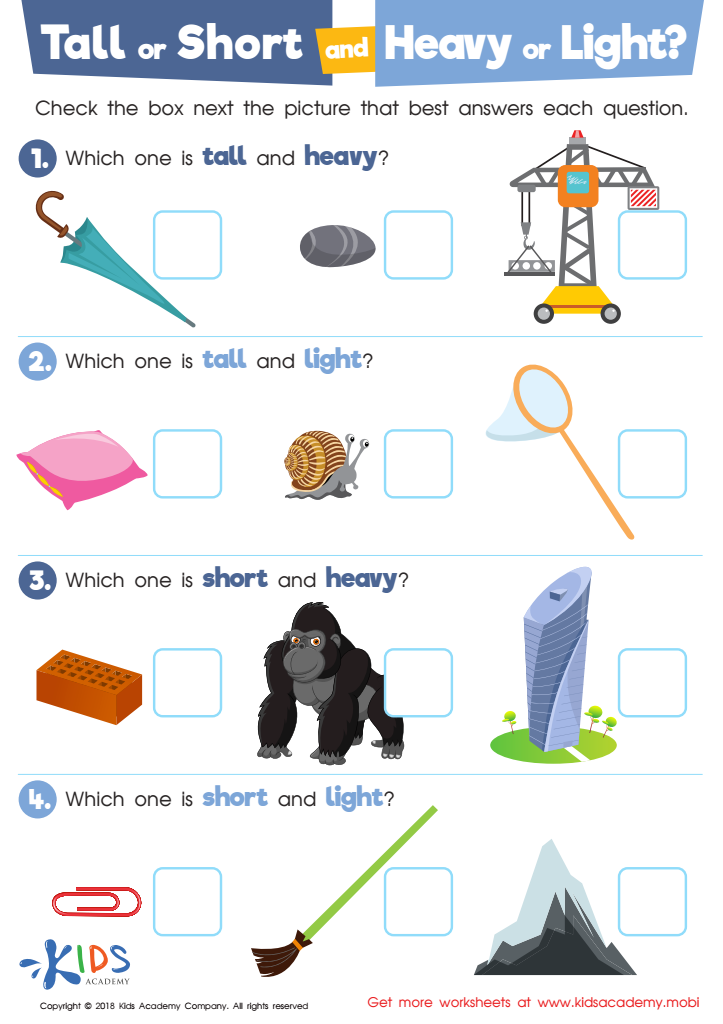
Tall or Short and Heavy or Light? Worksheet
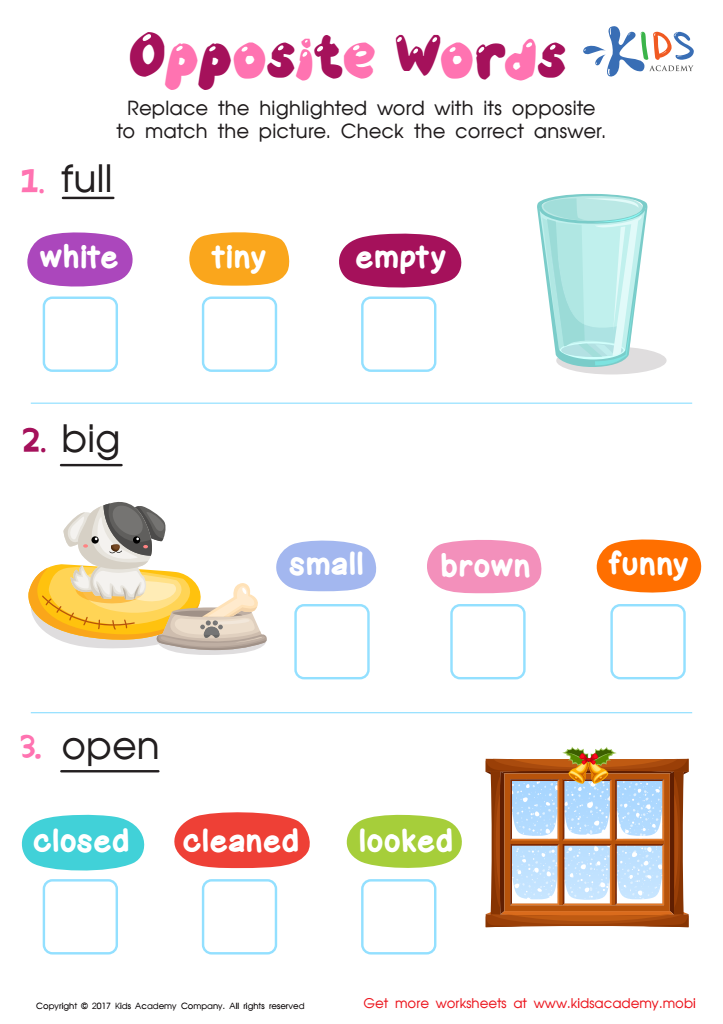
Opposite Words Worksheet








Understanding opposites is an essential concept for 5-year-olds, and parents and teachers should prioritize this learning for several reasons. Firstly, it enhances cognitive development. Recognizing opposites, such as hot and cold or big and small, helps children grasp basic comparisons and relationships in the world around them. This understanding lays the foundation for more complex thinking and problem-solving skills later on.
Moreover, learning about opposites strengthens language skills. Children acquire new vocabulary associated with contrasting concepts, which enriches their communication. For instance, understanding "happy" and "sad" not only builds emotional awareness but also helps them articulate their feelings more effectively.
Additionally, grasping opposites supports social-emotional development. Children learn to explore and express a range of emotions and attitudes, fostering empathy and better relationships. It promotes critical thinking as young learners distinguish between different ideas and experiences, preparing them for more complex cognitive tasks in school.
Lastly, it can make learning fun! Activities involving opposites, such as games, art, or storytelling, capture children's attention and engage them actively, making education enjoyable. By recognizing the importance of understanding opposites, parents and teachers are investing in comprehensive learning opportunities that benefit children's overall development.








