Hand-eye Coordination Easy Numbers up to 100 Worksheets for 5-Year-Olds
3 filtered results
Difficulty Level
Grade
Age
-
From - To
Subject
Activity
Standards
Enhance your child’s learning with our "Hand-eye Coordination Easy Numbers up to 100 Worksheets for 5-Year-Olds". These engaging worksheets are designed to develop your child’s hand-eye coordination while reinforcing essential math skills. Perfectly tailored for young learners, they combine fun activities like tracing, and coloring with counting exercises up to 100. This dynamic approach not only makes learning enjoyable but also supports fine motor skills development. Ideal for both classroom use and at-home practice, these worksheets offer a thorough and interactive way to boost your child’s confidence and love for numbers. Download and watch your child thrive!
Favorites
With answer key
Interactive
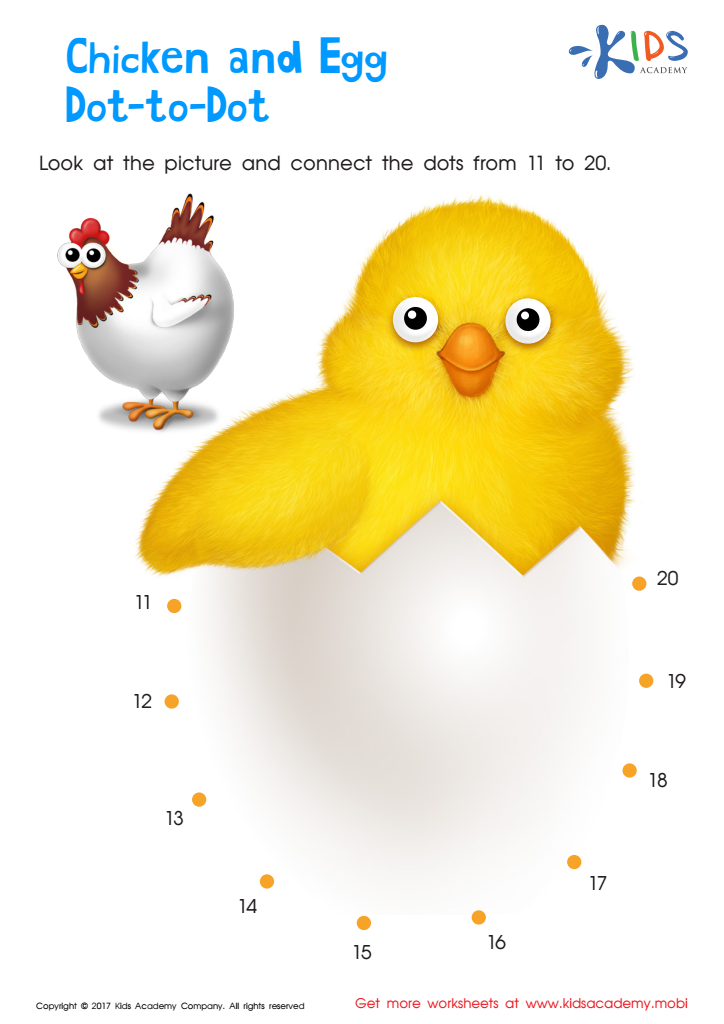
Ordering 11–20: Chicken & Egg Dot–to–dot Worksheet
Help your child hatch the chick and practice their counting skills with this dot to dot worksheet – the chicken came first! Connect the dots 11-20 to have fun and learn at the same time. Experience meaningful practice and gain confidence while drawing great pictures.
 Assign to My Students
Ordering 11–20: Chicken & Egg Dot–to–dot Worksheet
Worksheet
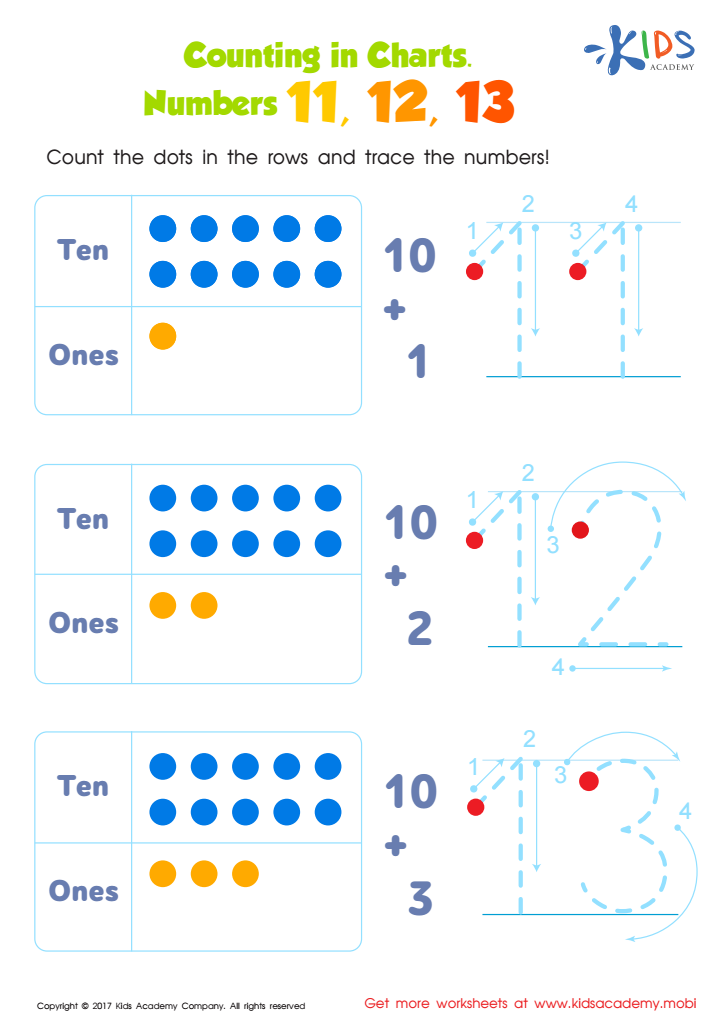
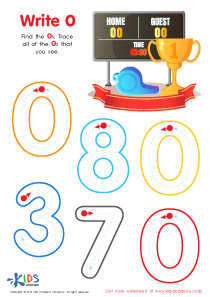
Number Tracing Worksheet For Kindergarten
Help your child develop addition skills and improve number recognition with this easy-to-use worksheet. Have them count the dots and add to solve each problem. Then, trace over the number to complete each row! It's a fun and simple way for kindergarteners to practice their math skills.
Number Tracing Worksheet For Kindergarten
Worksheet
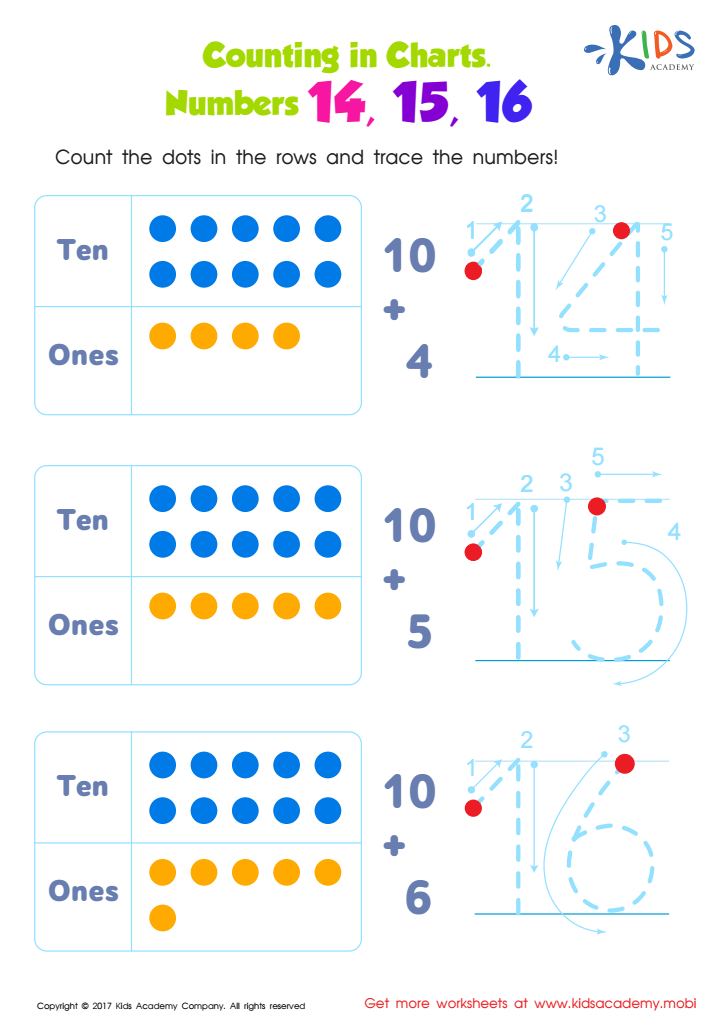
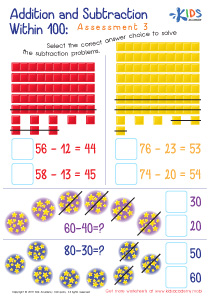
Number Tracing Worksheet
Kids learn math with counters and place value! This handy worksheet helps form a foundation for math skills and number sense! Have your child count the dots and trace the answers to the addition problems. It's a great way to support their math skills!
Number Tracing Worksheet
Worksheet
Join Kids Academy for Free
Who is primarily going to use this learning content?





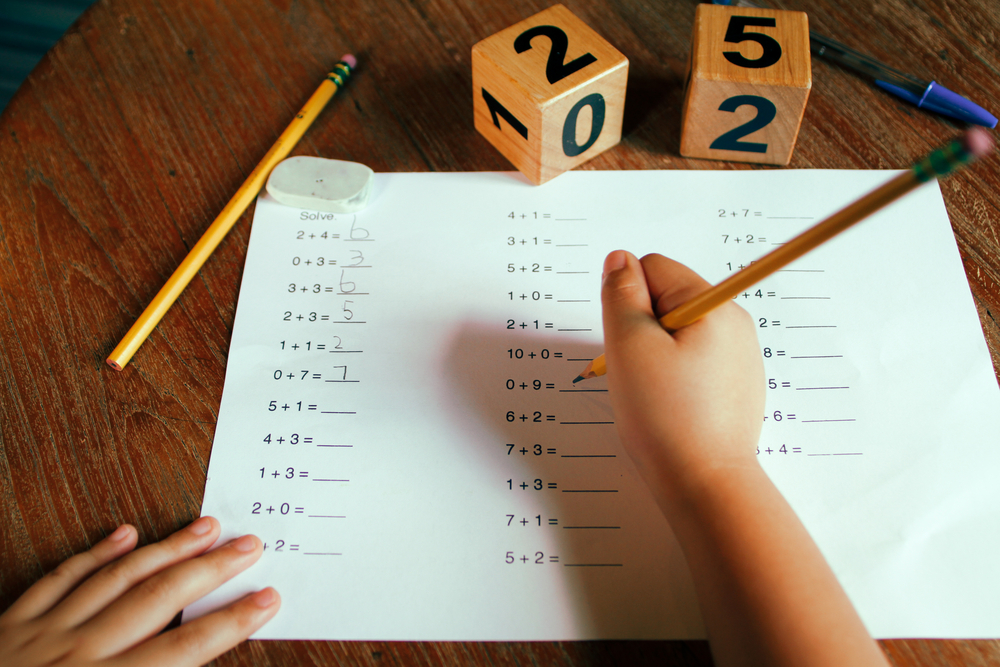


Parents and teachers should care about developing hand-eye coordination in 5-year-olds because it forms the foundation for various essential life skills and academic abilities. Hand-eye coordination is the synchronized control of eye movement with hand activity, crucial for many day-to-day tasks such as writing, drawing, and playing sports. By incorporating activities that involve easy numbers up to 100, children can simultaneously strengthen their cognitive and motor skills.
Counting and recognizing numbers up to 100 not only prepares children for more advanced math concepts but also improves their ability to focus and follow sequences. Activities such as tracing numbers, counting objects, or playing number-matching games can enhance fine motor skills, like the ability to handle a pencil properly and accurately color within lines. This blend of cognitive processing and physical activity can make learning more engaging and accessible for young minds.
Moreover, children with strong hand-eye coordination are better equipped to succeed in school settings where activities require these skills. Developing these abilities early on helps build confidence and feeds into a positive learning cycle. Therefore, focusing on hand-eye coordination through easy number-related activities provides a dual educational and developmental advantage, fostering well-rounded growth in young children.