Counting skills Easy Tracing Numbers Worksheets for 5-Year-Olds
4 filtered results
-
From - To
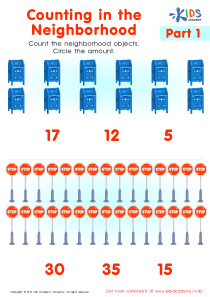
Boost your child's counting skills with our engaging Easy Tracing Numbers Worksheets designed specifically for 5-year-olds! These printable worksheets offer a fun, hands-on way for young learners to practice number tracing while reinforcing essential counting abilities. Each worksheet features colorful illustrations and easy-to-follow instructions, making learning exciting and interactive. Ideal for home or classroom use, these resources will help children develop their fine motor skills and number recognition in a playful environment. With consistent practice, your little ones will gain confidence in their counting skills and lay a strong foundation for their future mathematical learning. Start their counting journey today!
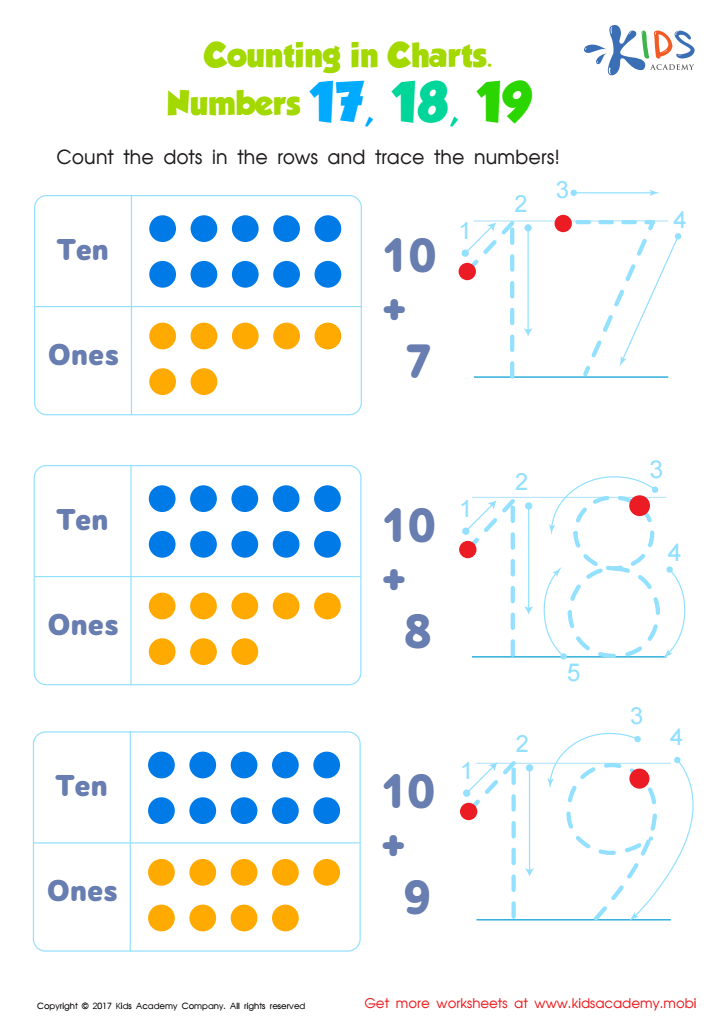
Kindergarten Number Tracing: Counting in Charts Worksheet
 Assign to My Students
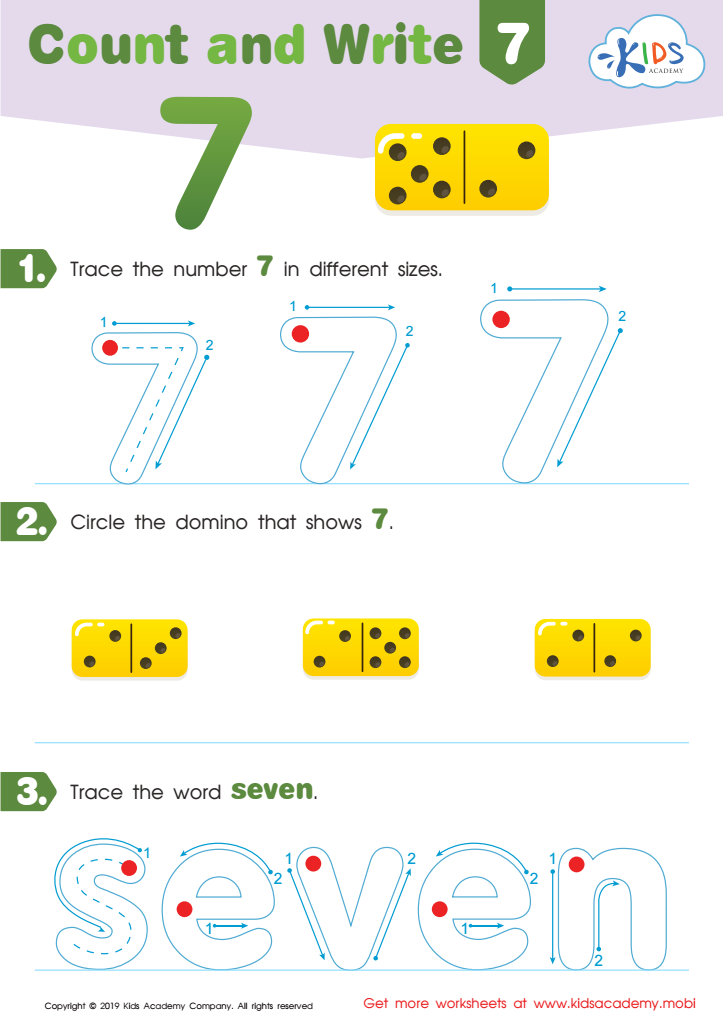
Count and Write 7 Worksheet
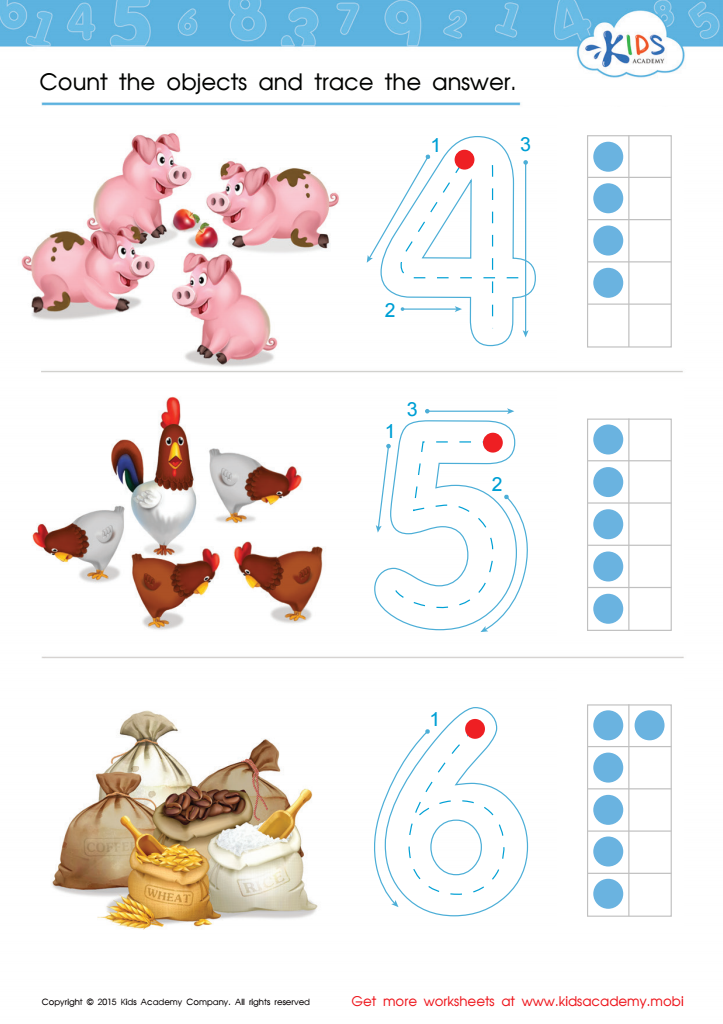
Count and Trace 4 – 6 Worksheet
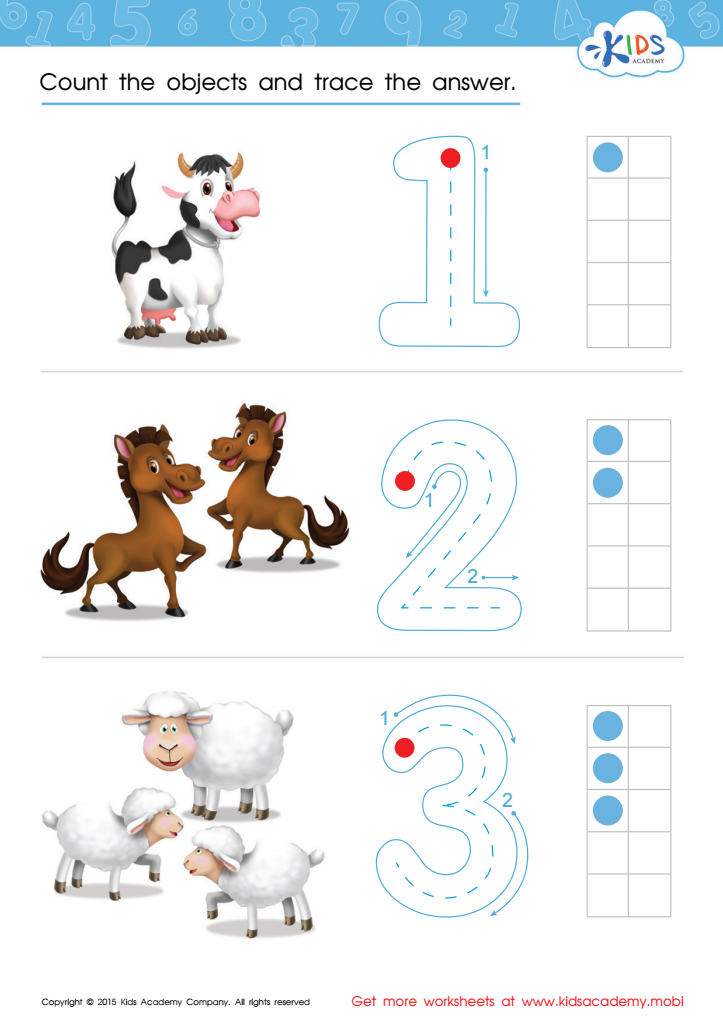
Count and Trace 1 – 3 Worksheet





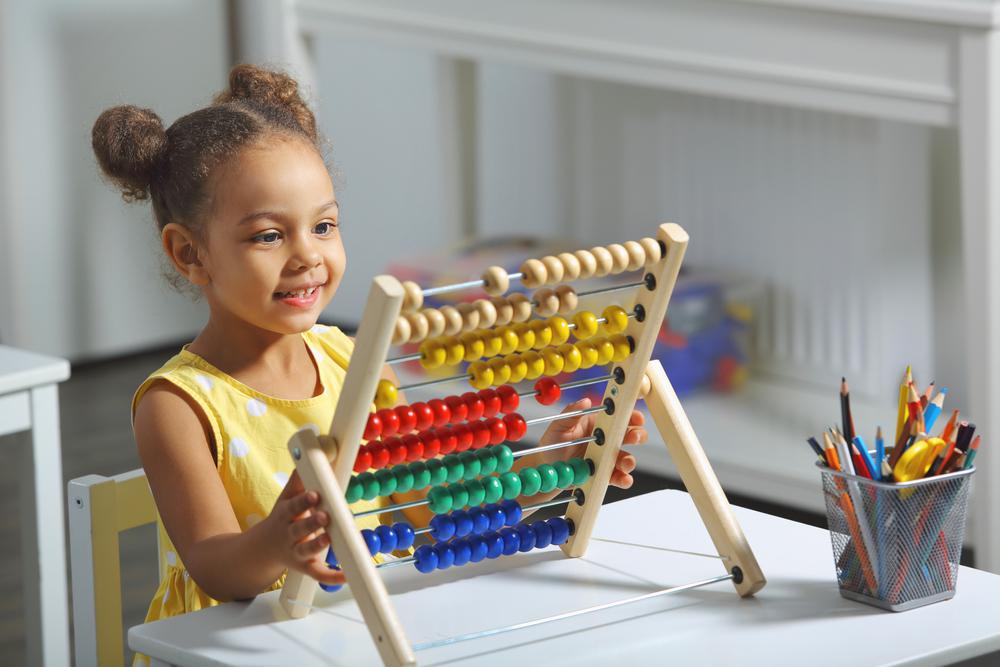


Counting skills and tracing numbers are foundational aspects of early childhood education that play a crucial role in a child’s development. For 5-year-olds, these skills are not just about rote memorization; they foster cognitive development and critical thinking. Mastering counting and number formation helps children understand basic mathematical concepts and sets the stage for future academic success.
Tracing numbers is particularly beneficial as it enhances fine motor skills, which are essential for writing and other tasks. This activity encourages children to develop hand-eye coordination and dexterity, paving the way for proficient writing later on. Moreover, as children trace numbers, they begin to associate quantity with its written representation, thus deepening their understanding of numbers.
Additionally, early counting and number recognition promote confidence in young learners. When children master these skills, they are more likely to engage positively with math-related activities in the future. For parents and teachers, fostering an environment that emphasizes counting and tracing means investing in a child’s academic journey, ensuring they grasp essential concepts that will support their education in years to come. By nurturing these skills, adults play a vital role in shaping a child's attitude toward learning and establishing a strong foundation in mathematics.