Problem-Solving Skills Easy Chess Worksheets for Ages 6-7
4 filtered results
Difficulty Level
Grade
Age
-
From - To
Subject
Activity
Standards
Unlock your child's potential with our "Problem-Solving Skills Easy Chess Worksheets" designed specifically for ages 6-7. These engaging worksheets provide a fun and interactive way for young minds to develop critical thinking and strategic skills through the game of chess. Each activity challenges children to analyze scenarios, make decisions, and develop solutions, all while enhancing their cognitive abilities. Perfect for at-home learning or classroom activities, our worksheets encourage skill-building in a friendly, approachable format. Introduce your little one to the exciting world of chess and watch them thrive as they tackle puzzles and improve their problem-solving prowess!
Favorites
With answer key
Interactive
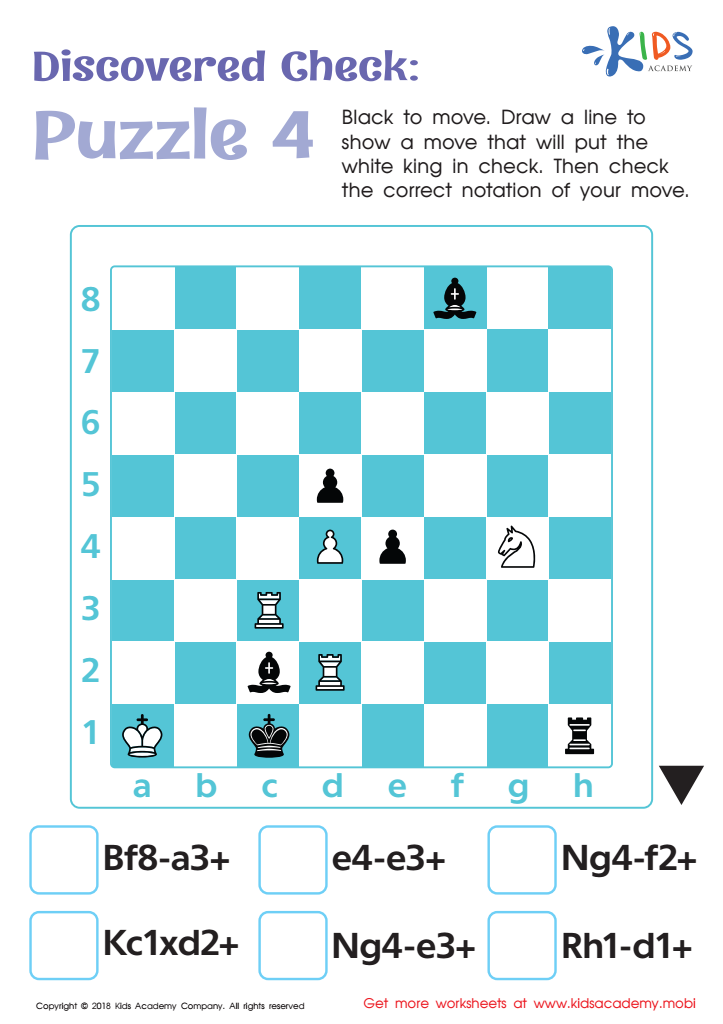
Discovered Check: Puzzle 4 Worksheet
Let your child test their chess skills with this easy worksheet. Have them take control of the black pieces and try to put the white king in checkmate. Ask them to draw a line from their chess piece to the white king, showing the move they'll make, then check the correct answer.
Discovered Check: Puzzle 4 Worksheet
Worksheet

Discovered Check: Puzzle 2 Worksheet
This worksheet exercise will stimulate your child's thinking and let them show off their chess skills. Ask them to use the white pieces and draw a line, pointing to the move that will put the black king in checkmate. Then they should check the correct option. Challenge your child and help them learn more about chess with this fun and educative activity.
Discovered Check: Puzzle 2 Worksheet
Worksheet
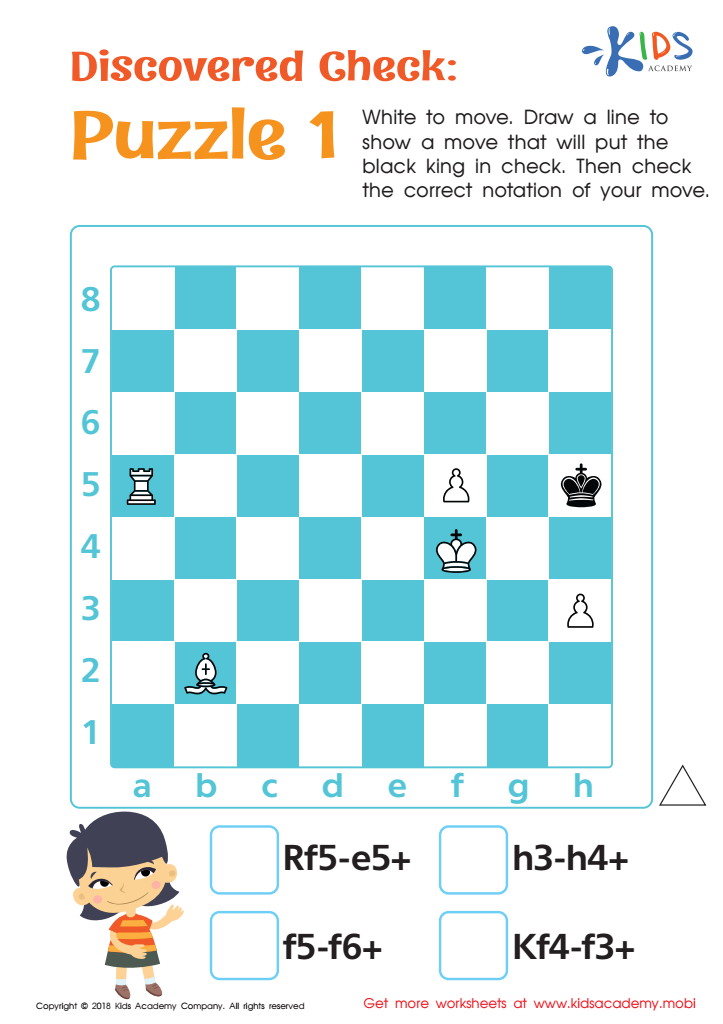
Discovered Check: Puzzle 1 Worksheet
Chess is an excellent way to engage your kids' brains and strengthen thinking skills. This worksheet is ideal for inspiring and growing their interest in the game. Have your child take the white pieces and move them to checkmate the black king. Compare their move against the provided notations to check accuracy.
Discovered Check: Puzzle 1 Worksheet
Worksheet
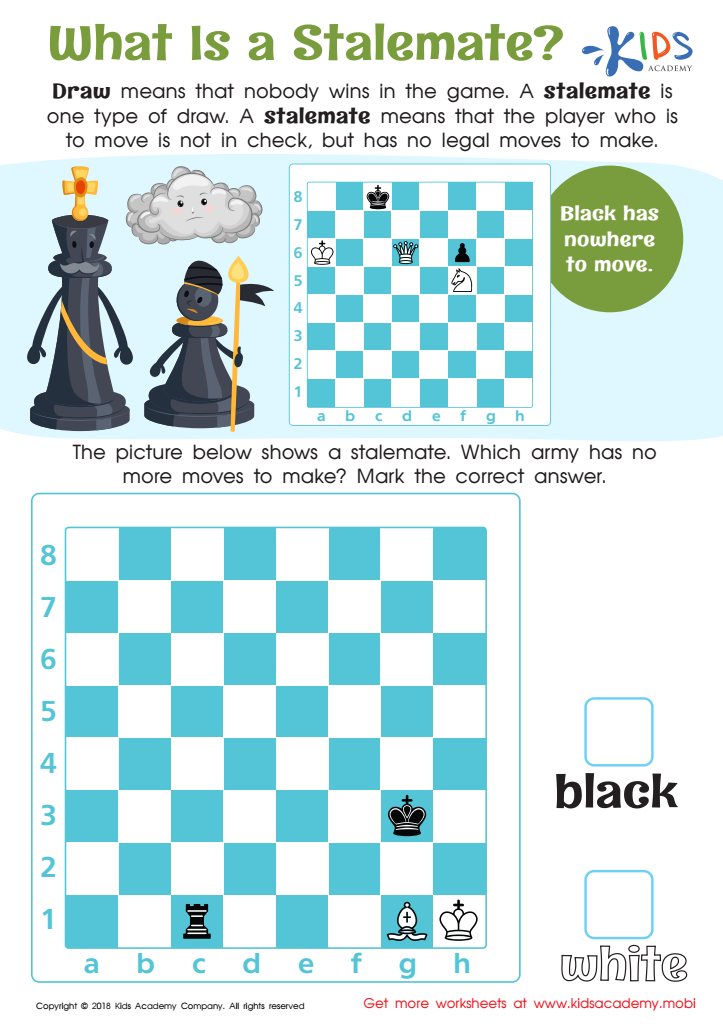
What Is a Stalemate? Worksheet
Chess is an ideal way to develop logic, strategizing, problem-solving and more! Even kids can learn it. With this worksheet, children can learn about draws and stalemates. Sample boards will help them decide which team, black or white, is at a stalemate.
 Assign to My Students
What Is a Stalemate? Worksheet
Worksheet
Join Kids Academy for Free
Who is primarily going to use this learning content?







Problem-solving skills are vital for children's development, and tools like Easy Chess for Ages 6-7 provide a fun and engaging way to cultivate these skills. Chess encourages critical thinking, strategic planning, and foresight, enabling children to learn how to evaluate various outcomes based on their decisions. As players learn to maneuver their pieces, they begin to recognize patterns, tackle challenges, and assess risks—valuable life skills that extend beyond the chessboard.
For parents and teachers, promoting problem-solving skills through chess is an investment in a child's future. These early learning experiences foster confidence and resilience, setting the foundation for academic success and social interactions. In a world constantly changing and presenting new problems, children equipped with strong problem-solving abilities will feel more prepared to face challenges.
Additionally, chess can promote social interaction. As children play together, they learn teamwork, taking turns, and good sportsmanship, further enhancing their problem-solving skills in collaborative environments. By investing time in activities like Easy Chess, adults can nurture curious, independent thinkers who can approach obstacles with creativity and logic—skills fundamental not just in school, but in life. Thus, incorporating chess into young children's routines offers gratifying benefits that last a lifetime.