Alphabet Recognition Easy English for Beginners Worksheets for Ages 6-7
6 filtered results
-
From - To
Alphabet Recognition Easy English for Beginners Worksheets for Ages 6-7
Our Alphabet Recognition Easy English Worksheets are meticulously designed for children aged 6-7 beginning their language journey. These engaging activities help young learners effortlessly identify and memorize each letter of the English alphabet, promoting foundational literacy skills. Each worksheet combines fun illustrations with incremental challenges to keep kids motivated and eager to learn. Perfect for home or classroom use, these printables ensure an enjoyable education experience through age-appropriate content tailored for beginners. Explore our extensive collection and watch your child’s confidence and proficiency in the English language soar. Unlock your child's potential with our easy and effective tools today!
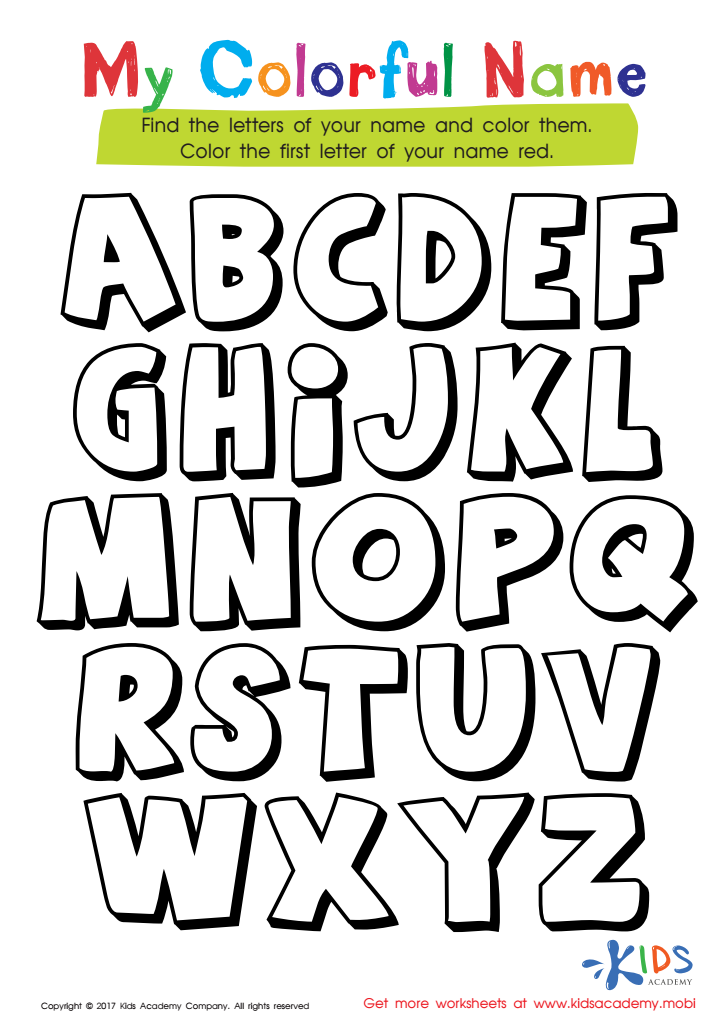
My Colorful Name Worksheet
 Assign to My Students
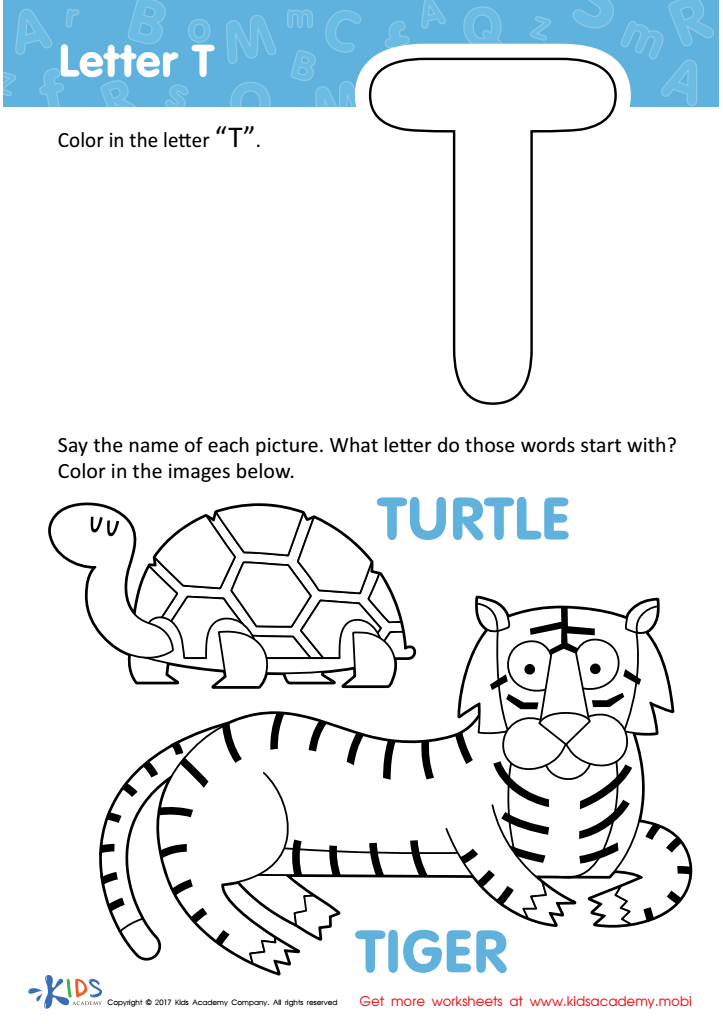
Letter T Coloring Sheet
Assign to My Students
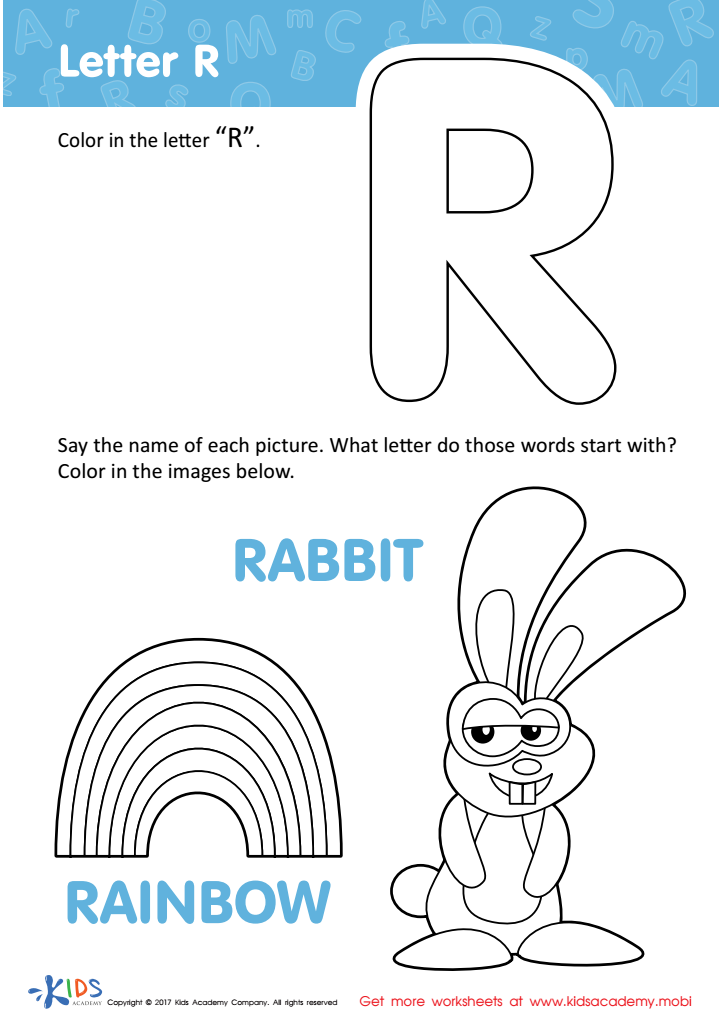
Letter R Coloring Sheet
Assign to My Students
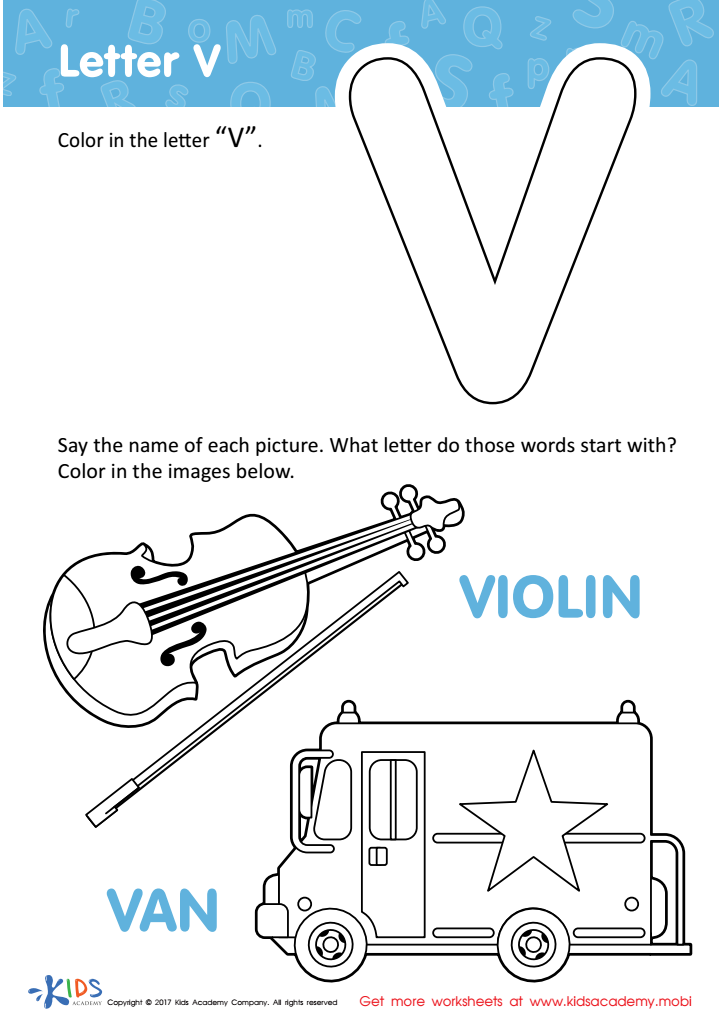
Letter V Coloring Sheet
Assign to My Students
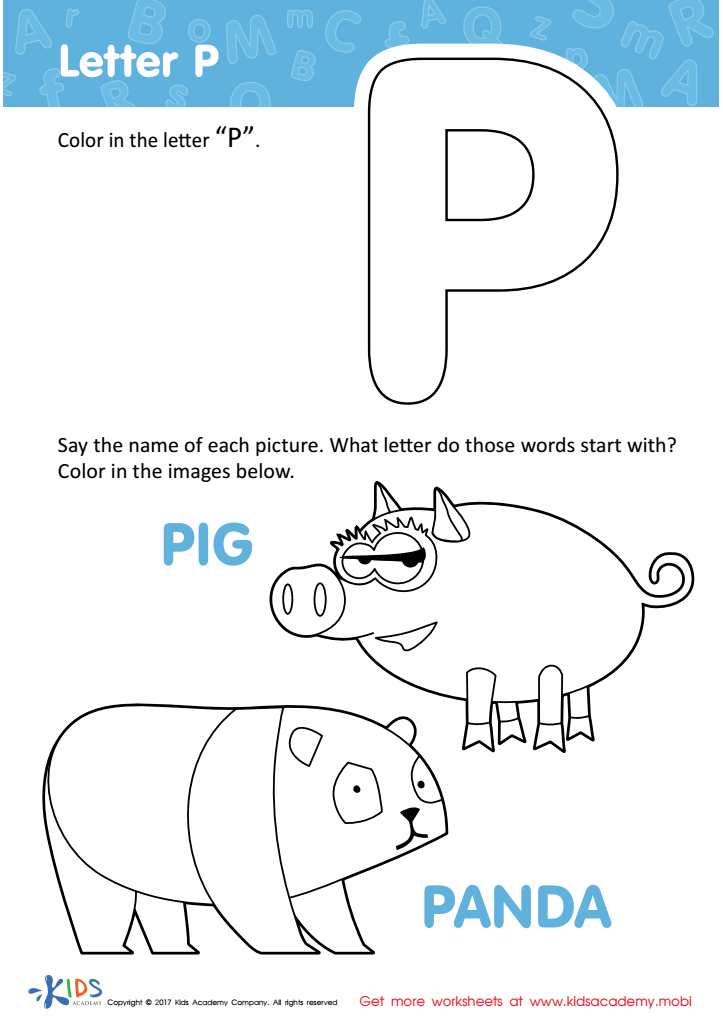
Letter P Coloring Sheet
Assign to My Students
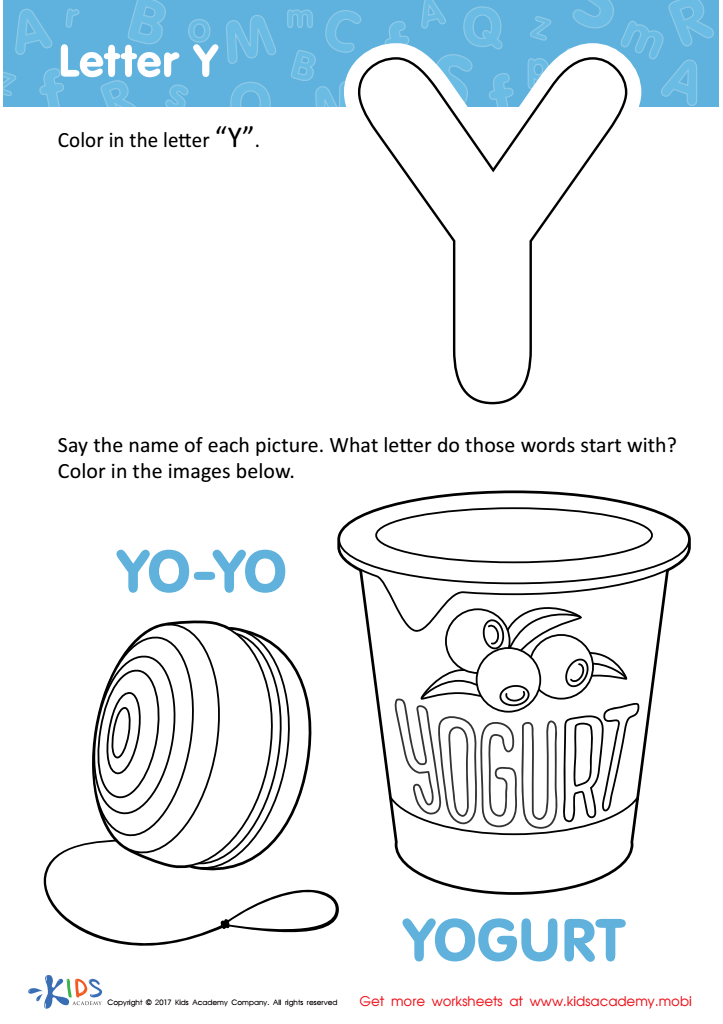
Letter Y Coloring Sheet
Assign to My Students




Alphabet recognition is a foundational skill crucial for early literacy development in children aged 6-7. Familiarity with letters and their corresponding sounds forms the basis upon which reading and writing skills are built. When children can easily recognize and identify the alphabet, they are better equipped to understand the link between sounds and letters, which is vital for decoding words during reading. This early mastery can make learning to read an enjoyable and less frustrating process, fostering a positive attitude toward education.
For both parents and teachers, emphasizing alphabet recognition can also help identify any learning difficulties early on, such as dyslexia, enabling timely intervention. Furthermore, proficiency in recognizing the alphabet enhances children’s abilities to follow written instructions, participate actively in classroom activities, and develop vocabulary. This foundational skill not only impacts academic performance but also boosts confidence and self-esteem, enabling children to engage more fully in the learning process.
Investing time and resources into effective alphabet recognition activities, games, and lessons thus lays the groundwork for academic success. It facilitates smoother transitions into more complex literacy concepts while promoting an enduring love for reading and learning. Hence, prioritizing alphabet recognition is a pivotal step in nurturing proficient and enthusiastic young learners.