Comparing quantities Easy Worksheets for Ages 6-7
3 filtered results
-
From - To
Discover engaging "Comparing Quantities Easy Worksheets" designed specifically for children ages 6-7! These interactive and colorful worksheets help young learners develop essential math skills by comparing different quantities through fun and relatable exercises. Children will practice understanding more, less, and equal, all while enhancing critical thinking and problem-solving abilities. Our worksheets are ideal for both classroom activities and at-home learning, providing a perfect balance of challenge and enjoyment. Tailored to support foundational math concepts, these resources foster confidence in young students as they embark on their educational journeys. Start exploring today and watch your child's skills flourish!
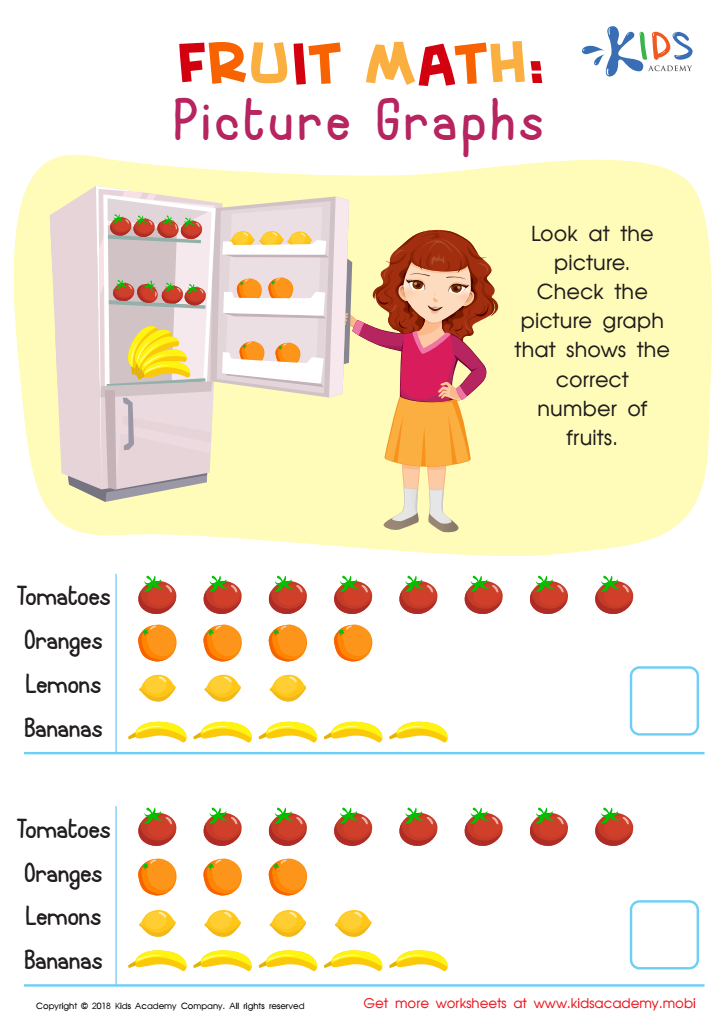
Fruit Math: Picture Graphs Worksheet
 Assign to My Students
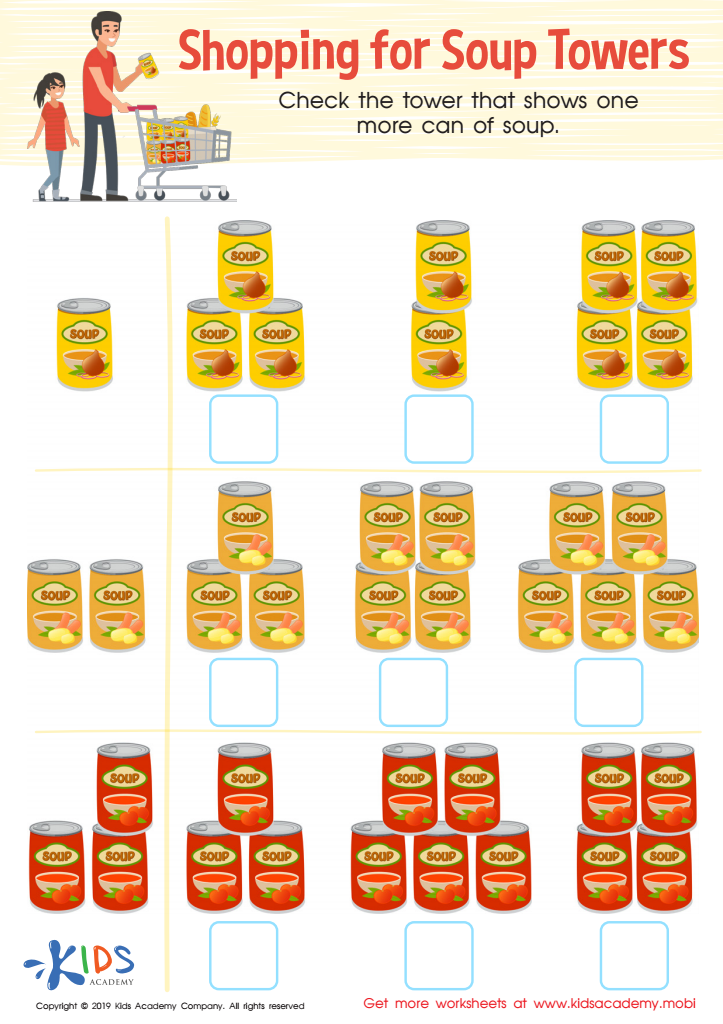
Soup Towers Worksheet
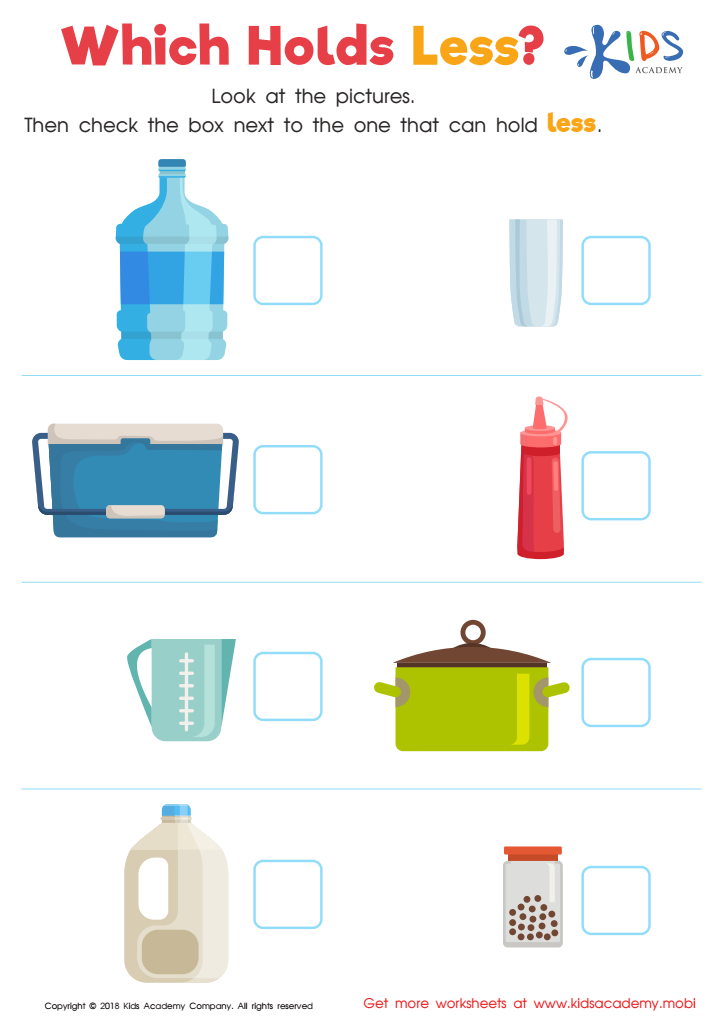
Which Holds Less? Worksheet







Comparing quantities is a fundamental mathematical concept that lays the groundwork for critical thinking and problem-solving skills in young learners aged 6-7. Parents and teachers should prioritize this skill because it helps children understand relationships between numbers, enhance their analytical abilities, and improve their overall math proficiency. By learning to compare quantities, children develop a sense of magnitude, which is essential for grasping more advanced mathematical concepts later on.
Understanding how to compare quantities also fosters confidence in young learners, empowering them to make decisions in their daily lives. For instance, whether they’re counting snacks, toys, or participants in a game, the ability to discern which group is larger or smaller builds their observational skills and nurtures a positive attitude toward math.
Moreover, comparing quantities encourages collaborative play and interaction, facilitating teamwork during classroom activities or home exercises. These interactions foster social skills while reinforcing mathematical concepts, making learning fun and engaging. Ultimately, by investing time in teaching children how to compare quantities, parents and teachers are equipping them with essential life skills, setting the foundation for future academic success in math and beyond.








