Fraction comparison Easy Worksheets for Ages 6-7
3 filtered results
-
From - To
Boost your child's fraction skills with our "Fraction Comparison Easy Worksheets"! Designed specifically for ages 6-7, these worksheets simplify the concept of comparing fractions through fun, engaging exercises. Each activity uses vibrant visuals and relatable scenarios to help young learners grasp fractions effortlessly. Perfect for classroom or home use, these worksheets aim to build foundational math skills and boost confidence in young mathematicians. Encourage interactive learning and make fractions fun with our easy-to-follow guides and exercises. Discover the joy of mastering fractions with Kids Academy’s expertly crafted resources!
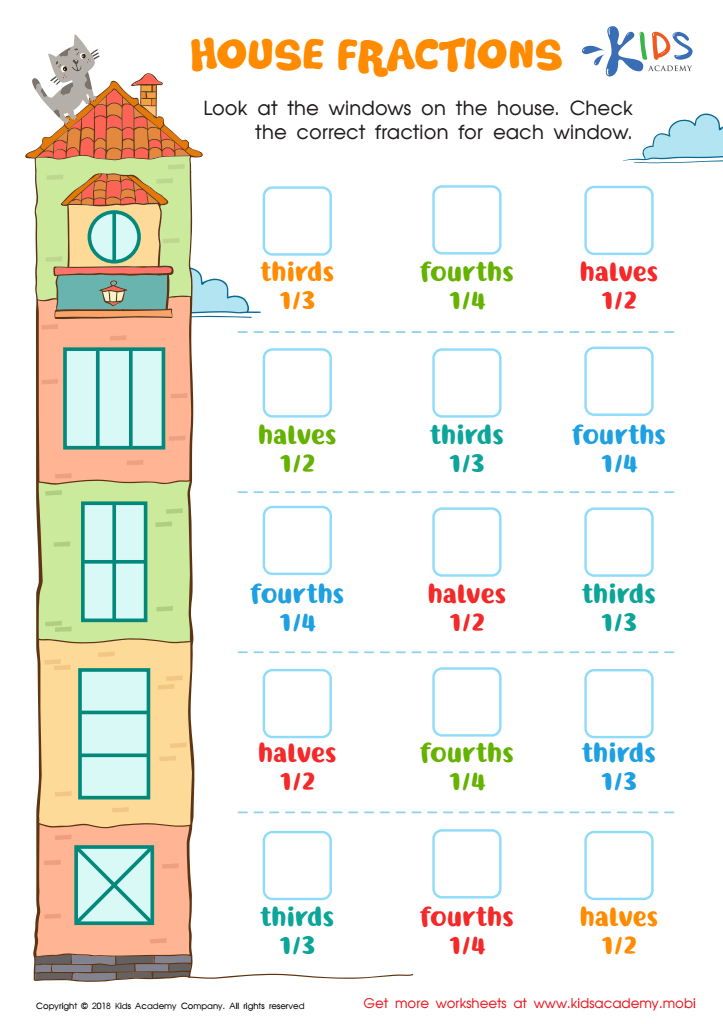
House Fractions Worksheet
 Assign to My Students
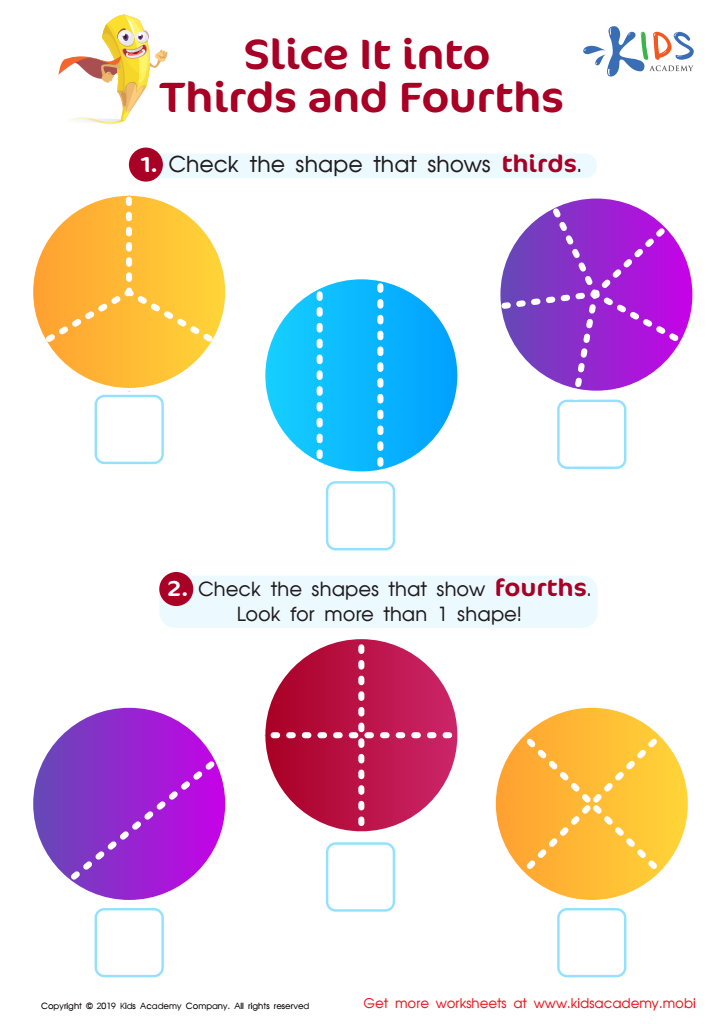
Slice in Thirds Fourths Worksheet
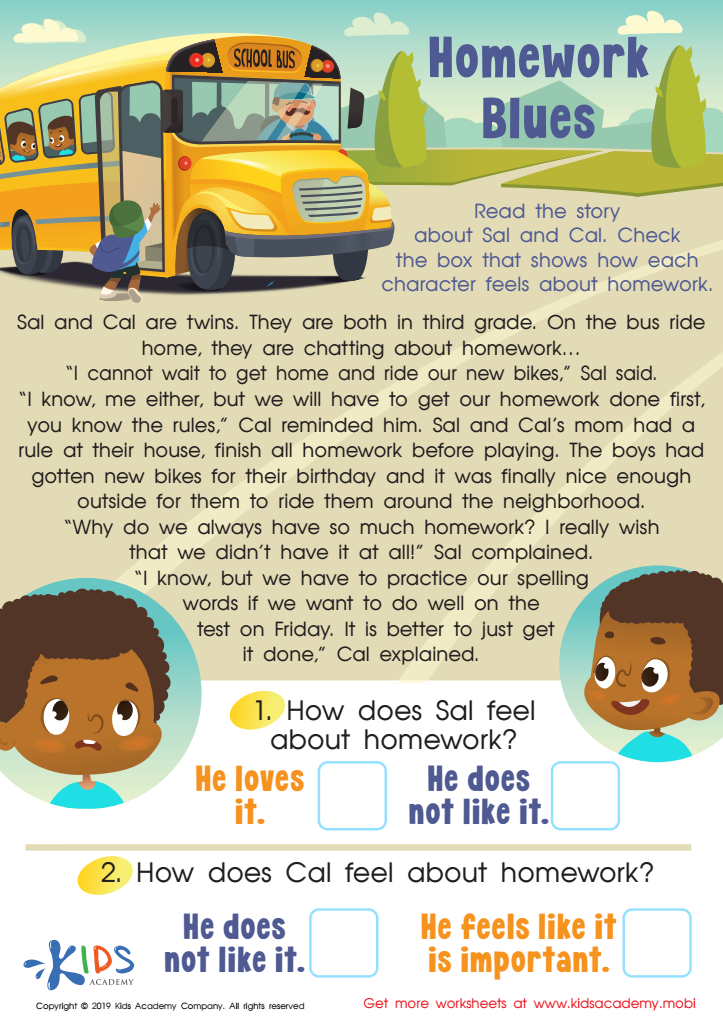
Homework Blues Worksheet


.jpg)



Parents and teachers should prioritize teaching fraction comparison to 6-7-year-olds as it lays a critical foundation for future mathematical proficiency. At this age, children are developing their number sense and spatial reasoning skills. Introducing them to fraction comparison helps them understand that numbers can express parts of a whole, which is a key concept not only in mathematics but also in everyday life.
Early exposure to fractions helps children build a strong base for more complex mathematical concepts such as addition, subtraction, multiplication, and division of fractions, which they will encounter in later grades. Understanding fraction comparison is crucial for developing logical thinking and problem-solving skills. It prompts children to grasp the idea of equivalence, greater than, and less than, enhancing their abilities to compare and contrast quantities accurately.
Furthermore, engaging kids in fraction activities can be fun and interactive, making math a more enjoyable subject and potentially sparking a lifelong interest in numbers. It also boosts their confidence as they begin to master concepts that they might initially find challenging, fostering a positive attitude toward learning.
Overall, laying a solid math foundation early by focusing on fraction comparison ensures a smoother educational journey and equips children with essential skills to navigate real-world situations involving measurements, sharing, and fairness.








