Problem Solving Easy Worksheets for Ages 6-7
3 filtered results
-
From - To
Discover a treasure trove of engaging Problem Solving Easy Worksheets designed specifically for children aged 6-7! Ideal for early learners, these worksheets foster critical thinking and enhance cognitive skills through fun and interactive activities. Children will tackle real-life scenarios, develop logical reasoning, and practice essential problem-solving techniques. Our curated resources encourage creativity while promoting collaboration and independence. With vibrant graphics and age-appropriate content, these worksheets captivate young minds and transform learning into an exciting adventure. Start empowering your child’s problem-solving abilities today and watch them thrive in their academic journey! Perfect for home enrichment or classroom use!
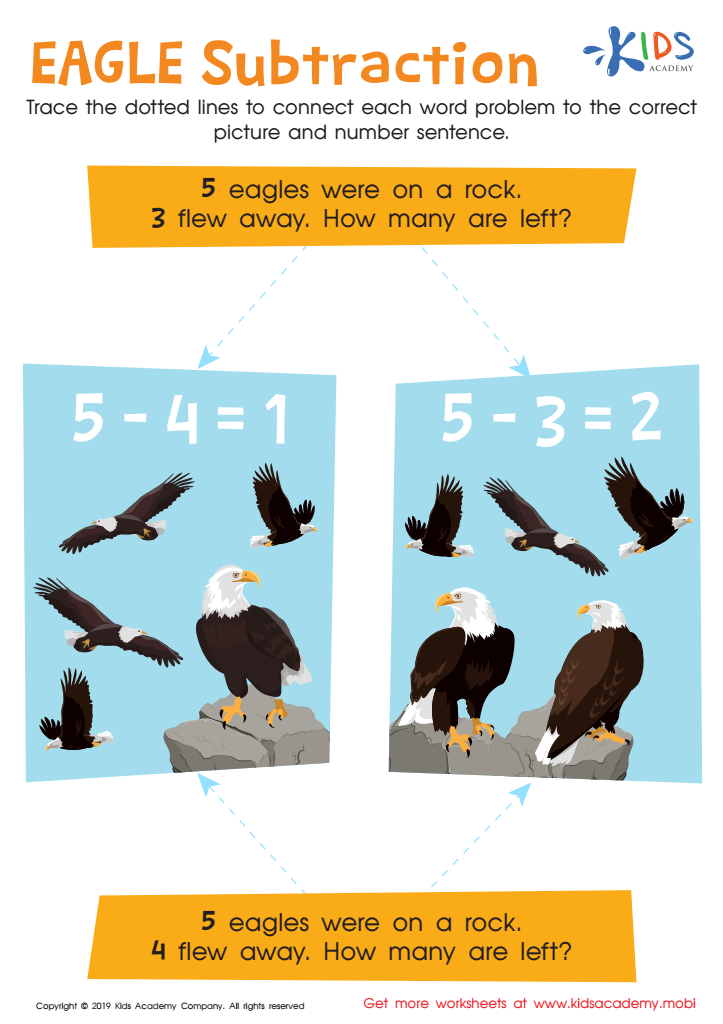
Eagle Subtraction Worksheet
 Assign to My Students
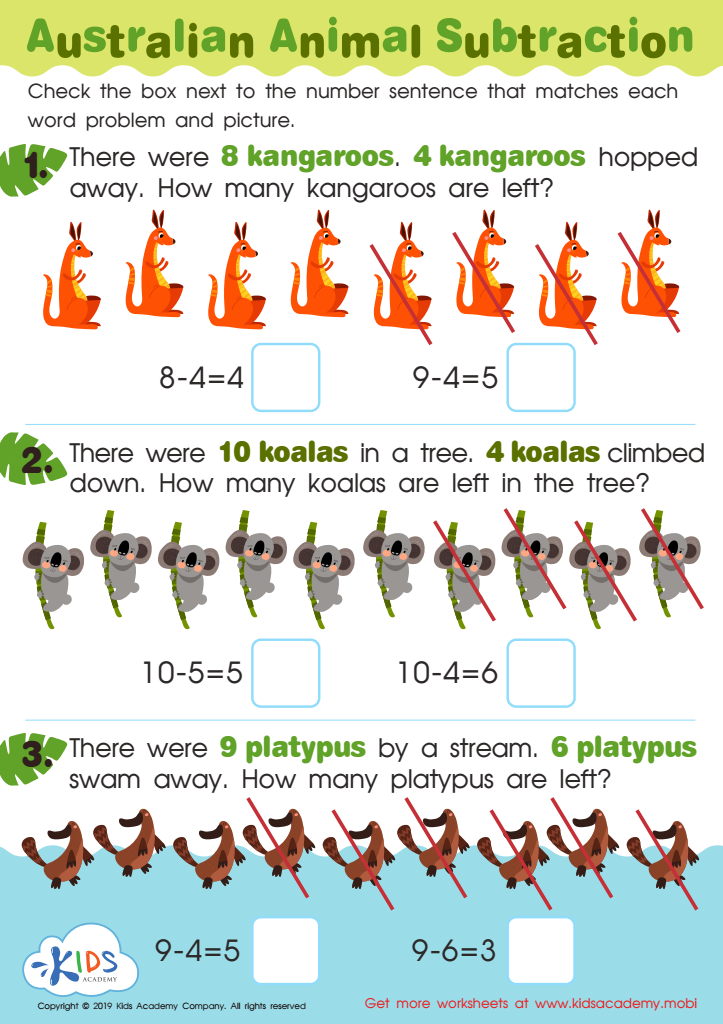
Australian Animal Subtraction Worksheet
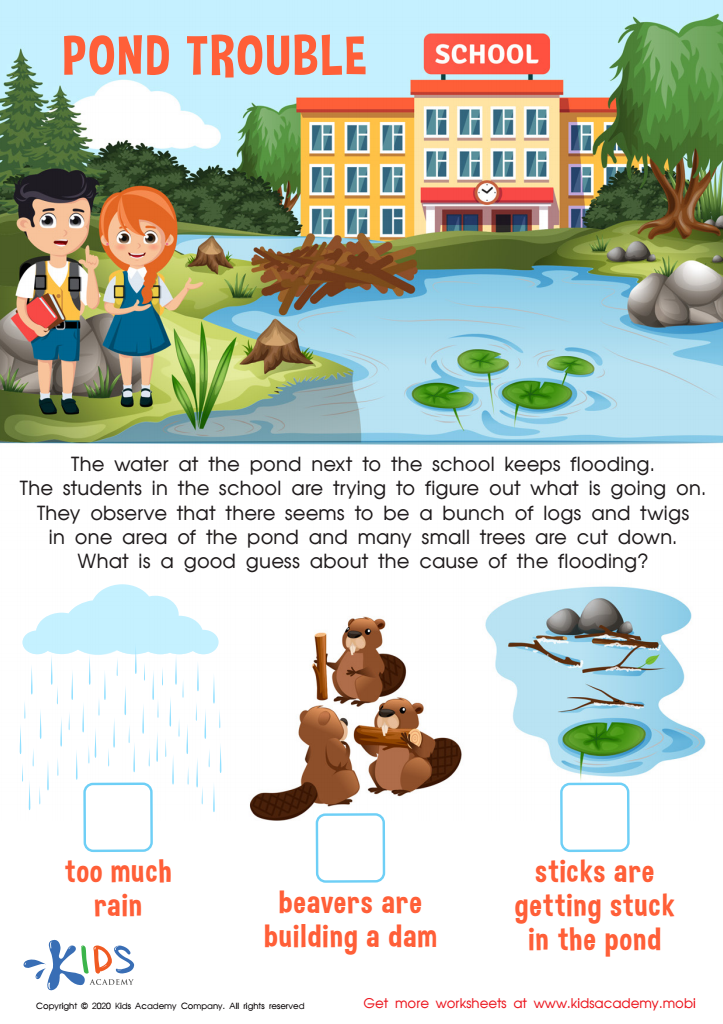
Pond Trouble Worksheet


.jpg)





Problem-solving skills are critical for children aged 6-7, as this is a formative time in their cognitive development. At this age, children transition from concrete thinking to more abstract ideas, making it essential for them to develop the ability to analyze, reason, and find solutions to challenges they face in everyday situations.
Parents and teachers should prioritize problem-solving activities because they not only foster critical thinking but also enhance social skills. Engaging in group problem-solving fosters collaboration and communication among peers, cultivating teamwork and respect for diverse perspectives. This interaction helps children understand their emotions and those of others, essential for emotional intelligence.
Moreover, mastering problem-solving lays a solid foundation for future learning. It promotes resilience as children learn to navigate failures and try again, an essential skill in both academic and life contexts. By addressing concerns creatively and systematically, children build confidence in their ability to tackle obstacles independently.
Finally, developing strong problem-solving skills prepares children for real-world challenges, ensuring they are better equipped to face the complexities of academic content, personal relationships, and daily life decisions in the years to come. Thus, parents and teachers play a pivotal role in nurturing these essential skills.








