Understanding time Easy Worksheets for Ages 6-7
3 filtered results
-
From - To
Unlock the world of time with our "Understanding Time Easy Worksheets for Ages 6-7"! Designed for young learners, these engaging worksheets help children grasp essential concepts like reading clocks, identifying hours and minutes, and distinguishing between AM and PM. The fun, age-appropriate activities encourage critical thinking while making learning enjoyable. Perfect for home or classroom use, our resources support early math skills and build a strong foundation in time management. Watch your child develop confidence and independence as they master time with ease. Download now and turn learning into an exciting adventure with our thoughtfully crafted worksheets!
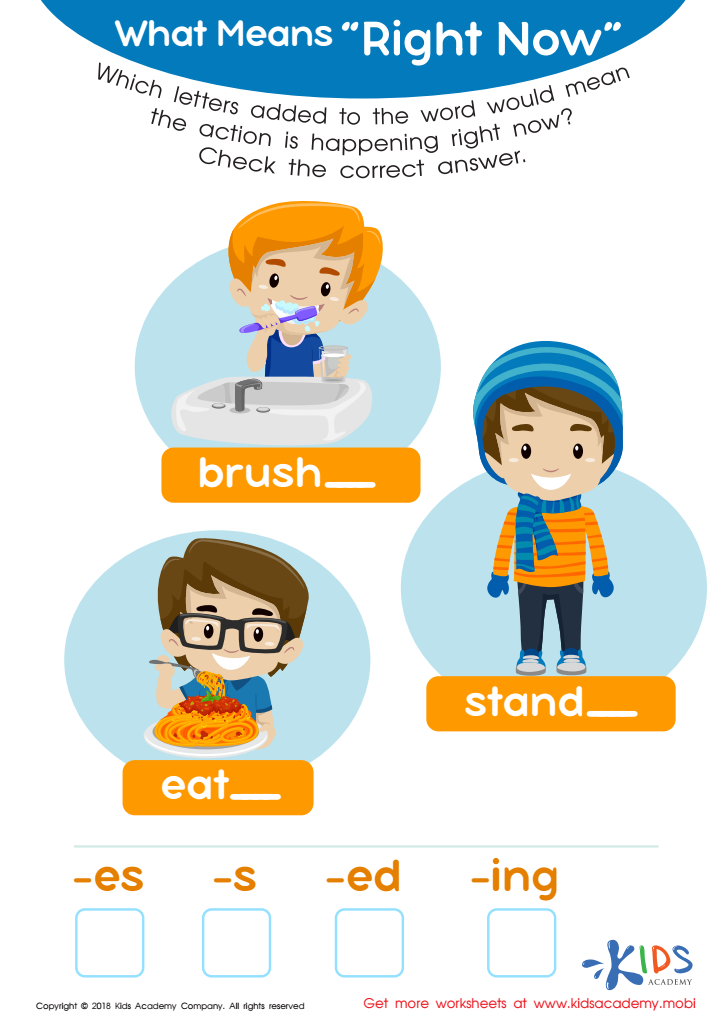
What Means "Right Now" Worksheet
 Assign to My Students
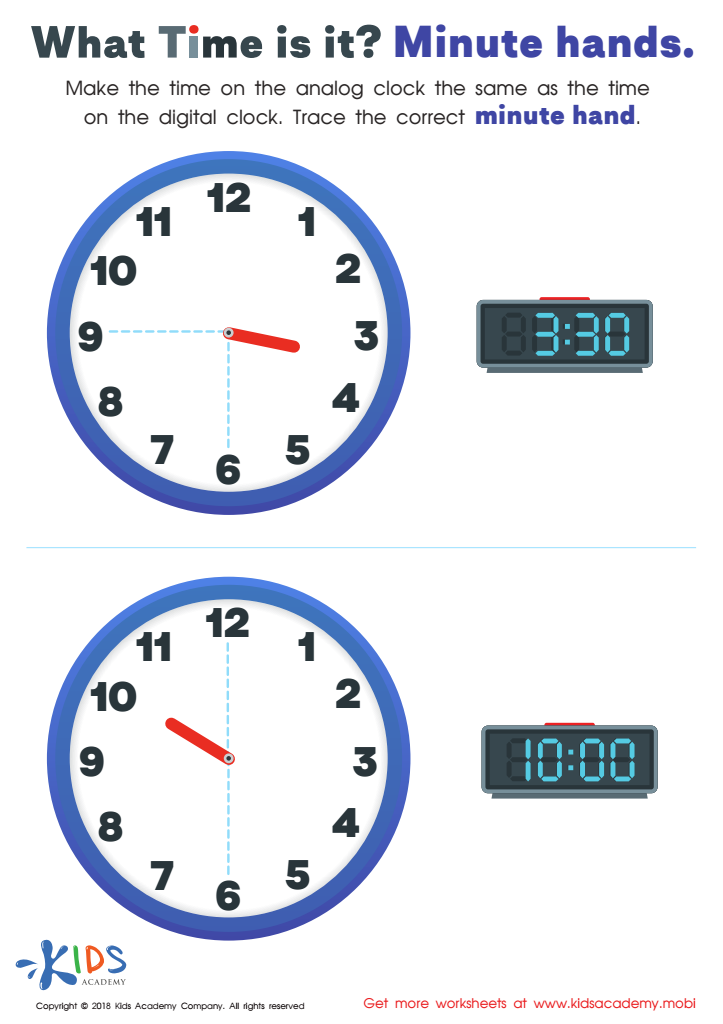
What Time Is it? Minute Hands Worksheet
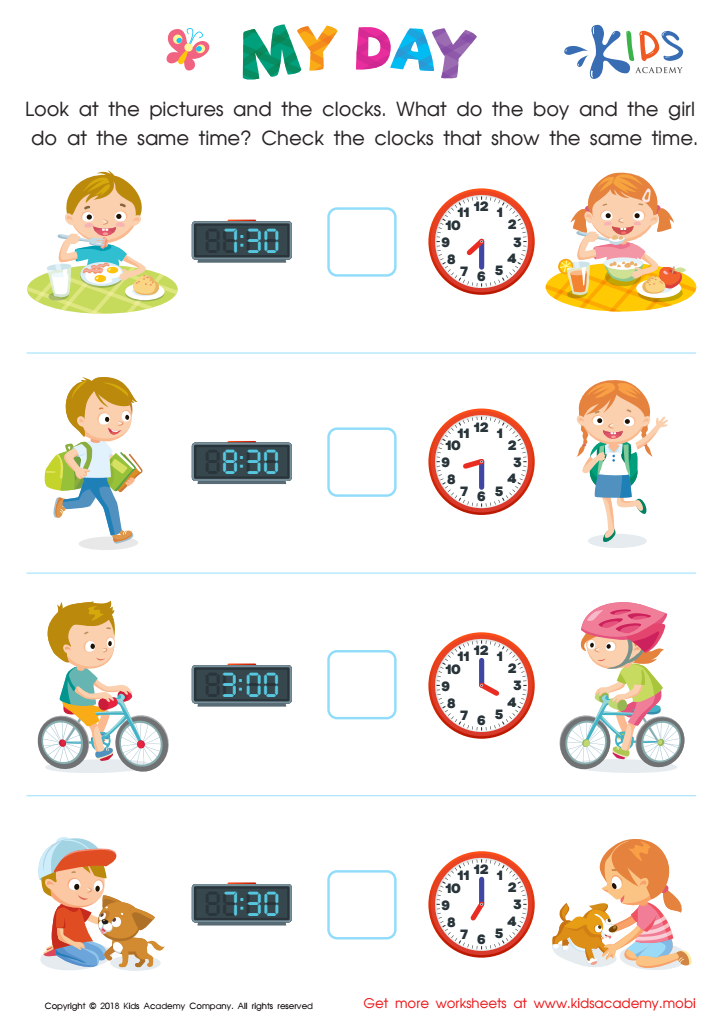
My Day Worksheet








Understanding time is crucial for children ages 6 to 7, as it lays the foundation for essential life skills and routines. At this age, children begin to grasp abstract concepts and become more independent. Teaching them to tell time and understand its passing helps them develop responsibility and enhances their ability to plan daily activities, like knowing when to start their homework or when to leave for soccer practice.
Moreover, comprehending time reinforces cognitive skills such as sequencing and prioritizing. It encourages kids to think ahead, anticipate events, and manage their time effectively—all important tools for their academic success and personal growth. Parents and teachers can use tools like storybooks, games, and visual timers to make learning about time engaging and relatable.
Furthermore, understanding time promotes awareness of schedules and routines, which can reduce anxiety in children and help cultivate a sense of security. By caring about this fundamental concept, parents and teachers support children's emotional well-being and academic performance. In a world where time management is increasingly essential, helping children develop a solid grasp of time can provide a significant advantage as they continue their learning journey.








