Understanding fractions Easy Fractions of Shapes Worksheets for Ages 6-7
13 filtered results
-
From - To
Unlock the mystery of fractions with our "Understanding Fractions: Easy Fractions of Shapes Worksheets" designed for ages 6-7. These engaging worksheets transform learning into a fun activity, helping young learners grasp the concept of fractions through visually appealing shapes and figures. Perfect for classrooms or at-home practice, these resources cater to first and second graders by promoting hands-on understanding. Each sheet emphasizes different fractional parts, aiding in critical thinking and mathematical skills essential for future learning. Aligned with educational standards, our worksheets build a solid foundation for your child's journey into fractions, making learning both enjoyable and effective.
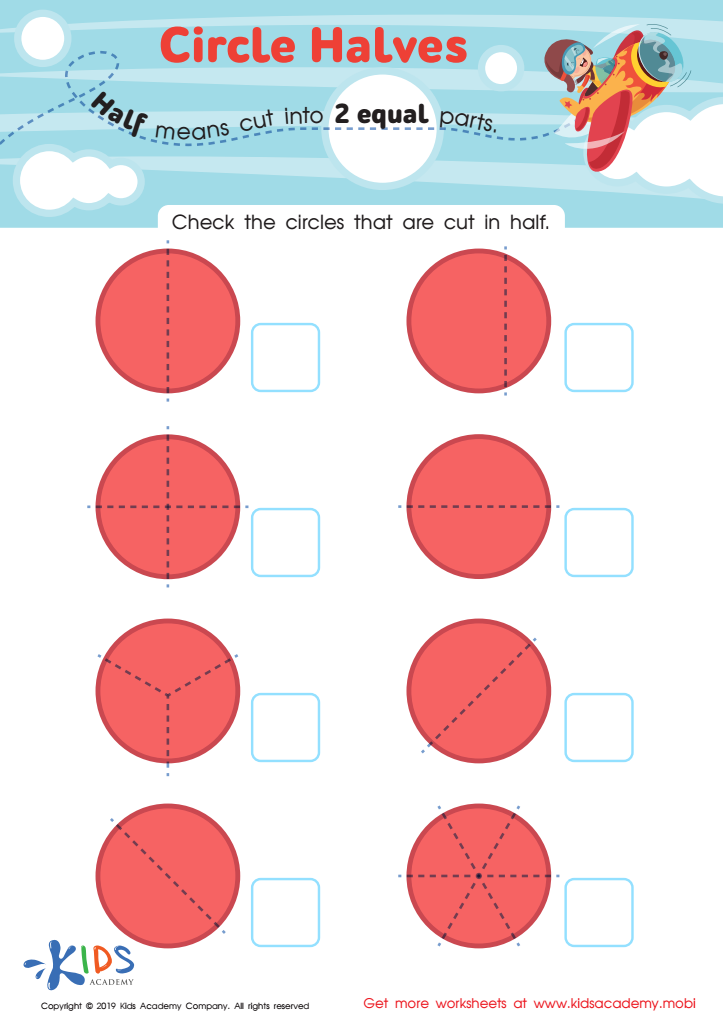
Circle Halves Worksheet
 Assign to My Students
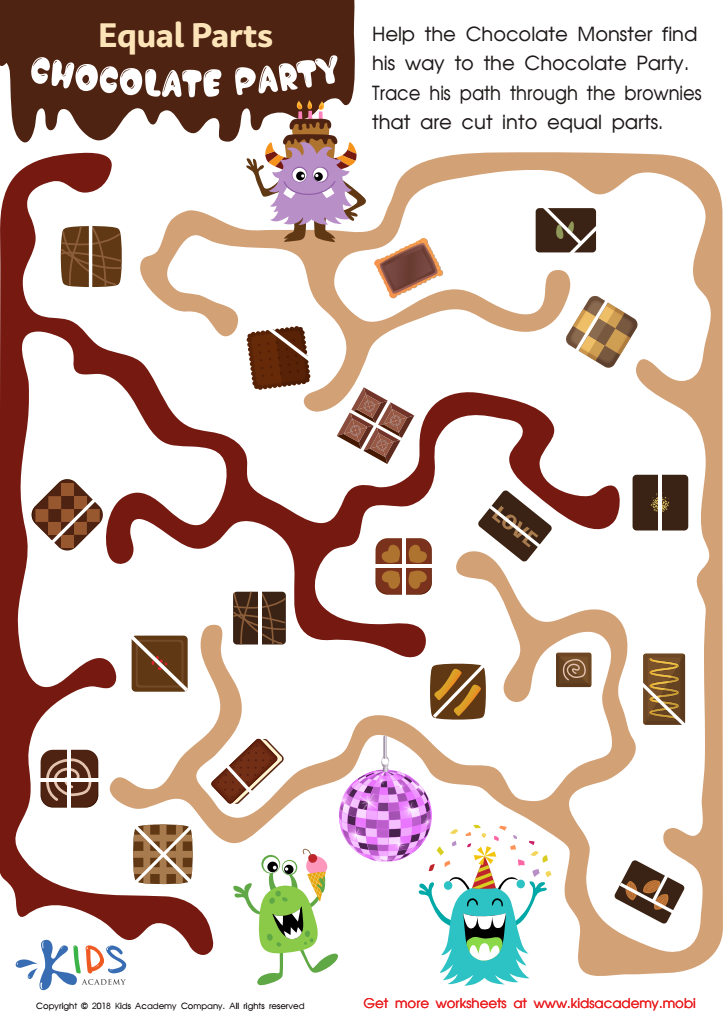
Equal Parts: Chocolate Party Worksheet
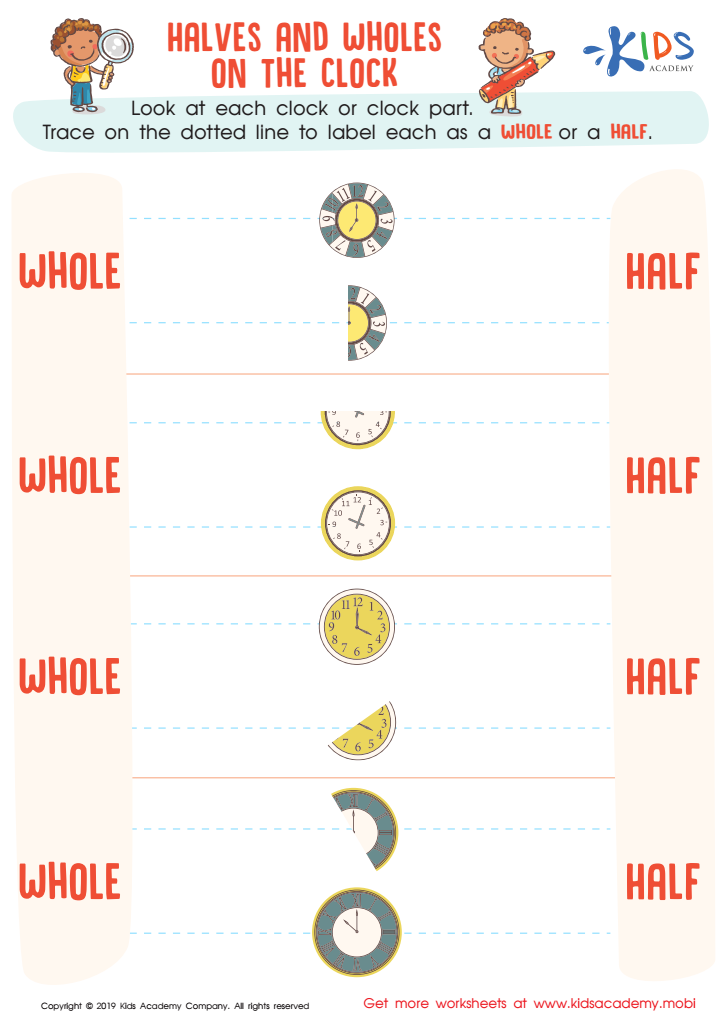
Halves and Wholes on the Clock Worksheet
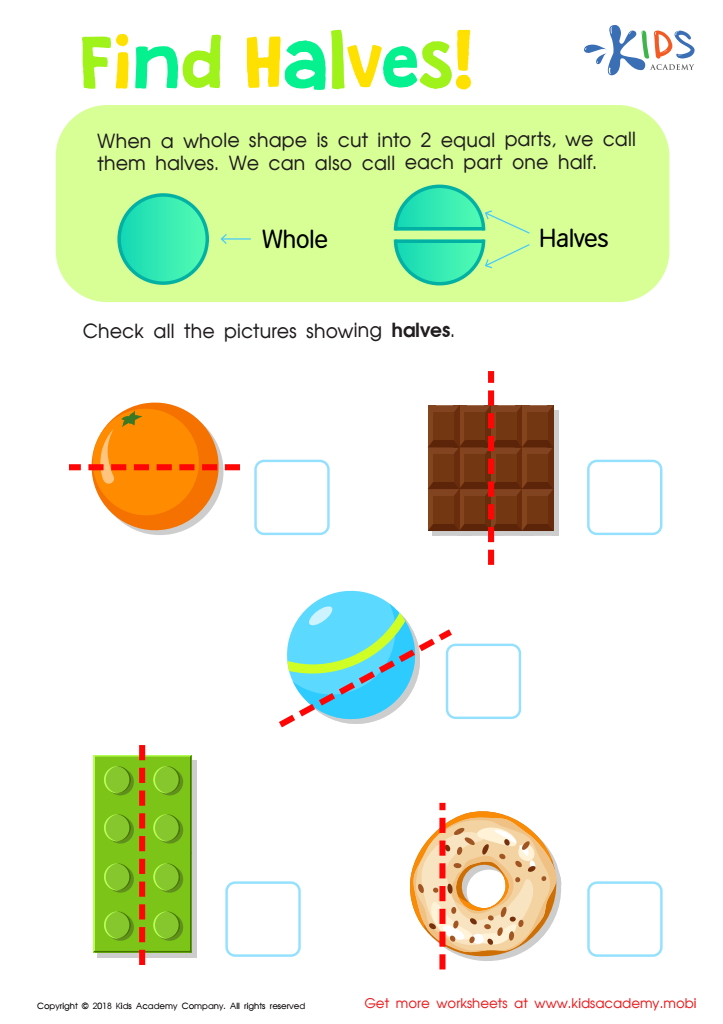
Find Halves Worksheet
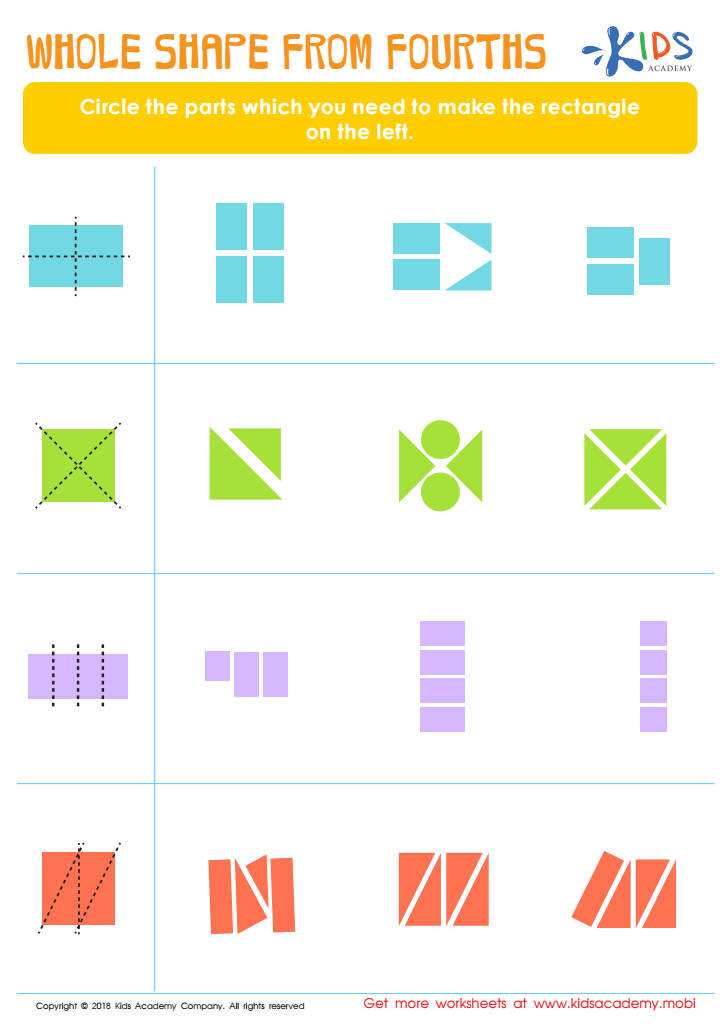
Whole Shape from Fourths Worksheet
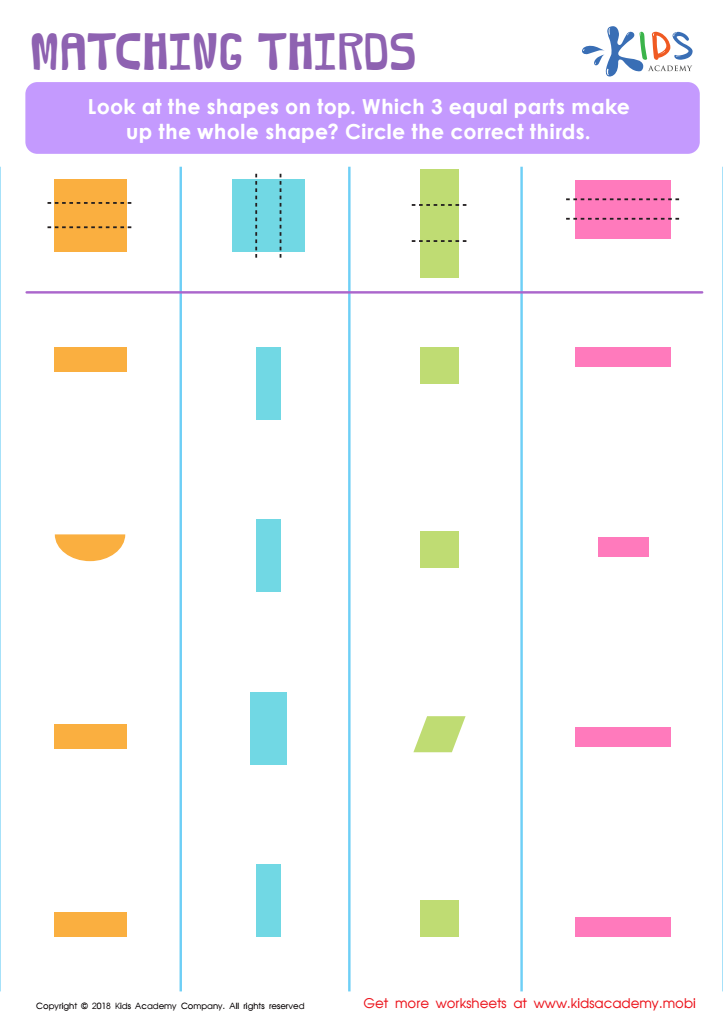
Matching Thirds Worksheet
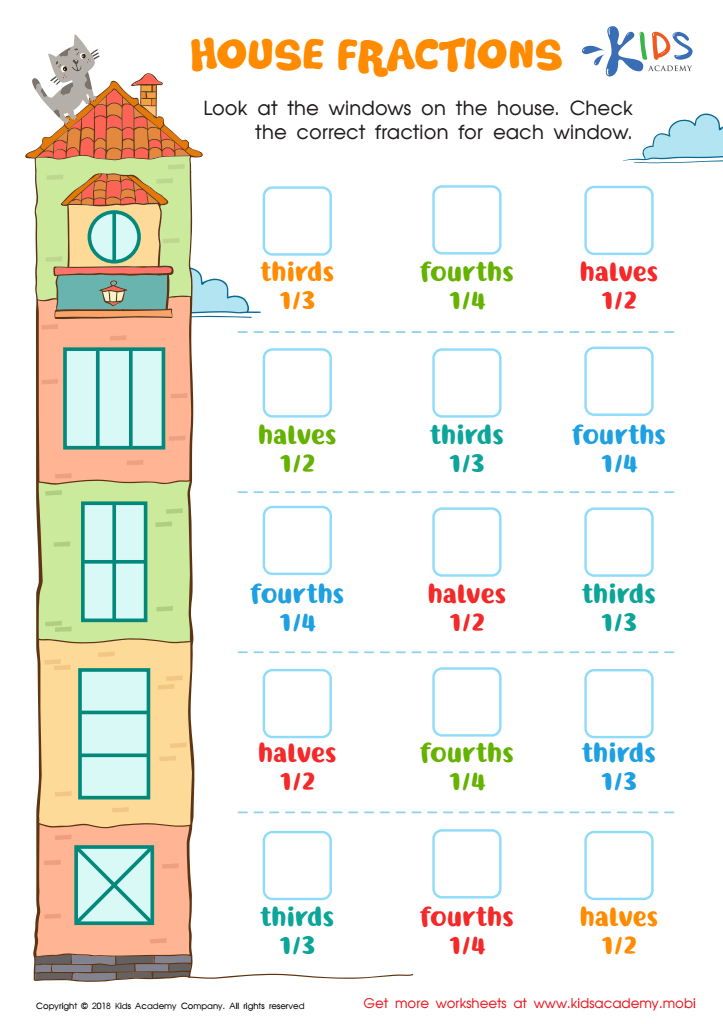
House Fractions Worksheet
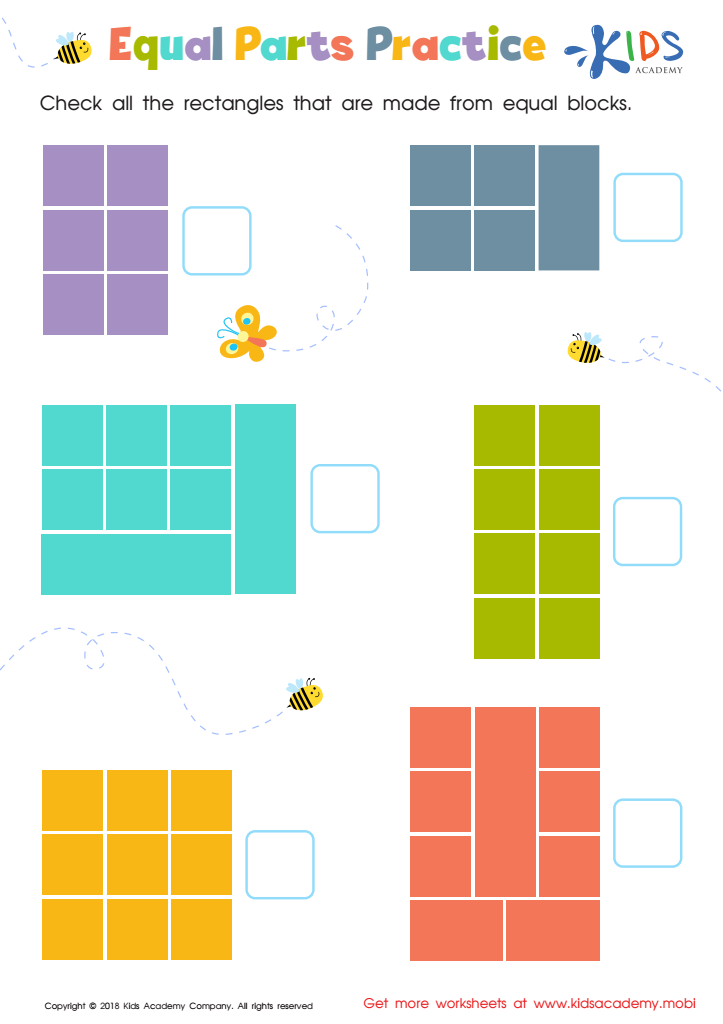
Equal Parts Practice Worksheet
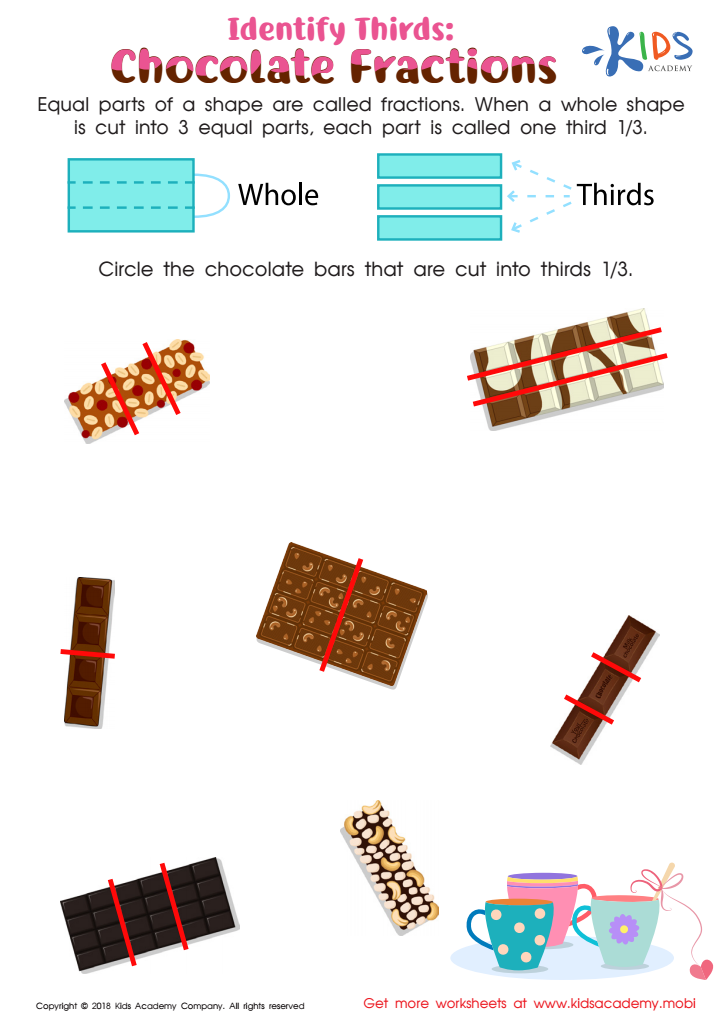
Identify Thirds: Chocolate Fractions Worksheet
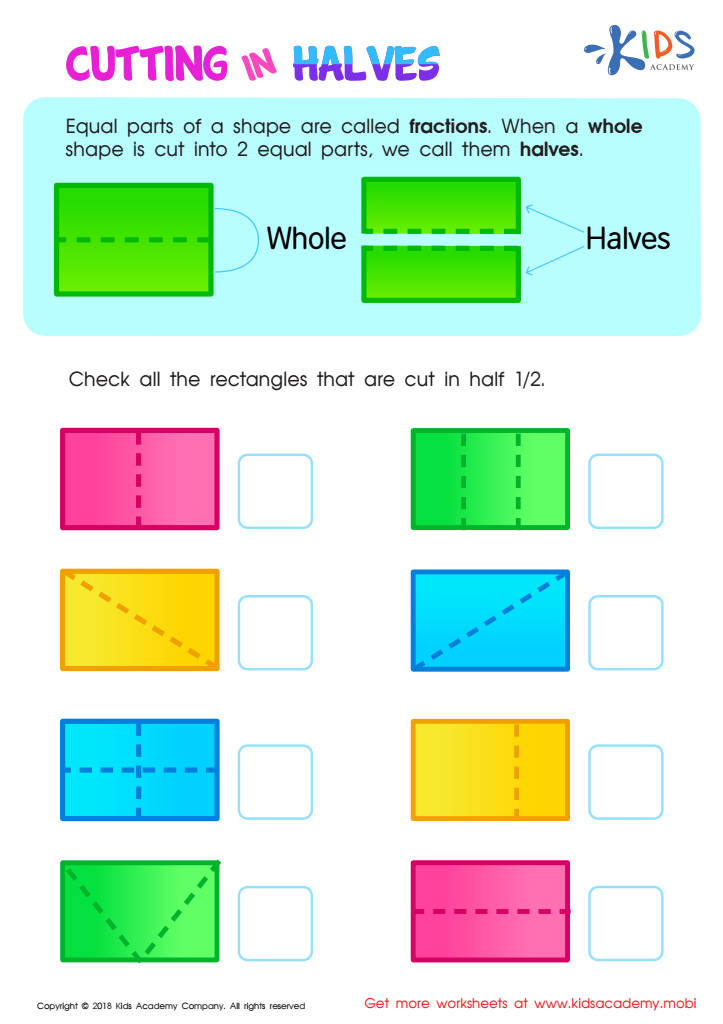
Cutting in Halves Worksheet
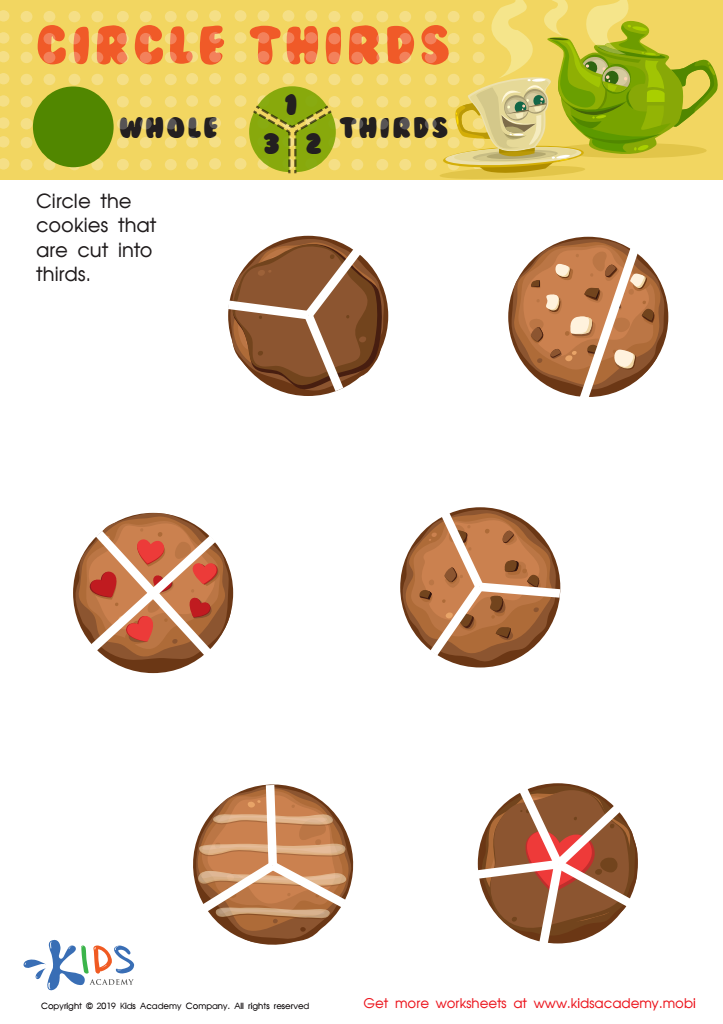
Circle Thirds Worksheet
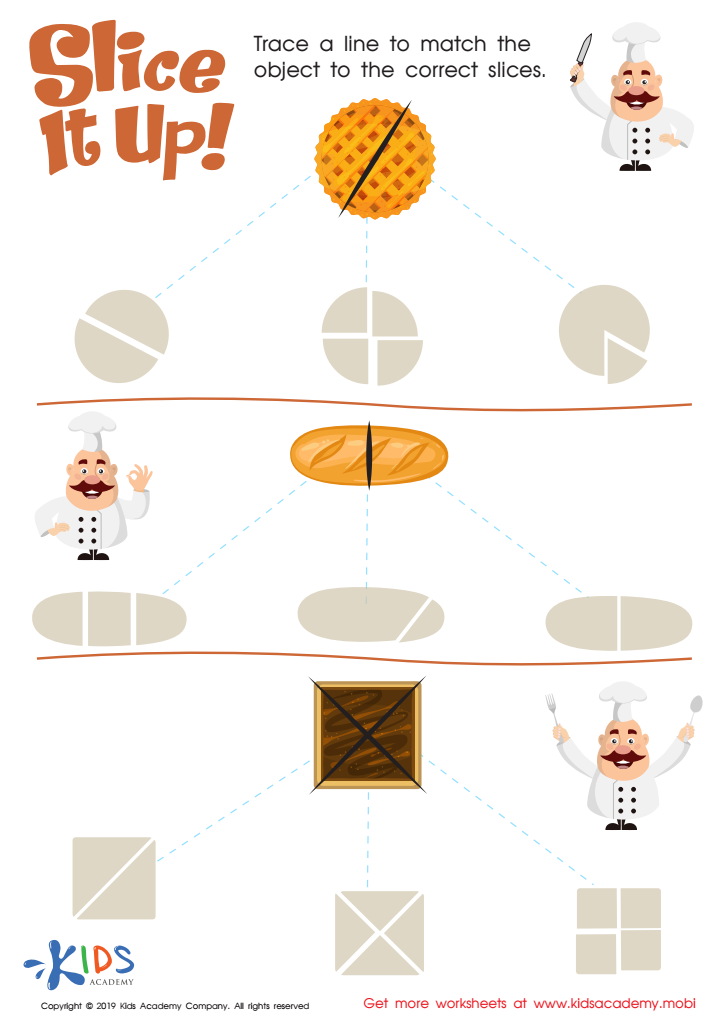
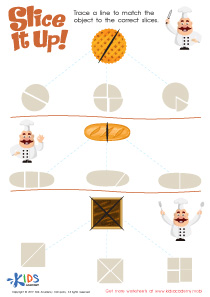
Slice It Up Worksheet
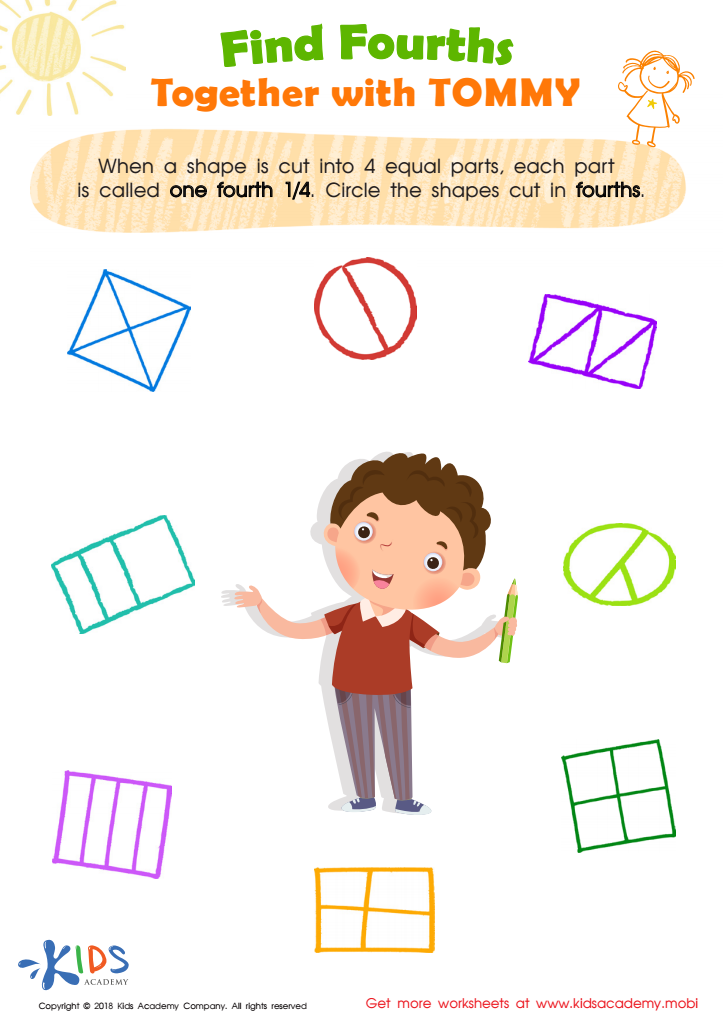
Find Fourths Together with Tommy Worksheet








Understanding fractions is integral to a child’s early math education, and introducing easy fractions of shapes to children ages 6-7 can significantly enhance their mathematical foundation. At this age, children are naturally curious and beginning to grasp basic numerical concepts. Fractions, although seemingly complex, can be made approachable and enjoyable through the use of shapes.
Teaching fractions using shapes helps children visualize the concept, making it less abstract and more concrete. For example, dividing a circle into equal parts can visually represent halves, thirds, and quarters, turning fractions into something relatable. This method is especially effective as it leverages children’s innate ability to recognize and compare different shapes and sizes.
Understanding fractions strengthens a child's numeracy skills, paving the way for more advanced mathematical learning in later grades. It also enhances problem-solving abilities and logical thinking. Furthermore, a firm grasp of fractions in early years helps in understanding parts of a whole, which is a useful skill in real-life scenarios, such as cooking or sharing.
For parents and teachers, incorporating shapes to teach fractions can make learning more interactive and less daunting for young learners, ultimately instilling a positive attitude towards mathematics. By investing in this foundational skill early on, we set children up for future success in math and everyday life.