Understanding Sequences Easy Math Worksheets for Ages 6-7
4 filtered results
-
From - To
"Understanding Sequences Easy Math Worksheets for Ages 6-7" are designed to make learning fun and engaging for young mathematicians. These worksheets introduce children to the concept of sequences through colorful activities that capture their imagination. By identifying patterns and predicting what comes next, kids enhance their critical thinking and logic skills. Our user-friendly format includes a variety of examples, from numbers to shapes, to help learners grasp the basics of sequencing. Perfect for classroom use or at-home practice, these resources ensure that children develop confidence in their math abilities. Start your child’s journey to mathematical success today!
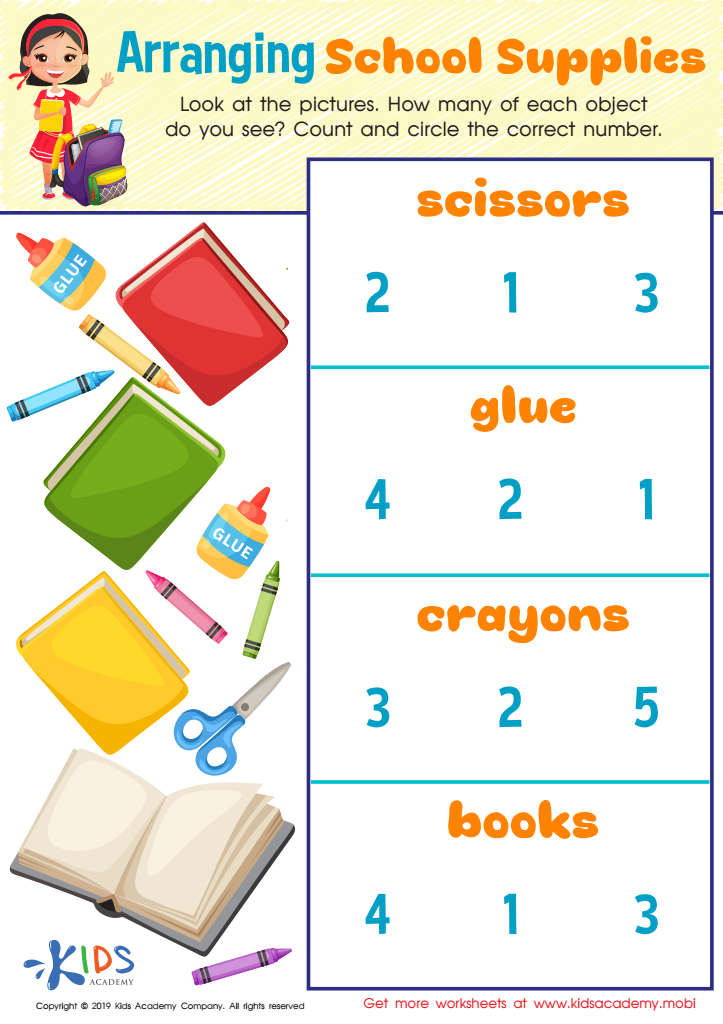
Arranging School Supplies Worksheet
 Assign to My Students
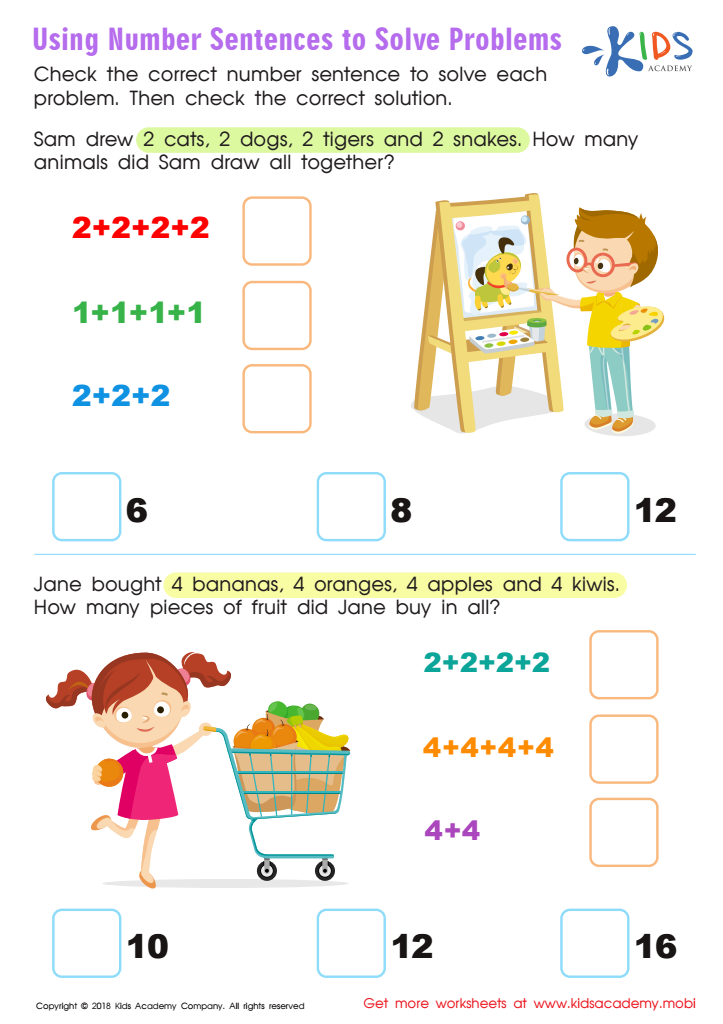
Using Number Sentences to Solve Problems Worksheet
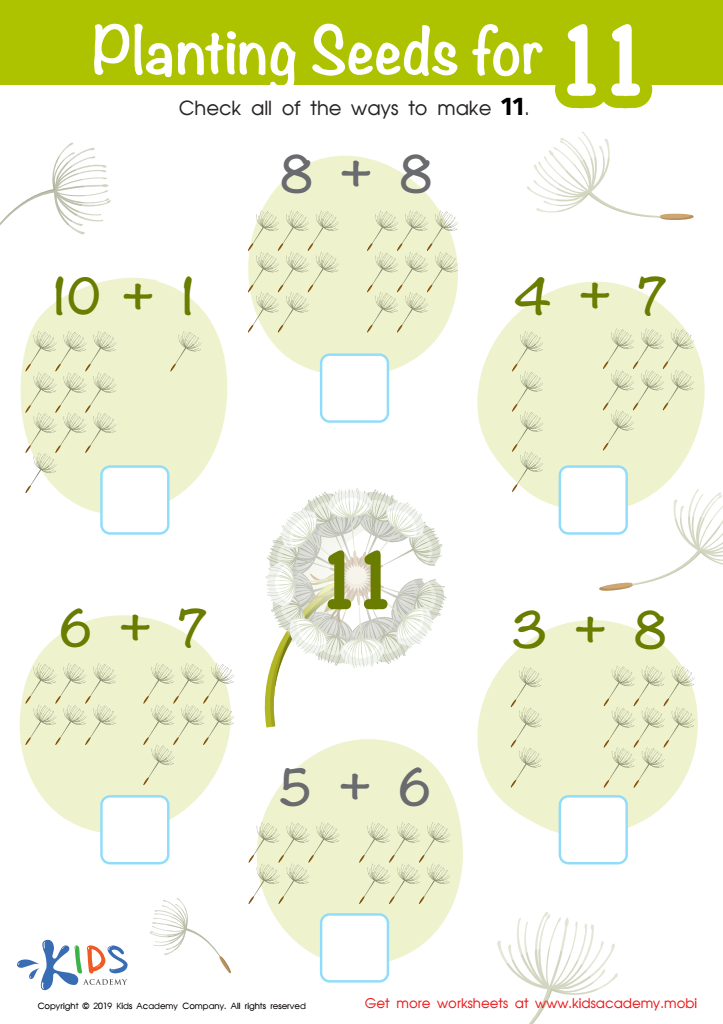
Planting Seeds for 11 Worksheet
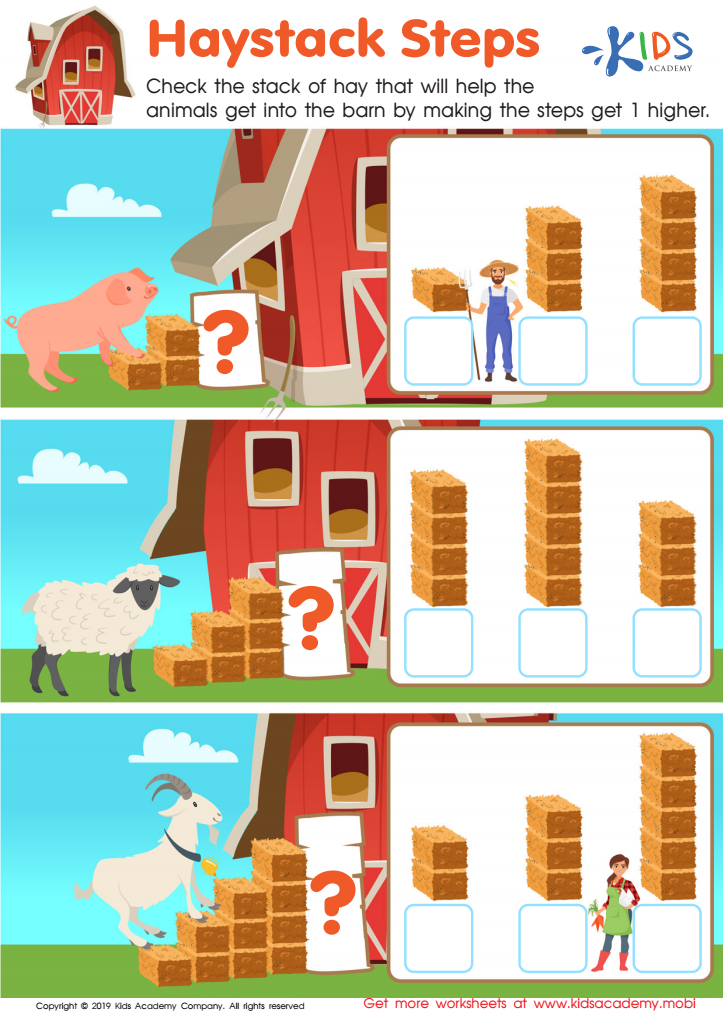
Haystack Steps Worksheet








Understanding sequences is fundamental for young learners, particularly for children aged 6-7, as it lays the groundwork for essential mathematical concepts. Parents and teachers should care about this topic because it fosters critical thinking and problem-solving skills. Sequences involve recognizing patterns and predicting what comes next, which are crucial skills in math and everyday life.
At this age, children are naturally curious and eager to explore relationships between numbers and events. Introducing sequences helps them make connections, such as understanding the order of operations in math or recognizing patterns in nature, like seasons or layouts. It enhances their cognitive abilities and prepares them for more complex concepts in later grades, such as algebra and geometry.
Moreover, early exposure to sequences promotes numeracy skills, which are vital in everyday situations, including time management and organization. By nurturing an understanding of sequences, parents and teachers encourage children to become confident learners, sparking a lifelong interest in math. Engaging in activities related to sequences will not only aid in academic success but also enable children to approach challenges with a systematic mindset, ultimately preparing them for future educational pursuits.








