Problem-Solving Skills Easy Chess Worksheets for Ages 6-8
4 filtered results
Difficulty Level
Grade
Age
-
From - To
Subject
Activity
Standards
Boost your child's problem-solving skills with our engaging Easy Chess Worksheets designed for ages 6-8! These worksheets seamlessly combine fun and learning, introducing young learners to the basics of chess strategy while enhancing critical thinking. Each worksheet features age-appropriate puzzles and challenges that encourage kids to think ahead, analyze situations, and develop logical reasoning. Perfect for classrooms or home learning environments, these resources will captivate young minds and make learning a joy. Explore our collection today and watch your child's cognitive abilities flourish through the timeless game of chess!
Favorites
With answer key
Interactive
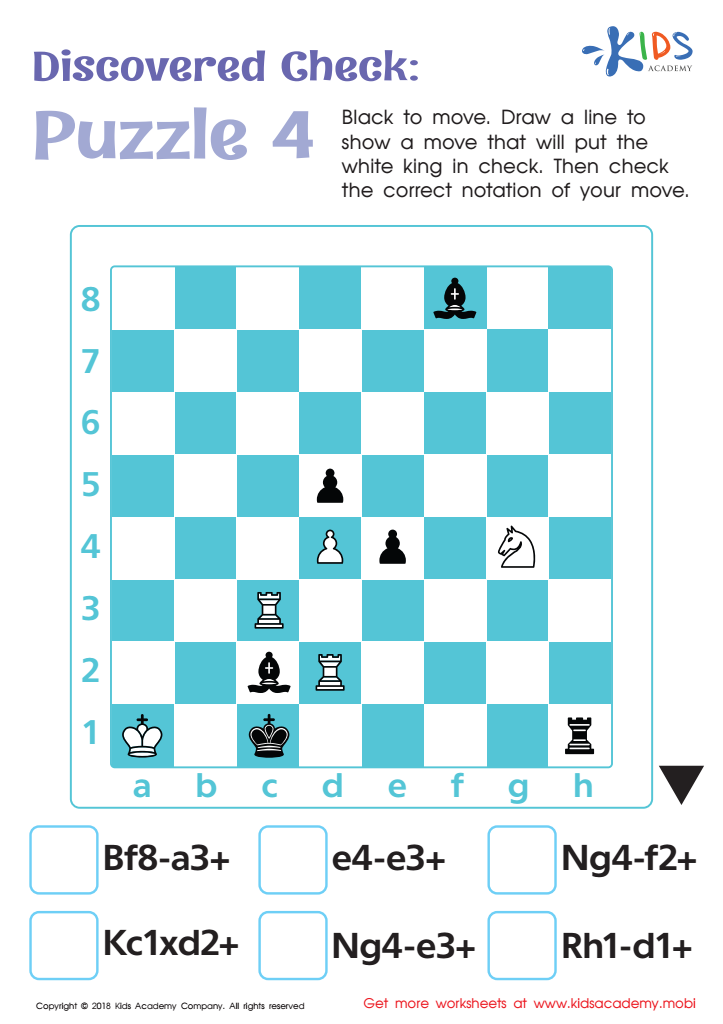
Discovered Check: Puzzle 4 Worksheet
Let your child test their chess skills with this easy worksheet. Have them take control of the black pieces and try to put the white king in checkmate. Ask them to draw a line from their chess piece to the white king, showing the move they'll make, then check the correct answer.
Discovered Check: Puzzle 4 Worksheet
Worksheet

Discovered Check: Puzzle 2 Worksheet
This worksheet exercise will stimulate your child's thinking and let them show off their chess skills. Ask them to use the white pieces and draw a line, pointing to the move that will put the black king in checkmate. Then they should check the correct option. Challenge your child and help them learn more about chess with this fun and educative activity.
Discovered Check: Puzzle 2 Worksheet
Worksheet
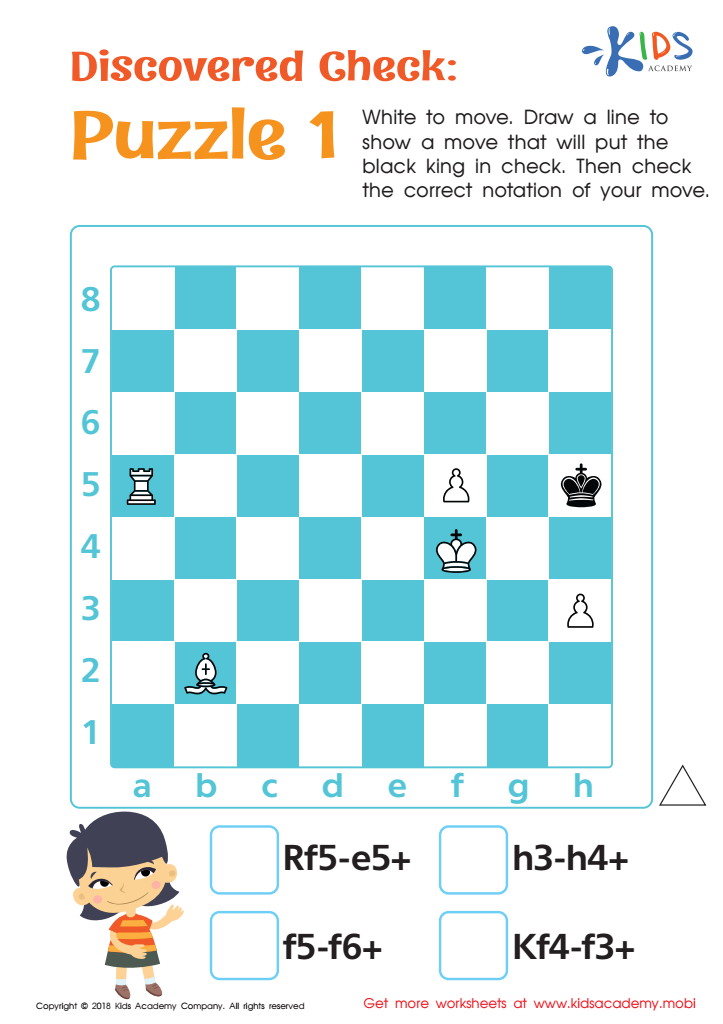
Discovered Check: Puzzle 1 Worksheet
Chess is an excellent way to engage your kids' brains and strengthen thinking skills. This worksheet is ideal for inspiring and growing their interest in the game. Have your child take the white pieces and move them to checkmate the black king. Compare their move against the provided notations to check accuracy.
Discovered Check: Puzzle 1 Worksheet
Worksheet
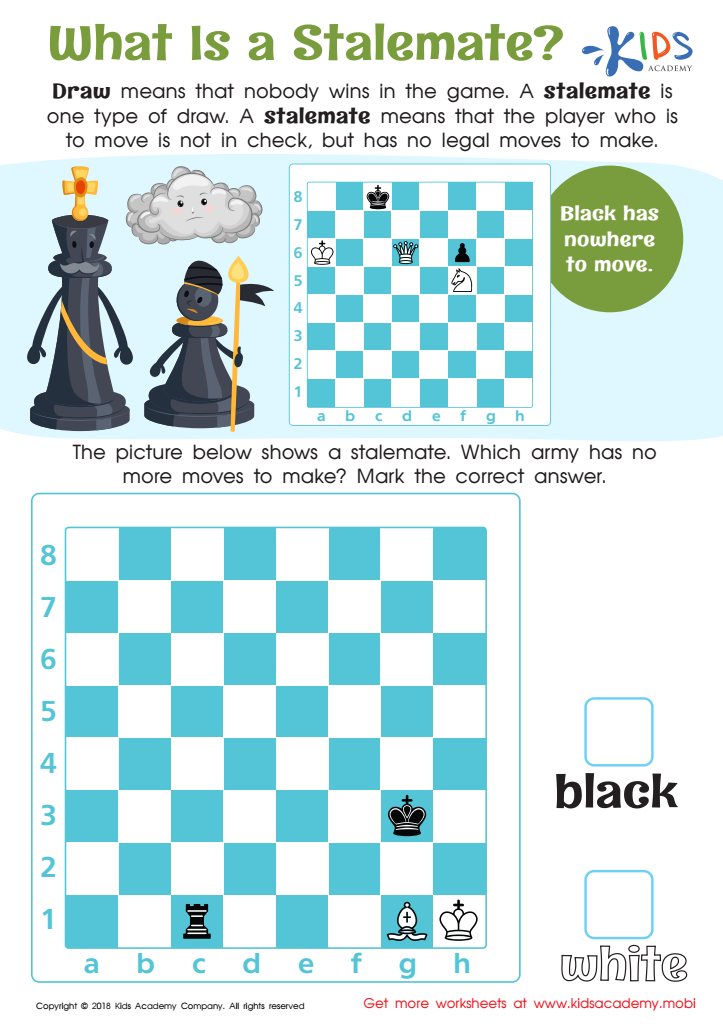
What Is a Stalemate? Worksheet
Chess is an ideal way to develop logic, strategizing, problem-solving and more! Even kids can learn it. With this worksheet, children can learn about draws and stalemates. Sample boards will help them decide which team, black or white, is at a stalemate.
 Assign to My Students
What Is a Stalemate? Worksheet
Worksheet
Join Kids Academy for Free
Who is primarily going to use this learning content?







Parents and teachers should care about problem-solving skills, such as those developed through chess, for children ages 6-8 because these skills lay the foundation for critical thinking and decision-making in various aspects of life. Chess, often deemed a “game of strategy,” challenges young minds to consider multiple possibilities, anticipate opponents’ moves, and think ahead. By engaging in this age-appropriate chess program, children learn to approach obstacles with a mindset geared towards resilience and creativity.
Moreover, problem-solving skills extend beyond the chessboard; they are essential in subjects like math and science, where logical reasoning is crucial. As children tackle chess puzzles, they practice applying strategies, adjusting to new information, and evaluating outcomes, fostering a growth mindset. This not only enhances cognitive flexibility but also boosts confidence and perseverance.
Additionally, chess promotes social skills through interaction with peers, developing teamwork and good sportsmanship as they learn to handle wins and losses gracefully. Encouraging children to learn problem-solving via easy chess games empowers them with tools for academic success, emotional development, and improved interpersonal skills, setting the stage for lifelong learning and personal growth. Ultimately, investing in these skills early can lead to more thoughtful, proactive, and engaged individuals.