Basic Addition Skills Easy Addition & Subtraction Worksheets for Ages 6-8
5 filtered results
-
From - To
Discover essential basic addition skills with our engaging worksheets designed for children ages 6-8. These easy addition and subtraction worksheets provide a fun and interactive way for young learners to practice their math skills. With colorful illustrations and varied exercises, kids will build confidence as they tackle simple equations and problems, reinforcing their understanding of number concepts. Perfect for classroom use or homeschooling, these worksheets cater to different learning styles and abilities, ensuring every child can succeed. Unlock a love for math at an early age and watch your child excel with our comprehensive resources!
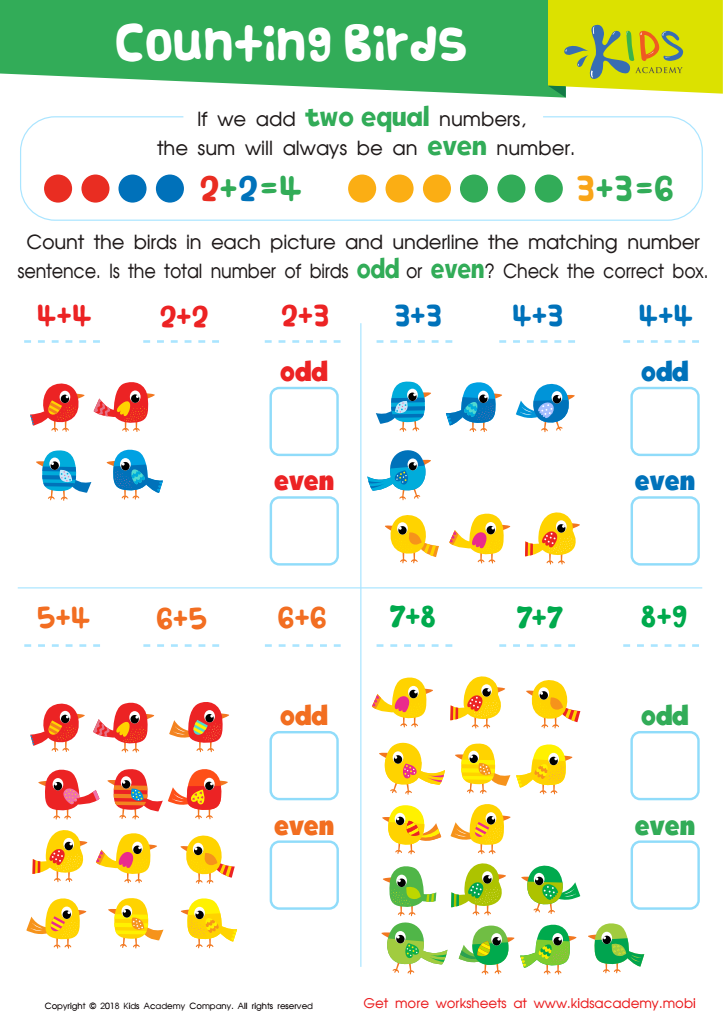
Counting Birds Worksheet
 Assign to My Students
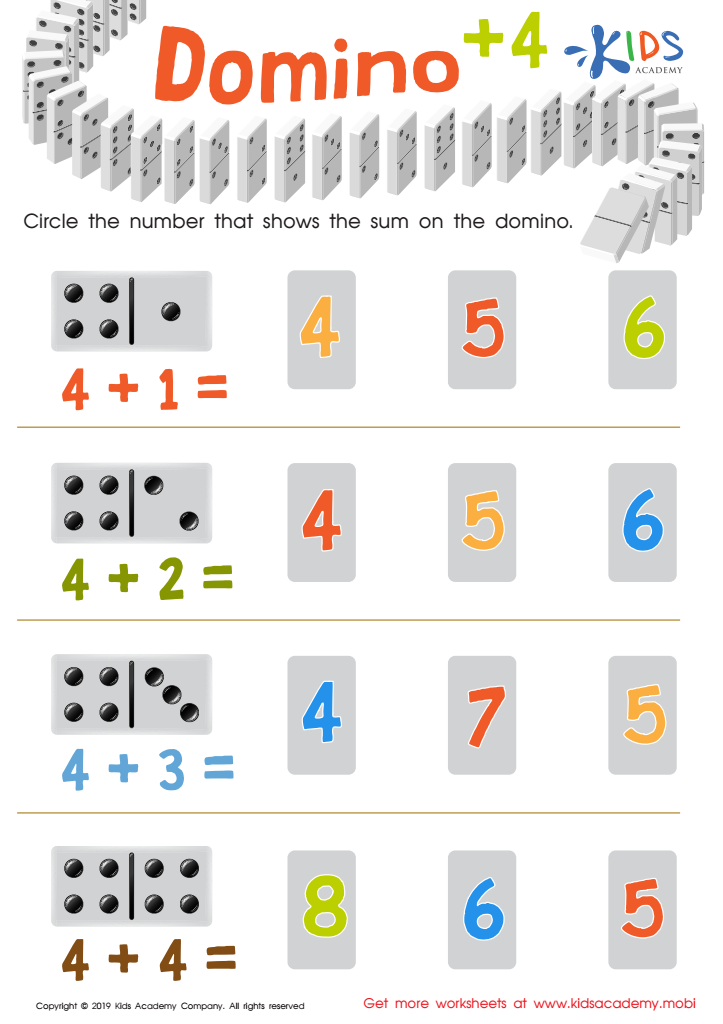
Domino +4 Worksheet
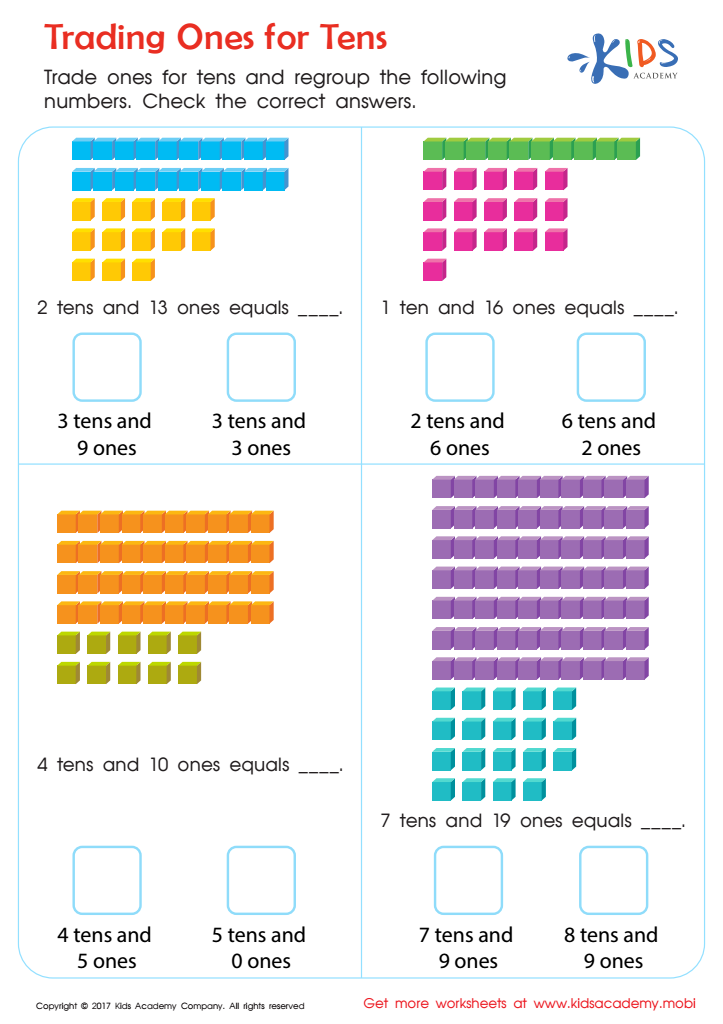
Trading Ones for Tens Worksheet
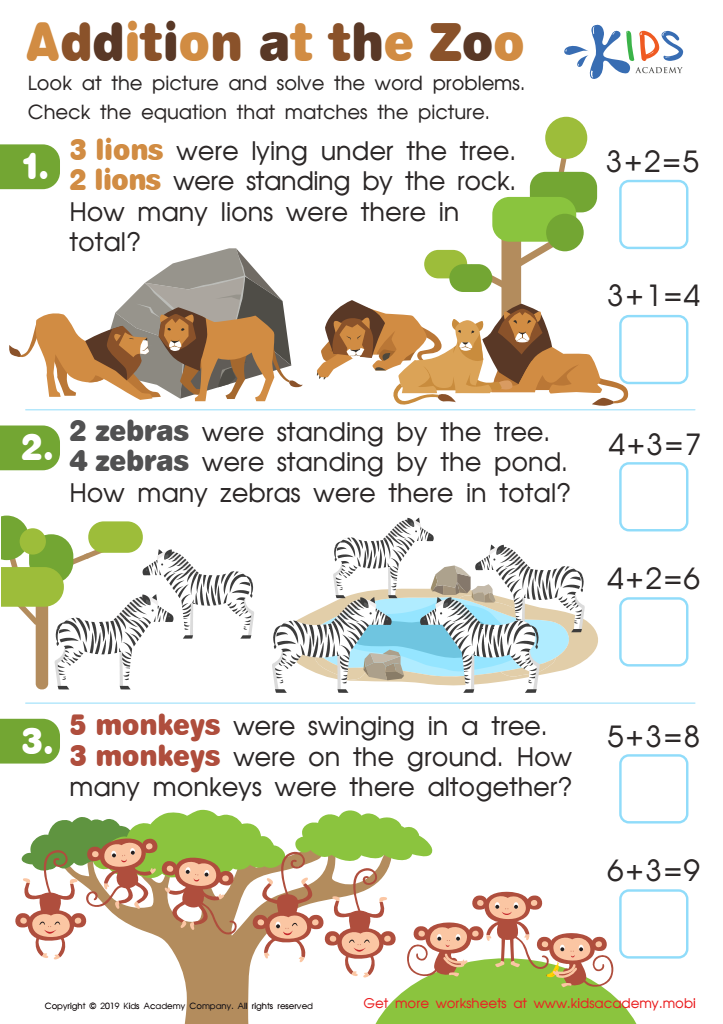
Addition at the Zoo Worksheet
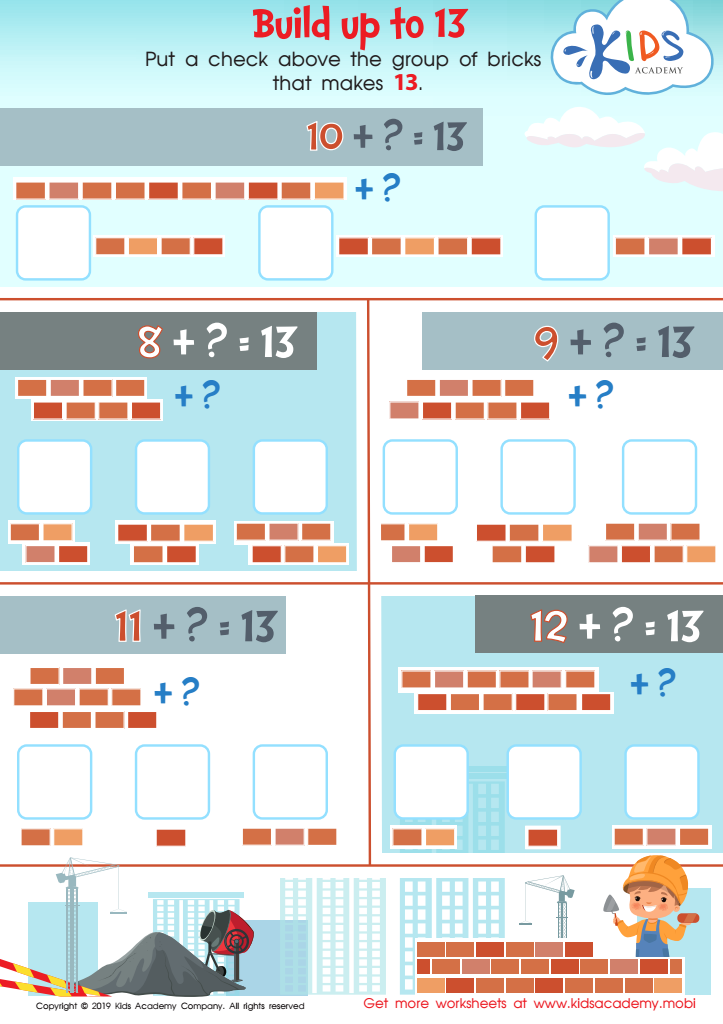
Build up to 13 Worksheet








Basic addition and subtraction skills are foundational elements of early mathematics that significantly influence a child’s academic success and confidence. For children aged 6 to 8, mastering these concepts is crucial, as they serve as the springboard for more complex math operations in subsequent grades. Parents and teachers should care about these skills for several reasons.
Firstly, strong basic math skills enhance problem-solving abilities and logical reasoning, fostering critical thinking that extends beyond the classroom. Competence in simple calculations helps build a child’s self-esteem and reduces math anxiety, allowing them to approach new challenges with confidence.
Moreover, these skills are integral to daily life; children encounter situations where addition and subtraction play key roles, from simple transactions to time management. By ensuring that kids understand these operations, adults help prepare them for real-world situations.
Finally, a solid foundation in basic addition and subtraction lays the groundwork for future academic subjects, including science and financial literacy. This early investment in numeracy pays off in higher proficiency levels and a greater enjoyment of learning, creating a positive, interactive environment for growth. Thus, fostering basic math skills is an essential priority for caregivers and educators alike.








