
Subtraction practice Easy Numbers Worksheets for Ages 6-8
7 filtered results
Difficulty Level
Grade
Age
-
From - To
Subject
Activity
Standards
Boost your child’s math skills with our "Subtraction Practice Easy Numbers Worksheets for Ages 6-8." Designed specifically for young learners, these engaging worksheets make subtraction fun and straightforward. Our exercises use simple numbers to help kids build confidence in their subtraction abilities. Clear instructions and appealing visuals ensure that children remain focused and motivated. Perfect for practice at home or in the classroom, each worksheet is a step towards mastering essential math skills. Help your child succeed in math with interactive and enjoyable subtraction worksheets tailored for their developmental stage. Download now and watch their skills grow!
Favorites
With answer key
Interactive
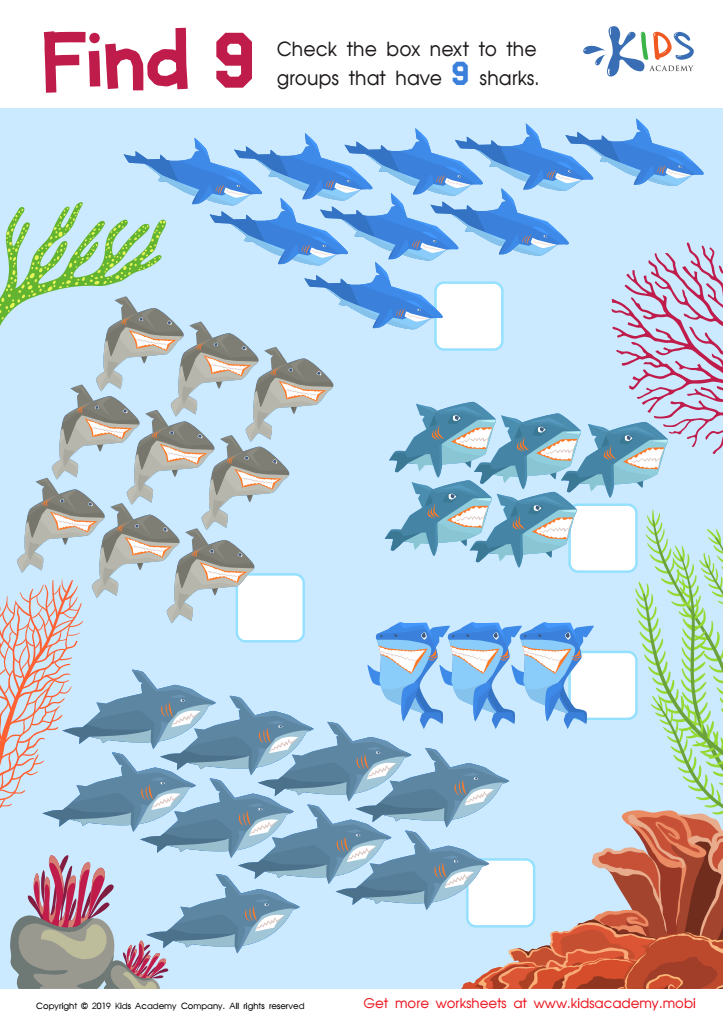
Find 9 Worksheet
Teach your kids to count proficiently with fun exercises and everyday objects. In this worksheet, assist your kid in counting sharks in the ocean and checking the box next to the group that has 9. This activity will help build a strong foundation for addition and subtraction later on.
 Assign to My Students
Find 9 Worksheet
Worksheet
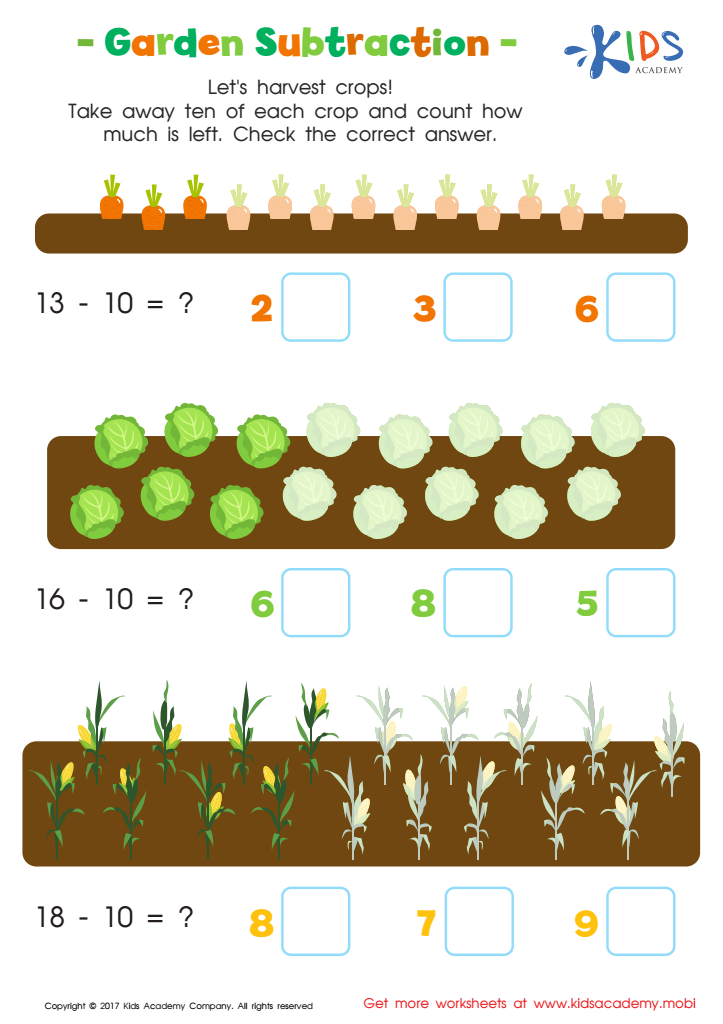
Garden Subtraction Worksheet
Help your kids understand math with this fun, garden-themed subtraction worksheet! Have them read the number sentences and count the veggies in each row. Then, subtract 10 from each row to find the answer. They'll love counting the colorful veggies and solving the problems!
Garden Subtraction Worksheet
Worksheet
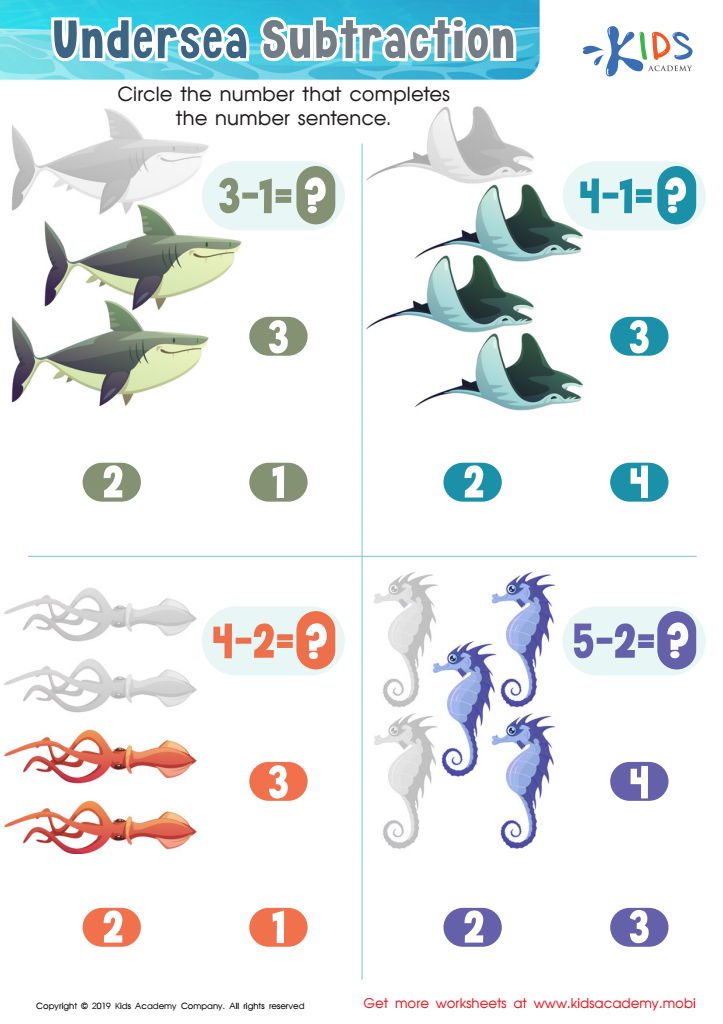
Undersea Subtraction Worksheet
To give your kids an advantage in math, use this worksheet! Begin by having them identify the fish in the picture. Then, have them circle the number that completes the number sentences. This will help them get some extra practice with subtraction!
Undersea Subtraction Worksheet
Worksheet
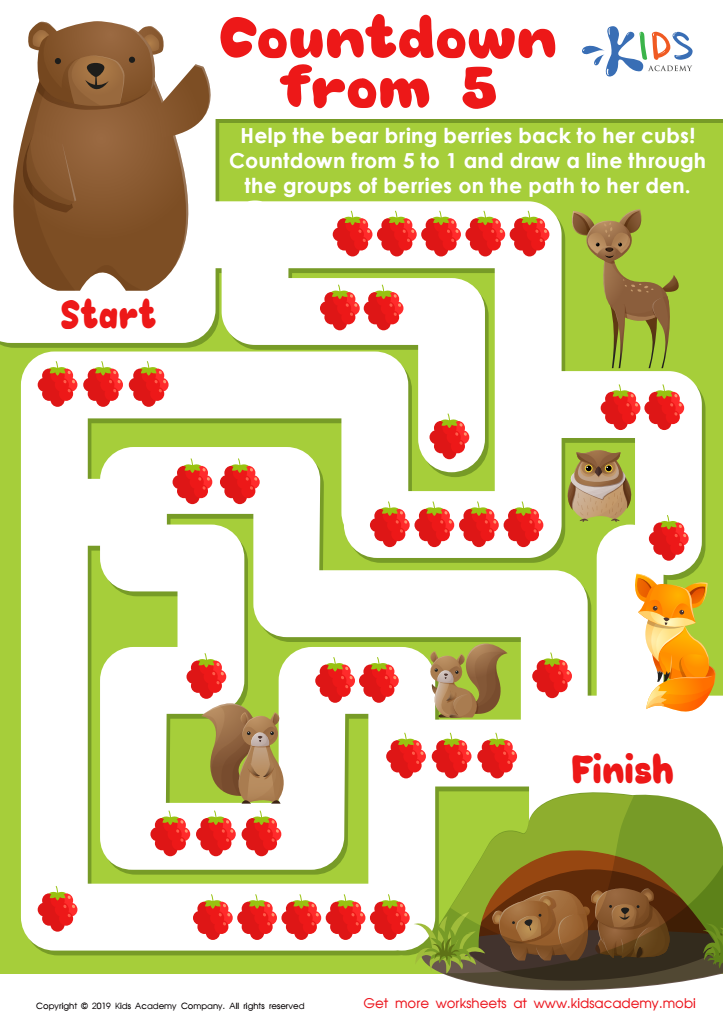
Countdown from 5 Worksheet
Encourage your kids to help Mama Bear find her way to her den! Ask them to count down from 5 to 1 and draw a line through the groups of berries on the path. Point them to the picture of the friendly bears. A fun and safe way to enjoy these cute animals!
Countdown from 5 Worksheet
Worksheet
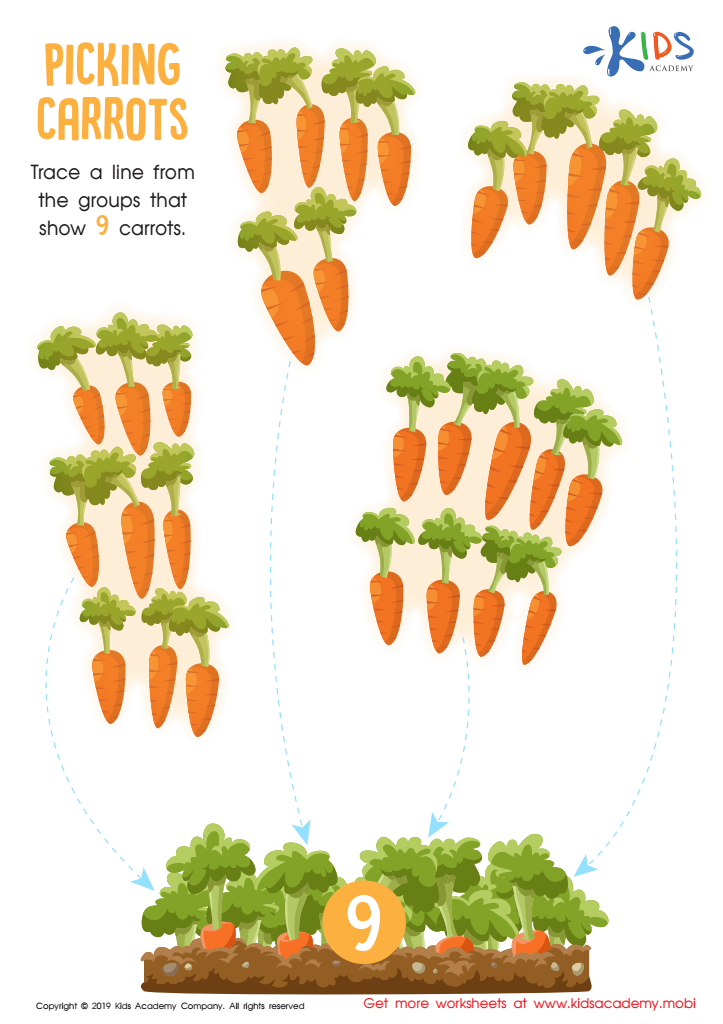
Picking Carrots Worksheet
Do your kids know what carrots are? They're nutritious veggies we should eat. Look at the worksheet with them; can they spot the carrots? It's an exercise to practice counting. Show them how to count all the carrots in the groups and trace the line to the groups with 9 carrots.
Picking Carrots Worksheet
Worksheet
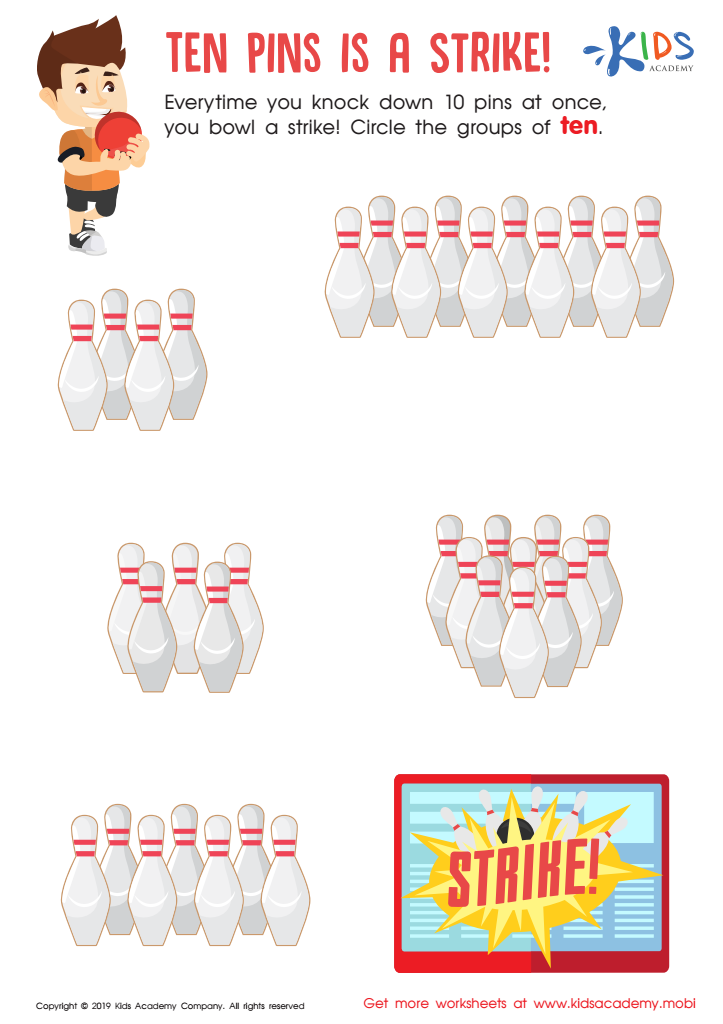
Ten Pins is a Strike Worksheet
Show your kids the picture and ask them to identify the objects. Explain that bowling is a leisure game played with a ball and pins. Count the pins and have them circle groups of ten. This worksheet will make learning fun and easy, as your children already know the objects.
Ten Pins is a Strike Worksheet
Worksheet
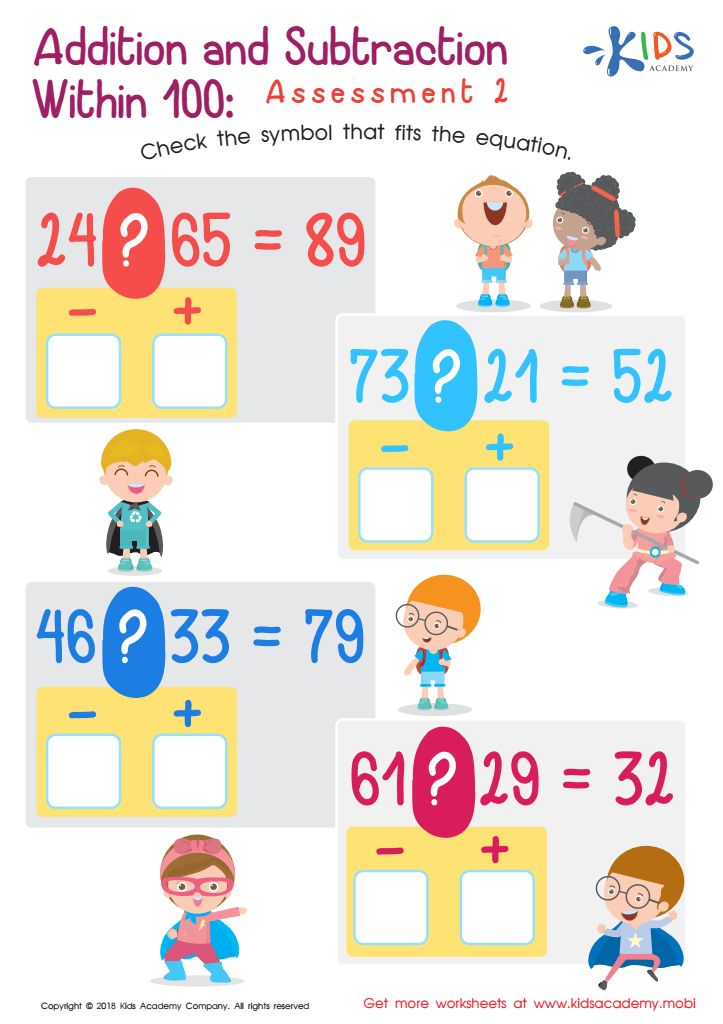
Addition and Subtraction Within 1: Assessment 2 Worksheet
This worksheet is a great tool to help your students learn addition and subtraction. It contains four equations in a printable pdf. Ask your students to review the equation and determine if the symbol between them is a '+' or '-'. Guide them in selecting the correct symbols for each equation.
Addition and Subtraction Within 1: Assessment 2 Worksheet
Worksheet
Join Kids Academy for Free
Who is primarily going to use this learning content?





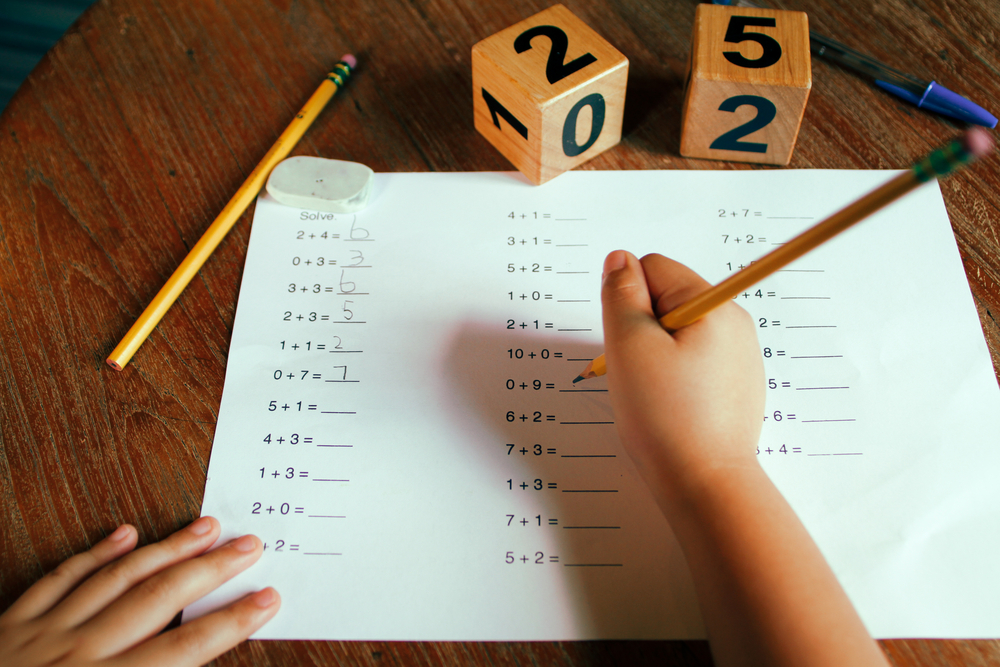


Parents and teachers should place a significant emphasis on subtraction practice for children aged 6-8 because developing a strong foundation in basic math skills during these early years is crucial for later academic success. Subtraction is not just key to arithmetic; it underpins more advanced math concepts such as multiplication, division, and understanding of fractions.
At this age, children are building their cognitive abilities and are receptive to new concepts. Subtraction practice helps them grasp the ideas of 'taking away' and 'difference,' which are foundational for problem-solving and logical thinking. By routinely working with easy numbers, kids become comfortable with basic operations, enabling them to transition smoothly into more complex problems as they advance in their education.
Moreover, consistent practice helps in retaining attention and boosting memory. With the repetition of subtraction exercises, children can internalize these concepts, making it easier for them to apply them accurately in various contexts, both academic and real-life.
It's also noteworthy that early success in math builds confidence and a positive attitude towards the subject. When children see progress and understand the material, they’re more likely to enjoy learning, stay engaged, and avoid math anxiety. Hence, prioritizing subtraction practice for young children paves the way for robust academic growth and a lifelong appreciation of mathematics.








