Understanding fractions Easy Numbers Worksheets for Ages 6-8
3 filtered results
-
From - To
Unlock the world of fractions with our "Understanding Fractions Easy Numbers Worksheets for Ages 6-8". Perfectly designed for young math learners, these printable worksheets simplify fraction concepts using engaging, visually appealing exercises. Lessons focus on recognizing, comparing, and understanding simple fractions, making complex ideas accessible for ages 6-8. Ideal for both classroom and at-home learning, these worksheets build strong mathematical foundations through hands-on practice. Explore our selection to enhance your child’s math skills while making learning fractions an enjoyable experience. Empower them to develop confidence and proficiency in math from an early age!
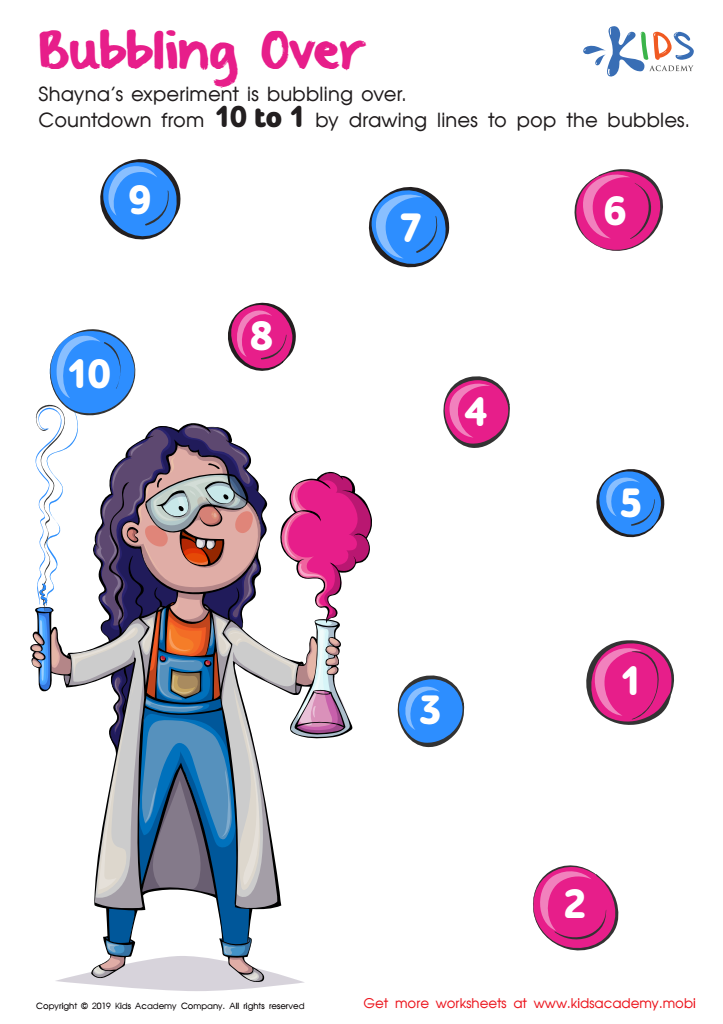
Bubbling Over Worksheet
 Assign to My Students
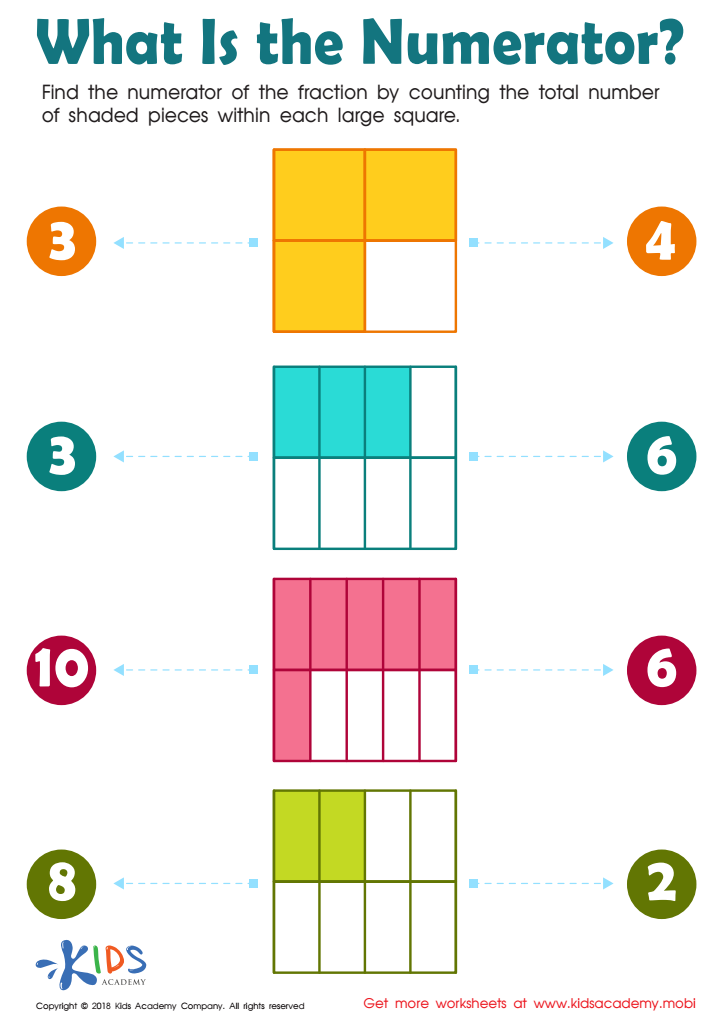
What Is the Numerator? Worksheet
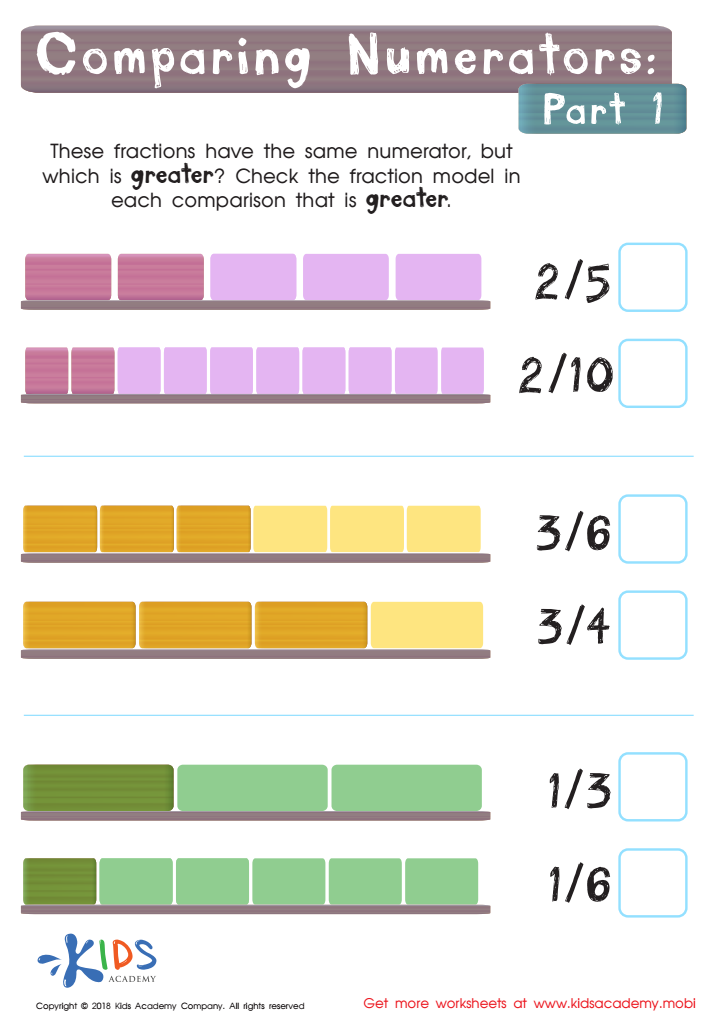
Comparing Numerators Part 1 Worksheet








Understanding fractions is fundamental for children aged 6-8 as it lays the groundwork for more complex mathematical concepts. At this developmental stage, cognitive abilities are highly receptive to making sense of part-whole relationships, which is what fractions predominantly represent. Engaging with fractions can enhance children's problem-solving skills and logical thinking, fostering their overall mathematical reasoning.
When parents and teachers emphasize fractions early on, they are opening gateways to a variety of useful life skills. For instance, fractions are intrinsic to understanding time, measuring ingredients in cooking, sharing items equally, and reading graphs. These real-world applications make learning fractions not only practical but also relatable for young children.
An early grasp of fractions also propels academic confidence, bearing significant impact in later grades where advanced topics like algebra, ratios, and percents rely on a strong foundational understanding of fractions. Teaching these concepts in simple, relatable terms prevents math anxiety and cultivates a positive attitude toward learning.
Instead of viewing fractions as daunting, presenting them as fun and approachable sets the stage for successful mathematical journeys. Using creative methods like visual aids, hands-on activities, and games can make fractions engaging, ultimately making parents and teachers important facilitators in children's impactful, long-term learning.








