Basic Math Skills Easy Math Worksheets for Ages 6-8 - Page 2
29 filtered results
-
From - To
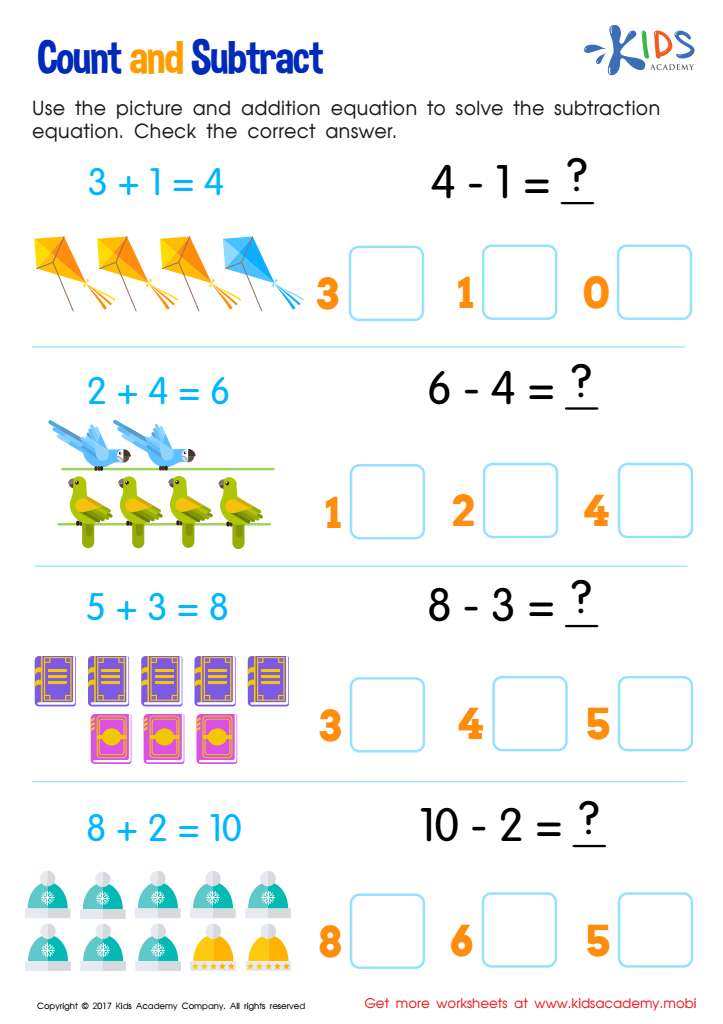
Count and Subtract Worksheet
 Assign to My Students
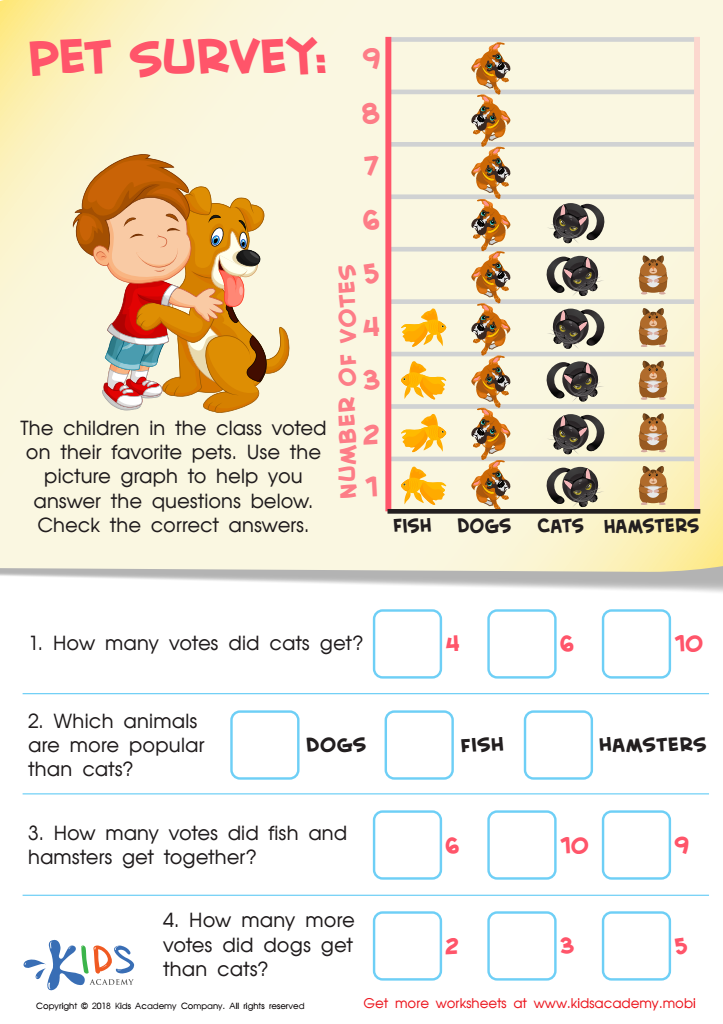
Pet Survey Worksheet
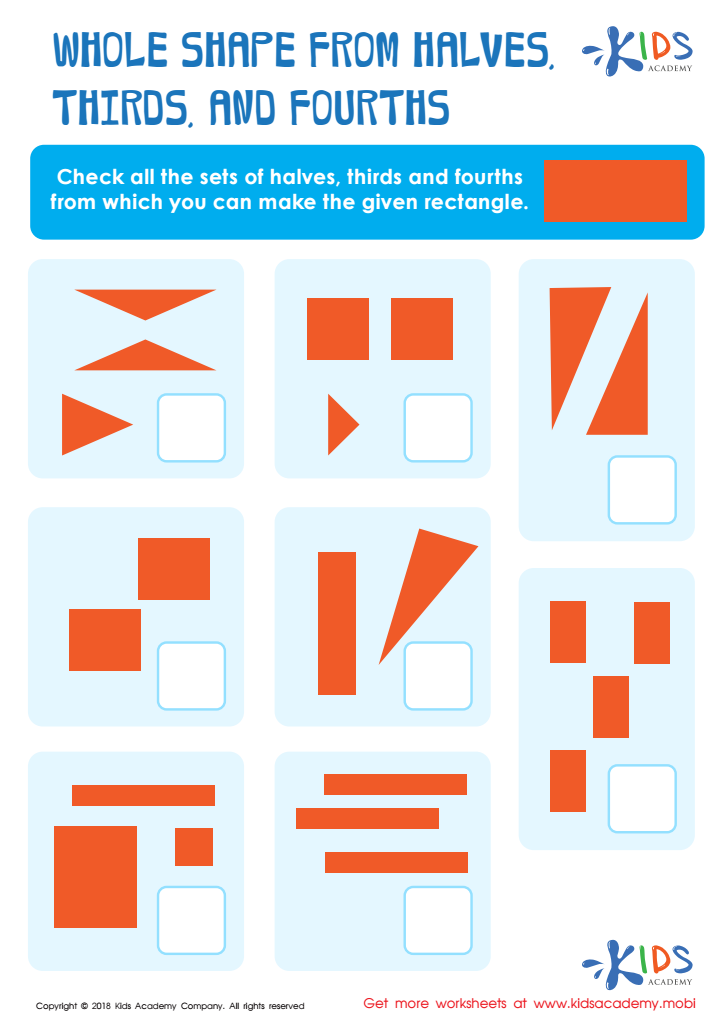
Whole Shape from Halves, Thirds and Fourths Worksheet
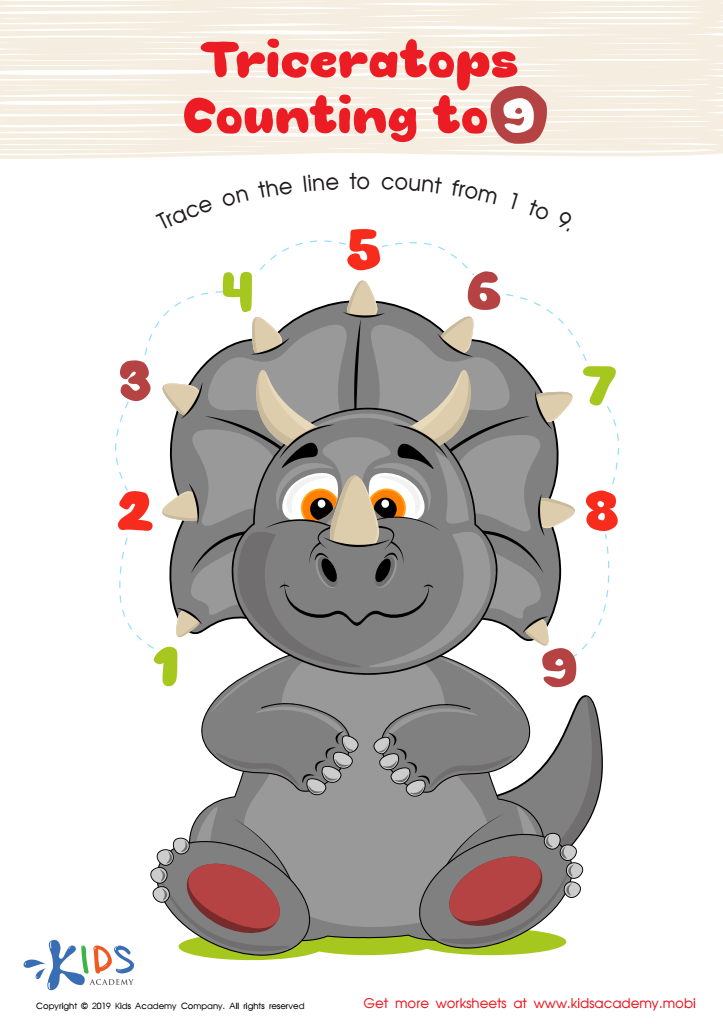
Triceratops Counting to 9 Worksheet
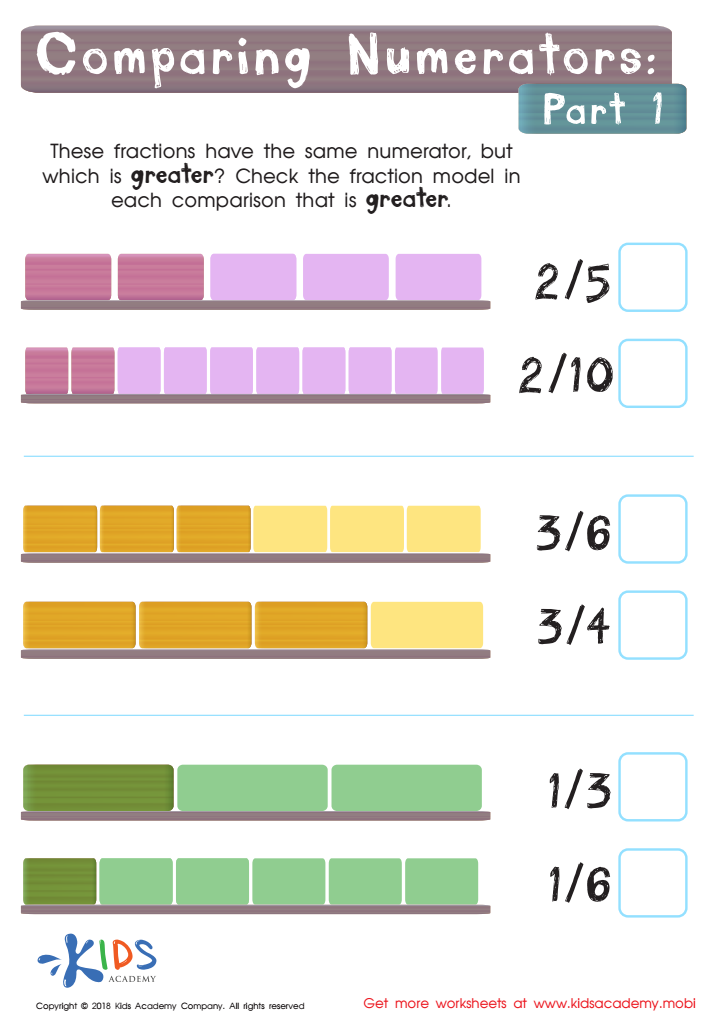
Comparing Numerators Part 1 Worksheet







Parents and teachers should prioritize Basic Math Skills for children ages 6-8 because early mathematical understanding lays the foundation for future academic success. During this critical developmental stage, children start to grasp fundamental concepts such as addition, subtraction, counting, and recognizing patterns. These skills not only facilitate a child's ability to solve math problems but also enhance critical thinking and problem-solving abilities across subjects.
Connecting math to everyday activities helps instill a positive attitude towards learning. When parents and teachers encourage children to engage with math in practical contexts—such as cooking, shopping, or playing games—they demonstrate its relevance and applicability. Moreover, strong math skills boost confidence, allowing children to approach more complex concepts with assurance in later grades.
Additionally, basic math proficiency promotes cognitive development, aiding in spatial awareness and logical reasoning. Students who master these early concepts are more likely to excel in standardized tests, ultimately influencing their long-term educational trajectories. By actively supporting the development of math skills during this formative period, parents and teachers can empower children with essential tools for lifelong learning and success. This investment fosters resilience and adaptability, critical traits in an increasingly analytical world.








