Comparison Skills Easy Math Worksheets for Ages 6-8
3 filtered results
-
From - To
Introducing our "Comparison Skills Easy Math Worksheets for Ages 6-8," designed to enhance your child’s mathematical understanding! These engaging worksheets focus on developing critical comparison skills, helping young learners differentiate between more, less, and equal quantities. With fun visuals and simple exercises, children will practice comparing numbers, objects, and quantities, making math both enjoyable and educational. Ideal for independent learning or guided practice, these worksheets align with early grade curriculum standards. Foster your child’s confidence in math while they develop essential skills for future success. Explore our printable resources and watch them thrive in their mathematical journey!
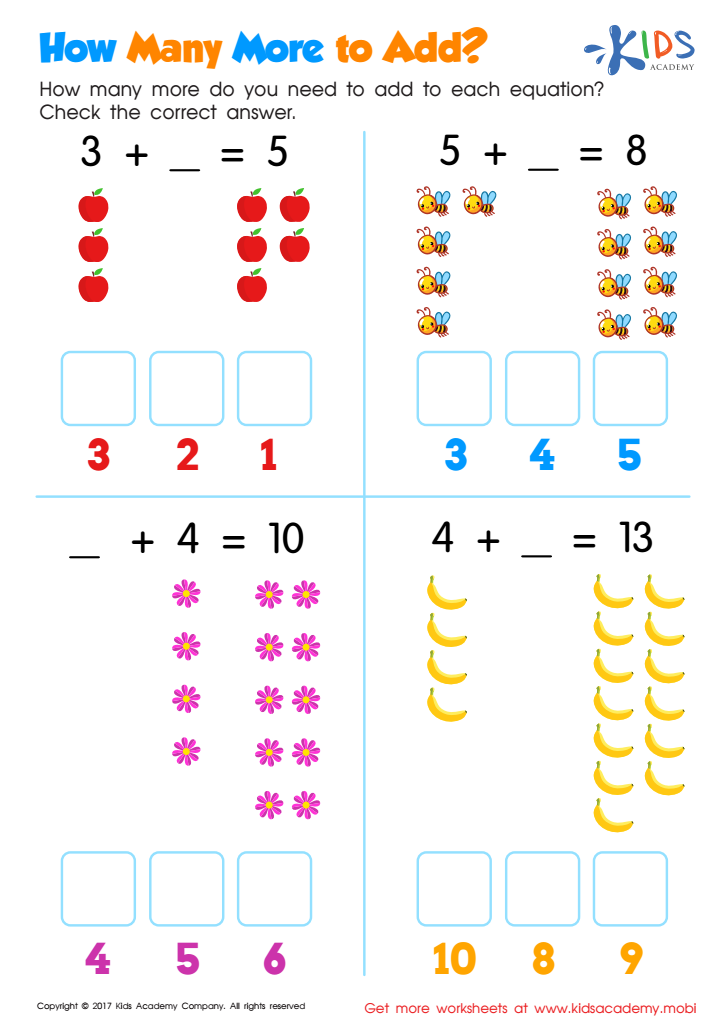
How Many More to Add Worksheet
 Assign to My Students
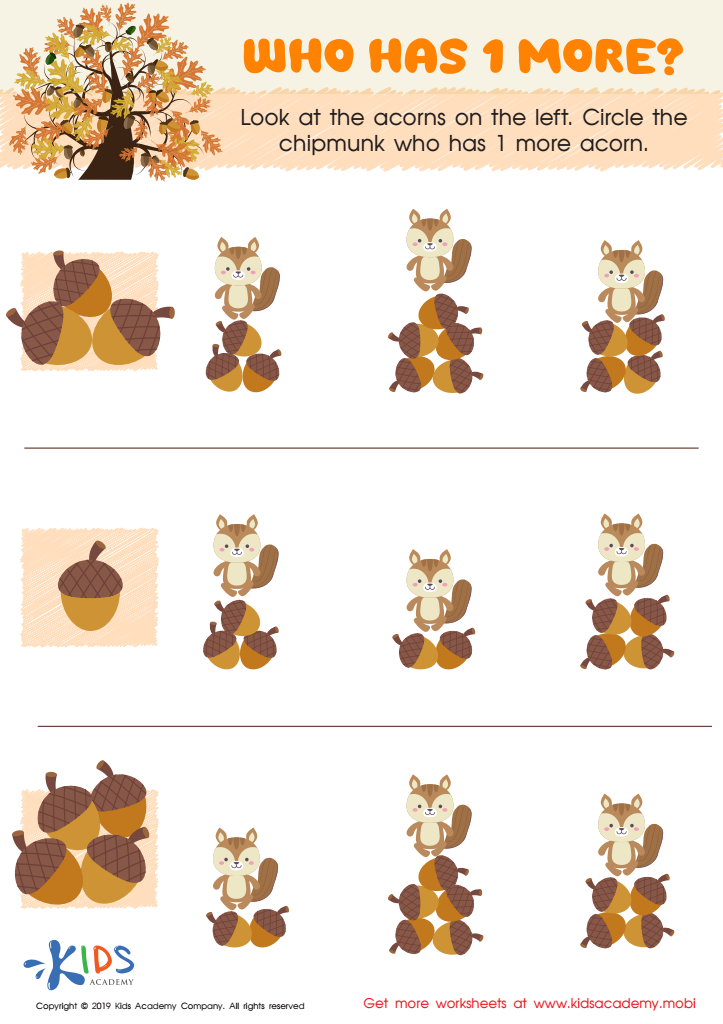
Who Has 1 More? Worksheet
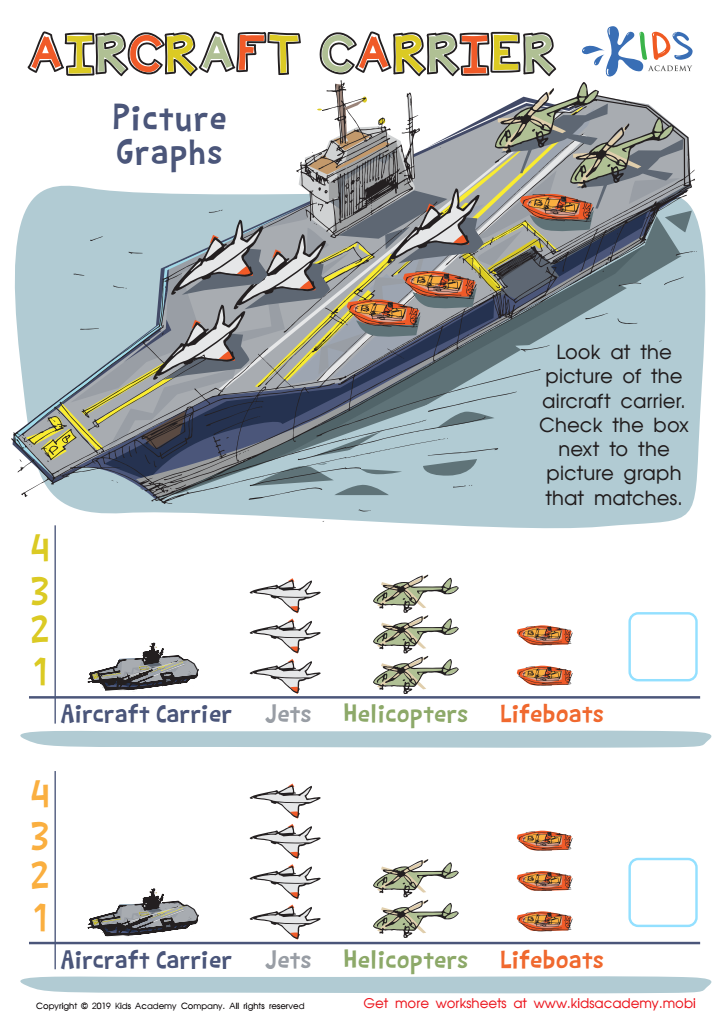
Aircraft Carrier Picture Graphs Worksheet








Comparison skills in mathematics are essential for young children, particularly those aged 6-8, as they form the foundation for critical thinking, problem-solving, and everyday decision-making. At this age, children are naturally curious and eager to explore differences and similarities between objects, quantities, and values. Cultivating comparison skills helps them develop a deeper understanding of mathematical concepts, such as greater than, less than, and equality, which are vital for mastering more complex operations later on.
Moreover, comparison skills empower children to make informed choices in real-life situations, whether they are budgeting for a snack, choosing between toys, or evaluating points in a game. Encouraging parents and teachers to prioritize these skills can enhance students' confidence and foster a positive attitude towards math.
Incorporating comparison activities, like sorting objects by size or counting items in groups, can engage children in hands-on learning and reinforce their numerical abilities. Ultimately, when parents and teachers foster strong comparison skills, they equip children with valuable tools that will benefit them academically and personally throughout their lives. Promoting these early math skills leads to a more successful and thoughtful approach to math in the future.








