Problem-solving abilities Easy Math Worksheets for Ages 6-8
7 filtered results
-
From - To
Our "Problem-solving Abilities Easy Math Worksheets for Ages 6-8" are designed to develop critical thinking and logic in young learners. These engaging and fun worksheets provide various exercises focused on enhancing problem-solving skills. They cover essential math concepts, including addition, subtraction, patterns, and more, fostering a love for math while building a strong foundation. Perfect for classroom use or at home, these worksheets adapt to individual learning paces, ensuring every child progresses confidently. Help your child or student unlock their potential in math and improve their problem-solving abilities with our expertly crafted resources.
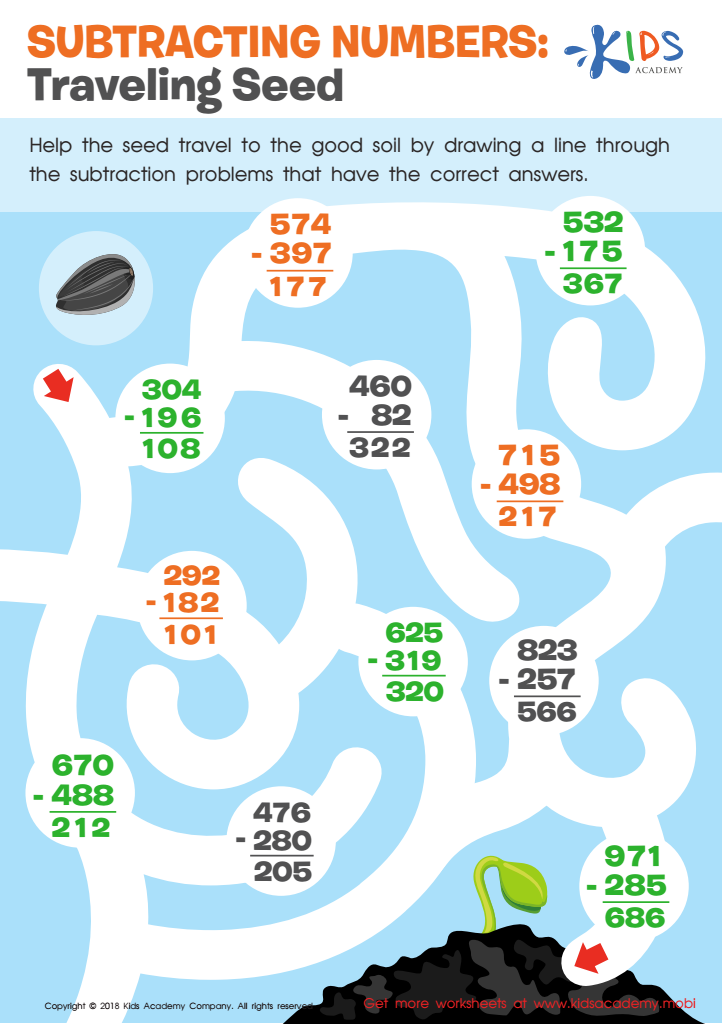
Subtracting Numbers: Traveling Seeds Worksheet
 Assign to My Students
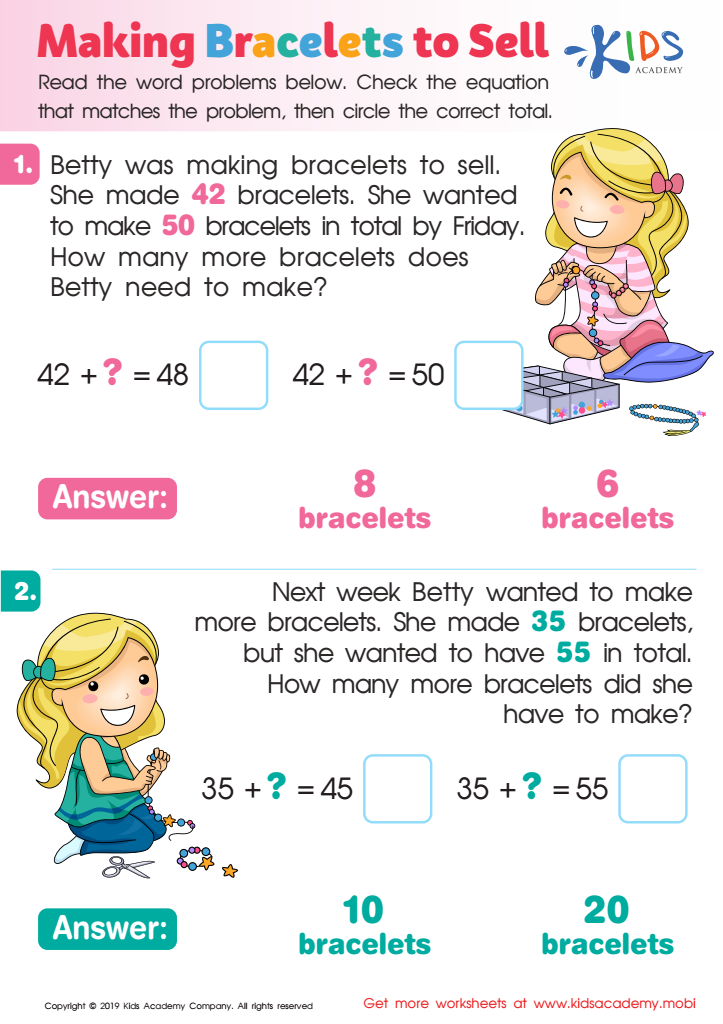
Making Bracelets to Sell Worksheet
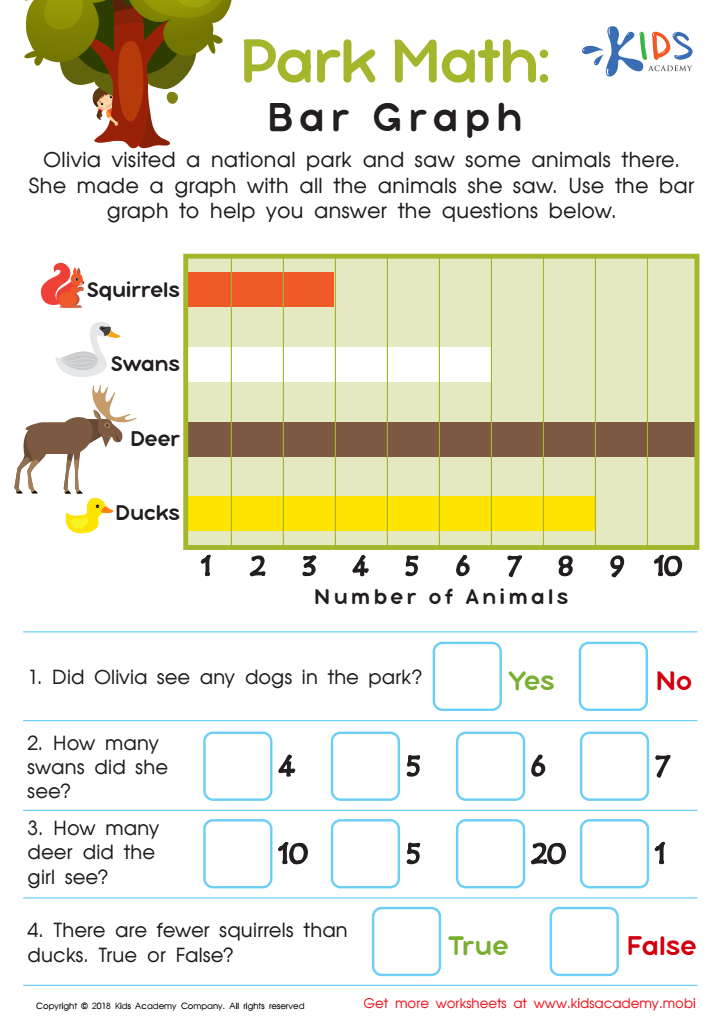
Park Math: Bar Graph Worksheet
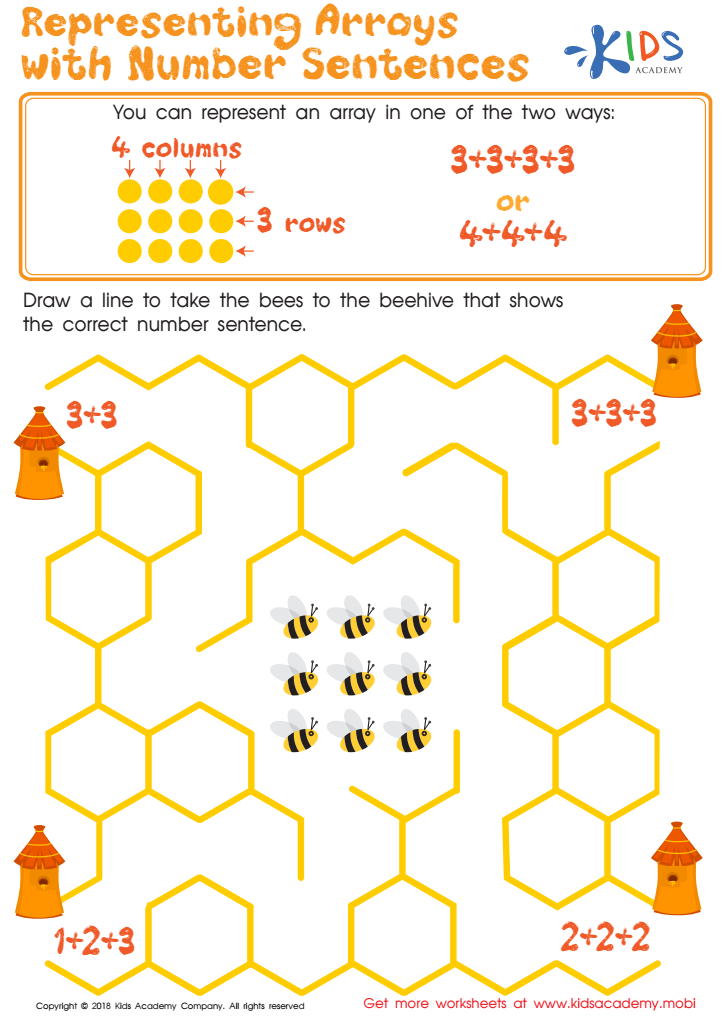
Representing Arrays with Number Sentences Worksheet
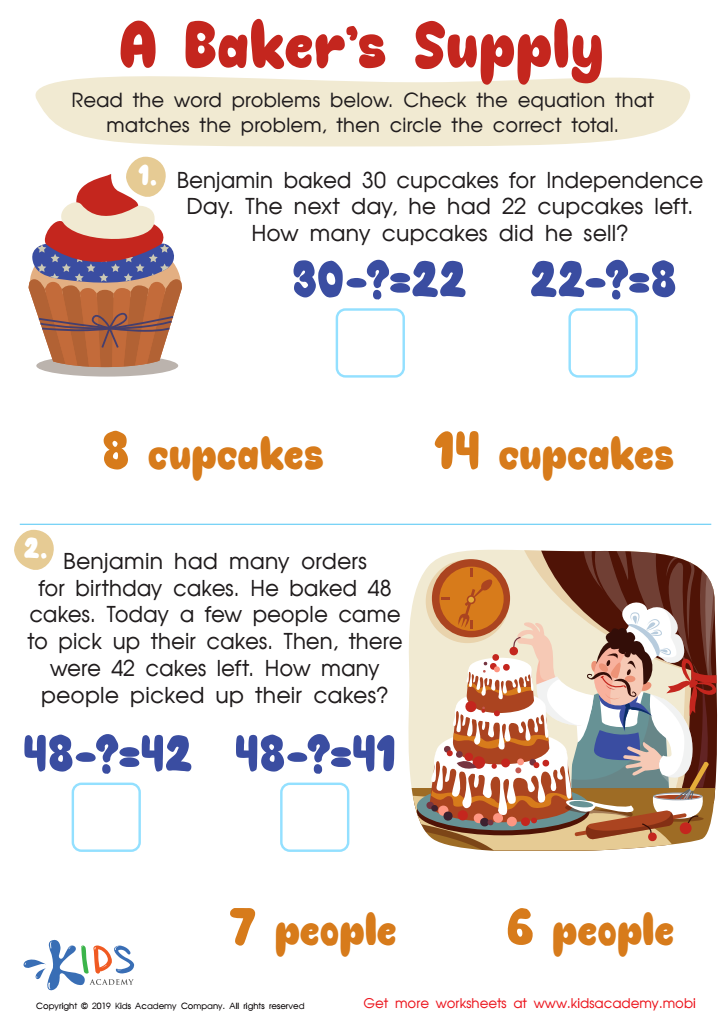
A Baker's Supply Worksheet
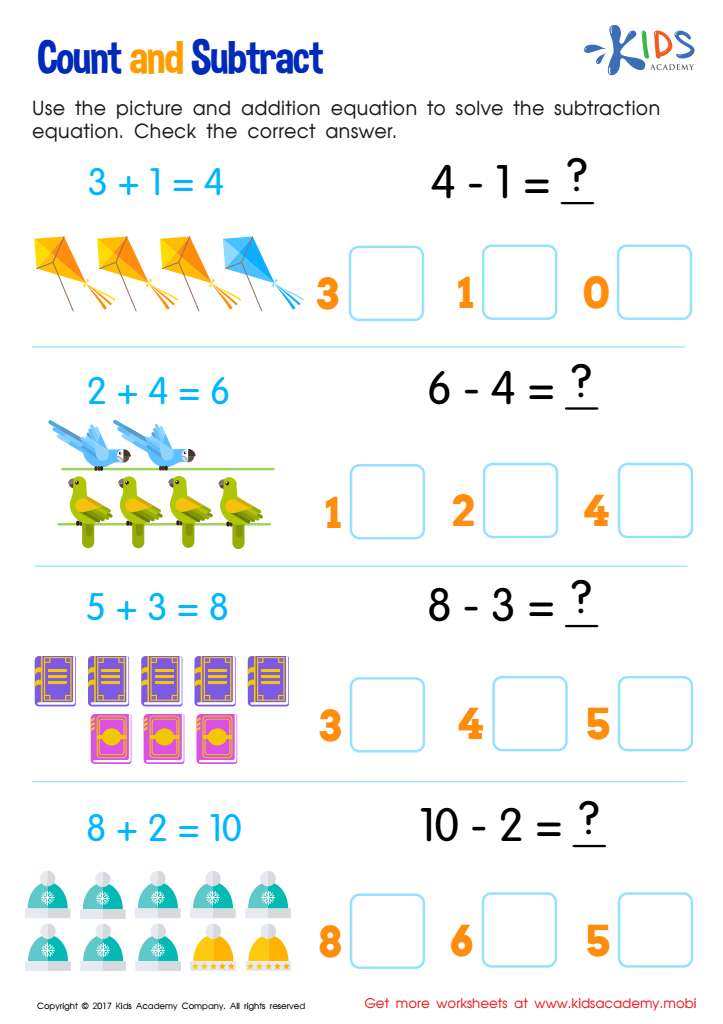
Count and Subtract Worksheet
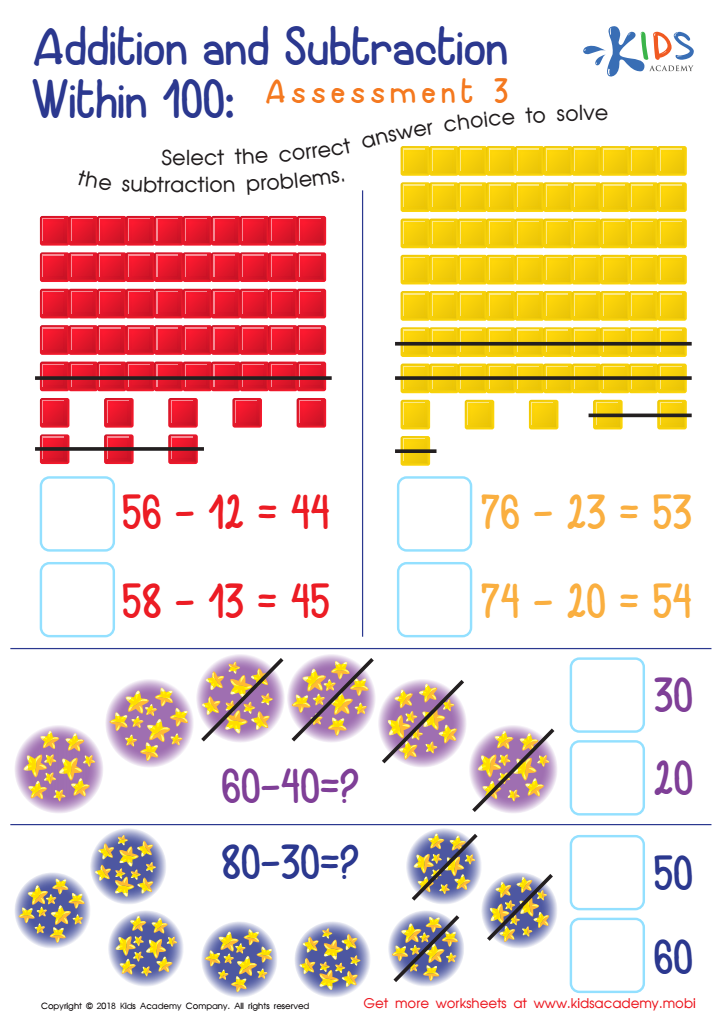
Addition and Subtraction Within 1: Assessment 3 Worksheet








Problem-solving abilities in mathematics are crucial for children aged 6-8 as these skills lay the foundation for cognitive development and future academic success. At this stage, children are not just learning to count or perform simple arithmetic; they are beginning to understand patterns, logic, and the basic principles of how numbers and operations work.
For parents and teachers, fostering problem-solving abilities can significantly enhance a child's critical thinking and analytical skills. Engaging with math problems encourages children to think independently, ask questions, and develop strategies for solving complex issues. This cognitive development is not limited to math alone but extends to overall decision-making abilities and enhanced performance in other academic subjects.
Moreover, early engagement in problem-solving helps build confidence and perseverance. When children successfully solve math problems, they gain a sense of accomplishment, which boosts their confidence and reinforces a positive attitude towards learning. Conversely, struggling with problems and finding solutions teaches resilience and persistence.
Additionally, problem-solving in math promotes collaborative learning. Working in groups allows children to share their thinking processes, learn from others, and develop social skills. Thus, both parents and teachers should intentionally include problem-solving activities in early math education to develop essential skills that pave the way for lifelong learning and personal growth.








