Sorting skills Easy Math Worksheets for Ages 6-8
6 filtered results
-
From - To
Discover the "Sorting Skills Easy Math Worksheets for Ages 6-8" at Kids Academy! Our engaging and educational worksheets help young learners develop essential sorting skills through fun activities. Perfect for children between the ages of 6 and 8, these worksheets blend learning with play, reinforcing concepts like grouping, categorizing, and organizing items. These foundational math skills are crucial for cognitive development and problem-solving abilities. Each worksheet is designed by educational experts to ensure your child enjoys and benefits from their learning experience. Download today to enhance your child’s sorting skills in a fun and interactive way!
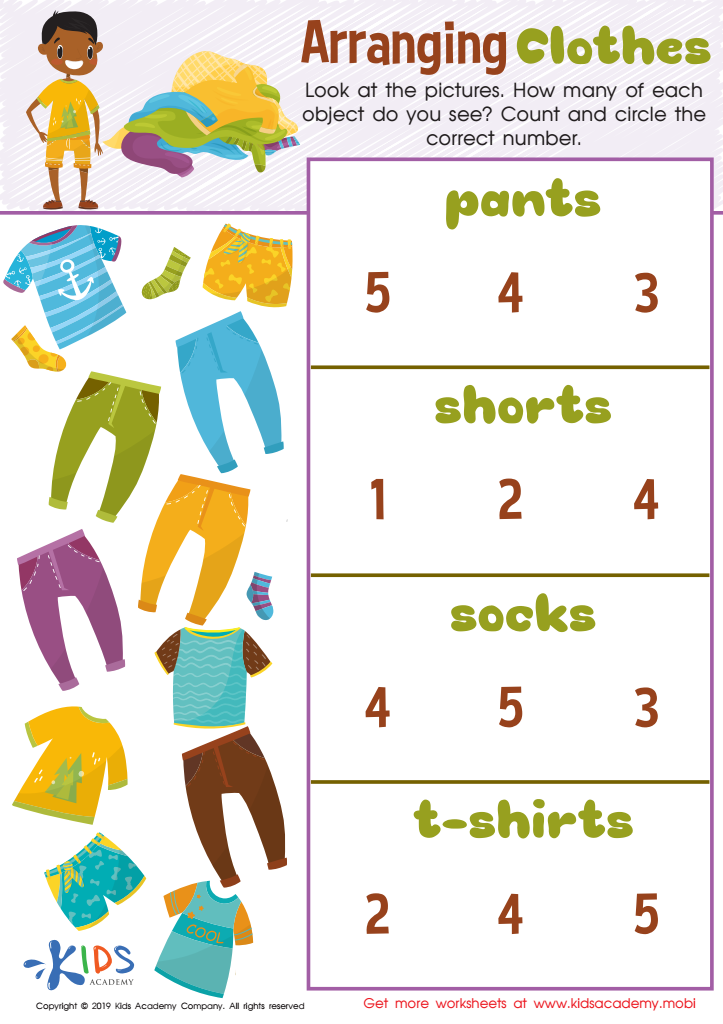
Arranging Clothes Worksheet
 Assign to My Students
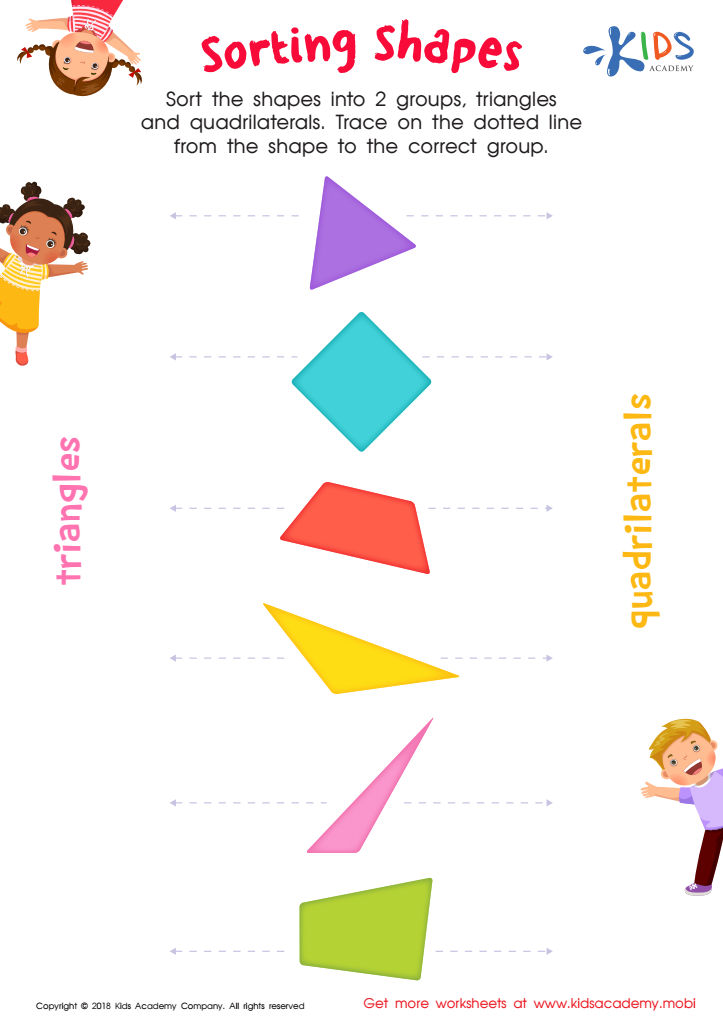
Sorting Shapes Worksheet
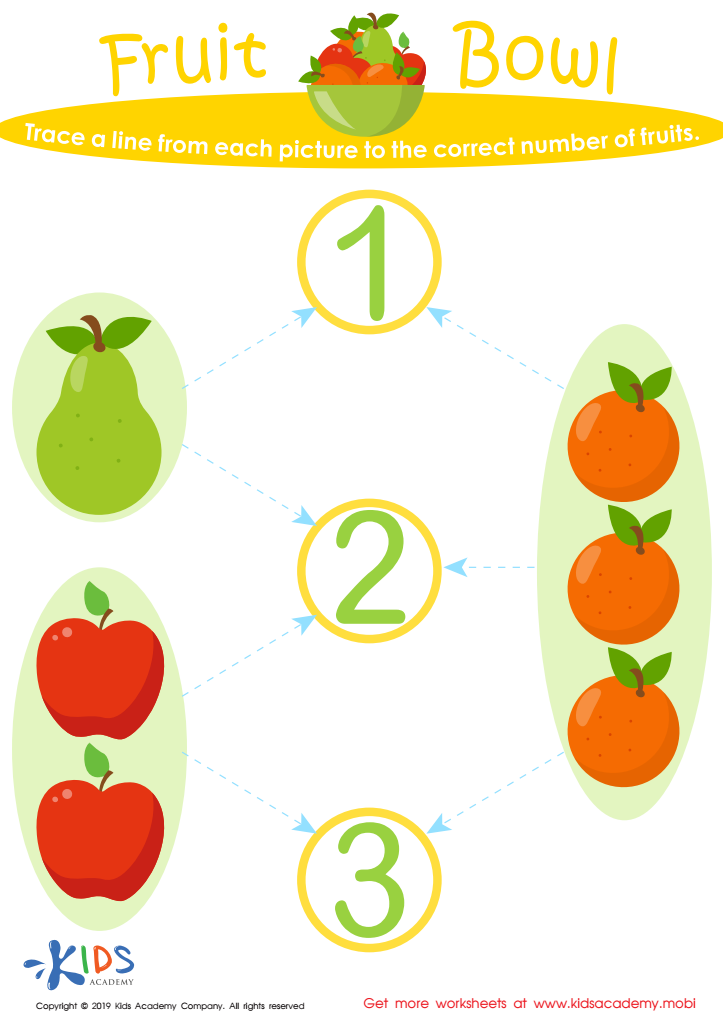
Fruit Bowl Worksheet
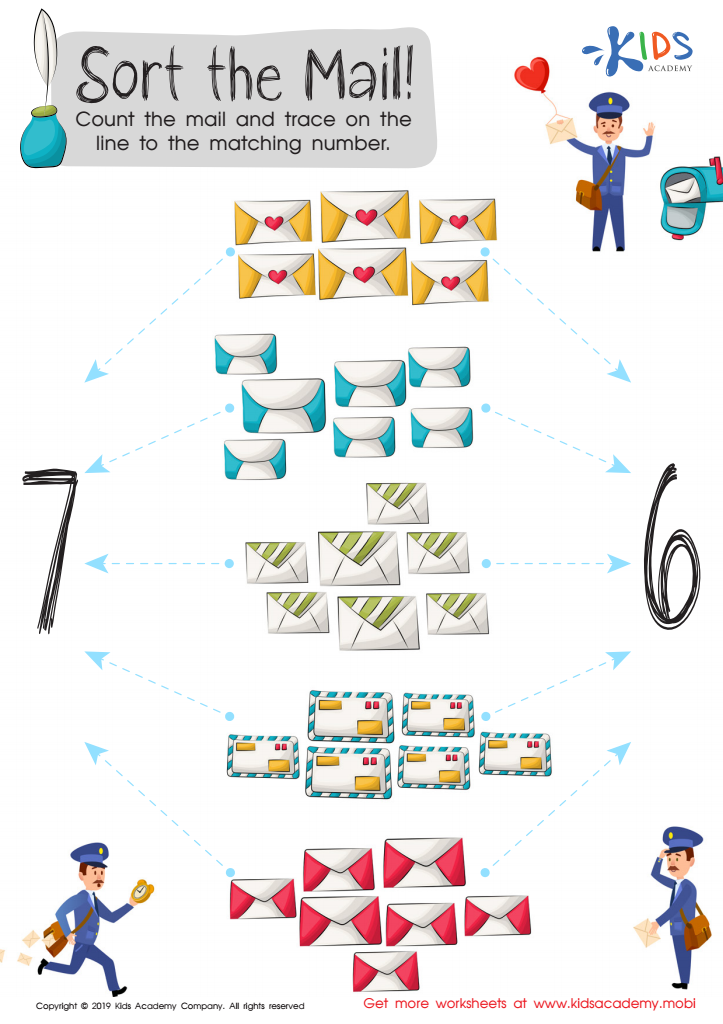
Sort the Mail Worksheet
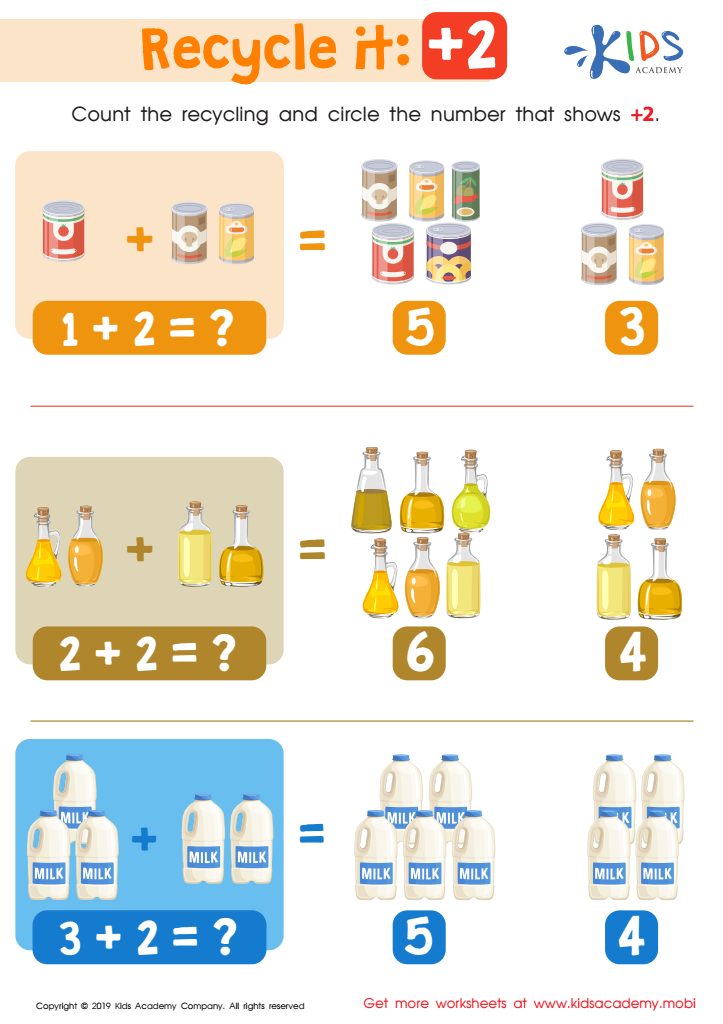
Recycle It: +2 Worksheet
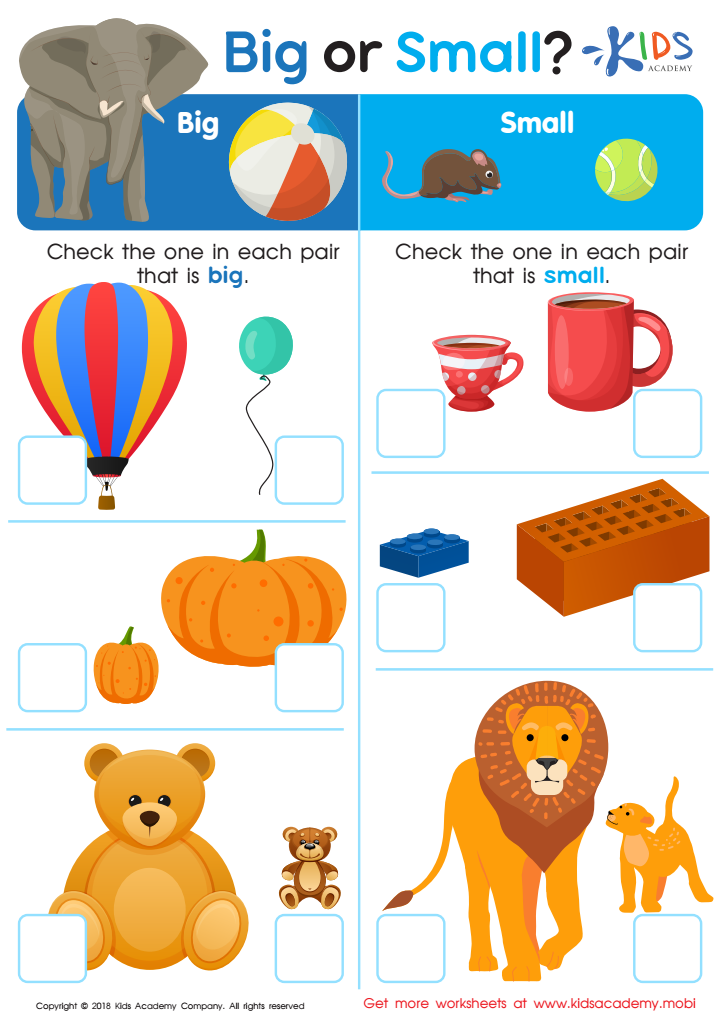
Big or Small? Worksheet








Sorting skills are fundamental for young children because they lay the groundwork for more complex mathematical and cognitive tasks. For children ages 6-8, practicing sorting helps to build crucial organizational abilities and fosters critical thinking. When children sort objects, they learn to categorize by identifying attributes like color, size, shape, or type, enhancing their observational skills and attention to detail.
Sorting is closely connected to one-to-one correspondence, counting, and the understanding of sets, all of which are foundational concepts in early math education. It also aids in the development of logical thinking by requiring children to make decisions based on given criteria, discerning similarities and differences among items.
From a developmental perspective, sorting can support language acquisition as children describe the items and rules they are applying, bolstering their communication skills. Additionally, sorting tasks can improve fine motor skills as children manipulate small objects.
Parents and teachers should care about sorting skills because these abilities underpin early arithmetic, pave the way for problem-solving skills, and strengthen children's overall cognitive development. Investing time in these simple yet effective exercises encourages a structured thinking approach, which benefits children in various educational and life contexts as they grow.








