Understanding patterns Easy Times Tables Worksheets for Ages 6-8
3 filtered results
-
From - To
Discover our "Understanding Patterns Easy Times Tables Worksheets" specifically designed for children ages 6-8! These engaging and child-friendly worksheets make learning multiplication fun and accessible. With a focus on recognizing patterns in times tables, your child will develop essential math skills through colorful activities and interactive problems. Each worksheet encourages critical thinking and enhances number sense, enabling kids to grasp multiplication concepts naturally. Perfect for classroom use or at-home learning, our resources provide clear instructions and educational support for young learners. Help your child build confidence in math with our easy and enjoyable times tables worksheets today!
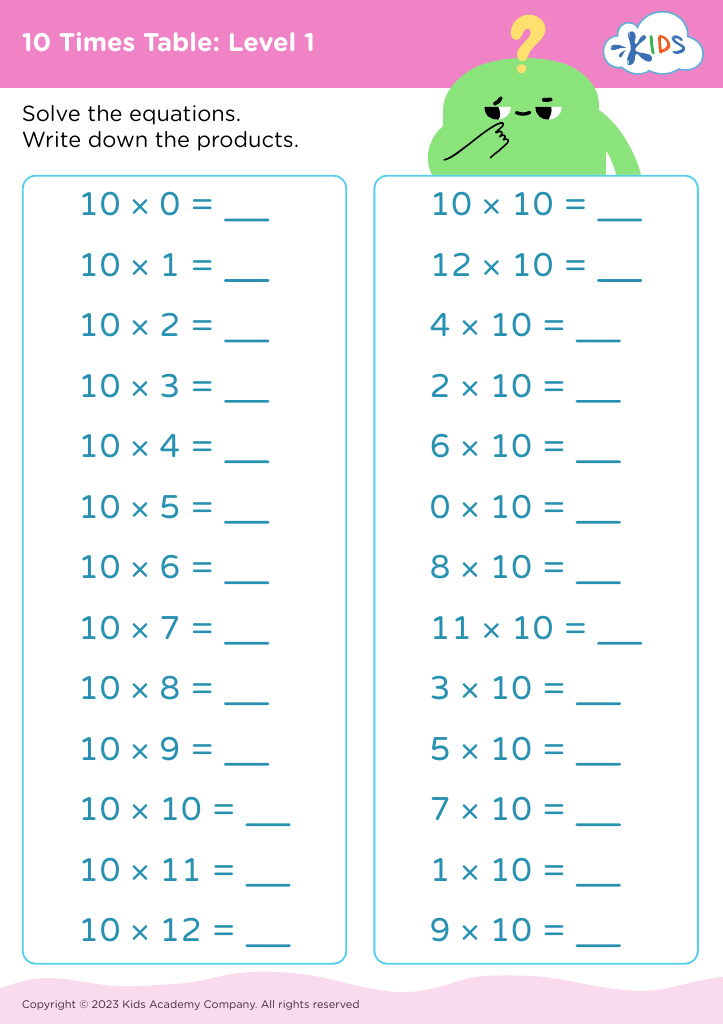
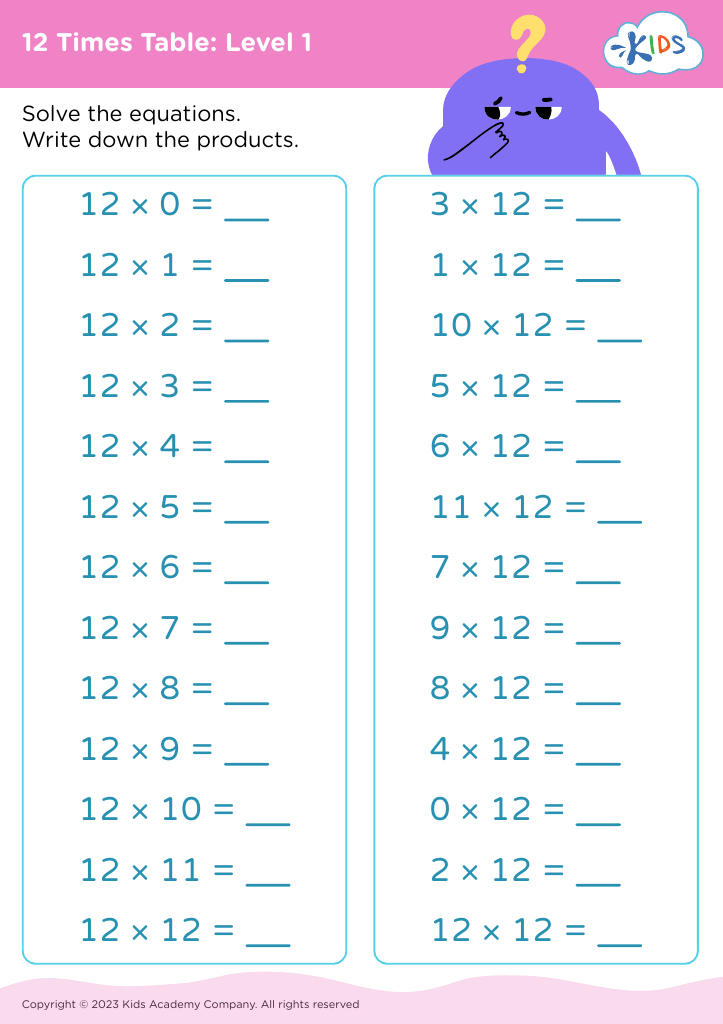
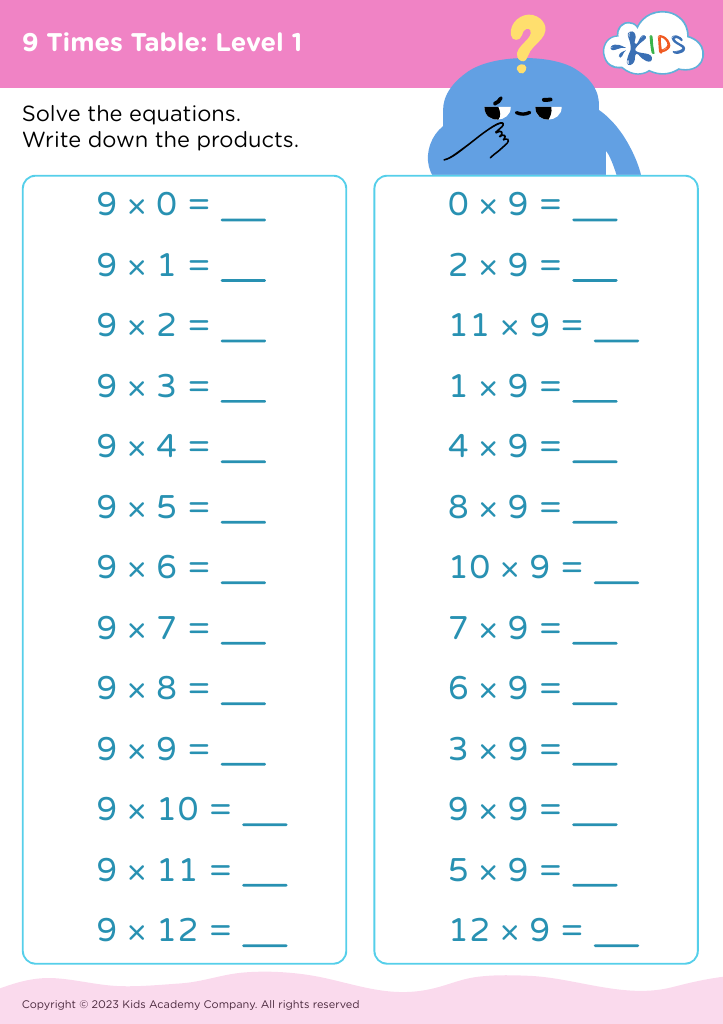





Understanding patterns in math, particularly with Easy Times Tables for ages 6-8, is crucial for parents and teachers alike. Learning multiplication through patterns not only makes math relatable and engaging for young learners, but it also lays a strong foundation for future mathematical success. When children grasp the idea of repetitive addition through patterns, they can more easily memorize their times tables. For instance, recognizing the pattern in the 5 times table (5, 10, 15, 20) can simplify learning and promote confidence in their abilities.
Moreover, developing pattern recognition skills helps children make connections within different mathematical concepts such as division and fractions. It enhances critical thinking, as they start to see relationships and logical sequences rather than viewing math as isolated facts. This understanding fosters a more profound enjoyment and appreciation for mathematics, reducing anxiety around the subject.
Parents and teachers should care about this aspect of learning because a strong mathematical foundation in early education can influence a child’s attitude towards the subject throughout their academic journey. Supporting children in these early stages can lead to improved performance in school, higher self-esteem, and a lifelong love of learning. Encouraging fun and engaging ways to explore times tables can make a lasting impact.








