Understanding life cycles Easy Reading Comprehension Worksheets for Ages 6-8
3 filtered results
-
From - To
Welcome to our "Understanding Life Cycles Easy Reading Comprehension Worksheets" designed for ages 6-8! These engaging and educational worksheets help young learners explore the fascinating concept of life cycles in a fun and accessible way. Each worksheet features simple reading passages accompanied by questions that encourage comprehension and critical thinking. Perfect for classroom activities or home practice, these resources cultivate a love for reading while enriching scientific understanding. From butterflies to frogs, children will discover the intriguing stages of various life cycles, enhancing their knowledge and reading skills simultaneously. Start your child's journey into the world of life cycles today!
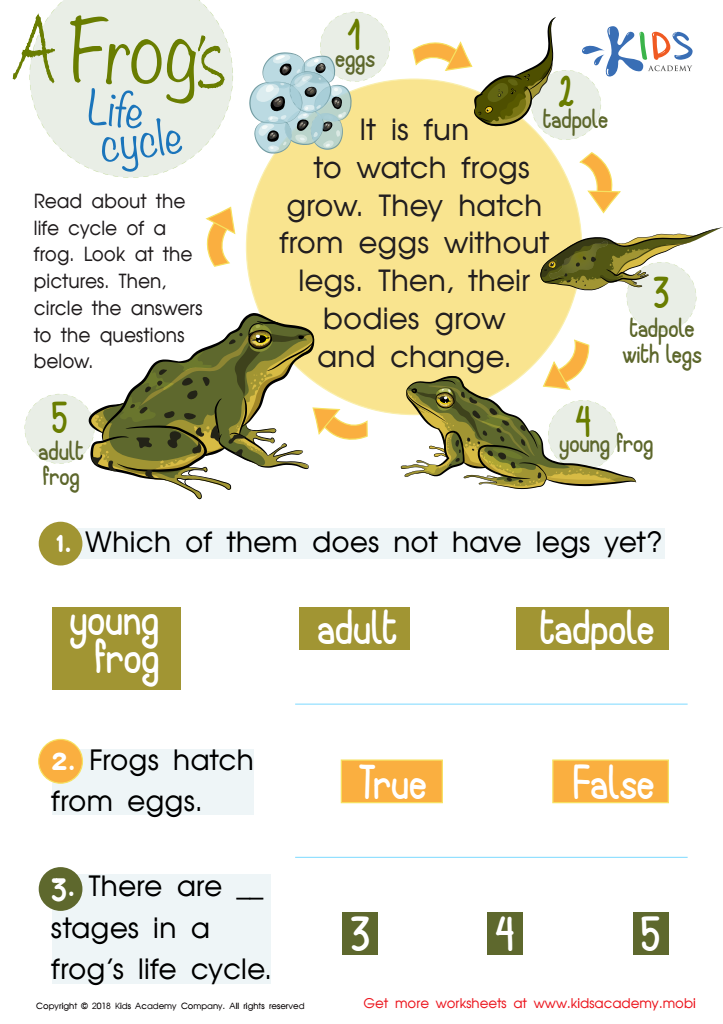
A Frog’s Life Cycle Worksheet
 Assign to My Students
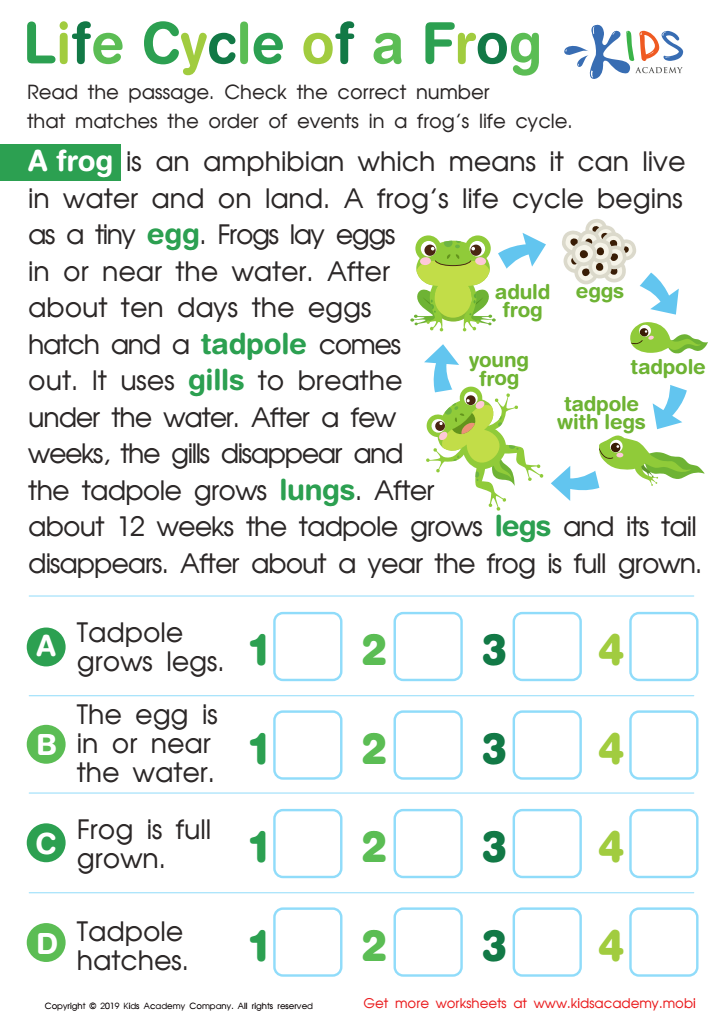
Life Cycle of a Frog Worksheet
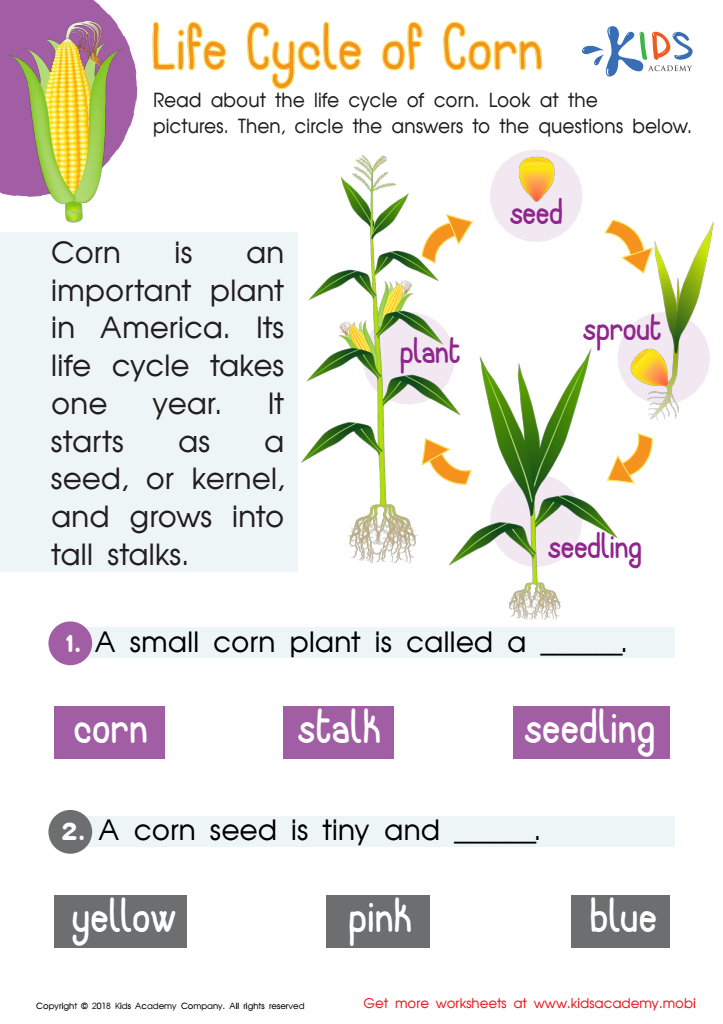
Life Cycle of Corn Worksheet








Understanding life cycles is essential for children ages 6-8 as it lays the foundation for their comprehension of the natural world. For parents and teachers, this topic fosters curiosity and exploration, making learning both engaging and enjoyable. By studying life cycles—such as those of butterflies, frogs, or plants—children learn that living things go through specific stages: birth, growth, reproduction, and death. This knowledge not only enhances their reading comprehension skills but also promotes critical thinking as they analyze how these differences occur in nature.
Additionally, life cycles introduce important concepts about change and development, helping children understand their own growth and the world around them. This can support emotional development by teaching resilience and adaptation, as life cycles often involve challenges and transformations. Furthermore, engaging in discussions about life cycles can also promote family bonding, as parents share stories of plants or animals they’ve encountered or observed. Ultimately, teaching young learners about life cycles encourages a sense of wonder about the environment, builds literacy skills through relatable themes, and prepares them to navigate and understand the complexities of life challenges ahead. This is why parents and teachers should prioritize learning about life cycles in early education.