
Vocabulary enhancement Easy Reading Non-Fiction Worksheets for Ages 6-8
3 filtered results
Difficulty Level
Grade
Age
-
From - To
Subject
Activity
Standards
Enhance your child's vocabulary with our engaging Easy Reading Non-Fiction Worksheets designed specifically for ages 6-8! These worksheets provide a fun and interactive way for young learners to explore vocabulary words, fostering their reading comprehension skills. Each activity encourages critical thinking and introduces captivating non-fiction topics that spark curiosity about the world. Our user-friendly format allows kids to connect language with interesting concepts, making learning enjoyable and effective. Perfect for classroom use or as supplemental resources at home, these worksheets will inspire young minds and help them expand their language proficiency in a supportive environment. Boost your child's confidence today!
Favorites
With answer key
Interactive
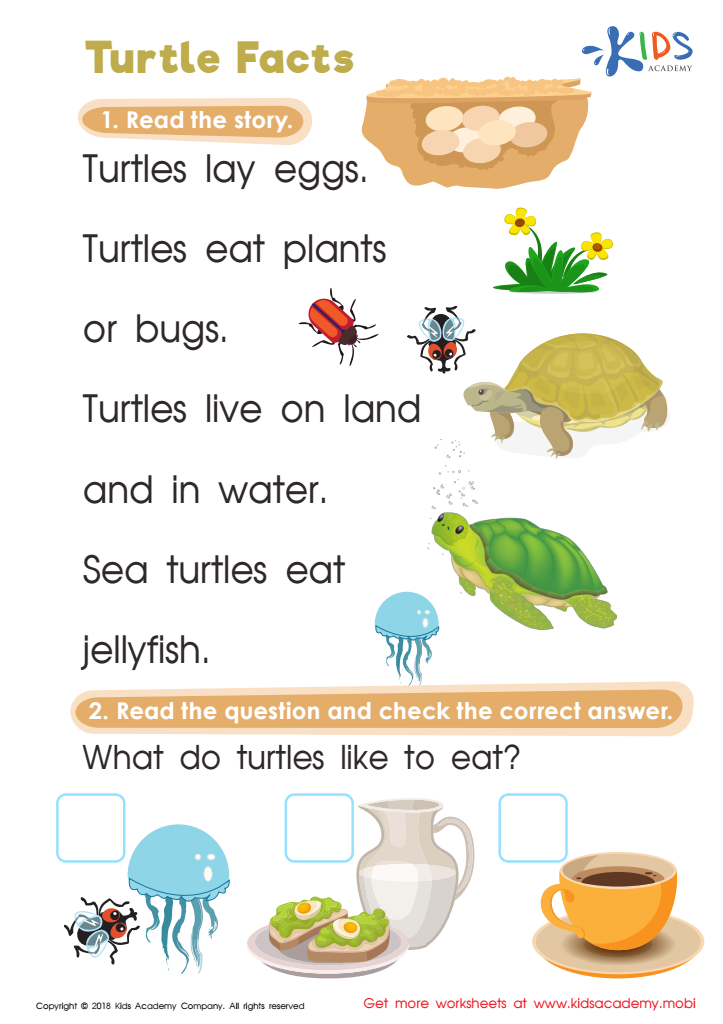
Turtle Facts Worksheet
Reading has many advantages, like being able to learn from informational texts! This worksheet teaches kids about turtles using a fun paragraph with pictures! Encourage students to read the text and use the visuals as a guide. Then, answer the question at the bottom by checking the image that matches the info they just read.
 Assign to My Students
Turtle Facts Worksheet
Worksheet
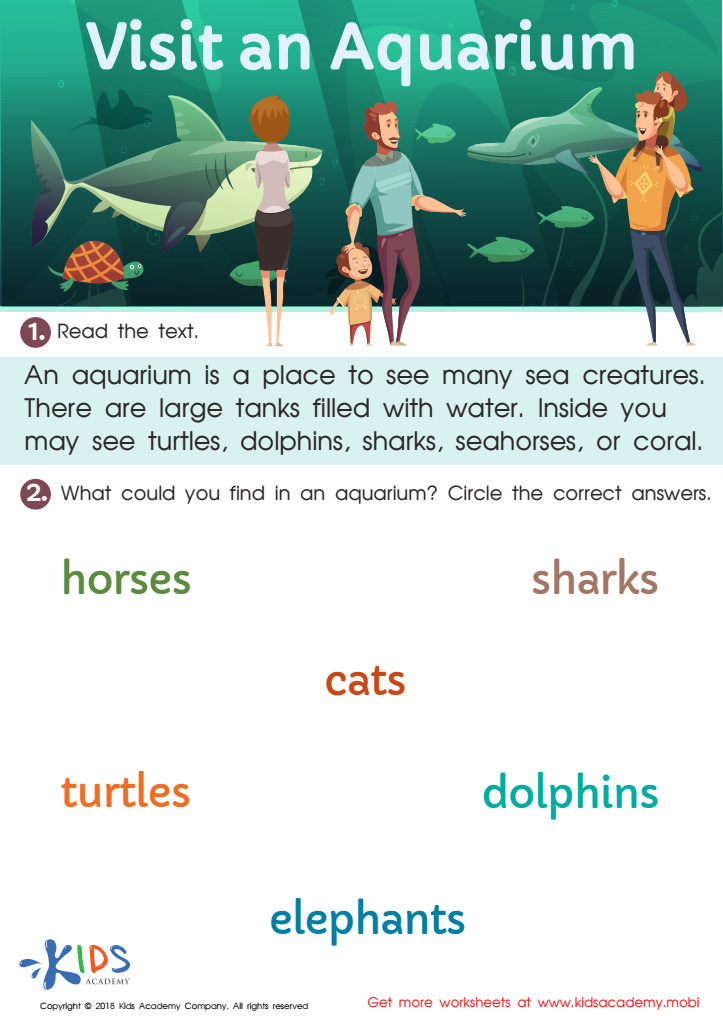
Visit an Aquarium Worksheet
Have your kids ever been to an aquarium? It's a great place to see a variety of sea creatures, like turtles, dolphins, sharks and fish. If they're fascinated by sea life, this worksheet is perfect! Help them circle the aquarium animals among the words in the picture.
Visit an Aquarium Worksheet
Worksheet
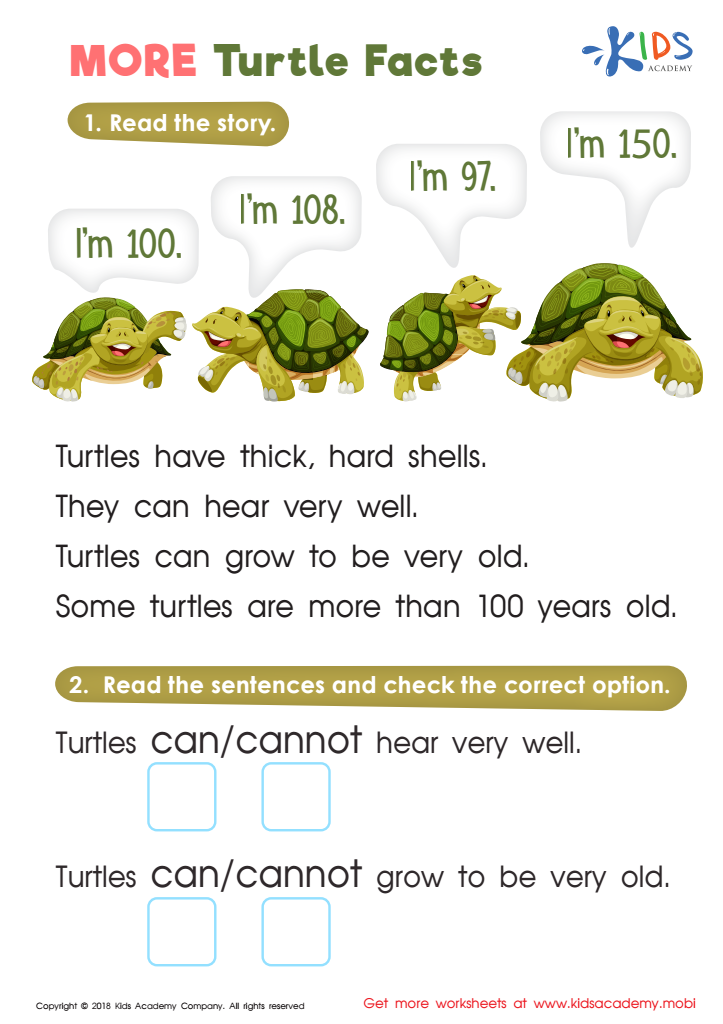
More Turtle Facts Worksheet
Discover more fun facts about turtles with this reading worksheet! Read through the paragraph, check out the pictures, then answer the questions at the bottom to see how well your child remembers what they learned. Find out what turtles can and can't do by ticking the boxes. Let the turtle-filled learning begin!
More Turtle Facts Worksheet
Worksheet
Join Kids Academy for Free
Who is primarily going to use this learning content?








Parents and teachers should prioritize vocabulary enhancement through easy reading non-fiction for ages 6-8 because it plays a crucial role in children's cognitive and language development. At this age, children are naturally curious and eager to learn about the world around them. Non-fiction texts provide them with factual information, fostering critical thinking and a deeper understanding of various subjects, from science to history.
Engaging with non-fiction reading helps expand a child's vocabulary significantly. Unlike fiction, non-fiction often introduces specific terminology related to particular topics, facilitating discussions about words and their meanings in context. This practice enhances reading comprehension and equips children with language skills that are vital for academic success.
Moreover, exposure to diverse vocabulary through non-fiction stimulates a child's imagination and encourages a love for reading. When students connect what they learn from texts to real-world ideas, their engagement increases, making lifelong learners out of them.
By focusing on vocabulary enhancement through easy non-fiction readings, parents and teachers empower children to express themselves confidently, communicate ideas effectively, and cultivate a foundation for future academic pursuits and social interactions. Encouraging this habit early on ensures that children are well-prepared for more complex language and literacy tasks as they progress through their education.







