Alphabet Recognition Easy English for Beginners Worksheets for Ages 6-9
6 filtered results
-
From - To
Boost your child's alphabet knowledge with our "Alphabet Recognition Easy English for Beginners Worksheets for Ages 6-9." Tailored specifically for young learners, these engaging worksheets make learning fun and effective. Each worksheet incorporates vibrant images, traceable letters, and interactive activities to reinforce letter recognition and pronunciation. Ideal for both classroom and home use, our expertly designed worksheets help kids develop crucial early language skills, setting a solid foundation for future reading and writing success. Perfect for ESL students or any beginner, these resources ensure an enjoyable and accessible alphabet learning experience for every child. Download today and start learning!
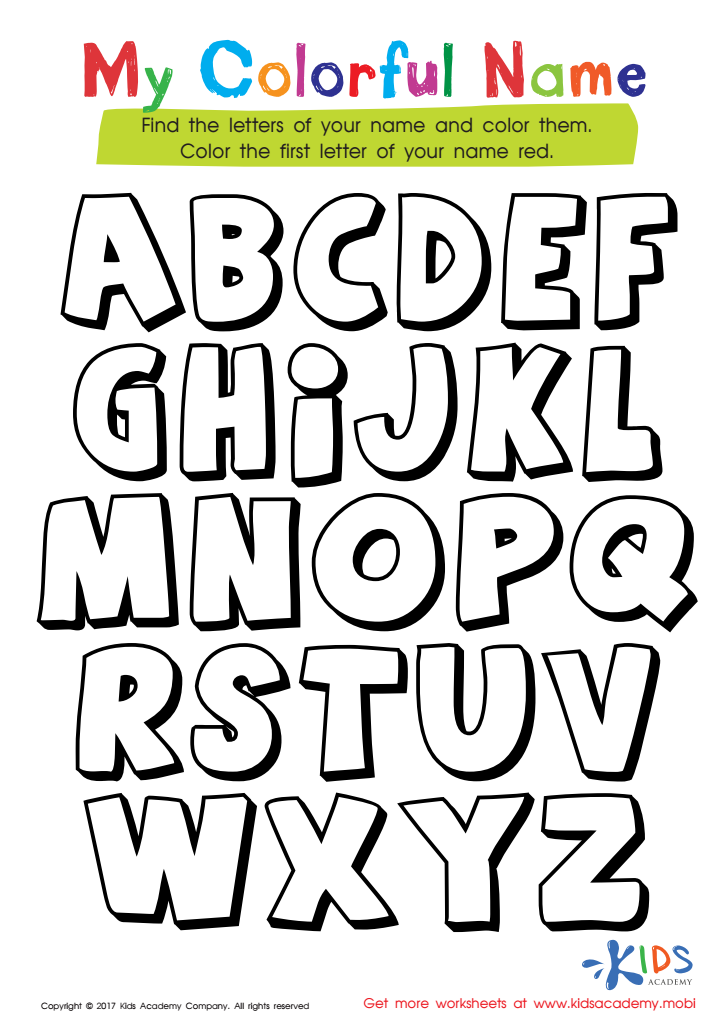
My Colorful Name Worksheet
 Assign to My Students
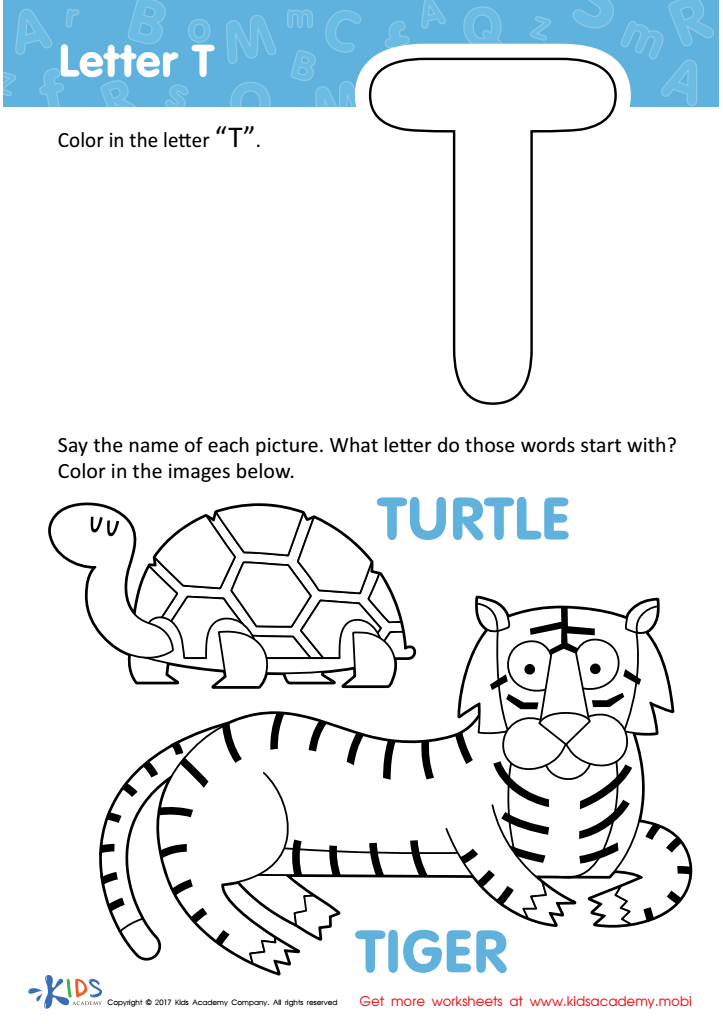
Letter T Coloring Sheet
Assign to My Students
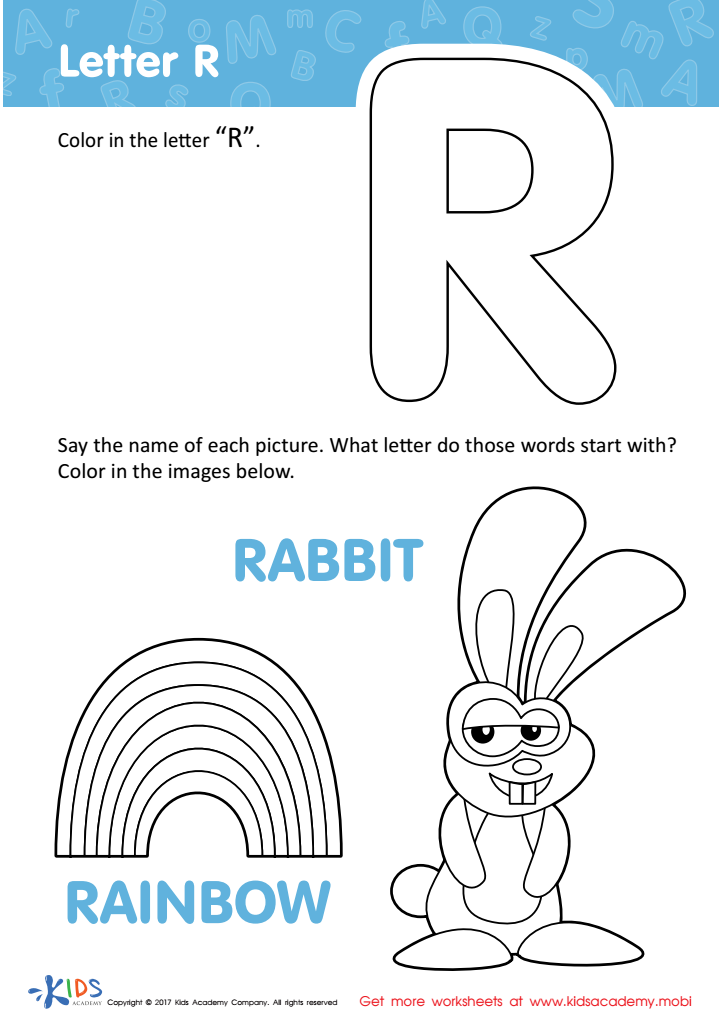
Letter R Coloring Sheet
Assign to My Students
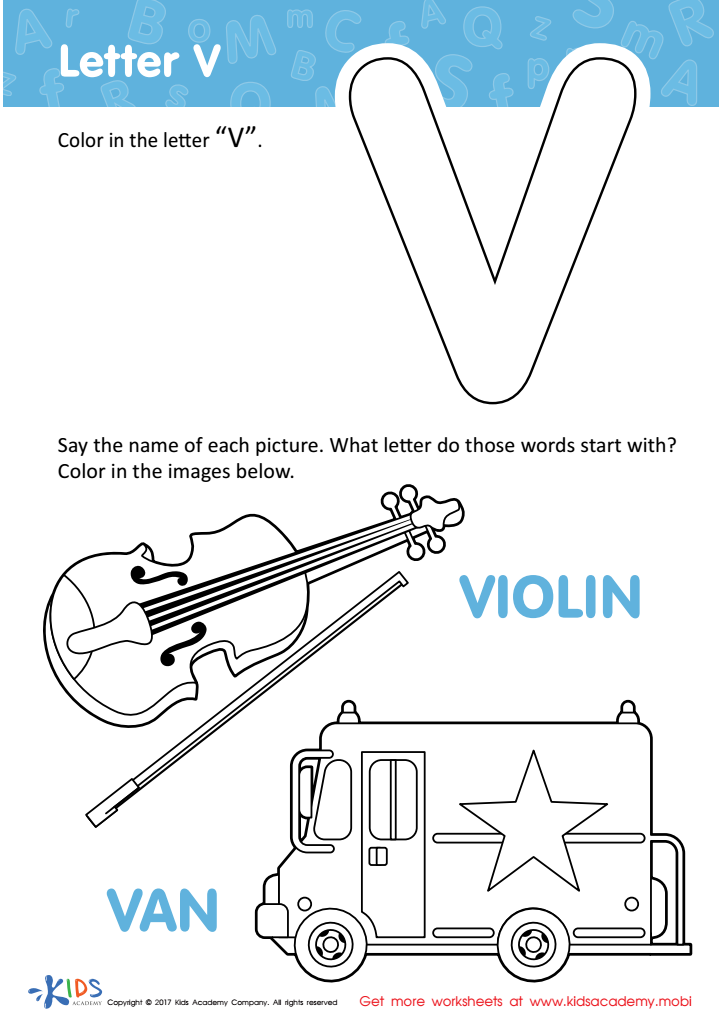
Letter V Coloring Sheet
Assign to My Students
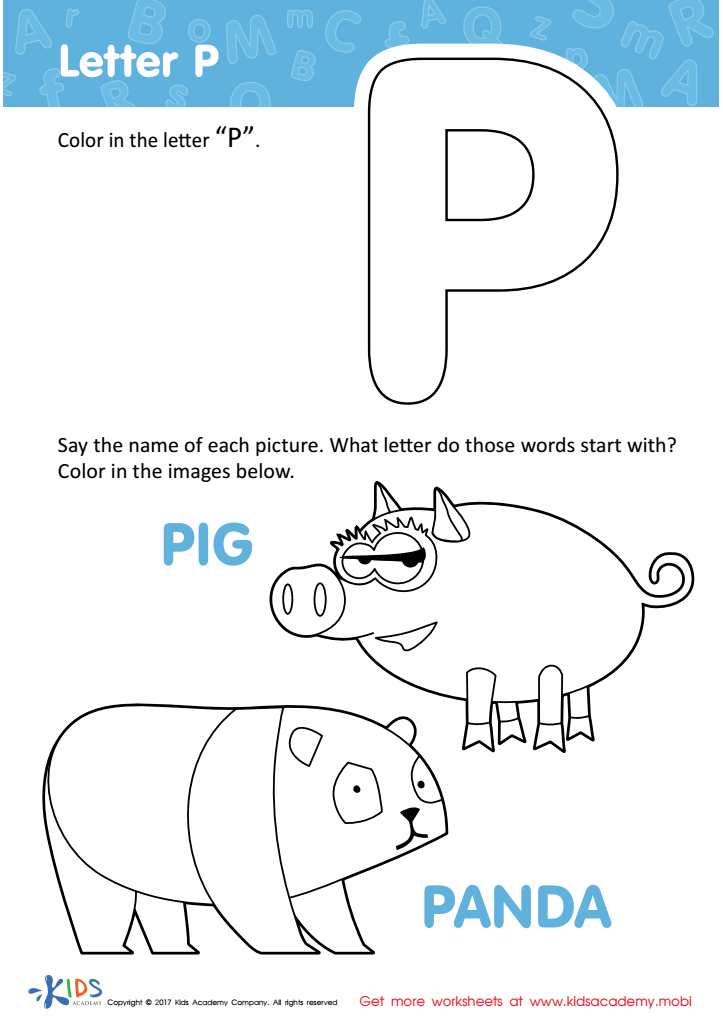
Letter P Coloring Sheet
Assign to My Students
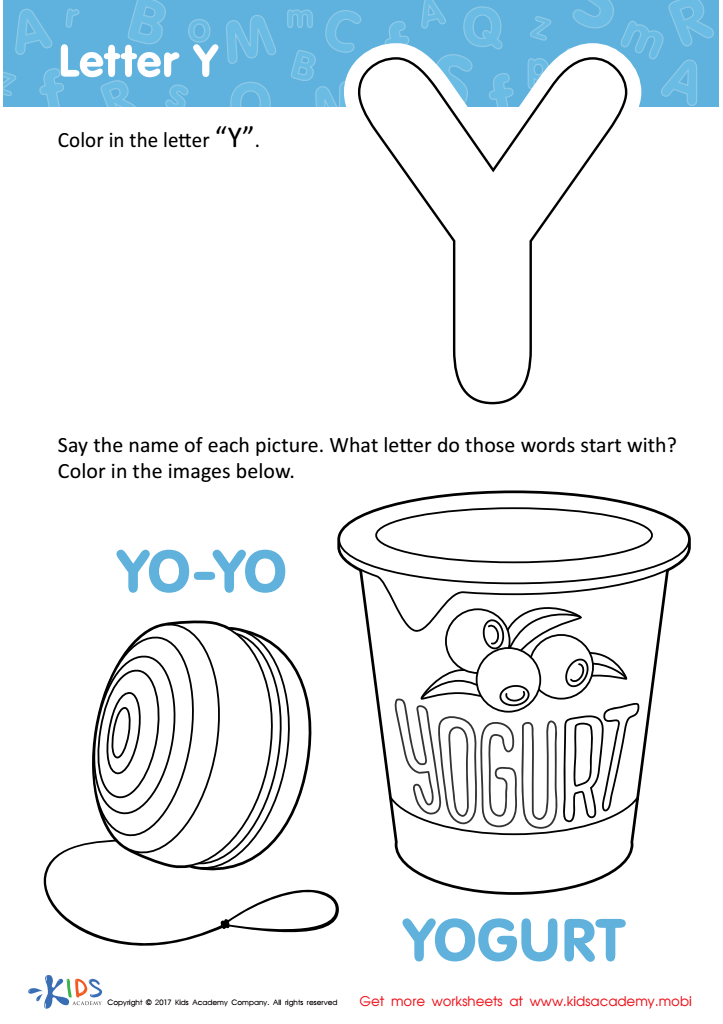
Letter Y Coloring Sheet
Assign to My Students




Alphabet recognition is a critical foundational skill for young learners, which is why parents and teachers should focus on it for children aged 6-9. Learning the alphabet enables children to develop essential literacy skills, such as reading and writing. This understanding forms the backbone of their future academic success, as it meshes into more advanced language arts skills like phonemic awareness, vocabulary acquisition, and sentence formation.
For children in this age group, learning the alphabet in an accessible and engaging way ensures they grasp these basics readily because their brains are at a crucial development stage. Interactive methods, including games, songs, and colorful visuals, make the concepts easier for young learners to absorb and hold their attention better.
Furthermore, early alphabet recognition boosts cognitive development and encourages a sense of achievement, enhancing their confidence and love for learning. Being proficient in the alphabet allows them to recognize and understand words in their environment, fostering an intuitive and proactive attitude towards learning.
Parents and teachers who prioritize alphabet recognition equip children with lifelong skills. It's a vital step not just academically, but also for overall personal development, enabling children to actively participate in classrooms and feel more competent in various tasks they encounter later in life.