Comparing quantities Easy Worksheets for Ages 6-9
3 filtered results
-
From - To
Discover our engaging Comparing Quantities Easy Worksheets designed specifically for children ages 6-9. These worksheets provide a fun and interactive way for young learners to grasp essential math concepts by comparing numbers, objects, and quantities. With colorful illustrations and varied activities, children will enhance their analytical skills and build a strong foundation in mathematics. Our carefully crafted resources not only encourage independent learning but also promote critical thinking through practical examples. Perfect for classroom use or at-home practice, these worksheets make learning about comparing quantities enjoyable and effective. Explore our collection and support your child's mathematical journey today!
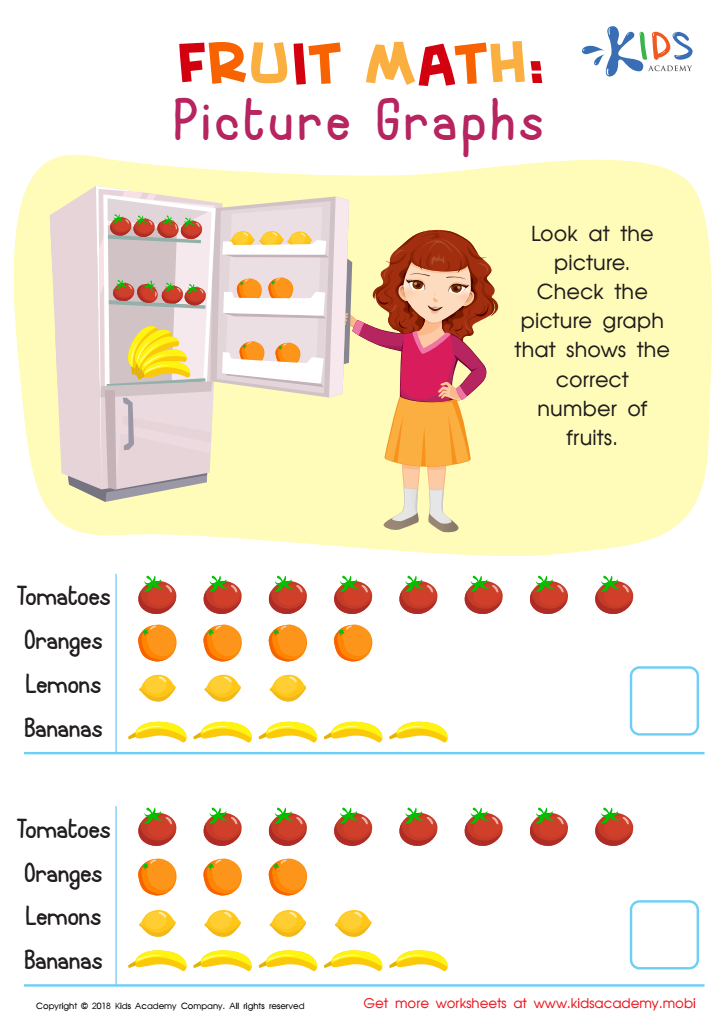
Fruit Math: Picture Graphs Worksheet
 Assign to My Students
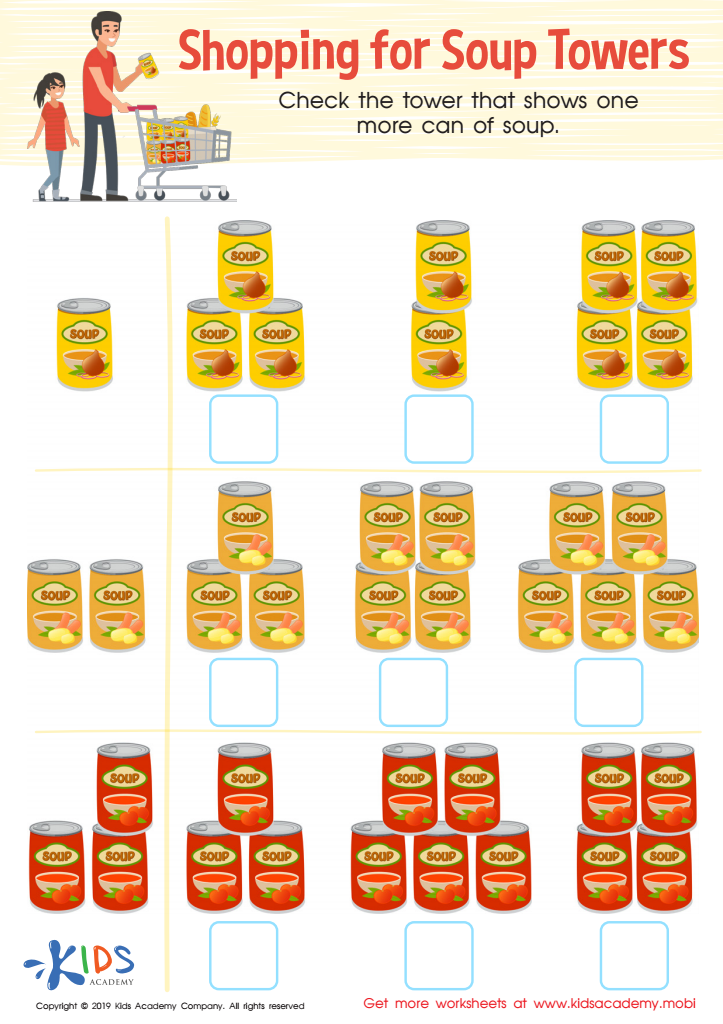
Soup Towers Worksheet
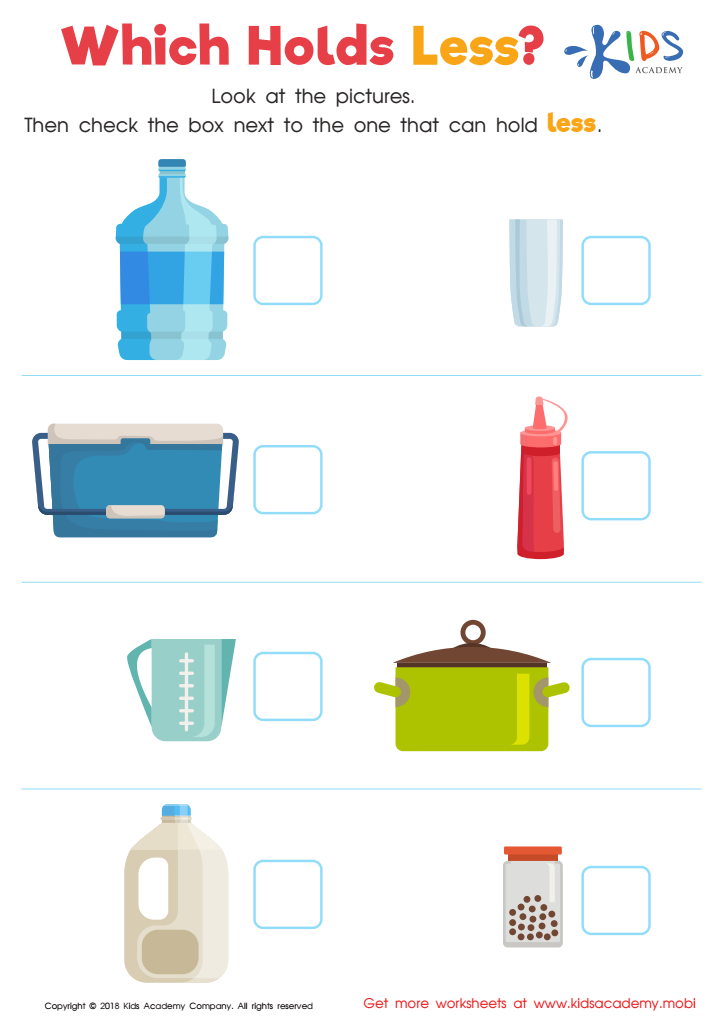
Which Holds Less? Worksheet






Teaching children to compare quantities is essential for their cognitive and mathematical development. From ages 6 to 9, children are at a crucial stage where they begin to understand basic mathematical concepts, including numbers and relationships between them. Comparing quantities helps develop critical thinking skills, as children learn to analyze and evaluate the differences and similarities between various sets of objects, numbers, or even measurements.
For parents and teachers, fostering this skill encourages early numeracy abilities, reinforcing concepts such as greater than, less than, and equal to. Through engaging activities—like using real-life examples (e.g., comparing toys, snacks, or even scores in a game)—children can better relate to the material, making learning more enjoyable and impactful.
Moreover, developing comparison skills lays the groundwork for more complex mathematics in later years, including addition, subtraction, and data interpretation. It also promotes logical reasoning, enhancing problem-solving abilities crucial for everyday life decisions. Ultimately, prioritizing lessons on comparing quantities nurtures an inquisitive mindset, empowering children to explore their environment and gain confidence in their mathematical capabilities. This foundation not only supports academic success but also cultivates lifelong skills essential for navigating a quantitative world.








